
AMHE Newsletter # 370


Table of Content of the AMHE Newsletter # 370
1- Words of the Editor-in-Chief: Is the White Coat Dead ?
2- Maxime J-M Coles MD : Ebola Virus Disease
3- Rony Jean Mary MD : Haiti entre Paternalisme, Impunite, Chaos and Anarchie sur fond de Desastre Ecologique.
4- Reynald Altema MD : Matchmaking
5- Requiem AMHE: Jude Marie Frantz Laroche. Nathan (Nate) Nickerson,
6- AMHE News, Resident-Program, Teaching and Residency Programs, Medical Missions in Haiti, AMHE Foundation, AMHE Chapters, News from AMH... etc.
7- Maxime J-M Coles MD: Les Papillons de la St Jean.
8- Rony Jean Marie MD: Mirebalais: Le Drame des Deplaces et des Territoires Perdus par l'Etat.
9- Reynald Altema MD: The Hustler.
10-Coin des Lecteurs:
11- Bertrand Laurent : The First Government May Have Been a Pig.
12- Chrystie Janvier DNP, MD: The Heart's Long Road.
13- Jean Serge Dorismond MD: Soif d'Eternite.
14- Maxime J-M Coles MD : Un Message de la Pluie.
Editorial Board
Maxime J-M Coles MD
Rony Jean Mary MD
Reynald Altema MD
Yasmine Titus Pompey MD
Fahimy Saoud MD

Words of the Editor-in-Chief
Is the White Coat Dead?
.

In October 1970, we were proud to step into the building, which will become our alma mater (FMP), wear our all-new white coats and carry our books. We realized that such a white coat was a powerful symbol in healthcare, representing trust and professionalism. The White Coat imposes a certain respect and reminds the young practitioner of the moral and scientific obligations in the world of Medicine. It has been a symbol for the medical profession for centuries (1800”s) representing cleanliness and science.
One can assure that it will help any practitioner to prioritize patient welfare and nurture a deep sense of empathy and concern towards others, in a spirit of integrity. This coat seems to provide us with a certain power which may have instilled in us the belief that we may become invincible. A year ago, my own daughter Carolyn had her “White Coat ceremony” and recently my friend’s Karl son Brandon and daughter Christine, have also proudly received theirs as well. I am not sure that this actual generation shares the same values when we stood proudly with the same vision. Over the years, it looks like our emotions may have taken different meanings.
We may have reached the doors of a medical school, getting ready to celebrate a monumental achievement with this iconic White Coat Ceremony. But, by transition, it is certainly not just about receiving a piece of clothing, signifying your transition into the medical profession
Although it was our first day facing the elders, we were waiting for the ceremony while we appeared all ready to celebrate the experience of a lifetime. 56 years later, here I am in an adopted country which has allowed me to perfect my skills in different fellowships training. Indeed, I have changed physically and mentally and the world of Medicine, we knew, has also evolved around us with novelties, like AI and many new concepts or adaptations. I may have become sharper and certainly better trained, but a new world has opened its doors.

Some of my friends presently eminent professors or chairmen in their respective institutions with different specialties, have found a need to return to their medical school benches and follow new courses on basic sciences and many other new topics in the curriculum. It is a new way to approach challenges and sharpen our knowledge. Things have really changed. The “Fete des Bleus” at our alma mater represented an equivalent of what is called in the USA the “ White coat ceremony”. This ceremony was implemented in 1993 by Arnold P Gold Foundation at Columbia University to emphasize the importance of humanism in Medicine. It was a way to accept newcomers and, in many places, traditions have evolved to a new meaning. It may be also the time to recite the Hippocratic Oath.
For many, the white coat may have an impact on the patient perception, infusing trust or “distrust”, misinterpreting the profession for the symbol for which it stands. It has not represented invincibility, but more, it has imposed to the one wearing such white coat, a touch of discipline allowing him/her to assume more responsibilities, while enjoying perhaps more prestige mixed with a sense of sacrifice, which remind a little, the Sacerdote of a clergy man (priest).

Indeed, I see nowadays, no prestige while defining the ceremony, but a path to many years of training with constant sacrifice, imposing on each of us a life of discipline with so many sleepless nights during our years of residency. coupled by an insignificant income despite our family responsibilities of newlyweds with kids.

I will never stop thinking about an encounter with my second son Rene-Max, running in the hallway of our apartment to tell his mother that a stranger was lying down in her bed. He was so confused, and unable to recognize his own father resting from nights of working at the hospital. I certainly was building a future for all the family, but the responsibilities of the white coat were also disturbing my kids.
How many times, answering to medical or trauma codes, I found myself in front of situations in which I needed to overcome my fears and, with my sober knowledge, performed well to the best of my capabilities and saved a human life, through personal risks while facing legal exposure and waiting for help from a more senior resident or a specialist.
I can enumerate so many examples in the mix of my different rotations during internship or residency which helped me mature as a physician. Really, these are the true moments which busted my ego and confer in me, as a young physician, the confidence necessary to save life. The full weight of accountability felt certainly on my shoulders, rendering me proud of being able to handle the difficult tasks and resolve medical problems.
I understood well that the white coat although represented a façade, but it imposed more a burden in which the outcome in life or death becomes important for your sanity. Indeed, we have as residents in training accepted to assume personal and legal responsibilities often in life and death situations, often without any compensation but at great cost, despite of not being fully able to understand the situation.
The white coat may be a symbolic uniform but does not confer to the wearer the assurance in his role as a physician, especially during training. Perhaps lessons learned during so many hours on duty may justify the feeling of being proud to accept more responsibilities, considering that you have become an accomplished physician, able to face any situation. Thus, wearing the coat proudly may give you the privilege of claiming that sense of clinical competence, allowing you to perform freely. After all, we may not need it at all if such transparency can be demonstrated despite elitism. It becomes then a reminder that the welfare of a patient being treated is above all recognition or comfort for yourself.

The white coat may have sharpened our ego for what it stands for, but lessons we have learned on the benches, at the Alma Mater or during training have given us that sense of pride which balances the noble calling of healing with this absolute need for self-recognition. I must believe that modern recognition may have already shifted away from advocating for the physician himself to their expertise and patient care while better advocacy is built. It is not given to all to wear it with pride and dignity. We have seen the ways our elders have always downplayed their achievements.
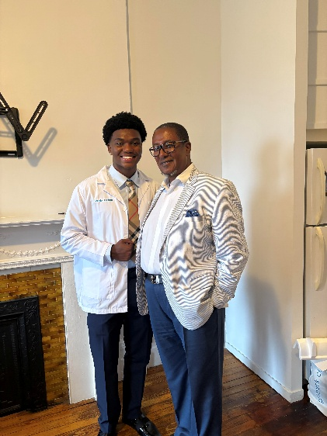
I felt deeply privileged to being an orthopedic surgeon who has dedicated more than 50 years of his life to care for patients in my field, at home, through the United States and around the world. For years I have been in the forefront of Emergency Rooms and Operating Rooms providing trauma care. Most of the time, I was not wearing a white coat but I knew that I made a difference in any of those countries where I was invited as a trauma surgeon… Haiti and USA, Mexico, Ecuador, Peru, Columbia, Panama, Costa Rita, Brazil, Paraguay… Egypt, Ethiopia, Santo Domingo, Bahamas, Ste Croix (V.I.). etc.

I dedicated my time to teaching and being a model to younger physicians. I know that I do not need a white coat while communicating my knowledge to younger physicians. No matter what the white coat brings respect to the science while boosting patient’s confidence.
Maxime J-M Coles MD
Boca Raton FL
June 2026

EBOLA Virus Disease
Ebola, also known as Ebola virus disease (EVD) or Ebola Hemorrhagic Fever (EHF) is a zoonotic viral hemorrhagic fever seen in humans and other primates but caused by four or six known ebolaviruses (Ortho ebolavirus). It is a severe and often fatal disease.
The Centers for Disease Control and Prevention (CDC) has recently issued a health alert network (HAN) health advisory to alert clinicians, public health practitioners as well as travelers about a recent outbreak of Ebola disease in the Democratic Republic of Congo (DRC) and Uganda ( a species of the virus was cited: the Bundibugyo virus as agent responsible). Others have encountered the virus in New Guinea, Sudan, Ivory Coast, Sierra Leone, Liberia etc.
The ministry of Health of the Democratic Republic of Congo (DRG) has confirmed a recent outbreak in their province of Ituri in the north of the country and as the 15th of May 2026, around 250 suspected cases were diagnosed with 80 deaths. Patients presented with fever, body ache, weakness and vomiting as well as some patients with bleeding and rapidly deteriorating. Screening and precautious measures are now enforced. It is believed to be the 17th recorded outbreak in the republic of Congo since it 1976 discovery in a first outbreak of the disease.
Ebola Virus Disease (Ebola Hemorrhagic Fever) is an infectious disease, a zoonotic viral hemorrhagic fever seen in humans and other animals (primates) and caused by four of the six known ebolaviruses. A typical patient with the disease may present diverse symptoms like fever, sore throat, muscle pain, headaches after two or three days of being infected, followed by vomiting, diarrhea, rash.
At this point, the patient may have already started bleeding internally or externally. The viral species involved and the timing of the treatment will play a critical role in the prognosis of the disease process, because mainly a high mortality rate is associated with the disease between 25% and 90% (average 50%).
Death generally follows with a hypovolemic shock in around two weeks (6 to 16 days), following the first symptoms. Intermittent outbreaks were recorded in the sub-Saharan Africa since the mid 70’s, but the disease was first reported in a large outbreak during the 2013-2016 years after a western African epidemic, when it was discovered that the disease spread through direct contacts with body fluids like Blood from infected humans or animals or other infected fluids. There are no known documented cases of transmission through the air between humans and other animals even if fruit bats are believed to be a natural host for the virus. Thet are not affected by the virus.
How long was a patient exposed to the virus ? and the apparition of the symptoms (Incubation) between 2 and 21 days or even longer ? Sudden influenza-like syndrome with fatigue, high fever, weakness, muscle pain, headaches, sore-throat with decrease in appetite followed by diarrhea, vomiting and dehydration.
Later shortness of breath and chest pain with confusion. The apparition of a maculopapular rash may be also noted.
Internal or external bleeding may occur in a week following the beginning of the symptoms while patients may demonstrate a decrease in blood clotting or bleeding from the mucosal membranes (50%), in vomiting or coughing, blood in the stools, petechiae, purpura, ecchymosis or hematomas especially after venipunctures, blood in the sclerae or the gastrointestinal tract (15-50%) or patient may develop a possible disseminate intravascular coagulation (DIC).
Recovery may begin a week or two after the early symptoms unless death is seen prematurely a week or two after due to shock from fluid loss or bleeding. Often, they may be in coma.
Other survivors may present ongoing muscular and joint pain, decrease hearing, decrease in appetite with persistent loss of weight. They may experience problems with their vision. It is recommended to use condoms for at least 12 months following the infection because the semen will continue to carry the virus.
Once a patient recovers from Ebola, even the breast milk continues to carry the virus for several weeks or even months as well. Survivors will develop antibodies against Ebola for at least the next 10 years. For many physicians dealing with infectious diseases, Ebola may mimic several other infectious diseases like cholera, typhoid fever, malaria, meningitis etc. The semen also will carry the virus for longtime.
There is little risk for the spread of the disease in United States at this time but travelers leaving Congo or Uganda to enter the United States should take additional precautions to avoid the contamination of others in the planes.
The orthoebolaviruses (ebolavirus) are responsible for the Ebola disease most frequently affecting humans and some nonhuman primates like monkeys, chimpanzees and gorillas. Four species appear to be responsible, causing the Ebola disease in humans: “Orthoebolaviruses zairense, Orthoebolaviruses sudanense, Orthoebolavirus taiense, Orthoebolavirus bundibugyonse.
These filoviruses are filamentous particles in shape of “U” or “6” measuring 14,000 nm. The ebolavirus structural glycoprotein (GP1,2) is responsible for the virus ability to bind and infect the targeted cells while the viral DNA polymerase is encoded by the L-gene.
An incubation period of two days to three weeks after exposure is expected generally although the individual does not seem infected until the apparition of the “dry” symptoms like fever, muscle aches, fatigue etc. But later with the “wet” symptoms, like diarrhea, unexplained bleeding. The disease can then spread easily through direct contacts or through broken skin or any mucous membranes in contact with contaminated body fluids (urine, blood, even semen or other secretions) of a sick or a dead person with the disease. The disease can also be transmitted through contact with infected animals or through contact with contaminated needles or objects.
To date, there is no known airborne transmission for the virus, although the local bats (fruit bats) and porcupines were found to be vectors of the virus without experiencing any sign of infestation.
Ebola disease has a high mortality rate with more than (50%) and no vaccine to protect against the virus has been effective. A vaccine licensed in the USA (Ervebo) is presently in use for prevention of the disease “zairense”, with most studies performed on animals. This vaccine is not expected to protect against any other orthoebolaviruses.
Unfortunately, there is no FDA treatment for the disease, but hope is on the way because some therapies have already shown efficacies in animal models. Supportive care and fluid replacement have also lowered the mortality rate. Since, CDC has presented some recommendations for the clinicians:
1- Routinely assess patients with symptoms like fever, headache, muscle and joint pain, fatigue or loss of appetite, gastrointestinal symptoms with or without unexplained bleeding for possible viral hemorrhagic fevers (VHFs) or BVD, especially when such patient has been recent travelers. The earlier such examination can be performed, the better chances to initiate prompt treatment in suspicious cases and prevent the spread of the infection, hopefully within 21 days after the beginning of the symptoms.
2- If a person demonstrates a suspicion or the confirmation of direct contact with a symptomatic person (BVD), alive or dead, or with suspected contacts with objects contaminated by body fluids.
3- If someone becomes sick or died following his/her participation to a funeral and became in contact with body fluids of the sick or dead person, in an area of active disease outbreak.
4- If someone worked or visited a healthcare facility or laboratory.
5- If someone has close contact with fruit bats.
One should consider testing for other possible tropical diseases like Malaria, Typhoid, or other gastrointestinal and febrile diseases even Influenza or COVID-19 especially after any recent international travels in endemic and epidemic areas. Isolate and hospitalize suspicious cases in a healthcare facility until confirmation of negative specimen collection in the 72 hours after onset of the symptoms.
Personnel should follow special training prior to taking care of such patients, while wearing protective gear and waiting for results or isolating patients following their suspicious or positive tests.
Prevention must be taught to avoid contact with infected fluids or materials belonging to sick people including the semen from the one who have recovered from confirmed or suspected BVD. Avoid entering areas (caves or tunnels ect) inhabited by bats, because these animals carry of the virus and their urine or their droppings need to be avoided. Non-human primates and antelopes can also transmit the virus through their blood or other body fluids or through the raw meat of unknown animals.
It is recommended to avoid non-essential travel to the known endemic and epidemic areas and if any traveler develops symptoms during their trip, they should self-isolate and contact the local health authorities or any clinician to receive supportive care with Atoltivimab/Maftivimab/Odesivimab (INMAZEB)/Ansuvimab medication, once the diagnosis is made. Such medications can improve the outcome and have been approved for medical use in the United States for the last Zaire ebolavirus. Early supportive care, oral rehydration with salty or sweetened water or intravenous fluids have improved outcomes.
In conclusion, Ebola (EVD: Ebola virus disease) or Ebola hemorrhagic fever (EHF) is a zoonotic viral hemorrhagic fever seen in humans and other primates caused by four known ebolaviruses. Symptoms start 2 days to 3 weeks after the beginning of the exposure to the virus in a febrile episode and sore throat, rashes, muscles and joints pain, headaches followed with vomiting and diarrhea, often complicated with hepatic and renal dysfunction and abdominal pain with hiccups, leading to internal bleeding. They become confused and develop shortness of breath and chest pain. More, in half of the cases, a maculopapular rash with bumps is visible.
There is a high mortality rate varying from 25% to 90% in a picture of shock from blood loss, rapidly seen in the two to three weeks following the beginning of the symptoms... If one recovers from the disease, he/she will develop a post-Ebola syndrome and will need to remember that longtime after, semen and breast milk will continue to carry the virus for months and antibodies will circulate in their blood as well for more than 10 years. Sexual precautions with the use of a condom is strongly recommended.
The presence of viral DNA or viral antibodies or the virus itself in the blood confirms the post Ebola recovery period. A view of the Ebola Virus from the last epidemic in Zaire taken from Wikipedia, is demonstrated below:

A patient becoming may become symptomatic 2 to 21 days after exposure to the virus but after around 10 days and some recent studies have seen patients developing the disease after more than 3 to 4 weeks.

Signs and symptoms of Ebola] from Wikipedia
Death may follow in one to two weeks after the beginning of the symptoms, due to shock from fluid loss leading to a period of coma. The one who survived the disease may experience more fatigue with joint and muscle pain, liver inflammation, and a progressive loss of hearing but typically a lack of appetite leading to a loss of weight they may never gain back.
Others may develop problems with their vision and excessive tearing but definitively, male survivors will develop antibodies for the next ten years and may continue to show the ebolavirus in their semen, forcing them to wear condoms during sexual activities. Female survivors will also carry the virus in the breast milk for longtime.

Smoked bushmeat in Ghana
In Equatorial Africa, fruit bats of the” Pteropodidae family” are considered as “crabmeat” and while being hunted for human consumption, it was discovered that they were linked to animal-to-human transmission of diseases, including Ebola, probably through direct contact with an infected animals like bats, apes (gorillas or chimpanzees) or antelopes (duikers). It represents an important source of protein. Moreover, domestic animals like pigs or dogs can become infected by the virus but if dogs do not appear to contract the disease itself, they can certainly develop antibodies while the pigs are able to transmit the virus to bats. Droughts in Central Africa have led communities to hunt and consume infected animals. Other animals like porcupines can also transmit the disease.
The most common clinical signs seen in Ebola can be as well reported in many other tropical diseases including Malaria, and Dengue fever, or viral hemorrhagic diseases, Marburg virus disease, Lassa fever or other infectious diseases like shigellosis, leptospirosis, viral hepatitis… This week a physician returning from the Congo area ravaged by the disease, was diagnosed to have contracted Ebola Virus diasease. This is the first time that such case was diagnosed in Europe and proper isolation procedures and supportive treatments were initiated to contain the problem.
It is also important to mention that many countries have attempted to use such Ebola virus in the world of Bioterrorism (biological warfare) as a potential weapon of mass destruction and hopefully have failed because the virus itself becomes so rapidly ineffective in contact with the air.
Finally, the Ebola virus disease has been used as a theme in movies (i.e. Hot Zone), documentaries (William Close) and in books or novels (Tom Clancy) to create dramas and fear in the general population, often divulgating improper information while confusing a public avid of knowledge on health matters.
Maxime J-M Coles MD
Boca Raton FL
Références :
1- Broadhurst MJ, Brooks TJ, Pollock NR (13 July 2016). “Diagnosis of Ebola Virus Disease: Past, Present and Future”. Clinical Microbiology Reviews. 29(4). American Society for Microbiology: 773-793.
2- Modrow S, Falke D, Truyen U, Schatzl H (2013). “Virus Definition, Structure, Classification”. In Modow S, Truyen U. Schatzl H (eds). Molecular Virology, Berlin, Heidelberg, Singer. Pp 17-30.
3- “Preliminary study finds that Ebola virus can persist in the semen of some survivors for at least nine months”. Centers for Disease Control and Prevention (CDC). 14 October 2015.
4- Ebola Virus Disease :Wikipedia
5- Sharma N, Cappell MS, (September 2015). “Gastrointestinal and Hepatic Manifestations of Ebola Virus Infection.” Digestive Diseases and Sciences (Review). 60(9): 2590-2603.
6- Shanta JG, Yeh S, Nguyen QD, (November 2016). “Ebola Virus Disease and the Eye.” Current Opinion in Ophthalmology (Review). 27 (6): 538-544.
7- Leroy EM, Kumulungui B, Pourrut X, Rouquet Pm Hassanin A, Yaba P, et Aal (December 2005). « Fruit bats as reservoirs of Ebola virus» Nature. 438 (7068) : 575-576.
8- Mackay IM, Arden KE (2015). “Ebola virus in the semen of convalescent men”. The Lancet Infectious Diseases, 15 (2): 149-150.
9- Rogstad KE, Tunbridge A (February 2015). “Ebola virus as a sexually transmitted infection”. Current Opinion in Infectious Diseases. 28 (1): 83-85.

HAlTl, ENTRE PATERNALISME, IMPUNITÉ CHAOS ET ANARCHIE SUR FOND DE DÉSASTRE ÉCOLOGIQUE.
Tout a commencé par là, avec des hommes qui cherchaient à violer des lois et qui n’ont trouvé personne pour leur dire qu’ils commettaient des infractions. Une première fois , une seconde fois ; et toujours personne ne leur dit rien .Dans le grand public, il y en a qui observent et s’en plaignent . Mais les autorités tournent ailleurs leur regard par complaisance, par lâcheté ou du fait de leur collusion avec les délinquants . Ceux--ci se croient alors tout permis. L’habitude devient une seconde nature , pareille à la nature qui est elle-même “une première habitude “ pour parodier Descartes . À coté d’eux, de petites gens observent et pensent que elles aussi, elles peuvent faire autant .Et, étant donné que “ chasser le naturel, il revient toujours au galop”, ainsi tel un cancer attaquant le corps social et se propageant à tous ses membres ,
le mauvais exemple s’établit et prend sa lettre de noblesse dans la société.. l’une après l’autre, les règles de droit disparaissent et les structures d’état s’effondrent.. Et comme La nature a horreur du vide, on finit ainsi par créer des omnipotents, des barons économiques qui font leur beurre et vivent en parasites au dépends de la société. Certains jouissent dans l’ombre de leurs biens mal acquis sans trop s’exposer à la vue de tous . D’autres par contre, moins prudents, s’érigent en barrons , genres ”baron de la plaine ” qui, moins conscients du tort qu’ils font à la société, s’exposent eux-mêmes, délimitent leur territoire , y pratiquent une justice expéditive , opprimant leurs sujets et exerçant sur eux un droit de de vie et de mort , Aujourd'hui, pour traverser ces zones, des frais de passage vous sont imposés jusqu’à ce que les riverains finissent par les abandonner.Et.Celles -ci deviennent alors des territoires perdus à tout jamais..
Dans cette structure où les plus faibles sont les premières et les plus grandes victimes , on passe ainsi à une sorte de bamboche dictatoriale où chacun cherche à sauvegarder sa part et à léser les intérêts du plus grand nombre.
Les économiquement puissants et les politiciens affairistes, placés au sommet de cette pyramide, et détenant les leviers du pouvoir , les centres de décision , manœuvrent à coup de décrets ministériels alors que les moins forts font feu de tout bois pour survivre, nuisant tout autant à leur façon..La corruption et le paternalisme qui sont des vices du même sérail engendrent alors un état de fait où Chacun crée son cartel de gangs et de bandits, de bandits de toutes sortes, à cravate ou en sapates.
Cherchant à survivre , la communauté,de son côté, vit dans une pagaille au quotidien, se débrouille seule sans directives ni claire alternative.
Aujourd’hui, cette pagaille se voit à travers les rues , sur les réseaux sociaux et un peu partout.Les plus fragiles sont sur les trottoirs des rues vendant des paquets de sucreries, érigeant des stands de fortune un peu partout devant les maisons. Chacun achète son petit générateur ou un carré de panneau solaire pour faire étudier ses enfants et maintenir un semblant de vie normale.
Les banques de Borlette sont à tous les coins transformant les rues et les villes en de grands marchés à ciel ouvert. Des tas d’immondices restent à même le sol au beau milieu des rues quand ceux-ci ne sont pas tout simplement entassés dans des sacs en plastique et déposés dans des canaux d’eau adjacents aux trottoirs. Faute de poubelles dans les rues, certains profitent de la pluie pour déverser les déchets domestiques et les détritus dans les rigoles .Et comme ces canaux ne sont jamais curés, les maisons sont inondées à chaque averse rendant encore plus infernale la vie des résidents..Des flaques d’eau dans les rues coupent carrément certains quartiers résidentiels du reste de la ville.Sans oublier d’ajouter que dans les rivières qui souvent côtoient ces villes, des tonnes de déchets sont déversées à longueur de journée devenant ainsi une source permanente de contamination et de maladies de toutes sortes pour ceux qui vivent en aval et qui sont forcés d’utiliser ces eaux à des fins domestiques.
Un bruit ahurissant vous crève le tympan à toutes les heures du jour et de la nuit forçant les riverains à se retirer le plus loin possible vers les cours et les basse-cours loin des rues qui sont à leur façon, elles aussi , des territoires perdus.Quand j’ai demandé gentiment à un policier que j’ai croisé dans une rue où nos deux véhicules pouvaient à peine s'arrêter tenir l‘un à côté de l’autre tellement l’espace était rendu exigu , à cause des marchands ambulants, pourquoi l ‘Etat ne fait-pas quelque chose pour dégager la voie?, Il me répondait que lui aussi, il vit le même drame au quotidien sans rien y pouvoir.Ainsi, comme des pleutres et des veules , nous sommes victimes d ‘une même maladie qui est en grosso modo celle de l‘inertie et l l’insouciance de nos dirigeants.
Les motocyclistes règnent en maîtres et seigneurs courant en toute allure comme des fous à la recherche du pain quotidien, estropiant des gens que l’on amène vers des centres de santé ou des hôpitaux de dernière classe qui ne le sont que de nom, et qui n’ont même pas de solutés et de pansements pour administrer les premiers soins. Pas d’assurance sur ces motocyclettes qui ne compenseront jamais ces victimes d’accidents. D’ailleurs qui s’en soucierait ou payerait pour un accident si banal quand les gens sont tués chaque jour sur les voies publiques sans que leur famille n’ait jamais eu droit à aucune forme de compensation? En visitant les hôpitaux , certains soirs les parents des patients dorment sur la cour, à la belle étoile, attendent des heures avant que le souffrant soit vu et admis au service d’urgence. Dans les quartiers. La nuit, un peu partout, il n’y a pas d’heure pour réduire le taux de décibel qui nous qui nous parvient aux oreilles Et l’état, dans tout cela , est aux abonnés absents.
L’embouteillage est si grave qu'il me fallait plus de temps pour quitter le Cap Haïtien en me rendant vers Hinche , qu’il ne m’en a pris pour parcourir les cinquante prochains kms. Les bouteilles en plastique sont partout sur les plages du centre ville.Quelle image offrons-nous donc aux étrangers qui débarquent pour la première fois dans le pays ? Quand un passage est réduit de moitié sur la voie publique à cause d’une construction ou d’un accident de la circulation, tout ce qu’il faut faire, c’est d’avoir deux agents routiers en deçà et au delà du point d’étranglement pour permettre aux véhicules de le contourner en bonne et due forme, par passage alternatif , permettant ainsi une circulation fluide dans les deux sens.Or, tout le monde était en juxtaposition, tête contre tête, bloquant ainsi le passage pendant des heures.
Ainsi sont la plupart des grandes villes que j’ai traversées au cours de mon périple en Haïti le mois dernier.. Le système, tel qu’on le voit et qu’il se profile, est en constant besoin de réinvention . Et pour ce faire, il pratique la corruption à tous les échelons de l’appareil d’état .Le sens du devoir et l’amour de la patrie sont des mots vidés de tout contenu. Le pire dans tout cela, c'est l’inconscience de l’insalubrité qui nous étouffe tous et dont personne ne semble se préoccuper parmi les responsables.
Pourtant la grogne est partout…. On se plaint d’une justice vénale à outrance, d’une voirie qui ne fait rien pour déblayer les rues , d’un système de santé décadent qui n’offre rien aux malades qui meurent tous les jours faute de soins adéquats.
Certains pensent qu’on en est arrivé là parce que les lois n’existent pas de manière aussi contraignante qu’au temps des dictatures.D’autre voudraient même faire croire que la dictature était meilleure pour nous autres. Mais les esprits lucides vous diront non ; que les lois en ces temps-là étaient appliquées à la protection d’un petit nombre qui cherchait à se maintenir à tout prix au pouvoir On était bien aussi longtemps qu’on ne discourait pas sur des sujets ayant trait à de la politique . Mais maintenant tout le monde sait que le pouvoir est une chaise éjectable.Alors mieux vaut en profiter pleinement pour qu ‘on n’ait rien à se reprocher lorsqu’on ne sera plus aux commandes.D'ailleurs, ces lois , au lieu d’avoir été érigées en garde -four pour tout le monde, garde-fou en lequel chacun pouvait se reconnaître., elles ne servaient que les intérêts de la clique au pouvoir.
Aujourd'hui, on est passé de dictature politique à de l’anarchie sans limite.Mais l’anarchie est en soi une autre forme de dictature pour ceux qui ne peuvent la tolérer. C’est une bamboche dictatoriale dont chacun en a pour son compte.. Ceux qui aujourd’hui crèvent de faim et vivotent dans la misère la plus crasse, la plus abjecte ,ou qui sont oubliés dans les prisons en violation flagrante de leurs droits les plus fondamentaux, ne sont-ils pas eux aussi des opprimés d’une dictature sociale au même titre que ceux-là qui pourrissaient dans les cachots lors de la dictature politique des temps passés.? La simple différence entre les deux , c’est que l’une sous-tend la répression et l’autre, l’anarchie sans limite..
Les puissants et les forts n’avaient pas tous été toujours forts et puissants.Ils sont des produits de la société au même titre que les parias et les damnés,eux qui sont restés derrière , ignorés de toujours du système, sans accès à une éducation de qualité et à un minimum de bien-être et de dignité.C’est le système qui, dans son laisser faire et son laisser aller, “laisser grinnin “ pourrait-on dire , a pu engendrer de tels résultats .Quand une église des cultes réformés ou un houngan dans son péristyle trouble la paix publique avec un microphone ou un tambour pour des nuits de réveil ou des danses de Vodou, c’est à l’état d’intervenir et de faire entendre que , passée une certaine heure, le silence doit régner pour permettre aux gens de se reposer. C’est également à l’État qu’il revient d’empêcher qu’un grand commerçant ne bloque tout un quartier pour faire débarquer des conteneurs de marchandises au grand mépris des motoristes et des piétons..
Ainsi, nous sommes au bord du gouffre, en train d’être avalés par une grosse couleuvre , notre tête déjà dans son ventre, sans chance d’en sortir. Malheureusement, les seuls qui sont à parler de pays et de fierté patriotique sont en dehors des sphères de l ‘état .Mais attendez qu’ils y parviennent, ils oublient déjà toutes les belles vertus républicaines sur lesquelles ils avaient fondé leur capital politique.Il faut dire que le chaos n’est pas uniquement d’ordre économique. Il est le produit des structures branlantes qui n’ont pas répondu aux attentes et qui n’ont jamais pu supporter les lois qu’elles étaient censées faire respecter.
Bref tout le pays est un laboratoire de corruption, de coups bas, de manipulations, dont chacun cherche à tirer profit.Tout le pays est un véritable désastre écologique dont on ne se remettra peut-être jamais. Il faut être fort et courageux pour vivre dignement dans un pays comme le nôtre et ne pas perdre la tête car vivre ici n’est pas une chose facile .il faut apprendre à survivre au quotidien tellement le désordre et le chaos sont insurmontables.
Enfin, quand un frère religieux de confession catholique travaillant dans le social depuis des années, me demanda s’il est possible pour le pays de remonter la pente glissante où il s’est engagé depuis tout ce temps? J’ai réfléchi un court moment et je suis reparti sans savoir quoi lui répondre. Car, nous ne sommes pas un pays quand nous sommes incapables de faire régner l’ordre et la discipline dans nos communautés respectives. , et que des intérêts particuliers sont protégés au détriment du plus grand nombre.Alors que sommes- nous donc ?
RONY JEANMARY, M.D
Hotel Hermitage, Pandiassou
Hinche, Haiti. Le 24 juin 2026
Matchmaking
Henri Daniel, HD, known to us as a sleuth with problem-solving in his veins, had lately been working full-time for a lobbying firm. Because of his previous security work, he was occasionally called for special assignments, though the riskier ones belonged to the darker category known as a “black job.” In that cloak-and-dagger world, where denial was part of the contract, a black job meant obtaining valuable information by unorthodox means without leaving a trace; if caught, the client would disown him without hesitation. The line between a special assignment and a black job was always a blur, and this one would test that distinction from the start. His role required brains rather than brawn, tactful guile, and full license to use persuasion. The task was deceptively simple: make a hostile Parliament function again before the country’s collapse became irreversible. Somewhere in the Caribbean, a group of lawmakers whose mission was to make laws had developed the nasty habit of not showing up for work, raising the price of spoils and entitlements while the rest of society sank deeper into wretchedness. Things had gotten so bad that foreign aid had become a casualty; despair and political instability, always fraternal twins in hard times, had grown so intertwined that they seemed inseparable. Insecurity had reached such a critical level that, true to form, a cottage industry had mushroomed around it. What began as private security had lately shifted toward kidnapping, afflicting rich and poor alike. Even the business community had started crying foul because the chaos was giving schadenfreude a bad name. HD’s role was to convince Parliament’s stakeholders to establish a working relationship. HD’s antenna went into high gear. He knew from experience that the assignment would not be simple, so he studied the players, the environment, and the risks before committing himself. In the digital age, information was easy to find; a quick survey of public videos showed daily scenes of brinkmanship, public rage, and political theater. Temporary rants had hardened into permanent feuds, and yesterday’s fiercest opponent could become tomorrow’s ally if enough Benjamin bills changed hands. HD dug deeper and found a Jekyll-and-Hyde reality: outside help was reviled and sought in equal measure, while calls for human rights coexisted with casual cruelty and lethal punishment. Tolerance and compromise were treated not as civic necessities but as forbidden concessions. Faced with that zeitgeist, HD’s first instinct was to refuse the assignment. Then Jean Delfié, JD, an old friend from the island, urged him to reconsider: “A lot of these brazen pols making bombastic statements in real life are craven. Get your toolbox out and use some clever tactics, and I bet you it will be easier than you think to have these folks sit down and talk to one another.” HD remained unconvinced until an op-ed from his favorite columnist in NY Times titled Willful Indifference caught his attention. It was a convincing essay about the willful abandonment of glaring suffering pitted against the spontaneous rescue of victims. The cases chosen were most appropriate: the help given to white Muslims being persecuted in Bosnia and the indifference to the slaughter of Tutsis by Hutus. That piece of truth nipped his burgeoning doubt in the bud. He reviewed classified profiles of the main actors and found a political class rich in vanity, betrayal, and compromised loyalties. Some had informed on one another while still boasting of independence, integrity and agency; others benefited from ties to the narcotics trade. The country had once given the world formidable thinkers, and HD could not avoid the contrast between that inheritance and the present culture of rapaciousness. The more he read, the more he wanted not merely to mediate, but to puncture the arrogance of men who had mistaken impunity for strength. 1 HD traveled under the guise of a think tank member seeking to conduct research and engage several of the pols. To set the tone, a reception was held at the U.S. Embassy, and the targeted lawmakers were invited. After a proper introduction, he said, “I look forward to working with political and thought leaders, and I hope we can find a way out of the quagmire. I also hope to see many of you at the seminar, where we can work together.” Invitations to a three-day retreat at a posh resort were then distributed. As was customary for HD, any event he organized carried the aura of first-rate status. The schedule included seminars on good governance, small-group breakout sessions, and one-on-one discussions with HD. The plenary sessions featured sleek PowerPoint presentations, while taped scholarly lectures and interviews with seasoned lawmakers from different parts of the world gave the gathering the semblance of a serious academic powwow. The topics ranged from proper decision-making to negotiation in a democratic process. The retreat’s social offerings were tantalizing. Replays of UEFA Champions League matches were available, and nothing was left to chance. In that male-dominated society, only a couple of female legislators attended, and neither stayed long. Strategically posted young masseuses were available to offer deep massages, and they were soon in high demand. Once the legislators had had their fill of liquor, they developed an urgent need to relax their tense muscles. Wowed by beauty and loosened by alcohol, their tongues began to wag. With little goading, they moved from banter to diatribes about one another, deploying vicious epithets such as ragamuffin, reprobate, grifter, grubber, illiterate, thief, and mendacious. As often happens, gossip soon turned into detailed revelations about one another’s private lives. It was as if they had stumbled into talk therapy. The interesting part was that the conversations were taped, unbeknownst to them. The pattern repeated itself the following night. On the morning of the last day, HD held one-on-one sessions with attendees when they were most likely to be sober. In theory, this was the time for them to offer feedback on the retreat’s benefits. For quite a few of the actors, it became an earful instead. To each targeted individual’s surprise, HD played edited segments from a high-quality recording of that person’s jeremiad against others. “I am sure you don’t want this to leak,” he would say, giving a light pat on the shoulder. He was careful not to play any criticism aimed at the listener; those recordings would be saved for later, if needed. Ever the astute player, he wanted to stay two steps ahead, press the right buttons at the right time, and never overplay his hand or become predictable. For those with close ties to the narcotics trade, HD showed airtight proof and delivered the warning in a steely, transactional tone: “You either play ball, or you will feel the sting of hardball. Make a choice, and be willing to live with the consequences.” Then came the final dagger: “Once and for all, stop blaming others. Be responsible. Man up. Do your job, and find common ground.” The response to this pressure varied. Some were frightened quickly. Others either bluffed or refused to believe they were at risk. One particularly influential member, always ready to denounce corruption at full volume, received a sealed envelope from HD containing evidence of secret offshore accounts and copies of recent transactions. At the bottom of the page, a laconic message was handwritten: “These are your options: 1. Release of this information to a foreign reporter. 2. Freezing of the assets sine die. 3. A combination of both. 4. Behave like an outstanding citizen, and none of the above will happen.” His shrill rants came to a screeching halt. 2 HD methodically called each bluff, including by playing a taped conversation in which a legislator requested his cut of a drug deal. The stunned lawmaker could not believe his ears and shaped up quickly. The few honest members of Parliament held firm convictions and could not be swayed because they had no sword of Damocles hanging over their heads. Before long, HD gained a reputation as someone not to trifle with. Most of the loudmouths had serious skeletons in their closets, and HD had no problem digging them up and letting them know it. He was also bluffing, since he had no authority to freeze anyone’s assets. He had, however, plenty of authority to cause serious trouble. Well-seasoned adults avoid unnecessary trouble, and our lawmakers were no exception. The legislators did not become patriots overnight, but their posture changed. Belligerence softened into caution, obstruction gave way to selective collaboration, and the retreat’s language of listening, bargaining, and compromise suddenly had practical value. The change began on the resort grounds, where former rivals drifted into small groups, played dominoes, and joined an impromptu football game. No one with a serious understanding of that environment expected harmony to last without pressure, but for a moment, HD’s leverage created the appearance of civic renewal. From the resort to the halls of Parliament, a brief current of fresh air seemed to rearrange the old equation into the triad of competence, patriotism, and honesty. HD with a magic wand? That can only happen in a fairy tale. Here I go daydreaming again.
Reynald Altema MD
Palm City FL

 |
Dear Dr. Harold Laroche, On behalf of the officers, board members, and entire membership of AMHE, please accept our deepest and most heartfelt condolences on the passing of your beloved brother. Our deepest sympathies extend to the entire Laroche family. There are moments in life when words seem wholly inadequate to comfort a grieving heart. This is one of those moments. The loss of a brother is not merely the loss of a family member; it is the loss of a lifelong companion, a keeper of memories, a witness to one's journey, and a part of one's very identity. We know that your brother, Frantz, occupied a special place in your life, and that despite the miles that separated you, your love, devotion, and unwavering care for him never diminished. Those who know you understand the depth of your loyalty and the strength of your family bonds. We can only imagine the profound sorrow that accompanies this painful loss. What makes this moment even more heartbreaking is the cruel reality that current conditions in Haiti prevent you from traveling to be present for your brother's final farewell. There is a unique pain in grieving from afar—a pain known only to those who desperately wish to stand beside their loved ones in their final moments of remembrance yet are unable to do so. Please know that although distance may prevent you from being physically present, neither distance nor circumstance can diminish the love you gave your brother throughout his life. The care, concern, and devotion you showed him from afar were no less meaningful, no less real, and no less profound. During your grief, your first concern was not for yourself but for AMHE. Your instinct was to reassure us that you would continue to fulfill your responsibilities related to the upcoming convention. That response, while entirely consistent with the person we know, moved us deeply. It speaks volumes about your character, your sense of duty, and your unwavering commitment to our Association's mission. For years, you have exemplified what it means to serve. Time and again, regardless of personal challenges, professional demands, or unforeseen obstacles, you have risen above circumstances and answered the call whenever AMHE needed you. Your dedication has never gone unnoticed. Your generosity of spirit, steadfast reliability, and selfless commitment have strengthened our organization and inspired all who have had the privilege of working alongside you. Today, however, we wish to remind you that service is not your burden to carry alone. During this season of grief, we hope you will allow the AMHE family to stand beside you as you have stood beside us so many times. We ask that you give yourself permission to mourn, to reflect, and to honor the memory of your beloved brother. Responsibilities can wait; family and healing cannot. May you find comfort in the countless memories you shared, peace in knowing how deeply your brother was loved, and strength in the support and prayers of all those whose lives you have touched through your kindness and service. Though we cannot lessen your sorrow, we hope you find solace in the knowledge that an entire community grieves with you and holds you close in thought and prayer. Please know that you and your family remain in our hearts during this difficult time. We pray that God grants eternal rest to your brother, surrounds your family with His peace, and gives you the courage and strength needed to navigate the days ahead. With profound sympathy, deepest respect, and heartfelt affection, |
Eric Jerome MD. Chair AMHE Inc
Schiller Castor MD, Central Executive President
Dear Harold.
I am deeply sorry to hear about the passing of your young brother Jude Marie Frantz. I can’t find words to express how sorry we are for your loss. We would like to offer our heartfelt support and friendship and may the special memories you built together, help you through this difficult time.
Your brother’s legacy of kindness and love will continue to inspire the one who shared his life. He will always be on your side.
Accept and share our deepest condolences through these difficult times with your immediate family, wife, children, sister, and all parents and friends affected by his departure.
Jude Marie Frantz mission on earth is over. He was called by his Creator and may he reach safely his eternal residence.
Bon voyage Jude Marie.
Maxime Coles MD
AMHE Newsletter Editor-in-Chief.

The leadership of the Association of Haitian Physicians Abroad (AMHE) as well as the staff at Justinien University Hospital in Cap-Haitien, Haiti was saddened by the news of the passing of Nate Nickerson, perhaps the biggest benefactor of Justinien Hospital. Those of us who have spent time at Justinien could not have heard his name, since it was involved in every aspect of a hospital that he had adopted as his own. He was never content just to see the problems. He felt the duty and the responsibility to solve them or at least try to find answers. He helped with the electricity, the aging structures of the hospital, the damaged equipment and everything else. He saw the chronic lack of supplies/. Therefore, he created a non-governmental organization, called Konbit Sante with an office at the hospital and a full-time employee and that allowed him to claim tax-exemption. He then proceeded to ship a container of medical goods every six months to keep the hospital going.
He collaborated with the AMHE and was happy to help bring heavy duty equipment to Cap-Haitien. He sought to bring order where he saw chaos. He provided a clerk and a computer system to better control the supply inventory at the hospital depot. He went to Cap Haitien as often as he could and was not afraid to walk the streets even in times when the country was deemed too dangerous.The AMJE wants to salute this generous human being who gave without expecting anything in return. May his memory guide and inspire the leadership and the staff to continue to serve a population in need. Nate, you will be missed. We take this opportunity to offer our deepest and most sincere condolences to his wife, his children and all the friends and family members, who are mourning his premature.Rest in Peace!
We reproduce hereafter the obituary published on the website of the Conroy, Tully and Walker Funeral Home, in Portland, ME (tel:+12073244104). It gives you a true flavor of the kind of man, the kind of a hero, Nate Nickerson was and will be remembered as.. • (https://conroytullywalker.com/contact-us/) (tel:+12077736511) (https://conroytullywalker.com/)�•• �Nathan Nickerson file:///var/mobile/Library/SMS/Attachments/3f/15/FC4D6CCE-FADB-458A-B8F7-65E64146630A/obituary-38114-226710.jpg December 28, 1956 ~ May 14, 2026Born in: Fayetteville, North Carolina�Resided in: Portland, ME Light a CandleShares file:///var/mobile/Library/SMS/Attachments/97/07/081B47E2-D9BB-4B6F-9048-FB72B3B4BC90/sharethis.svgNathan “Nate” Nickerson, 69, of Portland, Maine passed away at home surrounded by his family on Thursday May 14, 2026.Nate was born and raised in Bedford, MA. One of the formative experiences of his childhood was helping care for his older brother Danny, who suffered from a degenerative neuromuscular disorder. This made him keenly aware of our calling to “be our brother’s keeper,” set the stage for his life of service, and seeded his commitment to honoring the dignity of all people, including and especially those most vulnerable.After his graduation from Tufts University, Nate worked at Boston’s Pine Street Inn shelter for homeless men in a variety of capacities, including as coordinator of a Nurses Clinic. There he met the love of his life (and eventually wife of 44 ½ years), Nancy.Nate launched and co-administered the Parker Street Shelter before leaving Boston with Nancy and several friends to live communally in Washington County, Maine. Nate and Nancy welcomed their first daughter, Amara, two years later and then moved to Portland where Nate completed nursing school at USM. The birth of their second daughter, Rory, coincided with Nate becoming a nurse practitioner in 1989. He continued working with folks experiencing homelessness and was hired to lead the development of a new clinic in Portland that would manage health care services for homeless and low-income, uninsured individuals. Nate grew this into Portland’s Healthcare for the Homeless program, and received numerous awards from local, state, and national organizations for his work establishing substance abuse services, mental health services, needle exchange programs, and HIV-treatment initiatives focused on reaching people who use injection drugs.In 2001 an opportunity to travel to Cap Haitien Haiti presented itself, and Nate began to turn his sights to working in public health in a new way. He attended graduate school at Boston University from 2004 to 2007, earning a doctoral degree in International Public Health. During that time he had been volunteering with a fledgling Portland-based non-profit organization whose aim was to improve health access for the community of Cap Haitien, Haiti. For the last 25 years of his life Nate worked with this new organization, Konbit Sante, as its Executive Director for 15 years, and more recently in a volunteer capacity as its Strategic Advisor. Nate was compelled by the level of need he witnessed and inspired by the example of his Haitian colleagues to stand steadfastly, “shoulder to shoulder” with the people of Cap-Haitien. Together with health care providers in Haiti, Nate dedicated his time and energy to solving problems, procuring supplies and equipment, and supporting life-giving programs. For him, his work in Haiti wasn’t a job, it was a vocation. He spent hours learning to speak Creole, and for at least a decade lived about six months of the year in Haiti. He became a respected member of the community in Cap-Haitian and treasured the fact that his colleagues and friends there considered him an honorary Haitian. He built trust (in Haiti and throughout his life) by showing up over and over again with humility, a willingness to listen, and unwavering determination.Over the course of his career, Nate’s expertise, wisdom, and integrity were widely recognized, and he served on numerous public health committees, including the Presidential Advisory Committee on HIV/AIDS under George W. Bush.Nate’s notable accomplishments illustrated and were eclipsed by his memorable character traits, especially his compassion, intellect, wisdom, and tenacity (AKA stubbornness), to name a few. He was a devoted Dad and “Bapu;” love, care, guidance and fun were the hallmarks of the life he shared with his daughters and grandchildren. In addition to his capacity for service, Nate developed an impressive list of skills and interests. He built and repaired family camps, earning a reputation as “the man who can fix anything”, and made time to enjoy music, play bass, hike, kayak, build 3 cedar strip canoes, bicycle, and take his wife and daughters on motorcycle adventures all across North America. He developed a reputation for finding quality used goods and loved to say, “You can go first class if you go secondhand.” He completed the New York Times crossword puzzle daily (extending his streak to 900+ in a row in his final days) and cheered on the Boston Celtics with his family.His rich life cannot be adequately summarized in these few paragraphs, nor can the magnitude of the impact he made, nor the size of the hole in the hearts of those of us who knew him best.Nate will be sorely missed by his family and a large community of friends and colleagues in Portland and Haiti.Donations to honor his memory can be made to Konbit Sante and Preble Street Resource Center.A Celebration of Life to honor Nate will be held on Sunday June 7, from 2 PM to 6 PM, at Camp Ketcha, Scarborough. This will consist of mingling and memory-sharing at 2 PM, a service at 3:30 PM, and sharing a meal at 5 PM.Arrangements are under the direction of the new Conroy-Tully Walker Cremation, Funeral and Gathering Center, 300 Allen Avenue, Portland. To view Nate’s memorial page or to share an online condolence, please visit www.ConroyTullyWalker.com.View current weather. (https://weather.com/weather/today/l/04101:4:US)Sent from my iPhone

Dear Manno.
La perte d'un frere est une epreuve bouleversante. Je suis sur que Saturin a joue un role de complice dans ta vie tout en etant un temoin occulaire a toutes tes aventures. Son depart a du causer un chagrin qui te sera difficle a apaiser. Il serait bon alors, d'en parler et de partager les souvenirs de toute une vie en famille.
Sa mission sur terre est enfin terminee et ce Dieu de Misericorde, l'a rappele a ses cotes. Je profite de l'occasion pour te souhaiter tant en mon nom personnel qu'en celui de la AMHE et sa Fondation, de sinceres condoleances. Partages nos sentiments avec la famille immediate ainsi que les amis proches.
Bon voyage Saturnin, que notre Dieu de Misericorde te recoive a bras ouvert dans ta nouvelle demeure. Que la terre te soit legere...!
Maxime J-M Coles MD
AMHE Newsletter Editor-in-Chief.

Dear Dr. Micheline Lerebours-Dole, On behalf of the AMHE family, please accept our deepest and most heartfelt condolences on the passing of your beloved brother. In moments like these, words often seem inadequate to express the sorrow we feel for your loss. We know that the bond between siblings is a precious one, built over a lifetime of shared memories, experiences, and unconditional love. While no words can ease the pain of such a loss, we hope you find comfort in the love of family, the support of friends, and the cherished memories that will forever remain in your heart. Throughout the years, you have been a steadfast leader and dedicated servant of our organization. As a Past President of the AMHE New York Chapter and a valued member of the AMHE Board of Trustees, your commitment, wisdom, and generosity have touched countless lives. During this difficult time, please know that the AMHE community stands beside you with affection, gratitude, and unwavering support. May you find strength in the legacy of love your brother leaves behind, and may his memory continue to be a source of comfort and inspiration to all who knew him. We pray that God grants you and your family peace, courage, and solace in the days ahead. Please know that you are in our thoughts and prayers. With deepest sympathy and heartfelt condolences, |
PS: Informations on funeral services are not available yet and should be known by next week.
AMHE


Les Papillons de la St Jean
Le mois de juin anime toujours une allégresse dans le cœur de tous les étudiants qui attendent les dernières semaines de classes pour subir leurs examens de fin d’année scolaire.
C’est aussi le temps de préparer les projets de vacances alors que nos petits papillons jaunes baladent à tort et à travers, imposant un cachet artistique et romantique à ces longues journées chaudes du debut de l'ete. C’est en effet, un mois de juin qui contribue à embellir le paysage et ces longues journées chaudes encouragent leurs balades de fleurs en fleurs. Un tableau unique que la nature a bricole dans une splendeur qui émerveille. Helas, une scène qui devient de plus en plus rare surtout si nous nous trouvons en ville, dans la capitale de Port-au-Prince.
.

C’etait aussi pour nous, une periode d’insouciance qui nous permettait, comme adolescent de penser à l’amour et de rêver au bonheur alors qu’un renouveau se faisait ressentir dans une symphonie bien orchestrée de la nature. Les oiseaux, aussi, se donnaient à cœur joie, fredonnant des notes variées. Il faudra bientôt remiser nos bouquins pour mieux jouir des bons moments avec nos amis retrouves.

J’ai été témoin oculaire, grandissant d’abord en Haiti et plus tard au Canada, me permettant d’apprécier les sursauts d’une nature en joie, dans la transformation d’une chenille en papillon, ou le défilé des oiseaux de toutes sortes, renouvelant leur plumages et entamant leurs notes enchanteresses pour mieux courtiser les femelles. J’ai pu apprécier a maintes reprises, la métamorphose d’une chenille qui après avoir passé toute une vie a brouter sans cesse les feuilles, se transforme en un magnifique papillon, dont la vie sur terre se limitait seulement à quelques heures. Je n’avais jamais pu observer un tel phénomène alors que je grandissais, vivant à Port au Prince.
Des métamorphoses cycliques qui engendrent une multitude de papillons de différentes couleurs, dans un royaume d’une beauté céleste. Il est bon d’en parler un peu et d’expliquer un tel phénomène que beaucoup n’ont pas eu la chance d’observer de leur vivant. Il suffit de comprendre les quatre étapes qui se produisent dans une periode de deux à quatre semaines. Je vous invite a suivre un peu mes instructions.
. Tout commence par la déposition d’un œuf, par un papillon adulte sur une feuille-hôte qui lui servira de nourriture. Cet œuf grossit et bientôt laissera naitre une larve (chenille) qui se mettra à brouter cette feuille jusqu’à développer une Chrysalide (chrysalis or pupa) en deux à quatre semaines, dans une remarquable transformation. Parfois cette Chrysalide est protégée à l’intérieur par un cocoon de soie. Cela dépend du genre de papillons. Bientôt, la chenille finit de remplir sa mission et disparait dans un liquide avant de se reconstituer en une forme de nectar qui bientôt fera pousser des ailes et des jambes a un magnifique papillon.

Œufs déposés sur les feuilles d’une plante qui servira de hôte (nourriture)
Beaucoup ont considéré cette expérience, comme une « renaissance spirituelle » et l’ont même dénommé un renouveau tant une telle transformation nous permet de vivre la métamorphose. De plus en plus, nos biologistes ont pu éclaircir le mystère de cette transformation : La chrysalide demeure cette enveloppe protective qui permet de sécuriser l’epace où l’insecte (chenille) est dissout et digéré en nutriments pour subir plus tard sa métamorphose en réorganisant ses parties dans une forme adulte de papillon jusqu’à l’éclosion. Le papillon utilisera alors ses jambes pour se débarrasser de la membrane protectrice et le liquide se propagera à travers les veines pour étendre les ailes d’un magnifique papillon.

Le cycle d’un « Monarch papillon » commence quand la femelle dépose un œuf qui grossira pour former une chenille dont la mission est d’utiliser la feuille comme nourriture jusqu’ à être capable de se changer en chrysalide. La, la chenille sera dissoute et digérée en nutriments qui bientôt serviront a la "confection" d’un magnifique papillon en deux a quatre semaines.
C’est ainsi que cette expression « Papillons de la St-Jean ) qui est utilise dans notre créole (Papiyon lasenjan) fait référence a une réalité culturelle et même poétique, ancrée dans les plus profondes coutumes de notre pays.
Maxime Coles MD
Boca Raton FL

MlREBALAIS : LE DRAME DES DÉPLACÉS ET DES TERRITOIRES PERDUS PAR L’ÉTAT
Si depuis plus de dix ans , les territoires perdus étaient limités de manière exclusive à la capitale et à certaines zones du bas-artibonite, il y a cependant plus d’une année que le bas plateau central dont le Mirebalais , Saut d’eau et une partie de Lascahobas sont sous le contrôle des gangs armés, et sont devenus eux aussi des territoires ennemis . Cela a créé une forte tension dans d’autres régions du pays, en particulier le reste du département du centre qui craint d’être lui aussi, un jour, la cible de ces hommes sans foi ni lois qui ne cessent de semer la terreur là où ils posent leurs pas.
Quand ces pauvres gens avaient quitté leur demeure en toute hâte, certains ne prenant avec eux que les habits qu’ils portaient sur le corps, ils s’attendaient à un redressement rapide de la situation et à un retour sine die à leur hutte ou demeure de prédilection .Là , ils espéraient reprendre leur vie comme par le passé, sans s’imaginer qu’ils allaient être des réfugiés dans une contrée lointaine, et pour un si long temps
Comme en temps de guerre où les troupes ennemies s’approchaient des villages et des communes, infligeant à la population locale tous les déboires imaginables , ceux qui ne pouvaient pendre leurs jambes à leur cou et qui etaient restés derrière , avaient dû alors connaître les pires moments de leur vie.
Les autres contrées du pays les avaient accueillis à bras ouverts pour les aider à traverser cette rude épreuve à laquelle ils ne s’attendaient pas et pour laquelle ils n’étaient guère préparés.Mais á mesure que les jours passent, ils finissent par se rendre compte que la fin de leur calvaire n’est pas pour demain. En effet, Voila exactement seize longs mois que ces gens ont laissé précipitamment leurs pénates sans aucune lueur d’espoir de pouvoir y retourner un jour.
Ils sont des enfants , des jeunes et des moins jeunes , des vieillards et des nourrissons à avoir fui la barbarie sans nom de cette dernière semaine de Mars 2025…Si la plupart d’entre eux sont à Hinche, chef lieu du Centre, d’autres sont allés jusqu’à Ouanaminthe dans le Nord-est et au cap Haïtien en quête de cette planche de salut où ils trouveraient la paix d’esprit dans un environnement de vie apaisée. Là, ils bricolent, rafistolent, essayant de se surpasser tous les jours dans un un environnement où le lendemain est sans garantie certaine. Dans leur nouvelle terre d’exil ou d’accueil, ils sont pourtant incompris de la population locale qui les traque et les voit comme une charge supplémentaire puisant dans les ressources locales déjà inexistantes.
En fait, ces lieux d’accueil qui n’avaient pas de structure adéquate pour accepter à long terme cette nouvelle vague de migrants , ont vu doublée en un jour leur population sans espoir d’un retour à la situation d’avant..Ainsi, ces déplacés internes, ces nouveaux migrants, sont venus compliquer davantage la pression démographique énorme que les sections communales avoisinantes , sans structure administrative elles-memes , avaient déjà placée ou imposée à ces villes mitoyennes.Les originaires de ces villes, même dans leur assemblage hétéroclite , voient donc en ces nouveaux migrants , un grain de sel dans une plaie chronique qui tardait à se cicatriser. Certains vivent de petits transferts qui leur arrivent de l’étranger, d’autres qui n’ont aucune source de revenus devront commencer à exercer de petits larcins , de petits crimes organisés quand d’autres enfin seront forcés de vivre de la prostitution et dans la mendicité à travers les rues.
Dans mon cahier d’un retour au pays, j’ai noté un besoin exagéré de service dans ces villes qui sont remplies comme des œufs, pleines à craquer et prêtes pour un chambardement social d’un autre genre à tout moment. Notons que le Covid ,le choléra , sans compter le tremblement de terre de deux mille dix , avaient déjà fragilisé les villes de Province qui recevaient beaucoup d’entre ceux- là qui avaient laissé définitivement la capitale sans jamais y retourner. À présent,des écoles fermées là bas sont ici ré-ouvertes sous des taudis de fortune . Les banques sont remplies avec de longues lignes d’attente .Les hôpitaux sont dépassés depuis que ce joyau d’hôpital qui desservait à Mirebalais tout le centre et une partie de l’artibonite , a été fermé par les gangs.
Un riverain Hinchois a dû accueillir jusqu’à 15 personnes chez lui dans son immeuble de deux étages.Une femme en compte huit chez elle .Un autre complexe immobilier de 15 appartements qui était en voie d’achèvement a été littéralement envahi par ces nouveaux migrants.Et les travaux, depuis , y sont arrêtés. Pas une seule fois,l’État central, l’OlM et les autres instances concernées n’ont intervenu ni contacté les propriétaires fonciers de ces immeubles pour apporter une solution à la crise. Dans cette fameuse théorie des vitres cassées ou fenêtres brisées ( broken windows theory ) où le mal est susceptible d’en engendrer un autre encore pire, il faut s’attendre à une recrudescence de la criminalité,à plus de gangs dans ces Zones dans les temps à venir.
Comment donc espérer que des investisseurs privés puissent mettre la main à la pâte en disposant de fonds pour créer des emplois dans un pays où rien n’est assuré?Je noterai en passant que nous sommes malheureusement un peuple de migrants . Et une grande partie de notre destin actuel se joue en terres étrangères, toujours à la merci des instances internationales et locales des pays d’accueil.Le dernier verdict de la cour suprême des EUA, prononcé la semaine dernière, n’est pas pour rassurer ceux-là que le statut provisoire avait protégé contre la deportation forcée.Sans droit au travail et à une vie décente, ils seront du jour au lendemain pareils à ces citoyens qui déambulent oisivement dans les rues de nos villes encore sauvegardées de la fureur des gangs. Alors tout ce que je pourrais demander à ceux-là qui se plaignent de l’encombrement qu’ils endurent, c’est de patienter avec les déplacés. Je réclamerais des haïtiens de l’extérieur une solidarité agissante envers les trois cents milles de nos concitoyens qui sont aujourd’hui sur le pavé. La solidarité est plus urgente encore après l’élan de fierté nationale que nous avons manifesté aux divers stadium de Boston à Philadelphie et de Philadelphie à Atlanta en support aux joueurs de la selection nationale..L’état de notre pays qui est toujours dans une léthargie profonde, a besoin de se réveiller et de se ressaisir..Car personne ne semble vouloir assumer ses responsabilités..Entre temps, Le mal grandit. Le cauchemar s’alourdit., et d’autres territoires vont être perdus..Plus le temps passe, plus ces déplacés seront oubliés . Et le peuple dans tout cela? Il grogne tous les jours et s’en plaint. il prépare la prochaine révolte qui conduira encore à plus de destruction.
RONY JEANMARY, M.D
Hotel Hermitage, Pandiassou
Hinche, Haiti. Le 27 Juin 2026
The Hustler
The chaplain arrived at the bedside of a dying prisoner. Kevin Buckster, a lifer with a long criminal
history, had terminal lung cancer that had spread to his brain and knew the end was near. He refused
treatment. Between shallow breaths, he said, “Father, I have the handwritten manuscript of my
autobiography. It is both a confession and an indictment. Please find a way to publish it.” He
received the last rites and died an hour later. After reading the manuscript, Reverend Fitzpatrick
O’Farell faced a grave dilemma. Written as a journal but carrying the force of a screed and a
philosophical challenge, it contained assertions so inflammatory that no church authority would
approve it for publication. Yet the truths it raised were profound enough to demand public
discussion because they questioned moral assumptions and religious dogma at their core.
Submitting the manuscript through official channels would have ensured its suppression,
so the priest chose another route. He shared it with a friend, Lucas Nesbitt, a former Jesuit priest
turned college professor. As expected, both the content and the form were explosive. The reading
unsettled Nesbitt enough to make him challenge conventional wisdom, arrange for publication,
and write the foreword.
FOREWORD
What you are about to read tested my convictions as it will yours. Whatever discomfort it provokes
functions as a measure of the beliefs we claim as anchors. If nothing else, it demands honest
introspection. Read on, but do so with care. With that warning, I invite you to enter the text.
CHAPTER 1
THE TRANSFORMATION
My name is Kevin Buckster. I was born into a traditional Roman Catholic household. My mother,
a widow who never remarried or ever had another companion, and the dominant influence in my
life, went to church daily and received communion without fail. At nine, I became an altar boy, but
the role lasted barely six months. That period brought the first great fracture in my life: the
collision between sin and virtue, or at least between what people called virtue and what I saw in
practice. The vicar summoned me to his quarters and fondled me, his breath thick with alcohol. It
happened more than once.
What unsettled me most was not only the act but the contrast between his private behavior
and his public image as a model of holiness. That gap between appearance and reality led me to
conclude that life was a charade and that its rules were enforced or ignored depending on status
and wealth. I decided then that in this game I would never be the loser, whatever it required. I quit
serving at the church, to my mother’s deep disappointment. I do not think she ever forgave me, and
she marked that decision as the beginning of what she called my life as a heathen. Her judgment
stayed with me. For all the bravado I showed later, I always wanted her approval, and its absence
left a lasting wound. Almost overnight, I abandoned the image of the meek boy. The street offered
itself as the alternative to the church.
CHAPTER 2
GANG LIFE
I was so determined to abandon my reputation as an obedient boy that I became an easy target for
gang recruitment. Eager to belong, I joined the first group that offered me a place. My initiation
required my involvement in a fight. It was my rite of passage, and I embraced it fully. In doing so,
I rejected catechism and my mother’s moral code in favor of the belief that the end justified the
2
means and that retaliation was a form of justice. My transformation was well underway. I threw
myself into street fights with the zeal of a convert, often taking on stronger opponents simply to
prove myself. I absorbed more than a few beatings, but I learned quickly and eventually could give
as much as I took. At the same time, my relationship with my mother began to unravel. “I don’t
recognize my boy anymore” became her refrain. I acted as though the words slid off me, but they
deepened the conflict between my upbringing and the direction I had chosen.
In retrospect, that experience damaged me far more than I understood at the time. I refused
my mother’s suggestion that I speak to the vicar, and, strangely, he never pressed the matter. I
sometimes wonder whether guilt restrained him. I never felt able to tell my mother what had
happened or explain the conflict hardening inside me. It did not take me long to accept that making
money by unconventional means was entirely normal. I still remember the lesson of my first gang
leader. In essence, he argued that the pursuit of money drives everyone. We use different names for
transactions—bribe, fee, salary, commission, donation, extortion, but the impulse is the same.
When labor is taken by force for someone else’s gain, we call it slavery, and for much of history
our institutions accepted it. So moral sermons, in his view, were mostly theater. Corporations hire
accountants to minimize taxes within the law, while ordinary people pay penalties and interest
when they fail to meet their obligations. The only lesson, he said, was that everyone fights first for
self-interest.
Life as a gang member revolved, for the most part, around fighting. It also nurtured a distrust of
legal authority and a respect for brute force. Brute force conferred a position of strength.
Rebellion, however, relied on its own hierarchy. The brotherhood I gained also required allegiance
in omertà. At the time, it all made sense, but now I wonder whether I was trading one form of
allegiance—and its own practice of omertà—for another while pretending I was choosing the
better path. I was young, fragile, and susceptible to manipulation.
CHAPTER 3
MY LIFE AS A MOBSTER
Let’s not kid ourselves: making fast money became my guiding principle. I was not ashamed of it.
I pursued it openly. What began with auto theft expanded into gambling and loan sharking. The
margins were strong, and bribing the right officers offered a layer of protection. Any enterprise
that moved money off the books and generated easy profit drew my interest, with one exception: I
stayed away from drugs because the trade was too violent for my taste. I made good money. My
first arrest for auto theft ended in a suspended sentence, a fine, and a few weeks in jail. There, I
met hardened criminals who reinforced my convictions and introduced me to organized crime. My
mother visited every day.
Those visits had a bittersweet quality that unsettled me more than I cared to admit. After
she left, I would question the wisdom of the life I had chosen. She always mentioned former
classmates who had taken respectable paths and built stable lives. Her examples forced the same
question on me each time: What if I had chosen differently? College, the military, even the police
force—any of those roads might have produced another version of me. For a while after each visit,
the thought left me low. My cellmate mocked that weakness and told me to “man up,” which stirred
the part of me that still equated hardness with manhood. Even so, I could not ignore the truth that
my mother represented a form of virtue I had never managed to dismiss. My belief that sin always
defeated virtue began, however slightly, to crack. I was not ready to examine that fracture too
closely. I still clung to the idea that virtue was mostly performance and that sin operated behind
the curtain. As long as appearances held, I thought, almost anything could be excused. Corruption
seemed to confirm it. No illicit trade survives without protection, and no protection comes free.
3
Money governs the official world as surely as it governs the criminal one. Lobbying is
treated as respectable when it serves powerful industries, even when the effect differs little from
bribery. Weapons manufacturers profit from destruction without bearing the moral stigma assigned
to those lower in the chain. The same pattern appears elsewhere in the smartphone industry: coltan
mining is synonymous with environmental ruin, strife, refugees, and exploitation, all of which are
overlooked when profit and prestige take precedence. It seemed to me then that “by any means
necessary” was not a criminal invention but a social habit. He who held the purse strings became
influential and could spin the right story.
CHAPTER 4
JAIL TIME
My recidivism came from several forces acting at once. Asking me to leave that life felt, at the time,
like asking a fish to live on land. A conventional job was never going to define me. I preferred
being my own boss, even when that meant living on the edge, inside and outside the law. One man,
however, altered the course of my life more than any other: a police officer I had grown up with,
Kevin Oily. Our hostility began in youth when I teased him once and told him that his big ears
were oily and reminded one of blubber. That nickname stuck, but he didn’t like it. Hence, we fought
many times, and that devolved into a lasting feud. We went our separate ways after high school.
He entered the police academy. I delved more deeply into crime.
Later, I learned the hard way that the nickname was so offensive that he intended to settle
the score with me. He pursued me with relentless zeal like Inspecteur Javert tracking Jean Valjean.
My first long prison sentence came largely because of him. I had built a profitable poker operation
and was paying the local officers regularly, but he found a way to shut it down, aided by his brother,
who soon became the district attorney. Their careers advanced at my expense. That is not a
complaint; it is simply the truth as I lived it. I still remember the cold rush that went through me
when he burst in and announced, “You punk, I caught you red-handed, and I will make sure you
go to jail.” I returned to crime repeatedly, and he returned just as often to bring me down. The act
that sealed my fate came in prison, when another inmate tried to molest me. I cut off his Johnson,
and he bled to death. I escaped the death penalty but received a life sentence. Prison then became
something it had never been before: a place where I read seriously. Dante, Machiavelli, Milton,
Dostoevsky, and Hugo entered my cell and gave shape to questions I had spent years avoiding.
CHAPTER 5
LESSONS LEARNED
I eventually had to confront what should have been obvious long before: I was harmed by a sinner
who wore the mask of virtue, while the truest virtue in my life belonged to my mother. She died
while I was in solitary confinement, and I could not attend her funeral. That loss broke something
in me, and I cried my heart out. For the first time in my adult life, I felt unguarded sorrow for the
path I had chosen. I had embraced sin willingly because I believed the rewards justified the risk. I
lived among sinners long enough to learn that what passes for brotherhood in that world is often
temporary, transactional, and false. Even so, accepting the claims of virtue and redemption was
not simple. I still do not know whether I can claim redemption for myself. The books I read in
prison influenced me, but none more than Les Misérables. Valjean and Javert felt painfully close
to my own conflict with Oily. He once sneered that men like me drained society, paid no taxes, and
expected others to carry the burden of keeping us fed and confined. I hated the insult, but I could
not refute its substance. I had lived in the underground economy and contributed nothing to the
civic order, but I still expected to be protected when convenient. That contradiction forced me into
an uncomfortable truth: I had been both victim and perpetrator, acted upon and fully responsible.
4
My free will had led me into that life, and pride kept me from reversing course. The final
break came with the diagnosis of terminal cancer. I had never smoked, but it mattered not. I was
facing death alone, unmarried, childless, without ever nurturing the ordinary forms of love and
continuity my mother had once hoped for me. Only then did I become willing to state the conclusion
I had resisted for years. Sin does battle with virtue, and often it appears to win, at least in the short
term. But that is not the whole story. It is easier to surrender to sin than to resist it, and easier still
when society rewards certain forms of corruption while condemning others. I still denounce that
hypocrisy. Yet I can no longer pretend that sin is merely cleverness, rebellion, or survival by other
means. I know its pull, and I know its cost. It destroys more than it rewards and, in the end, leaves
very little standing.
Reynald Altema MD
Palm City FL


There is still time to register for the upcoming AMHE Annual Convention in New Orleans. However, rooms are very limited and we still have a few free round trip airline tickets for last-minute REGULAR registrants.
For the late deciders that you know, and who are still undecided, please invite them and make them aware of the special that is going on now.
Last call for the FREE round trip basic economy airline ticket from within the USA to New Orleans. This offer (by a sponsor) is only available for flights (Basic Economy ticket purchased by me) within the US and for new registration at the present Adult normal price.
Please use the link below to register for the 53rd Annual AMHE Convention.
https://forms.gle/gs763v6fTUAnQ2e3A
|
Within 12 hours of receiving your form, you will receive an invoice that will allow you to pay the NON-REFUNDABLE deposit. Make sure we have your proper email address.
Date July 26 to August 1st, 2026
Site: New Orleans
Hotel: Luxury Accommodation
REGULAR PRICE IS EFFECT NOW:
Single Occupancy : $3,299.00 per person
Double Occupancy: $2,599.00 per person
Children under 15 and staying in the same room with parents: $899.00
Children 15 and older are adult price


AMHE Foundation and GRAHN
Please join us to celebrate our achievements at AMHE Foundation, having implanted in Haiti a permanent tribute of our effort in diaspora land to improve the healthcare delivery system in Haiti.
This request comes from the USA were our AMHE Foundation Board of Director Member Reynald Altema MD had lead the effort in the US and had been at the forefront of the development of this modern healthcare achievement in Northern Haiti
I hope that you can join us
Emmanuel S Francois MD, MPH
Chairman AMHE Foundation Board of Directors


Chère Dr Marie Yverose Joseph Chrysostome,
Chere Dr Joane D Maitre
Je tiens à remercier sincèrement la direction de l'Association Médicale Haïtienne (AMH), notre association sœur, pour l'invitation à participer à son 66ème congrès médical, qui se tiendra le 26 juin 2026 à l’hôtel Montana.
Il est essentiel de commémorer les 78 années d’existence de notre association-mère dédiées à la médecine nationale. Je mesure pleinement l'importance de présenter les enjeux et les perspectives de la crise humanitaire actuelle lors d'un tel forum, tant les attentes de notre population sont grandes.
Bien que je ne puisse malheureusement pas me déplacer pour assister physiquement à cet événement comme par le passé, je compte suivre les présentations et les débats via la plateforme Zoom.
Cet anniversaire ravive en moi de nombreux souvenirs, notamment mon entrée à l'École de Médecine et de Pharmacie en septembre 1970. Ces 56 années consacrées à la médecine m'évoquent avec émotion les paroles du Doyen, feu le Dr Raoul Pierre-Louis, ainsi que nos échanges à l'Hôpital Général et à travers tout le pays.
Ce parcours m'a permis de comprendre profondément la responsabilité que confère notre profession dans le soulagement de la souffrance humaine.
Je vous souhaite un congrès fructueux et vous prie d’agréer, Chère Consœurs, l’expression de mes salutations distinguées.
Maxime Jean Marie Coles MD, FICS, FRCS, FAANOS-C
Chirurgien Orthopédiste et Traumatologue


Je partage un message Bonjour, chers amis Rotariens. Ce matin, alors que je terminais mes 20 000 pas quotidiens, j’ai entendu une voix derrière moi me lancer : « Bon anniversaire, Aldy ! » C’était mon compagnon rotarien, Eduardo Briones. Nous avons continué à marcher ensemble et, très vite, notre conversation s’est orientée vers un sujet qui nous concerne tous, que nous ayons 18 ans, 81 ans ou quelque part entre les deux : le TEMPS.
À 81 ans, j’ai atteint l’âge où les gens commencent à me demander le secret d’une longue vie. Je les déçois généralement en leur avouant que, malgré toutes ces années passées à pratiquer la médecine, je n’ai toujours pas trouvé le manuel du propriétaire. Croyez-moi, j’ai cherché. Mais j’ai appris quelque chose sur le temps. Il y a bien des années, j’exerçais l’obstétrique et la gynécologie à Lafayette, en Louisiane. Comme beaucoup de médecins en pratique privée, je travaillais de longues journées, de longues nuits et des fins de semaine qui finissaient mystérieusement par être plus longues que la semaine elle-même. Puis, à l’âge de 55 ans, quelque chose s’est produit. Un soir, après des mois de stress et de surmenage, j’ai commencé à ressentir des douleurs thoraciques intermittentes. Ce qui les rendait particulièrement inquiétantes, c’était mes antécédents familiaux. Mon grand-père est décédé à 59 ans. Mon père à 61 ans. En regardant ces chiffres, j’ai commencé à faire ce que les médecins savent souvent faire le mieux : me diagnostiquer moi-même et m’inquiéter de statistiques qui, pour une fois, me concernaient directement. J’étais convaincu que la fin était proche. J’ai donc pris une décision. J’ai quitté mon cabinet et choisi de consacrer le reste de ma vie au service du pays où je suis né : Haïti.
Voici la partie de l’histoire qui me fait encore sourire aujourd’hui. Je pensais organiser les quelques années qu’il me restait à vivre. Pourtant, vingt-six ans plus tard, je suis toujours là, devant vous, à 81 ans, ayant joyeusement survécu à mon propre pronostic. Cette expérience m’a enseigné une leçon sur le temps. L’une des plus grandes erreurs que nous commettons est d’agir comme si nous avions l’éternité devant nous. Nous remettons nos rêves à plus tard. Nous remettons notre gratitude à plus tard. Nous remettons nos excuses à plus tard. Nous continuons d’attendre le « moment parfait ». Mais l’éternité n’a été promise à aucun d’entre nous. Le temps est la monnaie la plus précieuse de la vie, car presque tout le reste peut être remplacé. L’argent peut être regagné. Les occasions reviennent parfois. Les biens perdus peuvent être retrouvés. Mais le temps, lui, ne revient jamais. C’est pourquoi le moment parfait est généralement aujourd’hui. Alors, mon message ce matin est simple : protégez votre temps. Passez-le avec les personnes que vous aimez. Prenez soin de votre santé. Apprenez quelque chose de nouveau. Mettez-vous au service des autres. Construisez quelque chose qui ait du sens. Car la manière dont nous passons nos journées est, en fin de compte, la manière dont nous passons notre vie. Le temps est gratuit, mais il est inestimable. Et si un médecin de 81 ans, qui pensait autrefois ne pas dépasser l’âge de 60 ans, peut vous offrir un conseil, ce serait celui-ci : Ne comptez pas les années. Faites que les années comptent. Merci.
Aldy Castor Juin 2026
Weston FL


Dhttps://www.youtube.com/watch?v=8ju6EOU5y3s&list=OLAK5uy_mYRXkANKk7vg-WgXpxcI_bEhvpfJHEhOY Poem dédié à ma jeune soeur Myschele’s sur AI music.
Enjoy it. C est mon premier CD de poèmes
Congrats !!!’
(Reynald Altema MD)
Congratulations Maxime ! Artfully done , a great hommage and very touching... Myshele must be smiling from above..
(Yasmine Titus MD)
Hi Maxime, je vois que tu as trouvé une seconde profession, en tant que grand frère, je te souhaite autant de succès que dans la première.
(Jacques Piere-Pierre MD).

Toutes mes félicitations cher confrère, Tu as porté bien haut le flambeau des deux associations , et de la médecine en général au cours des trente et plus dernières années. Une reconnaissance bien méritée!
(Rony Jean Mary MD)
Merci Rony, je sais bien que tes reflexions viennent du fond du coeur. Cela ne fera que m'encoutager a continuer l'encadrement des plus jeunes de chez nous qui recherchent tant notre savoir. Nous esperons encore de les soutenir dans l' enseignement de notre art, pendant que le temps nous permette encore ce luxe. Je tiens une fois de plus, a remercier l'Association Mere AMH d' avoir choisi trois d'entre nous a la AMHE, pour nous honorer cette annee, d'une facon speciale a l'occasion de leur 78ieme annee d'existence. Je me fais le porte parole des trois medecins honores: Feu Jean Talleyrand MD, Feu Pierre-Paul Cadet MD and Mavime J-M Coles MD pour cette marque d'attention.
(Maxime J-M Coles MD)
Message of David Walmer MD:
I wanted to reach out in support of our patient education working group. Please respond and let them know if you have patient education materials to share or if you want to participate in the focus groups. The training below will be in French.
Health literacy plays a critical role in engagement with screening and vaccination. In response, the HsCC Patient Education Working Group is advancing strategies to strengthen public awareness, improve patient-provider relationships, and engage both medical and community leaders. This work also supports the HPV Vaccine Preparation Working Group, recognizing that vaccine uptake is shaped by community knowledge, beliefs, and sociocultural context.
To support this effort, we are proposing the following activities across consortium partners:
Share existing materials: If your organization uses cervical cancer or HPV educational materials, please share them with the working group at healthEd@Haiticsc.org by June 30, 2026.
Conduct focus groups: Use the enclosed Focus Group Discussion Guide (already piloted and tested) to gather insights. Please note, this is for program quality improvement—not research purposes. We would like to have completed enough focus groups by July 31, 2026.
Submit findings: Send focus group recordings and notes to healthEd@Haiticsc.org
Express interest: If your organization would like to conduct focus groups, please contact nadesha@haitianhealthfoundation.org
Join the training: A training on using the guide will be conducted by Dr. Dubique and Dr. Belizaire from Zanmi Lasante Research Department on two separate dates for your convenience:
Thursday June 4, 2026, from 3:00 to 4:00 pm
Microsoft Teams meeting
Meeting ID: 251 177 789 219 497
Passcode: FE2p4mT6
Tuesday June 9, 2026, from 4:00 to 5:00 pm
Microsoft Teams meeting
Meeting ID: 289 614 375 265 580
Passcode: ZQ6xX9W4
(David Walmer MD)
Michael Anello is about to order reagent for our HPV lab in Tom Gato and he will be taking it into Haiti on July 10. If anyone needs reagent for their lab and can pick it up in Leogane, let me know.
(David Walmer MD)
Hi Christy
Je tiens a te remercier pour ce beau poeme et te souhaite beaucoup de succes dans ta nouvelle pratique medicale, suite a ton dernier deploiement avec le Departement de Defense dans le Nord-Ouest des Etats-Unis. Bienvenue dans nos rangs a la AMHE dans le Sud de la Floride et beaucoup de succes dans ta nouvelle aventure.
(Maxime Coles MD)


The First Government May Have Been a Pig
Civilization Wasn't Cause For Celebration
We usually tell the story of civilization as if it began with a triumph.
A clever band of hungry wanderers discovered that seeds placed in the ground would return as food. Someone noticed that captured animals could be kept alive until needed. A few practical innovations followed: pots, fences, fields, wells, walls. Then came farming, villages, surpluses, kings, laws, taxes, priests, armies, and all the rest of the machinery we now call civilization.
It is a comforting story because it makes civilization sound like progress.
But I suspect the people who first lived through it would not have described it that way.
To them, it may have felt less like progress than entrapment.
Imagine a small band returning to a seasonal camp. They had been there before. They knew where the edible grasses grew, where the roots could be dug, where the animals passed, where rainwater might collect. Such places were not just geographic locations. They were memory. They were safety. They were a kind of contract between people, landscape, and time.
But now the climate was changing. The old routes were less reliable. Game was harder to find. Water was no longer where it had always been. Other groups, also hungry and afraid, had learned the same places mattered. A camp that once felt like home might now be occupied. A water source might now have to be defended. A field of edible plants might now be worth fighting over.
This is where domestication begins to look less like a biological event and more like a political one.
It was not simply that humans decided to control animals and plants. It was that scarcity and danger forced people to create new relationships with them, - and then new relationships with each other.
A captured piglet was not merely future meat. It was a new kind of possession. It could grow. It could reproduce. It could become more valuable over time.
That sounds ordinary to us because we live in a world built around assets, yields, investment, inheritance, and return. But to a roving hunter-gatherer community, this was revolutionary. A spear did not give birth to more spears. A necklace did not produce offspring. A good hunting knife might confer status, but it did not multiply in the night.
A show did.
And the implications were explosive.
Who owned the pig? The person who captured it? The family that fed it? The group that protected it? The elder who decided when it should be slaughtered? The child assigned to keep it from wandering off? The woman who knew what scraps it would eat? The men who defended the camp where it was kept?
A piglet, in other words, was not just food. It was the beginning of a lawsuit.
It introduced the possibility that one person’s labor could create a claim against the group. It introduced the idea that future values could belong to someone before that value even existed. It introduced the possibility of inequality in communities whose older habits of survival had depended on sharing.
That is governance.
Not the grand version with marble buildings, flags, ministries, judges, and official seals. Governance in its earliest and most intimate form: who gets what, who decides, who obeys, who resents, who mediates, who punishes, and who has the right to say, “This is mine.”
The pig may have been one of humanity’s first teachers in political economy.
This is why I think we misunderstand domestication when we reduce it to the control of other species. Domestication was never just about animals becoming tame or plants becoming productive. It was about humans becoming socially reorganized around the responsibilities, conflicts, and temptations that came with managing life.
A tended field did something similar.
If a band cleared away competing plants, encouraged runoff, planted roots, burned an area, or protected edible grasses before moving on, they had already changed their relationship to land. They had made an investment. They had created an expectation of return. And when they came back, that expectation required enforcement.
What happened if another group harvested the plants first?
What would happen if a family within the band demanded more because they had done more work?
What happened when the harvest was poor and there was not enough to distribute according to old expectations?
The old rules of hunting were not enough. The hunt was dangerous, but its politics were relatively simple. A hunting party went out. Food came back. Traditions governed distribution. Skill, courage, experience, age, and kinship mattered, but the animal had been wild until the moment it was taken.
Agriculture and husbandry changed the timing of politics.
Conflict no longer began when food was obtained. It began when food was being prepared for, protected, stored, fattened, bred, planted, watered, and defended. It began in anticipation. It began in claims over the future.
This may be one of the deepest transformations in human history.
The move from food procurement to food production was not simply a change in diet or technology. It changed time itself. People had to wait differently. Work had to be organized differently. The future became something one could plan for, own, lose, steal, inherit, and fight over.
With that came accountability. Someone had to watch the animals. Someone had to guard the stored grain. Someone had to maintain the well. Someone had to protect the camp while others worked. Someone had to decide when to slaughter, when to plant, when to move, when to stay.
The first village was not only a settlement. It was a schedule.
And schedules require authority.
This is the part of the story that gets lost when civilization is presented as a staircase ascending from primitive life to modern life. Sedentary communities did not emerge because human beings suddenly preferred chores. They emerged because alternatives were becoming more dangerous. Farming was not initially liberation from wandering. It may have been the desperate strategy of people who could no longer trust that wandering would keep them alive.
The walls around early settlements tell us something. So do the arrowheads found in human remains. So do the defensive locations of early camps. Food production and organized violence grew together. The field and the fort were not opposites. They were twins.
Once food could be grown, stored, and defended, it could also be raided.
Once animals could be kept, they could be stolen.
Once labor could increase future value, people could be subordinated to protect that value.
This was the dawn of civilization.
It was not necessarily a happy time.
We inherit from this period not only agriculture, villages, food storage, and animal husbandry, but also many of the basic conflicts that still organize human life: ownership, distribution, class, work, obligation, security, inequality, and the use of force.
In that sense, the pig was not a minor character in the human story. It stood at the entrance to a new world.
The first person who looked at a growing piglet and understood that it represented future value had stumbled onto a dangerous idea. From that moment on, food was no longer only something found, killed, gathered, cooked, and shared. It was something that could accumulate.
And once value could accumulate, power could accumulate with it.
That is why the story of domestication belongs in the history of governance. Before there were states, there were claims. Before there were laws, there were disputes. Before there were courts, there were elders, kin groups, threats, bargains, resentments, and settlements.
And somewhere near the beginning of it all, there may have been a pig.
Not as a symbol of backwardness, but as one of the first living forms of capital. One of the first reasons someone had to say: Who owns this? Who decides? And who will enforce the answer?
Jun 07, 2026
Follow-up note to “Did Domestication Help Create Government?”
Note to reader: Due to the title under which the article posted on Sunday was originally posted,it may have sounded whimsical before most readers realized it was serious. I hope this Follow-up Note makes the intellectual stakes clearer: government, domestication, hierarchy, and the origins of political order. Here is my Follow-up Note:
After writing about the pig as one of humanity’s first forms of capital, I keep coming back to a deceptively simple question:
When does ownership begin?
Is it when something is found? When it is captured? When it is fed? When it is protected? When it reproduces? Or only when others in the group agree that a person or family has a rightful claim over it?
This question seems abstract now because we live in a world where ownership is surrounded by documents, laws, titles, deeds, receipts, contracts, and courts. But long before any of that existed, someone had to make a claim.
A captured piglet made that claim complicated.
Unlike a tool, a piglet was alive. It ate, grew, wandered, reproduced, and required care. Its value did not remain fixed. It increased over time. That is why I think domestication introduced a new kind of social tension into human life. It forced people to think not only about present food, but future value.
A hunted animal could be divided according to tradition. A living animal raised over weeks or months raised harder questions. Who had done the work? Who had taken the risk? Who had the right to decide when it should be slaughtered? Who owned the offspring?
These are not merely economic questions. They are governance questions.
Much of what we now call law may have begun in that uncomfortable space between labor and claim, between group need and individual effort, between food security and resentment.
The old egalitarian habits of roving bands were probably not designed for the politics of accumulation. A piglet, a tended field, or a stored basket of grain could quietly reorder an entire community.
That is why I find the origins of domestication so fascinating. They force us to see governance not as something invented by states, but as something that emerged wherever people had to manage value, fairness, danger, and trust.
So I will leave the question with you:
When do you think ownership begins — when something is taken, when it is improved, when it is defended, or when the community recognizes the claim?
Bertrand Laurent
Winston Salem, NC 2026

The Heart’s Long Road
Love does not arrive like thunder,
Cracking the sky open wide
It comes the way a river learns a stone,
Wearing smooth what time could not divide.
Patience is not empty waiting,
It is tending what you cannot see,
Trusting that the seed beneath the winter
Know exactly when it needs to be.
Compassion is the hand extended,
Not because the path is clear or bright,
But because you still remember
What it felt like in the night.
These three are not three separate rivers,
They run together, deepen, merge and grow.
Love without patience breaks itself on longing.
Patience without compassion turns to stone.
And Maxime, you who hold these lessons
Somewhere close beneath the daily noise,
Know that every gentle act of mercy,
Is the truest of human joys.
So, carry love the way you carry breathing,
Let patience root you like the oldest tree,
And offer others what you know of kindness:
“The world grows whole in such small ways”…You see…
Christy Janvier DNP, MD
Boca Raton FL
This Poem is dedicated to Maxime J-M Coles MD

Soif d'Eternité
L'imagination de l'homme veut tout tenter
Pour faire de sa vie une pérennité.
L'espace et le temps sont les limites extrêmes
Qu'il rêve d'incarner, à tout prix, en lui-même.
Il repousse plus loin les frontières érigées,
Visant un seul objectif : l'Immortalité.
Personne ne va plus vite que les années ;
Le temps devance toujours ceux qui sont pressés.
L'étincelle luit dans l'œil des jeunes fougueux ;
La lumière luit dans les yeux des sages vieux
Dont chaque parole est un trésor de diamants.
Vieillir est le seul chemin pour vivre longtemps ;
On laisse, loin après soi, le dernier printemps.
On guérit de mille illusions et des mirages ;
On se dépouille des passions pour être sages.
Quand, enfin, arrive le moment attendu,
On en a tellement vu, tellement vécu,
Que la temporalité des choses du monde,
Pousse nos pensées à voyager sur les ondes
De la lumière et du grand esprit créateur,
Pour vivre l'éternel et infini bonheur.
L'heure a sonné. La poussière exige ce corps
Que l'on voudrait imputrescible comme l'or.
A la terre, on remet la chair qu'elle a donnée.
De toute contrainte, l'esprit est libéré.
Le fardeau de la pesanteur n'existe plus.
La chenille fait sa miraculeuse mue ;
Et le papillon prend son envol pour les cieux
Vers la conquête d'horizons nouveaux, pour mieux
Connaître et jouir de l'amour de l'Eternel Dieu.
Dr Jean Serge Dorismond
4 juillet 2012, 01h17 at Beverly, MA, USA

Un message de la pluie
Telles des larmes qui coulent, le ciel exprime sa douleur,
Forçant la nature à déverser ses eaux sur nos montagnes.
Il pleut averse, comme pour nous imposer un renouveau.
J’aime à ecouter les gouttelettes marteler les toits.
Ce sont des pleurs de joie qui portent un message
Alors que le soleil s’esquive lentement sous les nuages.
Laissant mes pensées s’égarer dans une mélancholie…
Je me sens témoin d’un pays qui s’enlise doucement.
Il nous revient d’adoucir nos craintes en doux soupirs,
Essayant d’apaiser la douleur de ceux qui souffrent,
Afin de subvenir aux besoins des plus démunis…
Ainsi, je m’agenouille pour mieux prier, sous l’ondée.
Je deviens impuissant à contempler mon courroux.
Sans être capable de me consoler dans la pénombre,
M’assurant que l’odeur enivrante de terre battue,
Apaise les tourments de mon cœur attriste.
Maxime J-M Coles MD
Boca Raton FL
May 2026


Nicely done
Great