
AMHE Newsletter # 364


AMHE Newsletter Table of Content January 2026
1- Words of the Editor in Chief: Periprosthetic joint infections
2- Maxime Coles MD: Heart Flutter, an experience of a Lifetime
3- Rony Jean Mary MD: Hommage a mon Pere, un homme debout.
4- Reynald Altema MD: The Birders
5- Requiem AMHE: Aliette Beaubeuf MD, Junior Lemaire, Clara Lanier Verna, Marie Margareth Boncy, Sudhir B Rao MD, Jacques Pelletier MD.
6- AMHE Activities: Board of Trustees Statement, Membership, Gala, Residency Program, Convention, Chapitre Activities, Foundation Activities.
7- Maxime Coles MD: Triplication of the lower Extremity
8- Rony Jean Mary MD: Premier janvier, Jour des Haitiens
9- Reynald Altema MD: La Famille Taurier (La Succession)
10- Aldy Castor MD: From Descartes to Aquin: The Reason and the Heart of the Haitian Diaspora
11- Louis Frank Telemaque MD: 5 chapitres de l'ATLAS: Pathologies du Sein, Pathologies de la PEAU, Les Brulures, Pathologies du Thorax, Pathologies du Diaphragme, de l'Oesophage a l'Ileon.
12- Claude Surena MD: Institut National de Cancerologie (Projet Haiti)
13- Louis Joseph Auguste MD: Breast Cancer Handbook
12- Aldy Castor MD: Organ Trafficking in Haiti: What does Science really say? A diaspora in Haiti.
13- Rony Jean Mary MD: Bonheur Introuvable
14- Jean Serge Dorismond MD: Haiti Toup pou yo
15- Maxime Coles MD: Histoire d'une Vie
Editorial Board
Maxime J-M Coles MD
Rony Jean Mary MD
Reynald Altema MD

Words of the Editor-in-Chief:
Challenges in Prosthetic Joint Infections
A little more than a million of hip and knee arthroplasties and other joint replacements are performed in the United States yearly and this number is expected to quadruple in the next ten years because of an aging population. Prosthetic infection has become a challenge for our orthopedists dealing with these procedures because 1% to 2% of these prosthetic devices will become infected and will require revision surgery. In fact, nowadays, infections have become the primary indication for revision surgery.
Not every experts have a straightforward definition of a prosthetic infection occuring a month to years after the surgical procedure while such patients may experience emotional and social impact as well as profound physical disabilities. Such problems increase the cost of healthcare, patient morbidity as well as the rate of mortality.
Many expert reviews have exposed the profound human cost of periprosthetic joint infection considering recent advances in the field. Recently, I was involved in a discussion with medical colleagues about the subject and one of them was preparing his wife to accept the concept that she can be ready to have a hip replacement. She was limping and a little overweight, but she was following the advice of her physician to lose at least 25 pounds before the scheduled operation. It was fascinating to observe the way people who have undergone one or two total joints were advising as if they were the actual physician, and giving technical recommendations based on their own experience. I contemplated the scene and realized that comfort and absence of pain was the primary goal thriving them to undergo surgical treatment.
One must know that prosthetic infections remain one of the most devastating complications in the field of orthopedics. Nowadays, we have learned better approaches in the pre and post operative periods and we learned how to modify them with minimal destruction of the soft tissue and musculature. Robotic techniques of bone preparation seem to have enhanced the outcome. The use of a more refined cement technique or better prosthetic design has allowed healthier bone ingrowth, permitting some joint replacement to be performed as an outpatient procedure. Better advances in operative management, including physical rehabilitation, has allowed patients to become more aggressive, especially during the post-operative period.
Advances in new prosthetic devices may have helped in making the surgical techniques more accurate and proficient but it remains a devastating complication especially when a joint replacement is done as an elective procedure. Advances in diagnosis, surgical technique modifications, and antibiotic combination have better chances in avoiding an infection, although it has increased the cost in healthcare. It remains that an individual who undergoes a total joint replacement faces a 5-year mortality rate of 15% to 25%, percentage which is higher than common cancer.
Often, patients developing prosthetic joint replacement lose strength and confidence as well as mobility especially when they are old. Patients also face emotional, financial and familial problems. Even the medical teams remain judgmental on biology and the complexity of the infection which challenge often their understanding especially in recurrent infections.
Multidisciplinary specialists around the world in the fields of Orthopedics, Infection disease, Microbiology and Immunology are involved in surgical strategies and research to try to elucidate the problem. But we remain, as orthopedists, responsible to face the patient and offer a solution to his struggle for his mobility and his inability to return to work. It is a little our way to show thar recovery is at the end of the tunnel.
Total Joint infection is not only a complication to a joint replacement, it is also seen as a chronic disease which condition our life. Insite of our actual knowledge in the field, we must restore mobility and better way of living.
Maxime J-M Coles MD
Boca Raton FL (Déc. 2025)
References
1. Ramos MS, Benyamini B, Kompala V, Khan ST, Kunze KN, McLaughlin JP, Visperas A, Piuzzi NS. Periprosthetic Joint Infection Mortality After Total Hip Arthroplasty Is Comparable to 5-Year Rates of Common Cancers: A Meta-Analysis. J Arthroplasty. 2025 Apr 29:S0883-5403(25)00373-0.
2. Campbell DG, Davis JS, de Steiger RN, Lorimer MF, Harries D, Harris IA, Manning L, Lewis PL. Long-Term Mortality Associated with Periprosthetic Infection in Total Hip Arthroplasty: A Registry Study of 4,651 Revisions for Infection. J Bone Joint Surg Am. 2025 Jun 3;107(14):1620-7.
3. Folusakin Ayodabe; Daniel LI, Ahmed Mabrouk; John R Todd. “ Periprosthetic Joint Infection”. JBJS

Atrial Flutter, an experience of a lifetime
An Atrial Flutter is an abnormal heart rhythm forcing the upper chambers of the heart (atria) to beat quickly, reaching at times 300 beats, in an organized but fast cadence. At times symptoms like dizziness and lightheadedness, fatigue, palpitations and even shortness of breath as well as an impression of fainting.
Often a heart palpating too fast does not bring any life-threatening condition, but if such condition remains untreated, serious complications can result especially when heart failure and stroke may be expected.
Recently I became aware of this pathology, as I experienced discomfort and requested an urgent evaluation with my primary care physician and insisted on the need to have an EKG. The night before and for the past three weeks, while laying down to enjoy a night of sleep, I had the impression of hearing some persistent beating of a drum through what I understood was the wall of my bedroom, transmitting the sound of the music played loudly by my neighbor.
In fact, it took me enough time to understand that my heart was playing me tours in an extreme tachycardia, especially while I tried to lay down on the left side of my chest. It was a new habit that I adopted following my three-year-old Open Heart four vessels bypass surgery.
It took me time to realize it as a physician, although I looked for my stethoscope to check on my heart, but my daughter has kept it in hand to cover her activities in her own residency program. I started experiencing, days later, an inability to ambulate, dizziness and shakiness. I lost my footage at time and fell at least three times, accusing the sandals but I managed to avoid any major injuries. I was not in a condition in which I felt comfortable.
Upon my visit to the PCP office, we both recognized well the characteristics of an Atrial Flutter, and I took the road to the nearest Emergency Room at Broward North Hospital, under his directives. Our suspicions were rapidly confirmed after a new EKG was repeated, in the Emergency Room, showing an Atrial Flutter at 130/minute, which was rapidly reversed with a bolus of 10 mg of Diltiazem restoring a sinus rate. A short moment of happiness but the rate did not stay converted, and the Flutter came back at 140. Decision was taken to admit me in the Cardiac Intensive Care Unit on intravenous Diltiazem Drips.

At the ER, EKG
An atrial flutter consists in a heart arrythmia where the atria beat too quickly, leading to a fast and regular but abnormal heart rhythm. Symptoms can include palpitation, shortness of breath and dizziness while many patients remain asymptomatic. If left untreated, a flutter will increase the risk of stroke and cardiomyopathy or heart failure.
It is like there is an abnormal electrical circuit in the atria, possibly damaged from a previous heart attack or previous heart surgery. Remember that I underwent a four-vessels-by-pass surgery around three years ago and was placed on medication for High blood pressure to enhance the kidney functions. Recently, I was given medication to help me lose weight while having a history of Prediabetes for which Metformin medication was added to my regimen.
I must agree that I was not the healthier individual although, I have never been exposed to alcohol or drugs or smoking. My heart surgeon made me understand that I was the perfect individual to have the by-pass surgery performed at Presbyterian Hospital in New York despite a four-vessels advanced disease with 95% blockage.
An electrocardiogram (EKG) is indeed the simplest test to record the heart rate and rhythm, cardiac enzyme like troponin were also looked for. In fact, it is a kind of tachycardia, although abnormally fast atrium resulting from the disturbances in the heart’s electrical system. It is not always that one experiencing such problem becomes symptomatic, but often the tachycardia can develop other complications like heart failure and stroke which can only be avoided with proper treatment.

This is one of the most common tool for a diagnosis after the physical examination and the clinical evaluation. An EKG to show the Flutter.

.
Flutter is a common abnormal heart rhythm (arrhytmia) caused by an “defective” electrical circuit directing the rhythm of the upper chambers of the heart (atria) rendering it to beat quickly and “flutter” in a fast and poorly functional way. The heart rate increases but the vascular pump is poorly effective. An emmergent treatment is mandatory to avoid the possibility of stroke. In such, a flutter is treated with channel blockers, beta-blockers, antyarrhytmic drugs as well as anticoagulant medications.
I learned by experience that the most important signs of a heart attack may not be the one we are generally expecting like a chest pain or a dizzy spell before the classical signs of long-lasting tiredness, visual symptoms, confusion, loss of memory and even shortness of breath etc.
One has to remember that, in a normal functioning heart, electrical impulses are sent from the sinus node (SA node) in the right atrium, to control the heart rate and the timing of the heartbeats. An atrial flutter is an arrythmia that occurs when a short circuit in the heart causes the upper chambers (atria) to pump very rapidly. An atrial flutter is important not only because of its symptoms but because it can cause also a stroke, resulting in a permanent disability (stroke) or death.
During an atrial flutter, a normal heartbeat is initiated by the electrical impulse from the sinus node, a command center in the heart's right atrium (right upper chamber) while the short circuit — a circular electrical pathway — allows the electrical impulse to quickly move around the right atrium, causing between 240 and 340 contractions per minute. Rapid contractions prevent the chambers (atria) from filling completely between the beats. The ventricles (lower chambers) will try to follow the faster beat of the atrium, though not usually quite as fast. The rate is based on the ratio of atrial beats to ventricular beats. For example, a 2:1 block means that for every two beats in the atria, the ventricles beat once. This arrhythmia centered in the upper chambers of the heart is called a supraventricular tachycardia (SVT) or fast beat above the ventricles.
The atrial flutter is classified as typical or atypical depending on the location of the short circuit Note that when you feel your pulse, for example, at your wrist or neck, you are feeling the beat of the left ventricle as it pumps blood to your arteries with a normal rate between 60-80 to 100 beats. In the pathway of a flutter, the electrical signal moves too fast around the heart while the symptoms remain similar. But treatment will need to differ.
A typical atrial flutter originates in the right atrium, and such flutter can be cured with an outpatient catheter ablation procedure… while the atypical atrial flutter which arise from the left atrium may need a more prolonged catheter ablation procedure. The symptoms of an atrial flutter may vary from no symptoms at all to stroke, palpitations, dizziness or fainting, shortness of breath and fatigue.
Symptoms are usually age-related and occur rarely before the age of 50 but may become more common later. People who experienced previous cardiac surgery or previous catheter ablation for the atrial fibrillation may develop more problems. I may have been in this category because post operative precautions were taken, two years ago, after my open-heart surgery. Two or three metallic wires were left above skin of the upper abdomen to facilitate any post operative intervention possibly an ablation procedure.
One will understand that after inefficient heartbeats, it is expected that blood left in the atrium may encourage the formation of blood clots with the possibility of travelling through the systemic circulation, from the heart through the bloodstream. A clot could then lodge anywhere, once transported by an artery, causing a stroke.
It is imperative to start the “Conversion” of the atrial flutter to a normal sinus rhythm using a pharmacological cardioversion (medications) or an electrical cardioversion (shock) to reset the heart rate. The electrical cardioversion is faster and more effective way which will require sedation while the pharmacological conversion represents another alternative. The electrical cardioversion uses a catheter to stop the abnormal electrical signals in the heart.
In my case, as soon as I arrived in the Emergency Room, a peripheral line was inserted, and laboratory tests were repeated and especially cardiac enzymes were drawn, like troponin. My Magnesium level was below 1.4 mg/dl, and the deficit was rapidly corrected. It is known that a low level of magnesium is often associated with coronary heart disease and sudden cardiac death. Therefore, it is always recommended to keep the level above 2mg/dl, and encourage “hard water” intake, because of its high content in Magnesium. A low Mg has also been linked to atrial fibrillation.
It became important to monitor the flutter, and an antiarrhythmic drug Diltiazem (10 mg) was slowly injected allowing my heart rate to regularize and the pulse to return to a rate of 85. More medications including diuretics were added.
On observation, following the continuous injection of Diltiazem, the flutter recurs at the same rate of 130. It was then imperative that I be admitted to the Intensive Care unit for an IV drip of the same medication. Diuretics were administered as well to the regimen, and admission to the Cardiac unit at North Broward Hospital was dictated.
It would have been possible also to use the technique of “Carotid sinus stimulation” requiring manual pressure over the carotid sinus to perhaps re-gain a sinus rate. I was judged stable enough to leave the ER for the cardiac unit where on arrival, a Holter monitor (portable EKG) was attached to my neck, recording the hearth rhythm during my hospitalization. The Holter monitor was observed by the medical residents and fellows attached to the cardiology unit. The night was uneventful with my frequent urination and repeated blood drawing leaving me little time to rest. I started having a torticollis because of the positioning on the hospital bed.
The next morning, I met my cardiologist attending-physician who explained to me although stable and converted, he would like to avoid any recurrent situations and recommended his preference, in suggesting performing an ablation procedure. I knew this was the best way of treating my problem and I rapidly accepted. I called the kids and my close friends while I was getting ready for the electrical cardioversion.

Ultrasound of my heart
The pre-op night as described above, was difficult with the frequent urination and the hourly disturbances to take vital signs and to diverse blood drawing sessions which disturbed my rest. I started to be a little frustrated and I refused to be stuck at 7 am for more blood drawing for a pre-op. My arms were unable to sustain more sticks, and I requested the presence of the head nurse. They really did not need any more specimen to prepare me for a simple procedure, the ablation requiring a simple sedation. I got my wish and slept a little until I was awakened to go to the Cardiology suite.
Ultrasound of the heart and the legs were also performed, and no blood clots were detected in the lower extremities, and the chambers of the heart were found to be functioning adequately with no valve problems and no thickness of the wall (cardiomyopathy). My heart was pumping well with no obvious pathological findings. I was cleared for the procedure and it was time for another adventure.
I met the operating room staff nurse and anesthetist who explained their procedures. Two large electrode patches were placed on my chest in front and on the back. I was put asleep (IV sedation) as energy is sent through these patches to shock the heart hoping to synchronize the heartbeat. It is generally an outpatient procedure where electrical shocks are sent to the electrode patches to restore the normal rhythm. More antiarrhythmic medication was surely given as a routine procedure is performed to ensure a successful intervention.
There is also another technique of ablation with a catheter/wire, minimally invasive, being used through a large vein especially the femoral vessels and threaded to the heart, mapping the electrical activity and destroying the abnormal circuit (pathways) in the heart. Heat or cold energy is generally used to destroy the abnormal tissue. I would urge the lector to review the procedure in present textbook or discuss it with their cardiologist-interventionist if further interest is expressed.
In my case, the intervention was a success and no complications were registered. I requested after some hours of observation to be discharged home on medication.
One should know that if left untreated, an atrial flutter may precipitate a stroke or a heart attack or even cause cardiomyopathy. More, one must also remember that the node controls the heart rate and the timing of the beats after the electrical impulses travel through the heart muscle in the atria, triggering a muscle squeeze. The circuit is abnormal in the atria and impose frequent contractions in the chambers. Occasionally, this may cause the lower chambers (ventricles) to beat fast as well especially when in my case following previous heart surgical bypass or in patients with previous infarct or other changes.
Old age, Diabetes Mellitus, High Blood Pressure, Obesity, Heart disease, Alcohol consumption, lung disease, sleep apnea, etc. are as many conditions as possible, placing a patient at risk of developing a flutter. One needs also to take seriously into consideration any person with short breath, signs of tiredness, chest pain, palpitation like a fluttering heartbeat, lightheadedness, fainting, swelling in the leg, I presented to the ER with such signs. I fell at least four times in the previous weeks not knowing why. I knew my heart was fluttering only after a visit to my primary care physician.

A flutter may not be life-threatening at first but it does limit the heart from pumping adequately, encouraging clot formations and possible stroke. It is a common type of arrhytmia which can be present without any symptoms or present with a fast and irregular pulse, shortness of breath, dizziness, difficulties in performing in sports activities. My heart was pounding and I occasionally experienced thightness in my chest.
I would not like to forget mentioning my experience with sleep apnea (pause in breathing) diagnosed by my Primary care for which I was given a C-Pap macine to regulate my brething and snoring while sleeping. I found the machine combersome and stopped using it. In the past, it has helped with my loud snoring and breathing issues while sleeping and better machine are now provided once the diagnosis is made.
In a long range, a flutter can weaken the heart muscle and lead to heart failure or progress to a heart fibrillation. It is well encouraged that we keep a healthy weight, limit the amount of alcohol and the use of tabacco but also control any high blood pressure or diabetes. If not treated, a flutter will develop life-threatening complications.
In conclusion, it was my wish to share through this article, my lifetime experience with my recent admission at the Broward North Hospital with a flutter, like I have done following my open-hearted experience at Presbyterian Hospital in NY, on the AMHE Newsletter to encourage each of us to be able to face such cardiac problems. I want to thank particularly my primary care physician and his devoted staff, all the physicians and nurses or medical staff who have contributed to my successful recovery at Broward North Hospital in offering me their “tender loving care “(TLC). Special thanks to my nurses on the floor Katelyn G, Naomy M.

Post-op with my brother Richard visiting
Maxime J-M Coles MD
Boca Raton FL (December 2025)
References:
1- I C Van Gelber and al; “Pharmacologic versus direct -current electrical cardioversion of atrial flutter and fibrillation” ; Am J of Cardio. 1999.
2- Ali Shafiq MD, MSc, Abhinav Goyal MDMHS, PhD, Phillip G Jones , MS, Suman Sahil BS, Beng, Mark Hoffman, PhD and al. Journal of American College of Cardiology: Vol 69, Number 22.

HOMMAGE À MON PÈRE, UN HOMME DEBOUT
En cette période de fin d’année, je m’autorise à adresser un hommage à mon père.
Dans la vie de tout être humain, il y a quelques fois le besoin de se ressourcer dans l’enfance, dans ces temps qui ont marqué la vie d’avant ; le besoin de jeter un regard rétrospectif sur les premiers moments de son épanouissement, pour consolider ses bases, se refaire une santé mentale, entamer un nouveau départ. Toutefois, certains n’éprouvent jamais ce besoin, surtout si l’expérience passée a été douloureuse.
Les leçons des maîtres sont toujours une boussole.Combien de fois ne me suis-je retrouvé à répéter un geste ou une phrase d’un ancien professeur dont l’enseignement m’a marqué !
L’un des maîtres qui, plus que tout autre, m’a le plus apporté, c’est mon propre père. Il m’a appris à rester moi-même et m’a enseigné les notions de dignité, de recul par rapport à soi, de courage, et la résilience.
Mon père a dû prendre plusieurs fois le maquis pour échapper à la fureur des zélotes du régime d’alors, les nouveaux convertis étant les plus hargneux. Maintes fois il a été menacé d’empoisonnement. Nous étions constamment sur nos gardes, cherchant qui nous épiait, passant de cour en cour pour lui apporter à manger dans les bois où il se cachait. Il était vu comme un opposant au régime en place.
À l’époque, l’étiquette de communiste suffisait à vous faire condamner. Quand tous ses amis arboraient le bleu et le foulard rouge à l’instar des miliciens, lui, il préférait se réfugier à la campagne, à travers ses champs de canne à sucre, par crainte d’être indexé comme camoquin. Quand arrivaient le 22 mai, le 22 septembre, et autres 22 dans le calendrier, nous nous rendions en dehors de la ville, à la campagne. Pour lui, c’était une forme d’exil interne. Quand le régime a sombré en 1986, il a caché chez lui nombre de ses anciens adversaires politiques, les protégeant de la vindicte des manifestants. Il était plus enclin à pardonner qu’à se venger.
Doté d’une âme rebelle, mon père ne se soumettait à aucune convention, hormis celle qu’il tenait pour juste. Par ainsi faire, il nous a tenu éloignés des fanfares et des fastes du régime, de l’exemple des suivistes. Il a renforcé notre identité, notre souci d’indépendance, notre liberté de décision et d’action. En un mot, il a forgé notre caractère.
Aujourd’hui encore, face à tous ceux qui se croient invincibles et qui commettent des injustices contre leurs semblables ou leurs administrés, je résiste farouchement, en sachant que tout cela passera et ne sera qu’un triste souvenir…
L’une des devises de mon père était, qu’on pouvait toujours donner, partager, sans pour autant s’appauvrir. Il n’hésitait pas à nous ravir un uniforme pour le donner au gamin d’à côté. Les enfants que nous étions souffraient de ce qui ressemblait fort à une injustice, mais en grandissant nous avons pu apprécier le sens de son acte. La valeur d’un homme ne se résumant pas à ce qu’il a, mais à ce qu’il est.
Mon père ne s’est jamais laissé emporter par aucune forme de fanatisme. Il allait à l’église sans être esclave de la religion. Il questionnait tout, refusant d’obéir sans comprendre. À la fois calme comme l’eau et impétueux, honnête et juste, il explosait rapidement face à une injustice infligée à un plus faible et ne mâchait jamais ses mots. Je l’ai entendu dire non à un cousin qui briguait la députation et voulait qu’il concourt comme maire sur sa liste électorale. Il avait déjà donné son accord tacite à une tierce personne qui briguait le même mandat. C’était un homme qui tenait ses promesses, car un homme qui ne respecte pas la parole donnée, est une coquille vide.
Par deux fois, il arracha un paysan des mains d’un “chouquette la rosée” qui arrêtait de paisibles citoyens pour les contraindre à travailler dans la ferme d’un capitaine, vestige de la corvée héritée de l’occupation américaine. Il fut arrêté un dimanche sur ordre d’un colonel, parce qu’il protégeait un citoyen, faussement accusé d’avoir volé un bien appartenant au militaire. Il fut relâché le lendemain quand la population commença à protester contre son arrestation.
Quand il défendait les paysans, mon père ne cherchait ni avantages matériels, ni vaines gloires. Il deviendra par la suite officier d’État civil de sa commune. Lorsqu’un prêtre belge un jour lui demanda de modifier les certificats de baptême et de mariage qu’il délivrait, il lui ordonna de quitter son bureau séance tenante, refusant de recevoir des ordres d’un étranger.
Ainsi, je m’estime heureux d’avoir eu un père qui m’a inculqué très jeune le sens du travail et du partage, la notion de la justice et du pardon, l’honneur, l’amour de la patrie, l’abnégation de soi, en voie de disparition dans notre société.
Il est bon de rappeler ces valeurs d’un autre temps, afin que les générations de demain sachent, que notre société ne fut pas toujours assimilée à une jungle, telle que nous la connaissons maintenant.
Rony Jean-Mary, M.D.
Coral Springs, Florida.
Le 13 Décembre 2025

THE BIRDERS (2ND PART)
Whether they wanted to admit it or not, what happened in Cartagena did alter the lives of both Cholo and Emma. At one level, their shared fascination with birds established a bond between them. Emma’s academic training dovetailed Cholo’s practical skills, and this conflation of competencies was highly unusual. At another level, the yearning for the other’s company did seep into their comfort zone and attained the status of a pleasant habit, the type that one has a difficult time severing. The reality would also highlight their differences: from polar-opposite backgrounds and unequal economic statuses to living thousands of miles apart in two different countries. The bitter taste of the separation left a somewhat distinctive reaction with each.
At least from Emma’s point of view, the relationship was very pleasant and fulfilling, though short-lived. The steamy nights spent together would be memorable, no matter what. She experimented with a casual relationship but discovered that her heart didn’t take too kindly to frivolous entanglement. In real terms, what happened in Colombia didn’t stay in Colombia, but became part of her ruminations, daydreams, sleepless nights, confusion, joy, and sorrow. That was not surprising, as she was the type who latches on with the tightness of Velcro and the steadfastness of a wolverine.
Cholo, on the other hand, had his share of beautiful women to have fun with and didn’t think much of the fling at first. A week after her return to the US, Emma sent him the following postcard: Grasiá, Cholo. Tené un rumba bonito kon bos. ): This was in Palenquero and it means, “Thanks Cholo. I had a swell time with you. ): ” Her taking the time to express her sentiments in his native language hit a chord with him. A norteamericana no less, usually known for cultural chauvinism and an English-centered approach. He felt flattered, validated, and took it as a real fillip for his ego and his culture. From experience, he knew that a fling is not synonymous with a serious commitment. He appreciated the postcard and responded more out of courtesy than anything else, though with a bit of puzzlement. He has a collection of postcards from satisfied customers who never gave any additional sign of life. Why would she be different? He caught himself wishing she were different. Why, he couldn’t tell. He relegated the matter out of his mind.
Somehow, it would come back every so often. Quite unusual for him, since no female has taken that much real estate so far. The ho-hum for Emma and Cholo returned to the cruise control mode. Somehow, a little something seemed to be missing. Emma would readily put a finger on it without hesitation. Not so for Cholo, reluctant to admit he could be missing a customer, albeit one far more than that. When he received the following message from Emma, he remained slack-jawed: “Would you be interested in pursuing a course sponsored by the Smithsonian that would deliver a certificate upon completion?” That certainly would help him get a foot in the door at the Aviario, a job he coveted. That gesture from Emma touched him and warmed his heart’s cockles. That scared him because the last time his heart went down that path for a woman, she didn’t give him the light of day because of his lower social class. He felt hurt. He kept that story deeply buried among the skeletons in his closet and didn’t share it with anyone. The gesture revived some wounds that never properly healed. The rejection he received for a college scholarship in high school, even though he knew he had the qualifications; the sly remarks of some tourists surprised at his breadth of knowledge; and those who treated him with condescension because of his background.
At times, they tried to make him feel like an uneducated ragamuffin. This message had a smiley at the end along with a heart. Cholo debated quite a bit about the end of his response. A smiley was simple enough, but the heart was a step he couldn’t quite force himself to accept. Heart or no heart took on a life of its own, and for hours he agonized over it. Finally, he replied, “Sure, why not?” And sure enough, he affixed a smiley as well as a heart. In so doing, he felt a weight fall off his chest, a trepidation in his chest, and a mist layering his eyes. Quite a few days passed during which he kept wondering if he had gone too far by using this emoji. When he did receive an email, it came with several attachments, one as fascinating as the other. The course was more seminar-like, customized to suit him. The workload would include making videos of various species and their songs, with latitude for any creative construct. An application for the course was the other attachment. Last was a cursive print that said the following: “Espero verte de nuevo.” (“Looking forward to seeing you soon.” No smiley, just a carnation heart as an emoji. For as much as Cholo wanted to enroll in the class, he procrastinated because he had a thriving business with customers.
The flow of customers relying on air travel came to a screeching halt with the same alacrity that hydraulic brakes stop an airplane's engines. In a matter of weeks, the COVID-19 pandemic disrupted lives as never before. The historic areas that were teeming with people turned into ghost towns. An eerie silence replaced the pitter-patter, guffaws, and shouts of people milling about at random or in large crowds. In a domino effect, hotels, shops, and restaurants became victims of the dearth of customers. Travel agents and guides became expendable, no longer part of the cog of a well-oiled wheel. Cholo, the hunk, became a victim of this small but sneaky and nasty virus. Being airborne, stemming its spread called for strict precaution. When on the receiving end, as an inpatient, he had a ghastly experience.
The hospital environment was not a friendly one during this epidemic. Patients were under quarantine, and the treatment was like a prison, where one had no control over decisions. He recoiled at the discovery that people afflicted with this scourge and gasping for air had no access to the soothing hand of a relative or a loved one to hang on to. The same stillness that pervaded the streets made its way into the hospital halls, devoid of visitors. The one place where a visit was venerated as a sacred duty committed the sacrilege of abrogating it. The bedridden sick was left alone to contemplate a possible demise, a mental suffering just as punishing as the physical jousting or agony of moving one’s bellows to catch air.
Cholo found himself in that inferno. It was bad enough to struggle to breathe. That difficulty, by itself, would make one nervous, which would then create panic and a vicious cycle feeding on these phenomena, perpetuated. Misery and company pirouetting a pas de deux ballet performance, collecting no applause but provoking dejection and not awe, nausea and not drooling. As if this were not enough, others, by carefully protecting themselves in approaching you, made you feel like a leper. Imagine being in this surfeit of trouble and being handed the following news: “You have one of the lowest levels of vitamin D recorded.” His treating physician informed him. The last thing he remembered of this torment was the one time he gathered enough lucidity and strength to send this message to Emma, “I am sick and have COVID.” It wasn’t until weeks later, when he was convalescing, that he had the chance to read messages of support that he knew nothing of. Those from Emma came in regularly until his phone’s memory filled up. In a state of between and betwixt, he stress-tested the friendship by sending this signal, “I am alive, and I am recovering from this bad illness.” Cholo was back in Palenque after losing the apartment he was renting in Cartagena, without a job or steady income.
Back to square one, he was rekindling his storied kinship with birds, happy to be far removed from the silo of a hospital room. His heretofore musical whistle was handicapped by a raspy voice trying to rid itself of the malady crusts that had taken residence in his vocal cords. His bird-calling aural capacity may have been faulty, but his body scent retained the same pull, and the avian species was still flocking to him, as if sensing he was going through the throes of an illness. No other place would have suited his needs better. The fluttering of wings in the air, like the rustling of branches, brought a soothing element, lending a calmness as a segue. Cholo’s struggle for his survival forced him to rearrange his priorities. Finding a job to support his chronically ailing grandma recurred as a paramount concern. Life as a jobless wasn’t so appealing. The appeal of a chulo relied on financial independence, for he could never be a gigolo living off others. Slowly but steadily, Emma’s offer began to court his memory. “What good would it have been with all public places closed, including the Aviario?”
Cholo was handling the removal of the cobwebs of his system and going through all sorts of possibilities, real or imaginary, when the buzzing sound of a message brought him down to today’s reality 101. “I am so happy that you are alive! I had the worst nightmares about you not making it. I wish I could catch a plane to come and see you.” This time, several hearts filled the bottom of the message. This message resonated with him. It meant the world to him. Many a night alone on the bed at the hospital with air hunger, he felt so lonesome, and that was scary. He is such a people’s person that this was the worst possible sentence he could have imagined. Eerie silence instead of the welcoming noise of human voices while waiting for the Great Reaper, who has a liking for stiff bodies instead of an agile, stepping one. The Great Reaper had recently visited many of his friends. Emma’s words felt like fresh and limpid water slaking a parched mouth or the fuel revving a broken and sputtering heart. With a weak Wi-Fi, a phone call was impractical, but texting was a lifesaver. “Your presence would have been so welcome!”
This message from Cholo was ensconced in a sea of hearts. Cholo’s heart was thumping at a special pace, fluttering at the thought of her voice or some of her written words. His enthusiasm was akin to the birds’ not-so-subtle response to him. His recent bout of illness has made him become more attuned to his emotional needs, more sensitive to, and cognizant of the terms of endearment. Cholo was indeed having an epiphany. Cholo, the chulo par excellence, über suave, was discovering the nuances between physical attraction and emotional connection. While burrowing through this tunnel of sharp curves and bends, he noticed that tantric moments, however appealing and essential to a relationship, are short-lived. At the same time, tenderness and caring add another dimension that lasts longer. Neither the physical nor the emotional pivots sustain a relationship unless pedestrian needs can be fulfilled, from his perspective. Cholo did experience some memorable tantric moments with Emma.
He was now at a crossroads. How would he dare venture into the emotional side without satisfying the pedestrian needs? His machismo wouldn’t tolerate being dependent on a female financially. Yet the prospects were bleak. Well-to-do individuals became bankrupt thanks to this virus spreading like kudzu and spinning out of control like wildfire. Cholo was happy that Emma was letting him sip the flavorful taste of a lifeline, but he was resentful of the aftertaste, in a way. The alpha male side of him was so strong that he couldn’t help feeling jittery even to a genuine helping hand when coming from a female. Funny how the Martian brain can flip or spin a narrative so different from that of a Venusian one who may see it through a pair of protective lenses. Like the roar of the lion versus the guile of the fox. “¡Cholo mi amor!” These three words came from a special vocal cord, one he had not heard in a while, and one that came through a stroke of luck when the signal strength augmented out of the blue, when he answered the phone.
There was no equivocation about her feelings, no doubt left about her concern for his well-being. An interesting, emotionally-charged, if somewhat awkward conversation ensued. The unstable Wi-Fi, Cholo’s raspy voice, combined for a difficult exchange technically, but clarity of sound gave way to sincerity and poignancy. “I am so happy to know you are alive. I went into panic mode, and my heart was mourning when I didn’t hear from you.” She was obviously in tears while revealing these innermost thoughts. “These…. words bring ….. me …. bliss.” That was all she managed to hear. The hoarseness didn’t help either. She detected some passion in his voice, and that rejoiced her. This was the easy part of the conversation. She wanted to steer it to the application she had sent to him and the opportunity it would open, but the phone was not cooperating.
After several false starts and interruptions, “Darling Cholo, I will send you a message.” She had to take time out to determine the right mix of tone and content for the message. Emma was not so naïve as to forego the possibility of a reticence from Cholo as a cultural phenomenon. She read about birds extensively, for sure, but she also read about the prickly nature of males’ ego in Latin America, essentially a patriarchal society. She had been around enough smart folks to see in Cholo her alter ego, except she came from an environment, imperfect, yes, but more open to the egalitarian concept of the genders. She understood full well that were it not for obstacles along his path, he would have been in a position similar to hers. Rather than lecturing him, she was working on hints and letting him figure out the obvious. She knew he would do very well in an academic setting. She just wanted to give a little nudge and stay in the background, so he literally flies on his own. She arranged a stipend in the form of a research assistant position to help him make ends meet.
She didn’t want to come out and divulge all of this at once; she didn’t want him to feel any wee bit emasculated. For a while, she really believed that he had become one of the many unfortunate casualties of this modern plague, and she was distraught. In the new message, she continued the trend, “Cholo mi amor,” as the opening. After thinking this through, it said, “Cholo mi amor, you are a smart man, and I am taking the liberty of sharing this opportunity with you. It’s for smart individuals like you, and it would open many doors once you start it. Please take a look at it.” Of course, the hearts adorned the end. Cholo was in a corner. Pedestrian in his lexicon pertained to simple matters like constant access to reliable Wi Fi to take the course. First by having the money to pay for the service and since no reliable service exists in remote region like this one, then relocation is the solution. Relocation means expense and the pedestrian issue starts and ends with this fact, money. This was in scarcity lately.
He reluctantly reviewed the whole package through starts and fits and did notice there was possibility for stipend. As expected by Emma, he did put two and two together and he melded his street smarts with his uncanny ability to detect art from kitsch and pull victory from the mouth of defeat. Needless to say, Cholo roomed with a friend to cut on the expenses, he drove a cab and he took the class. One thing led to another, and he landed a full academic scholarship. He felt proud of himself and comfortable enough in his skin to say effortlessly, “The bloom of our love affair is in full moon”.
Reynald Altéma, MD
Port-Ste Lucie, FL


Aliette Beauboeuf
October 3, 1941 — November 28, 2025
White Plains, NY
Aliette Marie Françoise (Bayard) Beauboeuf was born on October 3, 1941, in Les Cayes, Haiti to Amelie (Laroque) and William Bayard. Upon completion of her education in Port-au-Prince, Aliette ventured to France to study medicine at Faculté de Médecine de Strasbourg, where she obtained her M.D. and met and married her husband, a fellow classmate, Dr. Alix Beauboeuf.
Upon graduation, Aliette moved to New York where she and Alix continued to grow and raise their family. She was a dedicated, selfless, and loving wife and mother to her five children. Aliette was a gracious host. Not a soul would enter her home without being offered something to eat or drink, which she prepared with her own hands, as she cooked for her family every single day.
Aliette was a woman of deep faith, with a strong devotion to the rosary and holy mass. She took a God-centered approach to all of her decision-making and, as a result, walked through life with self-assurance and a sense of serenity.
Aliette was a philomath, and was passionate about health and wellness, current events and trading in the stock market. She especially loved to dance - and when a Kompa beat hit, she would immediately call out to the nearest family member to come join her. Aliette was a spirited social butterfly, who loved chatting with family and friends and whose laugh was infectious.
Aliette passed away on Friday, November 28, 2025 at home. In addition to her husband, Aliette is survived by her children Natacha (Jay), Pascale (Bradley), Alain, Florence and Richard (Lourdes); and grandchildren John Paul, Kiyah and Natalia.
Aliette will be missed, but her legacy is like a guiding star, and we will carry her with us always.

In Memoriam Dr. Robert Miot (Par son frère Bernard) Mon frère Robert (Bob) est né le 11 mai 1944 et s’est éteint le 19 novembre 2025. Robert fut l’aîné des garçons d’une famille de neuf enfants. Il fut précédé par deux sœurs : Marie-José et Evelyn et deux autres sœurs naquirent après lui : Kathleen et Carole. La naissance des quatre derniers enfants lui donna une autre sœur : Sandra (l’avant dernière) et trois frères : Raymond, Antênor et Bernard. Étant le benjamin de la famille et plus jeune que Robert de 11 ans, j’eus seulement 7 ans quand il se rendit en Amérique du Nord pour ses études. A l’âge de 13 ans, en 1957, il participa avec ses sœurs aînées aux “meetings” du candidat à la présidence, le Sénateur Louis Déjoie. Bob n’accepta jamais le coup d’état du Général Kebreau en faveur du Docteur François Duvalier. Âgé seulement de 16 ans, il participa à la distribution de pétards pour semer du désordre dans les écoles dans le but de renverser le gouvernement illégitime de Duvalier. Il fut arrêté par le lieutenant Edouard Guillaud qui le questionna aux recherches criminelles. Première question : Kombien grenades ou jeté ? Réponse : Aucune Deuxième question : Bon ! ki kan ou fè? Il expliqua à Guillaud comment on faisait exploser les pétards en disant que lorsqu´on décortique le liège, on trouve une petite matière grise qui lâchée par terre fait un bruit : Pek. Le lieutenant s’écria promptement : “Voilà justement les deux mots que j`attendais de vous : matière grise, vous avez utilisé de la matière grise, décortiquée et bien demen matin map fe yo décotiké boundaw avek youn 7/16” qui était un bâton de bois très dur (gaiac) de 7/16 de pouce de diamètre, Il fut chanceux d’être libéré trois jours après d`intenses démarches. Deux ans plus tard, Robert partit pour ses études comme mentionné plus haut. J’avais, enfant, précieusement gardé deux souvenirs de lui. Un dimanche, avant la messe, il me fit emprunter un escalier en spirale qui nous amena au Choeur de l’Eglise du Petit Séminaire Collège St Martial. Je n’avais que 6 ans et je fus très impressionné par cette chorale dont Robert faisait partie comme ténor. L’autre souvenir est la frayeur qu’il nous causait certains soirs en passant en coup de vent devant nous (ses sœurs et frères) vêtu d’un drap blanc qui le couvrait de la tête aux pieds. Robert partit¨ donc pour Boston en 1963 où il commença des études en génie mécanique à Lowell Technological Institute. Peu après, il se rendit au Canada où il étudia les sciences pures à l’École Polytechnique de Montréal puis, la programmation informatique. Il travailla à la Banque Royale du Canada comme programmeur. Au bout de 9 ans hors d’Haïti, il décida d’y revenir. C’était en 1972 quand j’ai revu mon frère aîné avec énormément de joie ; j`étais alors en classe de rheto. Robert s’inscrivît en comptabilité à l’École de Commerce Julien Craan tandis que simultanément il enseignait la physique au Collège Canado-Haïtien. Comme professeur, ses exposés étaient tellement spéciaux et brillants qu’ils provoquaient une sorte de vacarme à l’école car, ses cours se terminaient toujours par les applaudissements frénétiques des élèves. Je m’apprêtais à partir pour des études pré-médicales à Ottawa, lorsque Robert, durant une de nos nombreuses conversations, me demanda avec insistance ce que je pensais de son éventuelle inscription à l’École de Médecine. Je l’encourageai à poursuivre ce rêve s’il était persuadé que sa décision était ferme et bien réfléchie. Ainsi, il s’engagea dans cette voie. Robert fut admis a la Faculté de Médecine en 1ère année en 1973 et obtint son diplôme de Docteur en Médecine en 1978 après avoir terminé son internat rotatoire. Après ses études à la Fac, il fut résident en Chirurgie Orthopédique durant 2 ans dans le Service de feu notre père, le docteur Antênor Miot. Au début de ses études en Médecine probablement en 1975, il se fit l’idée d’aller se distraire un samedi à Rétrofollies, une discothèque de Pétion-Ville. À cette époque, les frères Miot avaient la réputation d’être anti-duvaliéristes. Alors qu’il était assis au bar de la discothèque, il fut tabassé par un groupe de jeunes officiers Jean-claudistes qui, après l’avoir assommé à coups de poing, le traînèrent à coups de pied jusque dans la rue où ils l’abandonnèrent. En 1981, il retourna au Canada où, après son entraînement aux Hôpitaux de l’Université de Sherbrooke, il fit une belle carrière comme Médecin Généraliste à Montréal durant près de 30 ans. Ses patients sont unanimes à reconnaître son éthique médicale, son empathie, la justesse de son diagnostic et le succès de ses traitements. Cependant, quoique la médecine fut le point central de sa vie, Robert avait un esprit curieux et il s’intéressait à beaucoup d’autres domaines. A l’instar de mon père qui possédait une culture générale impressionnante, j’ai toujours considéré Robert comme un érudit car, l’homme était doué d’une mémoire prodigieuse et s’intéressait à tout ce qui s’apparentait aux sciences, aux beaux-arts, à la littérature, à l’histoire et à la politique. Il avait acquis de vastes connaissances dans divers domaines. Tout au long de sa vie, il démontra une passion pour l’astronomie. Il pouvait clairement identifier les étoiles les plus connues, comprenait les trous noirs, les quasars, les pulsars etc… et essayait de s’imaginer la dimension de l’univers composé de plusieurs centaines de milliards de galaxies. Robert avait une connaissance approfondie de la langue française tant en grammaire, qu`en stylistique, orthographe et vocabulaire. Bob avait une vaste connaissance de la littérature française s’étalant sur plusieurs siècles et il pouvait déclamer un nombre imposant de poèmes entiers et aussi des pièces de théâtre qu’il mémorisait avec facilité. Robert avait mémorisé une pléthore de textes latins incluant « De Bello Gallico » qu’il pouvait réciter par cœur pendant des heures. Parrain de noces de ma sœur Carole, il prononça son discours en latin. Bob possédait des connaissances rarement acquises par un seul homme incluant l’histoire générale (Empires du Moyen Orient et de l’Europe). Il pouvait raconter l’histoire des deux guerres mondiales avec minutie. Il possédait de solides connaissances en Histoire d’Haïti et même en Histoire du Mexique. Robert s’amusait parfois à inventer toutes sortes de gadgets pratiques et même des jeux de société ressemblants au Monopoli. Malheureusement, aucun d’entre eux ne se concrétisa. Robert s’est essayé à l’art, la peinture et à la sculpture et il a produit quelques œuvres qui vaillent. Il adorait chanter, un trait familial prononcé. Il fut un fan de rancheras et chantait celles de son temps sans rater un bémol, mais, il lui arrivait aussi de chanter en français, et en créole… Bob dansait la meringue avec beaucoup de passion et gesticulait tant et si bien que les dames se plaignaient qu’après avoir dansé avec lui elles ne ressentaient plus le besoin d’aller au Gym. Nous ne saurions compléter ce tableau, sans mentionner sa fascination pour la nature en général, les belles plages en particulier. Robert fut aussi un fin gourmet qui cuisinait les mets les plus exotiques comme le canard à l’orange, le bisque de homard, le gigot d’agneau etc… On ne se lassait jamais en sa compagnie. Il était un « entertainer » par excellence. S’il ne parlait pas d’un sujet sérieux et passionnant, il chantait ou quand son humeur était à cela, il racontait des blagues l`une après l`autre et nous faisait rire. Bob était loin d’être parfait. Il avait certainement ses travers. Cependant, il fut un être spécial doué d’une mémoire prodigieuse, un scientiste, bon médecin et qui aimait la vie, le vin et amusait la galerie par ses vastes connaissances, ses déclamations, ses chansons et ses blagues. Robert nous a quitté après avoir pleinement vécu. Il aura été digne et courageux pendant cette dernière année durant laquelle il savait que la maladie prenait le dessus et que l’inévitable frappait à sa porte. Bob laisse à tous ceux qui l’ont côtoyé des souvenirs précieux et inoubliables. Mille mercis Bob. Que le Tout Puissant dans sa bonté infinie t’accueille en la Maison Céleste.
Bernard Miot MD
Junior Lemaire
Je suis attriste par le depart de Junior et je sens le poids de sa perte pour toi Geneviève et pour toute toute la famille. Les bons moments qui nous ont vu grandir ne feront que renforcer les liens de famille. Je prie pour ton confort et la paix dans ces moments difficiles.
Sa mission sur terre est terminée, certes mais, il restera éternellement parmi nous dans tous les bons souvenirs que nous avons vécus. Son absence va créer un vide qui ne sera pas facile à combler.
Bon voyage Junior et que la terre te soit légère. Puisse notre Dieu de Misericorde te recevoir a bras ouverts.
Condoleancess a sa femme Michele Cineas Lemaire, sa fille Madame Anne Saskia Lemaire et petits enfants Liva et Avie Widmaier, a sa soeur Madame Genevieve Lemaire Fils-Aime, aux familles Cineas, Gousse, Morel, Salnave, Moraille, Faublas, Flambert, Camille, Moraille, Talleyrand, Barthold, Kanzki, Walker, Policard, Larco etc et autres parents et allies affectes par ce deuil.
Maxime Coles
PS: Les salutations debuteront des 7h30 AM a l'Eglise Sainte Theresede Petionville, le 13 decembre 2025. Pax Villa Maison Funeraire et Crematorium.

1932 - 2025
At the Montreal General Hospital, on Monday, November 24, 2025, at the age of 93, Clara Verna (née Lanier) passed away after a courageous struggle with Alzheimer’s Disease.Devoted mother of Henry-Donald (Lise), Josèfe Marie, Gaëtane (Gaétan), Stefan, and Mahalia (David). Cherished grandmother of Savannah, Keegan, Kayla and Audrey; Shabaka (Salim) and Perseus; Léontyne and Edwige; Benjamin and Lydia; Clara Alicia and Joseph Jacob. Proud great-grandmother to Liam. She will be missed by the Alcindor family, many relatives, friends, colleagues and the thousands of students to whom she taught in Haïti, Congo, and Quebec, during a teaching career that spanned more than 40 years.Predeceased by her husband Doctor Joseph Marie Verna and her daughter Gelsy.
The family will gather on Friday, December 12, 2025 from 5 to 8 p.m. at:Mount Royal Funeral Complex1297 Chemin de la Forêt,Outremont, Québec, H2V 2P9 Tel. (514) 279-6540www.mountroyalcem.com
Funeral service to be held on Sunday, December 14, 2025 at 10 a.m in the Outremont Chapel of the Mount Royal Funeral Complex.Donations in her memory may be made to support the St. Nicholas Hospital in her birthplace of Saint-Marc, Haïti: https://alongsidehope.org/SaintNicholasHospital/
Cher. Henri Donald.
Cher. Marcher.
Cher. Stéphan.
Cher Mahalia Verna. Schulz.
La mort n'est pas un choix, c'est plutôt une destinée. S'il est bien un devoir qui s'impose à mes souvenirs affectueux, c'est celui qui me commande aujourd'hui à m'incliner devant la dépouille mortelle d'une imposante personnalité, d'une sœur solidaire, irremplaçable. Bien sûr, s'il s'avère une tâche vraiment difficile, lourde et pénible. Soit être endossé. Et d'une profonde et incontestable, habitué, c'est bien celle-ci.
Tu prêtes ma voix au silence pieux et ému des enfants attristés dans un recueillement inexorable incluant les cousins, cousines, neveux, nièces, parents et alliés pour saluer dans la dignité éternelle, le départ d'une géante dont la compétence pédagogique de l'enseignant, les vibrations chaleureuses d'une vie sacerdocée dans l'amour de son prochain n'ont d'égal que l’ habilité et le talent de l'actrice consommée, silhouette plurielle d'une étoile filante, de l'éducatrice de l'artiste imbattable.
Bien certainement tout cela s’engouffre dans un néant pour s'installer dans les brumes de notre mémoire affective comme un long sanglot infini, auréolé d'adieu et le souvenir vraiment attachants. Bien sûr, cette dame que j'ai appris à respecter, et dont j'ai pu apprécier les ondoyantes qualités d'une personnalité intégrée et verticale fut racheté de notre compagnie malgré tout débordant du grand goût de vivre de cet optimisme contagieux et virulent de ce sens exquis de l'humour qu'elle n'a jamais cessé de pratiquer dans son parcours temporel.
Clara conjoint à son cher moitié, feu le Dr Joseph Vernas, emprunté dans le néant éternel, trop prématurément quelques années depuis et de sa fille Gelsi débordait un optimisme extraordinaire ou siégeait une ambiance de joie et de bonheur pour qui la vie, même au sein de la mort, cette fâcheuse, inexorable, demeure toujours un estimable présent des dieux.
Sa philosophie encerclait cette vie prise telle qu'elle est venue. Elle s'était cependant distinguée par un social exerce autant pour les grandes histoires universelles. Mais aussi pour celle de la terre natale à l'étranger nommément l’Afrique, le Canada que pour les petites histoires truffées de toutes les lyriques, de toutes les joies pures, de toutes les piègleries, les aventures cocasses auxquelles elle pouvait s'adonner avec une désinvolture sans pareille mais plutôt une quiétude d'esprit tel que le lui permettrait alors l'atmosphère du temps jadis de la jeunesse insouciante dans la caraïbe haïtienne sans doute. Persévérer chez elle, un esprit conservateur, rigoureusement respectueux des règles et principes moraux établis
Bien entendu, si par contre, il y a des personnalités capables d'animer les réunions les plus moroses, les coins les plus sombres, de stimuler les rires francs, les sourires ingénus des présences susceptibles d'inventer des paradoxes ingénieux, voire des coups de foudre évanescente prière de croire l'épouse, la mère de famille, l'ami de tous les instants. Elle était une éducatrice exigeante, voulant une vénération absolue du pays natal, ainsi qu'aux prestigieuses et éminentes valeurs intellectuelles de l'intelligencia haïtienne.
Enfin de compte. Elle était dans mon bouquin, une précieuse relique de fierté et de dignité. Ici, je prête ma voix pour exprimer avidement, mais sincères condoléances à la famille éprouvée, aux amis et alliés démunis de son entourage. En attendant de la retrouver a l'autre versant de la vie, souhaitons à son âme la paix incommensurable dans l'envoûtement du Seigneur.
Douge Barthelemy. MD.
Chicago IL
11/26/25.

Jacques,
Nous venons d'apprendre la triste nouvelle du depart subit de ta femme. Nous aimerons te dire combien nous sommes de tout coeur avec toi en ces durs moments. Magguy etait exceptionelle et restera dans nos coeurs pour toujours. Bon courage et nous te garderons dans nos prieres.
Les mots ne se trouvent pas facilement dans pareilles cinconstances mais je voudrais tant en mon nom personnel qu'en celui de la AMHE, te souhaiter des condoleances emues, de meme, aux enfants, aux parents proches et amis, ainsi qu'a toutes les familles affligees par son depart.
Que la terre lui soit legere et Bon voyage vers sa demeure eternelle.
Maxime Coles MD

Dr. Blaine Rawson, Chair of the American Academy of Neurological and Orthopaedic Surgeons, along with the entire Board of Directors are deeply saddened to inform you that Dr. Sudhir Rao has recently passed. Please see below for more... | ||
Dr. Sudhir B. Rao, former President and Chair of the Board of Directors (2023-25) of the American Academy of Neurological and Orthopedic Surgeons and senior partner of Big Rapids Orthopedics and Premier Hand Center, passed away peacefully at the age of 65 on December 21, 2025. Born and raised in Bombay, India, he attended Seth G.S. Medical College and completed his initial orthopedic training at King Edward Memorial Hospital, where he also trained in plastic surgery. He went on to pursue advanced orthopedic training in Great Britain through the National Health Service, including a fellowship in arthroscopic knee surgery at the Droitwich Knee Clinic in Worcestershire at a time when arthroscopy was still an emerging field. He later completed a hand surgery fellowship through the Cleveland Clinic combined program and a pediatric orthopedic fellowship at Children’s Hospital Medical Center in Cincinnati. This unusually broad training allowed him to serve as one of the country’s last true generalist orthopedic surgeons. For more than three decades, he maintained a busy private practice in rural Northern Michigan, providing comprehensive care across hand surgery, trauma, pediatrics, total hip and joint replacement, sports medicine, and more. Few surgeons can say that they operated on the same patient as a child and later again as an adult; Dr. Rao did so often, caring for generations of families over the course of his career. At a time when access to specialty care is becoming increasingly scarce in rural areas, Dr. Rao’s constancy and care was deeply felt by those he served. That same commitment, while grounded in his local community, extended to his national and international service. He served as President of the American Academy of Neurological and Orthopedic Surgeons and contributed extensively to the field as an author of numerous publications and book chapters. He also volunteered regularly with the World Surgical Foundation, traveling to Honduras to provide surgical care to patients with limited access to specialty services. Beyond medicine, Dr. Rao was a devoted husband, father, and son. He was a uniquely talented man; in addition to his prodigious skills as a surgeon, he was an excellent carpenter, fisherman, boatsman, and all-around jack-of-all-trades. In fact, one of his handmade tables was featured in the Journal of Hand Surgery. He is survived by his wife, Dr. Sushila Rao, a practicing pediatrician, and daughter, Arya Rao, an MD-PhD student at Harvard and MIT. He is also survived by his sisters, Rekha Kamath, Nandita Hegdekar, and Renuka Bijoor, and several nieces, nephews, and extended family members. He will be greatly missed by all. A Celebration of Life will be held on January 9, 2026, from 6:00 to 7:30 p.m. at Pere Marquette Bistro in Reed City, Michigan. All are welcome. |
Sudhir.
Rest in peace dear friend. Life is short but death is certain. May your soul rest peacefully. We were not ready for such news especially after working so much for the AANOS and the ICS. We were much planning to discuss urgent needs for our associations; This is such a shock. Let me send to your daughter and other members of the family strength and love. I am heartbroken for losing such a good friend but we will always remember you in our next meetings. We will keep the happy memories of a lifetime.
May our God of Misericorde, receive you with open arms.
Maxime Coles MD, FRCS, FICS, FAANOS-C


December 12, 2025
BOARD OF TRUSTEES STATEMENT:
Regarding a Recently Published AMHE Newsletter Article The Board of Trustees of the Haitian Medical Association Abroad (AMHE) has completed a review of an article recently published in newsletter number 363. The Board determined that the article did not meet the organization’s established editorial standards and governance expectations. The article has therefore been ordered to be retracted immediately.
The Board extends its sincere apologies for this oversight and the concern the publication may have caused. The views and opinions expressed in the article do not reflect the values, positions, or official views of Haitian Medical Association Abroad (AMHE), nor do they represent those of its Board leadership.
The Haitian Medical Association Abroad (AMHE) remains firmly committed to professionalism, accuracy, and respect in all communications. The Association further affirms its commitment to remain focused on matters pertinent to its mission: “The Health and well-being of the Haitian communities at Home and abroad”.
The Board has taken appropriate steps in reinforcing internal review processes to ensure that future publications are fully aligned with the organization’s mission, which is non-political but humanitarian. We appreciate the continued trust of our members, partners, and the broader AMHE professional community.
Eric L. Jerome, M.D., FASN
Chair of the Board of Trustees
Schiller Castor Schiller Castor, M. D.
President, Central Executive Committee


Link for the Gala site of the Foundation: https://amhefoundationgala.org/
Join a Historic Celebration — Registration Is Now Open |
Join the AMHE Foundation at the Grand Hyatt Washington in Washington, D.C., on May 22–24, 2026, for a landmark celebration honoring 50 years of transformative impact in Haitian healthcare and humanitarian relief. This historic moment calls for your presence. Be part of the milestone by attending, volunteering, or supporting a mission that has educated, cared for, and uplifted communities for five decades. Themed “Healing Across Borders: Celebrating 50 Years of Educating, Giving, and Caring,” the Inaugural AMHE Gala Conference—projected to become an annual gathering—will convene more than 500 Haitian-American medical professionals, international dignitaries, and philanthropic leaders for a powerful, three-day experience of purpose and connection. What to Expect · Continuing education and professional development sessions · Cultural celebrations honoring Haitian heritage and excellence · High-impact networking with global and community leaders · A formal fundraising gala supporting AMHE’s enduring mission Your participation fuels the Foundation’s work to expand access to quality healthcare, medical education, and humanitarian relief for underserved Haitian communities—both at home and across the globe. Registration is now open. Be part of history. Register today: |
REMINDER: If you have already donated to the AMHE Endowment Fund for 2025, please disregard this reminder. If you have not, there is still time to make a tax-deductible donation to the AMHE for 2025. Good morning AMHE members, friends, and family, For 53 years, our Association has played a critical role in helping our communities in their moments of need. That, however, would not have been possible without your financial support. We hope that we can continue to count on your generosity during this month of giving. AMHE is a 501(c) (3) non-profit organization, and your donation to AMHE may be tax-deductible on your income tax to the extent provided by the law. We are fully compliant with IRS regulations. There are three ways to donate: You can donate using: 1) Zelle (hlaroche@amhecec.org), 2) via our website (Donate), or 3) by scanning or clicking on the QR Code |

Dear Members, Family, and Friends of AMHE Dr. Karl Latortue is pleased to let you know that the AMHE New York Chapter held its elections on Saturday, December 20, 2025. Dr. Latortue warmly thanks the team of officers who have served alongside him for the past two years and congratulates the newly elected officers for their anticipated commitment and dedicated services to the AMHE. Here is the 2026-2028 AMHE-NY Chapter Executive Committee : President : Dr. Ernst Garcon President Elect: Dr. Margaret Donat 1st Vice President : Dr. Dolcine Dalmacy 2nd Vice President : Dr. William Gibbs Treasurer: Dr. Johanne Dupiton Secretary: Nadine Archer Assistant Secretary: Dr. Yvane Drouillard Media Relations: Dr. Jean Robert Chery Director of community engagement: Dr Mona Lisa Ferrari Immediate Past President: Dr. Karl Latortue Board of Advisors: Dr. Bernard Poulard Dr. Alix Dufresne Dr. Paul Nacier Dr. Roosevelt Clerisme Dr. Patrick Leblanc Dr. Remy Prosper Dr. Ketly Michel Sincerely,
Karl Latortue, MD President, AMHE New York Chapter |

Duplication of the Lower Extremities
Congenital duplications of the lower extremities have an extremely rare occurrence. There are less than 200 cases reported in the literature. I am presenting the first one presented to me while I was a chief resident in Orthopedics and Traumatology at the State University Hospital in Haiti, in 1977.
A young Attending-physician who recently returned to the country of Haiti, after his formal training at a hospital in The United States, was with me on the case. His name is Raymond Bernardin MD with whom I kept a long friendship. For years, I wanted to write about this case but we were unable to have any study performed on the baby once we discovered him at the State University Hospital, in Port au Prince.
I examined a young baby male, born from an apparent healthy mother who delivered without any complications at birth. She benefited from th care of a ” sage-femme”. Months later, she decided to bring the baby for an orthopedic evaluation in Port-au-Prince. A hormonal workup was submitted with the mean of our capabilities at the State University Hospital and radiological studies were performed. After discussions and being unable to find a peripheral pulse on the lower involved extremity, we instructed the mother that we would like to perform more studies especially an arteriogram.
We decided to bring him to the Radiology Suite at the HUEH, and we failed after many attempts at obtaining an arteriogram of the lower extremities to visualize the configuration of the vessels. No pulses were appreciated although the right lower extremity was deformed but well vascularized. We wanted to perform a cut-down but the mother refused to give us the authorization and decided to leave with the baby. This was the first case of triplication of an extremity we have ever heard off and unfortunately the mother never returned to the institution.
The deformation involved the entire right lower extremity which was kept in a flexed position at the knee level, in a contracture. Clinically visible, there were presents, two right femoral bones and two distinct right knee joints were present and held tightly together by what appeared to be a thick connective tissue or an amniotic band. There was no motion at the knee joints, none as well as the hip joint but it was difficult to appreciate the existence of a right ankle. Both knees appeared to be fused in almost 90 degrees with prominent patellae. The patellae were well demarcated, and a quadriceps musculature adequately covering the entire femurs, except that proximally, the femur appeared to be enlarged and redundant with a grossly deformed femoral head and neck. Distally, the right thigh was exposing two distinct femoral bones, three tibias appeared to be present following the anatomical structure but it was difficult to evaluate the presence of any vestigial fibulae. The distal aspect of the long bones of the leg appeared to be representing two or three tibiae or maybe a fibula but no distinct ankle joints.
The presence of at least two partially formed feet or perhaps a third one, incompletely developed toes with the presence of nubbins were also visible. The ankles were non-existent and the feet were held together by a connective tissue covering the metatarsal bones.
I wish now to have been able to retrieve the radiological studies for a better presentation and description of the deformed right lower extremity. We were unable to see the baby back in the clinic. To my knowledge, no such case has ever been reported in the orthopedic pediatric literature. There was No apparent spinal deformity or spina bifida seen. The lower left extremity was within the normal limits.
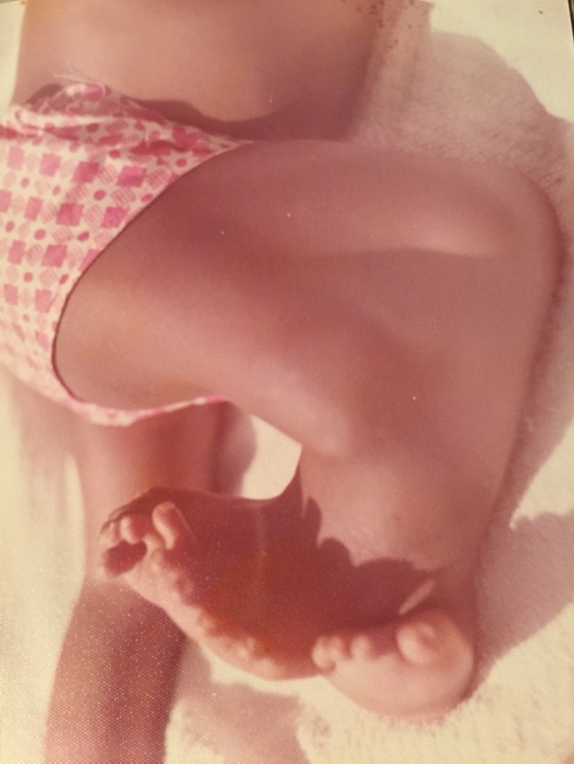
Triplication of a lower extremity at the HUEH in Haiti (1977).
The term “Caudal duplication syndrome” was first used in 1993. Other have used in recent debates the term “Caudal Split syndrome” due to the split seen in spite of a duplication. Caudal duplication syndrome is a rare congenital disorder in which various structures of the caudal region (embryonic cloaca and neural tube) exhibit a spectrum of abnormalities. The exact causes of the condition are not known but there are several theories implicating abnormal embryological development.
The diagnosis is often made during the prenatal development or in the second trimester because of abnormal scans. Conservative management to resection of the caudal segment to restore function and appearance can be offered. This is a rare congenital disorder with a prevalence of 1/100,000. As already discussed, less than two hundred cases have been reported around the world where structures derived from the embryonic cloaca and the notochord are duplicated.
The condition may come with a spectrum of Gastro-intestinal (GI), Urogenital (GU), Spinal and Limb anomalies. Anorectal malformations and duplication of the external genitalia, incomplete duplication of the lower spine and the spinal cord (diastematomyelia) or a partial fusion or duplication of the uterus, vagina, colon and bladder. Malformation of the spine may be seen at varying levels of neurological impairment, especially when spinal duplications are present with severe or mild neurological symptoms.
Other patients may present with an absent segment of the pelvis and a variety of symptoms like a duplication of colon, rectum, anus, urinary bladder, urethra, vagina and external genitalia. Patients with such syndrome can still be found asymptomatic and even may not be cosmetically or physiologically detrimental to the individual. Conditions like conjoined twins or incomplete twin separation.
We have seen that with a good prenatal examination, spinal malformations may be diagnosed or later with a Scan during the second trimester. If the anomaly is detected early on, psychological and surgical preparation for a C-section may prevent an obstructed labor. Some babies can even be asymptomatic or may develop complications during adulthood. It is also an extremely rare condition as well diagnosed through imaging modalities like CT-Scan.
Congenital duplication type “Sirenomelia” of a lower extremity, seen below as complete or incomplete. Until the year 2010, 26 cases were reported. And only 5 cases had feature of complete duplication. Maternal factors were linked to such pathology like Diabetes Mellitus, and the intake of teratogenic drugs. The “vestigial parasitic twin” is even a rarer condition, appearing like an individual with an extra appendage (limb). They are seen in 10% of all conjoined twins. Conjoint twins are also rare with a 25% survival rate.


Two recent babies born, one with an Imperforated anus and the other one with Sirenomelia syndrome in a hospital of our country, at Mirebalais, Haiti, during this time of political unrest.
Another case in a female infant presenting with an incomplete duplication of the left lower extremity. The mother suffered from Hypothyroidism but the pregnancy per-se was uneventful. On the posterior aspect of the infant’s left thigh, a tube-like skin tissue was noted. The left foot presented with an equinovarus deformity. Three extra toes were visible on the plantar aspect of the deformed foot as well as an amniotic band of skin. Plastic reconstruction of the foot has allowed her to be able to ambulate comfortably and run well by the age of three.
A case of Polymelia or congenital duplication or Surnumerary limbs represent an incomplete duplication of the lower extremity. Such a case has an extremely rare occurrence in humans but is quite frequent in animals. Only few cases have been reported in the literature. It is believed that there is an incomplete separation of monozygotic twins.

A little Hispanic infant boy, born with surnumerary lower limb buds which were non functional and surely were able to be removed with no effect on impairment. He has no consanguineous parents and no hereditary diseases or major dysmorphology. These underdeveloped surnumerary limbs (Polymelia) can be surgically removed and the histological analysis revealed the presence of diaphyseal endochondral ossification and cartilaginous epiphyseal growth plates maturing. Fatty tissue was the major component of the soft tissue replacing the muscle. Well vascularized parasitic limbs require surgical intervention. This type is unusual and rare form of duplication.

Limb development involves a large number of genes. One associated with the development of supernumerary limb is the “mouse mutant disorganization Ds gene” which is semi-dominant with variable penetrance for heterozygotes and a lethality in homozygotes. Almost ¾ of the heterozygotes have multiple defects but the remaining have single defects in which Polymelia is prominent. The limb development involves a precise regulation in relation to normal growth, but more research to understand the process is needed. Surgical resection of the accessory limb is always recommended at an early age in patients with supernumerary extremities.
Many theories advance an incomplete separation of the monozygotic twins as an etiological factor, associated with an abnormal adherence of the ectoderm to the endoderm during gastrulation or somatic and germ-line mutations in the developmental genes or a damage in the caudal cell mass. An “HOX gene” was also named leading to an abnormal proliferation of the caudal mesenchyme. At day 15 after fertilization, the notochord grows the primitive knot to form the notochord canal until resolution at day 20 to form the communication between the amniotic fluid and the Yolk sac (Kovalevsky canal). Soon the spinal canal will develop. This is where the problem is explained by an incomplete regression of the canal and the formation of fibrous bands into the spinal canal leading to the diastematomyelia. I would invite you to review this important passage of embryology. CT Studies can be used during pregnancy to try to elucidate the problem.

Skeletal image of a child with a parasitic limb.
One more case of a newborn baby at a hospital in Haiti last month (2024), born from a mother who has no apparent medical problems. She has received some pre-natal care sporadically but was unable to keep her regular follow-ups because of the turmoil in the country. She may have been a pre-diabetic. The baby was born in the rural area of the main hospital. There was no family history of similar congenital deformity, no known history of chronic illness in the mother, and she has never used any teratogenic drugs: A child born with a tail like congenital duplication of the lower extremity came to the world. Radiologic studies of poor quality, confirmed the duplication of the lower limb bones. Fatty tissue was the major component of the soft tissue which was replacing muscles covering the lower extremity long bones. This was an unusual case of Sirenomelia, very unusual and the rarest type of lower extremity duplication.

Radiographic study of the Sirenomelia case born in a local hospital in Haiti.
Sirenomelia is also known as “mermaid syndrome”. This is an extremely rare congenital syndrome of development of the lower spine and lower limbs. The affected baby is generally born with a partial or a complete fusion of the lower extremities (tail-like deformity) with often an external rotation of the lower extremity and feet. Often, such babies will present with genitourinary, gastrointestinal, lumbosacral spine and pelvis abnormalities with partial or complete fusion of the lower extremities.
Affected individuals may or may not have feet or the sacrum or the tailbone may be absent or partially absent. Imperforated anus., Spina bifida and heart malformations can also complicate the picture. Vascularization to the lower extremity is often inadequate. This syndrome although sporadic, is often fatal during the newborn period and the etiology is unknown.
Sirenomelia affects males more often than females in a ration 2.7 to 1. The incidence is in 1/60,000 to 100,000 births. This syndrome is seen in greater frequency among one of the identical twins (monozygotic twins) and can be accompanied with other complications cited above including duplication of the genital tract or other systems like the gastrointestinal or even the duplication of the spine.
Maxime Coles MD
Boca Raton FL (Revised December 2025)
References:
1- Rivera RE, Hootnick DR, Gingold AR, Levinsohn EM, Packard DS
“Anatomy of a duplicated human foot from a limb with fibular dimelia” Teratology. 1999 Nov;60(5):272-282.
2- Montalvo N, Redroban L, Espin VH. J Med Case Rep 2014 Jun ,12; 8:184. “Incomplete duplication of a lower extremity (Polymelia): a case report.
3- “Man with three legs: J Bone Joint Surg Br. 1952; 34-B. pp 630-635.
4- Mekonnen T: “Tail-like Congenital Duplication of Lower Extremity (Extra Leg Vestigial Parasitic Twin)”. Ethiop J Health Sci 2018 Jan 28(1): pp 103-107.
5- Roberts D J, Tabin C. The Genetics of Human Limb Development. Am J Hum Genet: 1994; 55:1-6.
6- Hanley EN, Stanitski CL: “Incomplete congenital supplication of a lower extremity. J Bone Joint Surg Am; 1980;62: pp 479-481.
7- McCredie J, Loewenthal: J Pathogenesis of congenital malformations, Am J Surg. 1978;135: pp 293-297.
8- Pang D, Dias MS, Abab-Barmada M. “Split cord malformation: A unified theory of embryogenesis for double spinal cord malformations”. Neurosurgery; 31 (3): pp 451-480.
9- Roberts D J, Tabin C : The Genetics of human limb development, Am J Hum Genet. 1994;55:1-6.
10- Hangley EN, Stanitski CL. : Incomplete congenital duplication of a lower extremity. J Bone Joint Surg Am. 1980;62:479-481.

1er JANVIER : JOUR DES HAÏTIENS
En ces temps de fêtes où les pensées sont tournées vers la Noël et les célébrations de fin d’année, je ne puis m’empêcher de penser à mon pays, Haïti. Je pense en particulier au 1er janvier, jour à jamais mémorable de notre histoire, et je renouvelle mes sentiments patriotiques à l’endroit de la horde d’esclaves qui, les pieds nus, déguenillés, ont lutté pour libérer ce pays des chaînes de l’esclavage. Ils ont forgé une nation indépendante, sans aide extérieure, dont nous autres, descendants de ces preux, devrions être tous fiers aujourd’hui.
Si pour d’autres peuples, traverser le Nouvel An représente un simple changement de calendrier, pour nous autres Haïtiens, peuple façonné dans la douleur, cette date a permis de marquer un changement de paradigme dans l’histoire de l’humanité.
Ce fut une rupture civilisationnelle, un choc mondial, où un système d’exploitation érigé en culture depuis des siècles, allait s’effondrer sous la détermination farouche de révoltés, qui avaient juré de vivre libres ou de mourir. Ils allaient non seulement réveiller la conscience universelle, mais aussi porter les puissants à reculer, face aux pratiques cruelles et inhumaines exercées depuis des siècles sur les Noirs, un peu partout en Amérique.
Le cérémoniel et le symbolisme d’un tel jour sont pour moi d’une portée sans égale. Car, jeune enfant, j’observais du matin au soir le rituel dont la journée était empreinte. Tout commençait la veille, lorsque les commerçants et les Madan Sara se joignaient aux paysans et aux paysannes arrivant des sections rurales, déferlaient sur les marchés locaux et remplissaient les trottoirs. Les articles les plus variés en provenance de la capitale, s’échangeaient contre des produits de la campagne. Des activités inaccoutumées prenaient place avec un va-et-vient plus fréquent que pendant le reste de l’année.
Très tard, le 31 décembre, les salons de coiffure étaient pleins à craquer. Les gens se préparaient, qui pour le bal du soir sous des tonnelles improvisées et des pistes de danse, qui pour des messes et des services religieux. Il y avait aussi des réveillons où la famille et les gens du quartier se rassemblaient pour chanter, boire et danser, à l’approche du Nouvel An. On répétait Good morning, Good morning à travers les rues de la ville. Et je veux croire que c’est peut-être là un vestige de l’occupation américaine. Car ce n’était pas une expression qu’on répétait souvent.
Tôt le matin, on s’agenouillait au pied du lit de papa et de maman pour leur dire « Bonne Année ! » À leur tour, ils nous souhaitaient de grandir en sagesse et en santé pour la nouvelle année. Malgré la température froide des montagnes du Centre, on allait prendre un bain à l’aube dans la rivière, pour éliminer la déveine de l’année finissante. On était tous vêtus d’habits neufs que maman nous avait confectionnés avec sa machine à coudre. : on faisait peau neuve pour recevoir prospérité et bonheur…
Une fois la soupe au giraumon servie de grand matin, on souhaitait la raisonnée à tout le voisinage et l’on espérait partout où nous posions nos pas, qu’on nous serve des liqueurs aromatiques et des tranches de gâteaux venus tout droit du four à kérosène de “Joe Bonbon”, un monsieur sage qui gagnait dignement sa vie en vendant des pâtés, des bonbons et des petits pains au beurre. De partout, d’autres enfants venaient eux aussi nous souhaiter une bonne année. Maman avait des petites pièces de monnaie - les fameuses étrennes ! - qu’elle distribuait à tous ceux qui nous rendaient visite. Les stations de radio diffusaient des chansons empreintes de couleur locale et de patriotisme pendant toute la journée. Le soir, des bandes à pied défilaient dans les rues en entonnant des chants patriotiques, avec des guitares, des banjos des tambours, des manoumbas et j’en passe… Quand enfin on allait se coucher, on avait un certain regret du temps qui n’allait plus être. Mais on apprenait que notre pays était indépendant. On apprenait Vertières, la Ravine à Couleuvres, tout ce qui forgeait notre Âme Haïtienne, et nous portions avec fierté le bicolore national.
Je ne sais plus comment les hommes et les femmes commémorent aujourd’hui cette date, si même ils y attachent encore une quelconque importance. Car beaucoup d’entre eux, devant la précarité de leur existence, doivent se demander à quoi tout ce sacrifice aura servi.
Moi je sais que mon pays est tout pour moi, qu’il n’y a rien au monde que je ne ferais pour garder pérenne le sacrifice de nos ancêtres…
À vous, nos fervents lecteurs et ferventes lectrices, nous souhaitons
Bonne et Joyeuse année 2026 !
Rony Jean-Mary, M.D.
Coral Springs, FL.
Le 31 décembre 2025


"Soup Joumou" is a traditional pumpkin soup symbolizing Freedom and Independence to all Haitians. A tradition dating from the Independence day which give to Claire Felicite Heureuse, epouse du "pere de la patrie" Empereur Jean Jacques Dessalines, credit for encouraging solidarity between Haitians, in offering such soup on New Year 's day while commemorating Haiti Independence day and our liberation from the rules of the The Colonial French in 1804.
It was a soup reserved only to the slave owners and UNESCO has classified it as part of the Cultural Heritage to Humanity. I invite you, to taste it with its content of vegetables, plantains, meat, pumpkin, pasta, spices etc. and appreciate the meaning of our day of indedpendence.
Maxime J-M Coles MD
LA FAMILE TAURIER: LA SUCCESSION
Robert, las de justifier son comportement, quitta le foyer familial pour aller vivre à la Martinique en compagnie d’Elvire, une native de cette île, son amante et aînée de dix ans. Il fit de son mieux pour adoucir l’aigreur de la séparation en l’annonçant et, surtout, en promettant de maintenir le contact avec la famille par des échanges épistolaires. Le premier-né tournant le dos au bercail, une idée au goût de l’absinthe qui perce un cratère de douleur à la poitrine d’une mère, surtout celle de Marcèle qui avait tout fait pour éviter un tel sort. Faire sa vie avec une prostituée ajouta du venin au breuvage déjà amer.
Ce développement l’affligea tant qu’elle resta alitée pendant une semaine entière. Joe, inquiet, vint la visiter. Il était seul et l’horloge indiqua quelques minutes passé midi. Il avait des documents dont il voulait discuter avec Marcèle. Il hésita à franchir le seuil de l’entrée de sa chambre, mais la servante l’encouragea à y aller. Il ne put retenir son admiration à la vue de Marcèle, dans son état naturel, sans maquillage, étendue sur un lit, les cheveux éparpillés. « Tu es comme Néfertiti » ! s’exclama-t-il. Un compliment spontané et habile, qui revêt la parure d’une simple flatterie ou le souffle d’un murmure aguicheur, augurant de la sensualité. Marcèle répondit avec un faible sourire, paraissant calme, mais sous le joug d’un galop furieux à la poitrine. Elle tendit la main, contente de recevoir une telle visite. Il baisa cette main tiède et la déposa légèrement sur le lit avec la même délicatesse réservée à un cristal Lalique.
Ce style élégant impressionnait toujours Marcèle. En revanche, elle se trouvait à un niveau psychologique bas, et chaque fretin de soutien pesa lourd et apporta une contribution énorme à son faisceau de motivations. Joe s’assit près du lit et obtint son accord pour quelques décisions administratives et sa signature sur des documents. —Je regrette que Robert ait pris cette décision. Je me demande si j’ai raté ma mission de le protéger comme son parrain. Un silence court et lourd suivit cette remarque. —Je me demande si, moi aussi, j’ai échoué en tant que mère. J’ai tout fait pour le protéger et l’encadrer.
Des larmes, tels des ruisseaux, coulaient sur chaque joue. Joe prit la main de Marcèle et la serra. Il offrit son mouchoir pour sécher les larmes. Elle hésita quelques secondes, mais l’accepta volontiers. « À quoi bon résister » ? Pensa-t-elle. Elle prit le mouchoir, essuya rapidement les larmes et le remit à Joe. Cette fois, il essuya les larmes plus complètement, avec une souplesse dans les gestes.
Cette attention spéciale amorça une ruée de larmes, non de pure amertume, mais mitigées de remerciement pour une amitié, de joie à l’idée d’un amant idéal et d’un peu de honte à la pensée de flirter avec un homme marié. Il embrassa sa main une fois de plus. —Tu peux m’embrasser si tu veux. Ces mots, exprimant un désir refoulé, une fois exprimés, ouvrirent une voie nouvelle, annoncèrent un engagement chargé de conséquences. Le baiser partagé avait le goût salé des larmes, exprimait une attraction mutuelle en cachette, explosait en intensité surprenante des deux côtés, adoucissait la douleur pénible de Marcèle, allumait un brasier chez Joe. En guise de femme désespérée, débile, elle se transforma en une déesse d’amour, ingambe et vivifiée. L’inévitable liaison amoureuse finalement prit naissance en dépit d’un long tissage truffé d’hésitations, de pruderie, mais jamais rejeté, restant à fleur de peau, prêt au débordement au moment propice.
Ce moment arriva soudainement. La réticence s’évapora et, ce faisant, franchit une barrière en laissant une autre en arrière, et alla d’une route ensoleillée, mais parsemée de principes rigides, à une autre ensoleillée par intermittence, avec des principes flous. Chaque route empruntée imposait un prix d’entrée : l’isolement dans le premier cas et la compagnie dans le deuxième, même si la route était enrubannée du titre « liaison dangereuse ».
Ce détour, vieux comme le monde, a toujours été l'objet de maintes élégies et de descriptions par les troubadours ou les bardes. Tantôt, on le décrit comme un duel entre le moral et la morale, pour dire que commettre ce péché tonifie tant le moral qu’on s’en fout de la morale. Parfois, l’allure de cet écart, qui aiguise la passion pour le fruit défendu, peint le récit de l’accro à la fleur du mal.
Sous la plume de l’auteur, le récit de cet écart prend une tournure prophétique. Baudelaire parle de la dame créole comme s’il admirait Marcèle : Une dame créole aux charmes ignorés… Grande et svelte en marchant comme une chasseresse… Joe, coureur de jupons certes, trouva en Marcèle non seulement le fruit défendu si difficile à cueillir, mais aussi une fleur dotée d’un magnétisme plus puissant qu’un aimant et d’un suc singulier qui enivre, captive, excite et imprègne un parfum aguicheur. Aussi bien qu’une fleur pour laquelle il était prêt à commettre une folie. Il savait bien que l’adultère sillonnait avec une sœur jumelle du nom de scandale, qui s’amusait à souiller la réputation lorsque démasquée.
Le même moustique avait piqué Joe et Marcèle et, en dépit de, ou à cause de, son statut légal, leur liaison revêtait la parure d’une idylle osée mais sincère où chacun risquait beaucoup, mais s’engageait volontairement. La réaction immédiate chez Marcèle fut une infusion d’énergie et une amélioration de sa perspective sur la vie. La décision de Robert, hélas, brûlait toujours le cœur, mais la paralysie avait disparu. Le retour aux activités professionnelles lui mit du baume au cœur. La présence de Joe dans sa vie intime ajouta une autre dimension et la rendit plus complexe et épicée. Joe agrémentait la vie de Marcèle d’une part et l’aggravait d’autre part, car elle devait s’inquiéter de Gigie, toujours jalouse et soupçonneuse, et de sa conscience, qui, de temps en temps, la narguait.
Toutes ces angoisses disparaissaient en présence de Joe, de sa voix, de son étreinte, même s’il n’était pas un amant parfait, car il souffrait d’une éjaculation prématurée. Il doublait les câlineries pour combler sa faille mécanique. Il remuait assez les points sensibles de Marcèle pour la satisfaire sur les plans sensuel et émotionnel. La clarté des jours qu’il m’offre sert de contrepoids aux heures de pénombre que j’endure seule, se disait-elle pour justifier cette liaison.
Cette liaison, scandaleuse du point de vue de la vertu, procurait une satisfaction comparable à celle d’une vue d’un paysage bucolique ou à celle d’une écoute d’un solo de rossignol. La seule présence de l’autre, même sans contact physique, insuffla aux poumons un air plus léger et à l’esprit une sève qui étiola l’amertume, et permit à la joie de s’épanouir. Ils se gardèrent d’échanger des notes d’amour pour éviter aucune interception par d’autres yeux curieux. Les rencontres se déroulaient de manière aléatoire et très créative. Cette liaison secrète et intense, dura trois ans. *******
Les Entreprises Taurier, SA, opéraient en vitesse de croisière après le départ anticipé de Robert, sous la direction de Marcèle, de Joe et de ses enfants, Ginou, Amélia et Albert. La liaison entre Marcèle et Joe était soit soupçonnée, soit tolérée par les enfants, puisqu’ils aimaient tous Joe, un être affable et attentif aux besoins des autres. Le volume des affaires croissait d’année en année. En mai 1842, un tremblement de terre frappa la ville du Cap, laissant des milliers de victimes et de pertes immobilières. Le siège social fut rasé par ce désastre naturel, ensevelissant Marcèle, Joe, Ginou et Amélia. Sous les décombres, Marcèle gisait sur la poitrine de Joe. Albert était le seul survivant de ce cataclysme. Il était un jeune marié, ayant épousé, depuis six mois, une nièce du baron de Vastey, Micheline Roberte Lurline Catherine Jeanne de Vastey. Elle insistait sur Micheline et non sur le tralala de tous ces prénoms. Son apparence moyenne, grassouillette, courte en hauteur, de teint de pêche, de poitrine peu prononcée, démunie de séant protubérant, trompait les gens. En effet, une simple conversation avec elle révélerait une intello, sans suffisance, mais passionnée par la justice sociale, comme son oncle. Les noces étaient plutôt simples parce qu’elle esquivait l’extravagance, préférant l’élégance raffinée.
Les convives ne comprenaient que les proches amis et les parents. Un jeune garçon âgé de dix ans, qui deviendra plus tard célèbre, Demesvar Delorme, participa au cortège religieux en tant qu’enfant d’honneur. En Micheline, Albert découvrit un esprit brillant, une compagne aux fémininités riches, mais subtilement cachées. Leurs échanges retenaient la saveur de terrain fertile pour la formulation d’idées progressistes.
En revanche, leurs sessions intimes au lit captaient le cachet d’une expression maximale de passion sensuelle. Le tremblement de terre fut un tournant de portée existentielle. La perte de Joe fut un rude coup pour les Entreprises Taurier, SA. La perte de sa mère et de sa fratrie dérouta Albert. Toutes choses confondues, il serait difficile pour Albert de recommencer. Micheline, pieuse catholique, et adhérente à la philosophie sociale de son oncle, n’appréciait guère ce genre de négoce « qui prenait avantage des vices des gens ». La disparition de l’immeuble et de ses proches « représentait un mauvais augure » pour la perspective de Micheline, qui ne cessa de le lui rappeler. Amoureux fou, Albert traitait un désir de sa femme comme une consigne. « Seul héritier, tu dois prendre le temps qu’il faut pour orienter ta carrière. Tu es trop intelligent pour passer ton temps dans un métier qui n’offre pas de défi mental. » Albert avait assez d’épargne en banque et il partit en France avec Michèle pour obtenir un diplôme en pédagogie en tant que couple. Ils étudièrent ensemble et reçurent le diplôme avec la marque d’excellence. Ils retournèrent en terre natale après le règne de Boyer, décidés à rouvrir l’école fermée sous ses ordres.
Ainsi, cinq ans après le séisme, l’institution « École de Vastey Taurier » prit naissance avec la distinction de la première jusqu’à la philo et une faculté nationale et internationale, incluant aussi des professeurs de l’Angleterre. Les époux voulaient rééditer l’exemple de Christophe et concevoir un enseignement de première classe ouvert à tous. Des bourses d’études étaient disponibles pour les élèves brillants, mais pauvres. La devise de l’établissement : « L’instruction est sacrée, c’est un droit universel. » Du jour au lendemain, cette école devint une institution et le lieu de fréquentation pour une bonne formation académique.
Naturellement, Demesvar, brillant élève en tous les sujets, était parmi les premiers étudiants. Albert et Micheline s’efforçaient de diffuser la notion de justice sociale et de civisme, une activité qui attirait des adeptes, donc des libéraux sociaux, ainsi que des ennemis de l’aile conservatrice, qui se sentaient ciblés par les critiques. Malgré tout, les deux ailes s’accordaient sur le mérite de cette méthode d’instruction, qui reposait sur une rigueur de premier ordre. Beaucoup de nos illustres citoyens avaient bénéficié de ce système. Micheline devançait son époque de loin. Dans ses cours d’histoire, elle glorifiait la participation des femmes aux affaires publiques. Ainsi, elle passait en revue les reines de l’histoire ancienne, telles que Cléopâtre, Néfertiti, Saba, pour aboutir aux combattantes récentes qui avaient participé à notre guerre d’indépendance. Elles citaient avec aisance des noms inconnus ou peu connus, ainsi que d’autres, connus mais relégués à la poubelle de l’histoire. Elle prenait un plaisir particulier à mentionner le sort indicible réservé à Marie-Claire Heureuse Félicité Bonheur, la veuve toujours vivante de Dessalines, patriote ignoré et mis à l’index à cette époque-là. Au fait, ce sujet était relégué au rang de tabou. De tels plaidoyers suscitaient des remous et écarquillaient des paupières qui ne toléraient point ce genre de discours « à tendance séditieuse » ou « mettant en jeu la sûreté de l’État ». Ce genre de myopie ou d’intolérance ne date point de notre vivant, mais remonte aux siècles précédents. Chaque César appréciait l’instruction pour la maîtrise du calcul et de la syntaxe compliquée du français, mais regimbait à l’analyse ficelée des problèmes sociaux.
La liberté d’expression avait ses limites et nul, surtout nulle, ne devrait les dépasser. Le machisme ambiant n’acceptait pas de prêche émanant d’une corde vocale féminine. Son origine, sa place sociale et sa collaboration avec le clergé protégeaient Micheline, mais chaque discours tendanciel frôlait la frontière de la lune de miel avec les autorités. Elle avait assez de perspicacité pour espacer ses discours et se faire oublier entre-temps. Néanmoins, la cible sur son front était indélébile et le risque de bras de fer, ou simplement d’ennui, avec César devint inéluctable. Le genre de la personne, le genre du discours tenu formèrent une dualité indigeste, au minimum. En cas de nausée, le principe « Aux grands maux, les grands remèdes » s’appliquerait. C’est ainsi qu’elle reçut la visite d’un capitaine. « Madame Taurier, vous n’êtes pas sans savoir le sort de votre feu beau-père. Cette méthode de punition est toujours en vigueur en bonne et due forme. Il n’y aura pas d’autre avertissement. » Si elle voulait rester en vie, ses choix étaient minces : se taire ou s’exiler en France. Si elle voulait former des citoyens et citoyennes conséquents, elle ne pourrait l’accomplir que de son vivant. Confrontée au même imbroglio que sa belle-mère quelques décennies plus tôt, elle aboutit à la même conclusion, nul besoin de se cogner la tête contre le mur, elle dut adopter la solution vieille de millénaire, l’astuce. Les fables n’ont pas été inventées par La Fontaine. Il a littéralement calqué l’œuvre d’Ésope.
Du jour au lendemain, elle freina sa disposition à la critique franche et directe, sans filtre, et se débarrassa de la confrontation. Au cours de cinq ans de mariage, Micheline et Albert eurent trois enfants. L’établissement scolaire continua son épanouissement. Ce succès, malheureusement, suscita de la jalousie au sein d’un secteur qui n’aimait ni les Taurier ni les de Vastey en raison de leur tendance libérale. Ce secteur était plutôt hétéroclite et sa composition variait entre les autorités qui gardaient leur pouls sur la société pour le maintien du statu quo, des affairistes opportunistes qui convoitaient l’occasion de lancer leur propre établissement et d’autres personnes agissant avec la mentalité de crabes. La participation de Micheline aux affaires de l’établissement diminua une fois devenue mère. Un choix volontaire aussi bien qu’obligatoire. Le style d’Albert, plus sobre et plus pragmatique, émoussait les critiques de front, mais son association avec Demesvar Delorme et leur participation au Parti Libéral devinrent problématiques pour César, dans ce cas, le président Geffrard. Le ton de l’intolérance, débuté depuis la nuit des temps dans cette nouvelle république, avait fait école. Le Cap, au fil des ans, est devenu la source de maintes révoltes politiques dans l’histoire du pays. Par définition, ses notables qui y participèrent seraient soit applaudis en cas de victoire, soit rejetés en cas de défaite.
L’école de Vastey-Taurier avait formé de nombreux de ses leaders, qui jouaient un rôle important sur l’échiquier. Micheline et Albert ne cachèrent point leur préférence idéologique. Geffrard qui signa le Concordat avec le Vatican profita de l’échec de l’insurrection à laquelle prirent part les Delorme, les Taurier et autres pour fermer l’établissement. Le prétexte était similaire à celui de Boyer : « Nid de formation de sédition. » Geffrard voulait des enseignants pliables, apolitiques que les religieux français pourvoyaient, venus de la Bretagne. Le concept « Les têtes bien pleines » plutôt que « Les têtes bien faites » lui plut. Les enfants de la famille Taurier étaient adolescents, en 1866. (à suivre).
Reynald Altéma, MD
Port Ste Lucie, FL

From Descartes to Aquin: The Reason and the Heart of a Haitian Diaspora
I. Two Ways of Understanding the World
“There are two ways to understand the world,” my friend the philosopher Dr. Frantz Bataille once told me, “The Cartesian way: patient and rational, and the Einsteinian way: spontaneous and instinctive.” The first dissects reality; the second feels it. One seeks truth through logic, the other discovers it through the energy of life itself. All human comedy plays out between these two poles: the brain and the heart, rule and emotion.
I was born in Port-au-Prince and spent my vacations in Aquin, that small Haitian town where the sea listens to the confidences of the mountains. There, before learning Euclid’s geometry, one learns to read the wind. Before reasoning like Descartes, one dances as if the drums were beating at the center of the world. I grew up, through my adolescence, in that country of instinct and intuition, where logic is not written on paper but inscribed in the body.
And yet, life led me across three inner continents: Haiti, the land of feeling; Mexico, the land of mystery; and the United States, the land of method. Each revealed to me a different face of human reason, three accents of a single melody: the relationship between man and the universe, between calculation and emotion, formula and devotion.
II. The Realm of Descartes: Calculation and Control
When I arrived in New York after my medical studies at the Universidad Nacional Autónoma de México (UNAM), I met Descartes, not in person, of course, but in spirit. In American university hospitals, everything is codified: schedules, protocols, doses, diagnoses. Every gesture follows a procedure; a chart must justify every idea. The American spirit seemed to me a symphony of rational efficiency. The watch is not just an accessory: it is a moral tool. Time is money, and lateness, a venial sin.
One night on duty at Lincoln Hospital in the Bronx, I tried to improvise a shortcut during a long and difficult delivery. A nurse stopped me short: “Doctor, that’s not in the protocol.” I understood then that in Descartes’ realm, logic prevails over instinct, even when life itself is pounding at the door of a delivery room. That rigor taught me precision and discipline. I learned that reason, well measured, can save lives. Americans do not believe in fate; they believe in checklists. And sometimes, that simple piece of paper keeps death at bay.
III. Haiti: The Logic of the Heart
In my memories of Haiti, medicine never had that mathematical face. At home, many heal first through words, through trust, through the warmth of a hand. My uncle Prévent, a houngan from Zangle, a rural section near Aquin, once told me: “Lè ou tande kriye, pa chèche doktè, chèche kè.” (“When you hear someone crying, don’t look for a doctor, look for a heart.”) That is the “Einsteinian” reasoning my friend Frantz spoke of: an intelligence of energy rather than of formulas.
Einstein said that energy, E = mc², is mass transformed by light in motion, as if every particle of matter contained a promise of a spark. Haiti understood that equation in its own way: when sunlight touches a farmer’s skin, it is already a form of knowledge. When a grandmother improvises a remedy from leaves and prayer, it is a laboratory experiment without a microscope but full of faith. In Haiti, one does not calculate, one feels. This survival logic, forged in chaos and beauty, has its excesses; sometimes emotion replaces analysis. But it preserves in man his warmth, his dignity, and that unique ability to smile in the face of the unpredictable.
IV. Mexico: The Wisdom of the Balance
Between these two worlds, I discovered a third: Mexico. I arrived there as a young medical student, curious, hungry for knowledge, and tacos al pastor. I spent eight years there, which that taught me that logic only has meaning if it can converse with the dead.
Each November 2, during El Día de los Muertos (the Day of the Dead), Mexico becomes a vast living painting. Streets burst with color, homes are covered with flowers, and music rises even in cemeteries. I still remember my friends Chucho, El Chachis, El Chirrisco, and El Pollo building bright altars, lighting candles for their departed loved ones, and offering them mezcal. It was neither a day of sadness nor a macabre celebration like Halloween, but a moment of dialogue with time, a joyful celebration of memory.
Mexicans taught me that one can be rational and mystical at once, scientist and poet in a single breath. At UNAM’s medical school, we would dissect the human body with method in the morning, and in the evening, not far from the Zócalo, dance on the ruins of ancient civilizations. Perhaps that is the true reconciliation between Descartes and Einstein, to understand that science can stand beside death without losing its joy. In Mexico, I learned smiling gravity, a logic that still knows how to sing.
V. Louisiana: Creole America
Then came Lafayette, Louisiana, where I practiced medicine until my retirement. Ah, Louisiana! My American surprise: I found Haiti without being there. In New Orleans, the cemeteries resemble those of Port-au-Prince, the churches smell of incense and vodou, and gumbo warms the soul like a Creole kalalou soup.
I saw Black American friends, Boudreaux, Thibodeaux, and others, pray, dance, and laugh like my compatriots from Aquin. Beneath the Protestant façade, there survived an African memory, an intuitive wisdom. Again, instinct mingled with Western rigor: one could speak of God with passion and of biology with precision. I remember an old Creole colleague once told me, “Doc, down here we don’t think, we feel first.” That was Einstein without knowing it.
This Louisiana, half reason and half mystery, reconciled me with the idea that culture is a nervous system: it reacts, vibrates, learns. I understood that science, to remain truly human, must sometimes listen to the heartbeat before the machine’s beep. In Haiti, my patients used to say that I examine with “two hands”: one scientific, to hear the body, and one mystical, to understand the soul. Perhaps that is Creole medicine: one prescription for the body and a wink for the heavens.
VI. Weston: Florida and Perspective
When I settled in Weston, Florida, I discovered a miniature social laboratory. In my neighborhood live precise and passionate New York Jews, exiled Cubans still burning with nostalgia, elegant and expressive Venezuelans, warm and resourceful Colombians, dreamy Haitians, and methodical Americans — a mosaic of accents, cuisines, music, and, at times, well-ordered contradictions.
One morning, while playing tennis, I heard an American neighbor joking: “My wife is so logical she schedules our arguments.” I thought to myself, that is Cartesian perfection, served with Floridian humor. In Weston, everything is planned: the sidewalks, the palm trees, the watering hours. But sometimes, this perfection lacks rhythm. Then I find myself missing the living disorder of Aquin, where dogs bark at the moon, children play barefoot soccer in the dust, and a simple thunderstorm can interrupt philosophy. America taught me order; Haiti taught me rhythm; Mexico taught me the right cadence for happiness.
VII. Peoples and Equations
I often think that Cartesian people - those who plan, codify, analyze - have conquered the material world. But the Einsteinian people - those who improvise, feel, and invent - hold the key to the living world. One builds the rockets; the other reminds us that before taking off, we must first look up at the sky.
Haiti, Mexico, New York, and Louisiana - four laboratories of the same alchemy. Four places where I saw reason and instinct coexist, method and magic intertwine. In New York, rigor reigns, but the energy of Harlem or the Bronx reminds you that a beat of jazz or salsa can disarm any equation. In Mexico, logic glows with mystery; in Louisiana, science still dances with vodou; and in Haiti, life itself becomes an improvisation guided by faith.
Einstein once said, “Imagination is more important than knowledge.” Perhaps he meant that the light of knowledge truly shines only when the heart allows itself to be warmed.
VIII. From Reason to Rhythm
I have listened to women, to people, to cultures. Everywhere I heard the same pulse: the need to understand, to explain, to survive. But the paths differ. The Cartesian analyzes his pulse, the Einsteinian listens to his heart. One speaks of acid-base balance, the other of mood and energy. Yet both seek the same thing: inner peace in an expanding universe.
In American hospitals, the glow of screens sometimes replaces the light of the eyes. In Haiti, it is the opposite; electricity may be scarce, but human sparks are not. In Mexico, candles are lit for the dead; in Florida, for romantic dinners. Each flame tells a different relationship with time.
IX. A Prayer for Reconciliation
I dream of a world where Descartes would learn to dance, and Einstein would keep an agenda, where the rigor of medical protocol would join the tenderness of the human heart, and where science would recognize that intuition is also a form of knowledge. And where the Haitian would no longer be seen as irrational, but as the bearer of another kind of logic: the logic of life, of courage, of daily faith.
Perhaps Haiti, despite its apparent poverty, holds a wealth that “developed” nations have forgotten: the power to turn instinct into poetry, disaster into energy, fatigue into laughter. Each time a child laughs among ruins, it is already a form of rebirth; each time a mother improvises a meal out of almost nothing, it is creative economy; each time a young man sculpts a dream out of wood or scrap metal, it is a lesson in hope. Yes, Haiti remains wounded but alive - a country where the heart beats louder than statistics, where light always finds its way.
X. Between Reason and the Heart
Life, after all, is not a blackboard covered in equations. It is a field of energy where each human being seeks balance between reason and heart. I believe that it is ultimate wisdom to know when to think and when to feel.
Descartes said, “I think, therefore I am.” Einstein might have replied, “I feel, therefore I become.” Between the two, I have lived my life. From the sea of Aquin to the skyscrapers of New York, from Mexican altars to sterile American hospital corridors, I learned that truth lies neither in formula nor in faith, but in the steady rhythm of the human heart - the universal engine that no theory can exhaust. And if one day I were asked what I have understood after all these years observing humankind, I would simply say: Reason enlightens, but only energy gives life.
For the most enduring light is not that of laboratories or screens, but the one that shines in the eyes of people who refuse to give up. Haiti is living proof. Despite all trials, it keeps its ability to laugh amid chaos, to hope where all seems lost, and to reinvent life each morning as if it were the first time. The world may need its engineers and equations, but it also needs what we carry in our hearts: light born from pain, a strength woven from tenderness. That may be the true Haitian genius: to turn every obstacle into an opportunity, every wound into a song. And when dawn rises over Aquin, Port-au-Prince, or any corner of that battered but standing country, I tell myself that Haiti is not defined by what it endures, but by what it continues to hope for.
Aldy Castor, MD
Weston, Florida
November 2025


Projet : Institut National d’Oncologie (Haiti)
1. Contexte et justification
Le cancer représente aujourd’hui une des principales causes de mortalité en Haïti, après les maladies infectieuses et cardiovasculaires. Selon les estimations de l’Organisation Panaméricaine de la Santé (OPS), plus de 6 000 nouveaux cas de cancer surviennent chaque année en Haïti, dont la majorité sont diagnostiqués à un stade avancé faute d’infrastructures adaptées, de dépistage précoce et de services spécialisés.
Haïti ne dispose actuellement d’aucun centre national de cancérologie. Les soins oncologiques sont fragmentés, concentrés dans quelques hôpitaux privés ou missions médicales temporaires. Cette réalité accentue les inégalités d’accès aux soins et alourdit le fardeau socioéconomique pour les familles.
La création d’un Institut National de Cancérologie (INC-Haïti) constitue donc une urgence de santé publique, mais aussi un signal fort de modernisation du système de santé. Cet institut serait à la fois :
Un centre de référence clinique et scientifique national,
Un pôle de formation et de recherche,
Un espace de coopération régionale et internationale en matière d’oncologie.
2. Vision et objectifs
Vision :Établir en Haïti un institut de cancérologie moderne, accessible, intégré au système universitaire et hospitalier public, capable de prévenir, diagnostiquer, traiter et étudier les cancers selon les standards internationaux.
Objectifs spécifiques :
1. Offrir des services cliniques complets de dépistage, diagnostic, radiothérapie, chimiothérapie et suivi.
2. Développer un programme national de prévention et de sensibilisation communautaire.
3. Former des spécialistes haïtiens en oncologie, radio-oncologie, pathologie et soins palliatifs.
4. Promouvoir la recherche clinique et épidémiologique sur les cancers les plus fréquents en Haïti.
5. Établir des partenariats techniques internationaux pour le transfert de technologie et le renforcement de capacités.
3. Ancrage institutionnel et modèle de gouvernance
L’Institut serait créé par arrêté présidentiel comme institution publique à caractère scientifique et hospitalier, sous la tutelle :
Du Ministère de la Santé Publique et de la Population (MSPP),
4. Organigramme suggéré :
Un projet d’architecture modulaire est recommandé pour permettre :
Une première phase clinique (consultation, dépistage, chimiothérapie)
Une deuxième phase (radiothérapie, hospitalisation spécialisée)
Une troisième phase (laboratoire de recherche, centre de formation, registre national du cancer).
5. Partenariats stratégiques et coopération internationale
Pour garantir la viabilité et la qualité du projet, un jumelage est envisagé avec un ou plusieurs instituts de référence internationales, afin d’assurer le transfert de compétences, la formation du personnel et la durabilité technologique du futur Institut National de Cancérologie.
Les partenariats potentiels incluent avec plusieurs acteurs nationaux et internationaux déjà en grande partie identifies à titre d’exemple et non limites
Mexique : Instituto Nacional de Cancerología (INCan) — partenaire stratégique pour la planification hospitalière, la formation d’oncologues et la coopération Sud-Sud.
Cuba : Instituto Nacional de Oncología y Radiobiología (INOR) — modèle de système intégré de prévention, de recherche et de traitement, adapté aux contextes à ressources limitées.
États-Unis : MD Anderson Cancer Center ou autres institutions académiques partenaires, notamment à travers la diaspora médicale haïtienne, pour un appui technique, la formation continue et la participation à des protocoles internationaux.
Canada : Université de Montréal / McGill Cancer Institute — pour la recherche clinique, la formation francophone et la mise en place de programmes de master en oncologie et radiothérapie.
Taïwan : Taiwan Cancer Center (TCC) et National Taiwan University Hospital (NTUH) — reconnus pour leur excellence en oncologie de précision, radiothérapie avancée, imagerie numérique et gestion hospitalière moderne.
Ces partenariats permettraient :
La formation de techniciens haïtiens en radiothérapie, imagerie médicale et biotechnologie
Le transfert de technologies pour l’équipement du futur pavillon de cancérologie
L’appui à la mise en place d’un registre électronique du cancer et d’une base de données épidémiologique nationale ;
Le développement conjoint d’un programme de télé oncologie et d’assistance robotisée, tirant parti des expériences externes et d’intelligence artificielle médicale.
Ces collaborations bilatérales positionneraient l’Institut haïtien comme acteur régional de coopération sanitaire, combinant expertise latino-américaine, innovation technologiques et solidarité de la diaspora.
6. Financement et durabilité
Le financement du projet pourrait combiner plusieurs sources :
1. Appui budgétaire de l’État haïtien,
2. Contributions multilatérales : OPS/OMS, BID, Banque mondiale.
3. Coopération bilatérale : Mexique, Cuba, États-Unis, Canada, Union européenne et d Universites etrangeres.
4. Fondation nationale de lutte contre le cancer, issue de la diaspora et du secteur privé.
5. Mécanismes innovants : télé-oncologie, partenariats public-privé, dons d’équipements, bourses de formation.
7. Plan de mise en œuvre (phases)
Phase | Durée | Objectifs clés |
Phase 1 : Étude de faisabilité et conception | Diagnostic national, plan directeur, partenariats, financement initial | |
Phase 2 : Construction et équipement | Travaux, installation, recrutement, formation | |
Phase 3 : Démarrage pilote | Ouverture de services de dépistage et de chimiothérapie | |
Phase 4 : Expansion complète | Radiothérapie, recherche, registre national, coopération régionale |
8. Résultats attendus et impact
Réduction de la mortalité par cancer grâce à un accès élargi au diagnostic et au traitement.
Création d’un réseau national d’oncologie intégrant les départements.
Développement d’un registre national du cancer pour orienter les politiques publiques.
Renforcement des capacités nationales dans les disciplines médicales et paramédicales.
Rayonnement international d’Haïti dans la coopération médicale régionale.
9. Conclusion
La création d’un Institut National de Cancérologie en Haïti constituerait un acte fondateur pour le système de santé du pays.
Ce projet transcende les clivages politiques : il s’agit d’un investissement dans la vie, la science et la dignité humaine.
Avec un appui institutionnel fort de l Etat des partenaires techniques et financiers. Haïti pourrait enfin se doter d’une infrastructure capable de répondre à l’un des défis sanitaires majeurs du XXIe siècle.
Claude Surena MD
Port-au-Prince, Haiti

Organ Trafficking in Haiti: What Does Science Really Say? A diaspora in Haiti
By Aldy Castor, MD
December 15, 2025
An organ is not an object: it is living tissue
In the popular imagination, shaped by movies and sometimes by rumor, an organ can be removed, placed in a cooler, transported across borders and battered roads, and then quietly implanted elsewhere, like a spare part.
Medical reality is very different. An organ is not a spare part. It is living, fragile tissue that depends on continuous blood circulation. The moment that circulation stops, the countdown begins. This critical period has
a name: ischemic time. In simple terms, it is the amount of time an organ can survive outside the body before it is irreversibly damaged. And that time is short. Very short.
Even when preserved on ice, even when immersed in specialized medical solutions, this window cannot be negotiated. Human biology obeys neither weapons, nor money, nor magic.
The key factor: ischemic time
To give a clear and accessible picture, without medical jargon, once an organ is removed from the body:
· The heart and lungs survive only 4 to 6 hours.
· The liver and pancreas last approximately 12 to 18 hours.
· The intestine is even more fragile.
· Only the kidneys are more resilient, lasting 24 to 36 hours.
And here is a fundamental point that is often overlooked: the clock starts ticking at the exact moment of surgical removal. Not upon arrival at the hospital. Not at the border. Not at the airport. In other words, an organ removed at 8:00 a.m. in Port-au-Prince does not patiently wait for a flight the next day. By noon, by 2:00 p.m., by 6:00 p.m., deterioration is already underway. Beyond a certain threshold, even the best surgeon in the world can do nothing. Science can be harsh. It remains faithful to its laws.
Why the most common scenarios do not hold up scientifically
Over the course of my career, I have seen entire teams mobilize urgently for transplants scheduled down to the minute. Surgeons, anesthesiologists, nurses, biologists, transport coordinators, everything is coordinated like a military operation, without guns, but with strict protocols. Transplantable organ procurement requires:
· a perfectly sterile operating room,
· highly specialized surgeons,
· specific preservation solutions, costly and regulated,
· immediate transport logistics,
· and above all, a recipient already identified, compatible, and fully prepared.
So, let us ask the question plainly, without evasion: can an armed group operating through violence, without a functional hospital, without a blood bank, without safe anesthesia, harvest transplantable organs? The scientific answer is clear: no.
Brutal violence, summary executions, prolonged kidnappings, and chaotic movement make the transplantation of vital organs, such as the heart, liver, or lungs, biologically impossible. Unless one imagines an armed gang simultaneously running a certified operating room, a laboratory for specialized biological testing, a medical cold chain, and an airplane or helicopter ready for immediate takeoff. Let us agree that this belongs more to cinema than to Haitian reality.
What is theoretically possible, but extremely limited
From a strict medical standpoint, only kidneys have sufficient resilience to be transported over a somewhat longer period. But even then, the conditions are extremely strict. This would require:
· immediate, expertly performed surgical removal,
· specialized medical equipment,
· appropriate preservation solutions,
· rapid access to an international transport chain,
· and prior coordination with a transplant team abroad.
In other words, this is not street level banditry. It is highly organized transnational medical crime, involving:
· corrupt health professionals,
· logistical accomplices,
· falsified documents,
· and traceable financial transactions.
Such a system always leaves evidence. It does not thrive in total disorder. On the contrary, it relies on a cold, methodical, and detectable organization.
Why do these rumors take root in Haiti?
It would be dishonest and dangerous to dismiss these fears outright. In Haiti, rumors often emerge where:
· the state is absent,
· justice is slow,
· investigations are incomplete,
· and families are left without answers.
When a body is found without a clear explanation, imagination fills the void. And sometimes, imagination moves faster than truth. The diaspora, of which I am a part, cannot remain a mere spectator. It has a particular responsibility here. Not to deny the suffering of our fellow citizens, nor to inflame fear, but to help illuminate the debate with rigor, humility, and pedagogy. To say what science allows, and above all, what it does not.
The danger of sensationalism
Spreading unfounded accusations may feel mobilizing in the short term. But in the medium and long term, it:
· profoundly weakens the country,
· undermines the credibility of the state,
· complicates the work of judicial authorities,
· unnecessarily alarms international partners,
· discourages humanitarian aid,
· and diverts attention from real security, health, and social emergencies.
Fear may alert. It never protects a nation. Clarity does.
Essential takeaways: what to remember
ü Not all organs can be transplanted after violent removal. Most become unusable within hours.
ü Ischemic time is a non-negotiable biological limit. Neither money, nor weapons, nor corruption can override it.
ü Transplantation requires complex and traceable medical logistics. It does not happen in chaos.
ü Rumors thrive where reliable information is lacking. They can cause more damage than truth.
ü Combating violence requires serious investigations, not sensational speculation.
Science as a tool of sovereignty
Haiti is going through a major crisis, perhaps one of the most severe in its contemporary history. In this context, we more than ever need public decisions, political discourse, and security strategies grounded in verifiable realities, not in spectacular narratives
Reintroducing science into public debate does not mean denying the violence our fellow citizens endure. It means refusing to let that violence be compounded by misinformation. It also means reaffirming that knowledge, rigor, and critical thinking are integral components of national sovereignty.
A measured, but firm call
To our leaders, political officials, community figures, and civil society actors: Let us fight crime with serious investigations. Let us fight fear with facts. Let us fight rumors with information.
Haiti needs security, yes. But it needs truth, discernment, and collective responsibility just as much. Science does not solve everything. But without it, we risk fighting ghosts, while the real problems continue to thrive.
Aldy Castor MD
Weston FL
November 2025

BONHEUR INTROUVABLE
Par les bois, les sources, les chutes d’eau et les forêts,
Par la foule immense des grands jours,
Dans la solitude de ma chaumière,
Je t’ai longtemps cherché,
Longuement soupiré après toi.
Et jamais, je n’ai su te trouver.
Je t’ai vu courir vers moi,
Te blottir contre mon corps ;
Comme un doux zéphyr sur ma peau,
Je t’ai senti effleurer mon visage,
Livrer à mon âme inquiète ton parfum d’espoir.
Mais quand j’ai ouvert les yeux pour t’étreindre
Tu n’étais qu’une ombre,
Un rêve que le jour allait vite dissiper.
Je te croyais dans des palais somptueux,
Offrant aux souverains de la terre
Des festins délictueux.
En les regardant cependant,
Leur coeur semblait aussi chagriné que le mien.
Malgré tout le confort, malgré tous les appâts,
iIs étaient plus malheureux que jamais.
Je te voyais accroché au mur
D’une quelconque église,
Caché dans une mosquée,
Un temple ou un péristyle.
Comme si là, on savait tout, on pouvait tout ;
Comme si là, ils avaient le talisman
Dévoilant tous les mystères.
Mais tu n’y étais pas.
Éternel pénitent, je rentre te chercher
Au fond de moi-même.
Là, tu résides, comme en chaque être.
Là, sans haine, sans illusion, sans jalousie,
Sans vengeance, sans effort et sans violence,
Je t’ai finalement retrouvé.
Ô bonheur furtif !
Rare compagnon de mes jours ensoleillés.
À peine apparu, et déjà tu me quittes.
Reviens moi vite !
Reste là, et ne pars plus !
Rony Jean-Mary , M.D.
Coral Springs, Florida.
26 Décembre 2025

Alexandrins en l'honneur de Haiti
HAÏTI. TOUP POU YO
QUAND HAÏTI LUTTE, AVEC SON COEUR, JUSQU'AU BOUT,
MÊME L’HIMALAYA, SE PROSTERNE Á GENOUX.
COMME À VERTIÈRES, CHEVAUCHANT TOUS LES VALLONS,
LES " GRENADIERS À L'ASSAUT " ONT MIS LE BALLON,
Á LA VITESSE--ÉCLAIR D'UN BOULET DE CANON
DANS LE FILET, JUSQU'À EN CREVER LE FOND.
TOMPOUSS, GUY FRANÇOIS, ERNST JEAN-JOSEPH, FRANCILLON
BAYONNE, NAZAIRE, VORBE, EMMANUEL SANON,
TOUS POUR UN ET UN POUR TOUS, ENSEMBLE, ILS ONT
RECRÉE LA LÉGENDE DES GUERRIERS MARRONS.
DANS LE LIVRE DU SPORT-ROI , ONT INSCRIT LEUR NOM,
EN CONQUÉRANT LA GLOIRE SUR LE VERT GAZON,
ÉTERNISANT LEURS EXPLOITS DANS LE PANTHÉON.
EN DEUX MILLE VINGT CINQ, L'AUTRE GÉNÉRATION :
LOUIS, DUMORNAY, PROVIDENCE, ÉTIENNE, NAZON,
JEAN-JACQUES, DELCROIX, MONDÉSIR, PIERROT, DEEDSON,
PICAULT, FORTUNÉ, MÉTROPOLE, LEVERTON,
FÉRUS DES TECHNIQUES DE TOUS LES HORIZONS,
SUBLIMANT L'EXPÉRIENCE DES COMPÉTITIONS,
GARDANT, AU COEUR, LA PATRIOTIQUE VISION
ET À L’ESPRIT, L’HYMNE VAINQUEUR DES BATAILLONS,
OSENT MÊME RÊVER DU TITRE DE CHAMPIONS.
PLACIDE, LE MUR INFRANCHISSABLE, EN BÉTON,
MAINS ET DOIGTS, IMITANT, DU SOLEIL, LES RAYONS,
RENDIT STÉRILE CHAQUE ATTAQUE DES DÉMONS
NE LAISSANT RIEN PASSER NI LE VENT NI LES SONS.
BELLEGARDE, MONTANT LA GARDE SUR LE FRONT,
RIEN NE PASSE, NI L’ATTAQUANT NI LE BALLON.
LA PELOUSE EST UN ÉCHIQUIER, LES JOUEURS DES PIONS.
LOIN DE CONTRER L’ADVERSAIRE EN FORCE ET DE FRONT,
L’ATHLÈTE CONTOURNE, L’OPPOSANT, TOUT EN ROND,
MAGIE DE LOBE EN CHAPEAU, AILES DE PIGEONS,
LE BUTEUR DÊPLOIE UN PETIT OU UN GRAND PONT.
SEMANT LE DEFENSEUR, COLLÊ À SES TALONS,
L’ACCÉLÉRATION DES JAMBES EN TOURBILLON,
DONNANT LE VRAI VERTIGE EN VOL DE PAPILLON,
PIERROT, SANS PITIÉ, COMME LE CHAT AU DOS ROND,
ASSOMA LE PORTIER, MÉDUSÉ COMME UN CON,
PAR UN TIR, À BOUT PORTANT, EN COUP DE BATON.
L’ÉCHO DU BUT FIT VIBRER, DU CIEL, LE PLAFOND.
HAÏTI EST AIMÉ D'UNE FOLLE PASSION
PAR TOUS LES ESPRITS ÉPRIS DU BEAU, DU TRÈS BON.
SYLVIO CATOR EUT LA GLOIRE PAR UN SEUL BOND.
L’ÉTENDUE DES TALENTS SURVOLANT TOUT OBSTACLE
PAR LA DANSE TOUT EN GRÂCE, CRÈE LE MIRACLE
D'UN BALLET ETOILE, EN GRANDIOSE SPECTACLE.
LE COEUR DU PAYS ET DES JOUEURS A L'UNISSON
ENTONNE DE L' AMOUR D'HAITI LA CHANSON
HAITI LIBERTE: LUMIERE DES NATIONS.

HAÏTI : TOUP POU YO
JEAN SERGE DORISMOND, MD
18 NOVEMBRE 2025
FORT LAUDERDALE, FLORIDA. USA
Histoire d'une vie
Il a fallu une rencontre pour que deux âmes se reconnaissent
Sur un chemin cahoteux de la vie, bercées par la destinée.
Souvenirs tortueux et cruels d’une mère irresponsable,
Relatant une enfance malheureuse, privée d’amour maternel.
Un destin complexe qui invite enfin à la recherche de l’Amour
Explorant pleinement la douceur d’une existence solitaire,
Rêves ou aspirations, imposant une fermeté de caractère,
Telle se présente une inconnue dont le coeur déborde de tendresse.
J’ai vite ressenti sa douleur, à travers un miroir de rêves
Alors que nos vies se sont entremêlées dans une mélodie du bonheur,
Explorant douceur et souffrance, tout en aspirant au bien-être :
Elle m’a paru vouloir s’épanouir en quête d’une existence meilleure.
Sauvageonne de nature, elle pétille comme une fleur de chez nous.
S’aventurant à petits pas dans une innocence naturelle,
Sans trop comprendre ceux qui profitent de sa bonté,
Guidée par l’instinct de survivre, et résignée à son sort.
Nos vies s’entremêlent dans un tourbillon du plaisir,
Qu’elle arrive à contrôler, sans pour autant se plaindre.
Réservée et possessive, elle semble hésiter à se libérer
D’un passe qui la ronge et la retient prisonnière.
Par moments, son cœur en folie, déborde de joie de vivre :
Une jeune femme que la vie a modelée fermement,
Imbue de ses devoirs de mère envers sa petite famille,
Fière d’être forte et retenant ses larmes dans la tristesse.
Maxime Coles MD
Boca Raton FL (Decembre 2025)


Comments