
AMHE Newsletter # 367


Table of Content of the AMHE Newsletter # 367
1- Words of the Editor-in-Chief: Un mot sur la “Demisexualite”.
2- Maxime J-M Coles MD : Les Lymphomas
3- Rony Jean Mary MD : Par les Sentiers de la Terre.
4- Reynald Altema MD : Coffee and Health
5- Requiem AMHE: Jean Laventure Renelien MD, Jean Talleyrand MD, Mona Myrtha Dorsainville Phanor MD and Armand Demostheres MD.
6- AMHE News, Resident-Program, Teaching and Medical Missions in Haiti, AMHE Foundations, AMHE Chapters, AMHE Convention 2026
7- Maxime J-M Coles MD: Clavicles Fractures
8- Rony Jean Mary MD: Le Moyen Orient, une Guerre au Denouement Incertain.
9- Reynald Altema MD: Merlot in Ethiopia
10- Bertrand Laurent: What is a Failed State ? Are they forever cursed?
12- Coin des Lecteurs: David Walmer MD and others
13- Rony Jean Mary MD: Coin des Lecteurs
14- Reynald Altema MD: Les Entreprises Tauriers S.A.
15- Bertrand Laurent: New Book: Who put the devil onto the pig ?
16- Louis-Frank Telemaque MD: Infogazette Medicale Vol 5, No 52.
17- Serge Dorismond MD: La Femme Noire.
18- Maxime Coles MD: Sarcasme de Bonheur.
Editorial Board
Maxime J-M Coles MD
Rony Jean Mary MD
Reynald Altema MD
Yasmine Titus Pompey MD
Fahimy Saoud MD

Demisexualité
Une amie de longue date me fait parvenir un article sur un sujet qui ne m’était pas trop familier, décrivant une orientation sexuelle unique dans laquelle un individu pouvait ressentir une certaine attirance sexuelle seulement qu’après avoir établi un lien émotionnel fort et profond avec elle. Je me suis vite demande si cet individu avait des tourments homosexuels. Telle était ma surprise de voir que je m’étais complètement trompe et que je découvrais un nouvel état de fait.
Ma curiosité m’a vite poussé à discuter le cas avec des amis experts en Medecine Psychiatrique, qui eux aussi ont trouvé cette situation un peu en dehors de l’ordinaire, me laissant perplexe à assimiler et à comprendre que ce « phénomène » représentait à mes yeux, une orientation sexuelle et émotionnelle dans un contexte asexuel bien particulier. Il parait que ceux ou celles qui vivent dans un tel état de fait, basent leur attirance sur l’apparence mais qu’ils ont aussi besoin d’une connexion antérieure amicale ou amoureuse pour nourrir ce lien émotionnel qui déclenche en eux, ce désir, dans un état qui frôle l’asexualité (absence d’attirance) et la forme classique de la sexualité.
Beaucoup de ces demisexuels sont indifférents et se montrent peu intéresses par le sexe en soi, à moins que le lien affectif s’avère tres fort. En fait, c’est une orientation innée qui n’a rien à voir avec les liens du mariage ou une décision morale. Ils sont attirés par tout genre sans pour autant dépendre de l’identité de ce genre. Cette orientation sexuelle est donc imposée non pas par choix mais par ce besoin de se connecter émotionnellement a quelqu’un.
La demisexualité fait partie donc d’un spectre asexuel qui ne devrait pas être confondu à l’asexualité grise ou à l’Aromantisme (manque d’attraction romantique). Ce terme « Demisexualité » a été introduit dans le language durant les années 2006 par le Network pour l’Education et la Visibilité Asexuelle, pour mieux decrire ces individus qui rarement ou presque jamais éprouvent une attraction sexuelle primaire après une première rencontre. Une attraction basée sur certaines caractéristiques comme l’odeur ou l’apparence adaptée à l’émotion du moment et aussi basée sur la théorie que les « allosexuels » expériencent des attractions primaires et secondaires alors que les « asexuels » n’expériencent aucune… D’où vient ce terme de Demisexualité pour designer ce second groupe d’individus.
Le terme « Semisexuel » a été auparavant suggère par David Jay en 2003 mais encore mieux, en Mars 2022, le mot « Semisexuel » avait gagné déjà, son entrée dans le dictionnaire anglais Oxford.
C’est pour cela que la demisexualité est classifiée dans un spectre asexuel (Gray asexuality, Demiromanticism) car les individus qui vivent cette expérience ont rarement vécu une attraction sexuelle première. Cette attraction peut être basée sur des caractéristiques comme l’apparence ou même l’odeur a la première rencontre, durant une brève relation.
 |
Il y a même un drapeau pour les « Demisexuels » ou la bande noire représente l’asexualité et la bande grise représente la sexualité et une autre bande mauve, plus large qui représente la communauté.
La Demisexualité décrit donc, tout individu qui se sent attire par quelqu’un d’autre, juste pour avoir développé des contacts émotionnels, menant possiblement à une relation romantique, bien qu’il soit difficile de définir une telle relation par moment sans créer parfois des confusions. The terme en lui-même ne peut pas indiquer le genre des personnes qui partagent cette relation dans la Demisexualité. Attractions primaires sur l’apparence ou même dans l’odeur… Attractions sexuelles primaires à première vue… Attractions sexuelles secondaires basées sur le talent ou à la vie de l’individu qui attire autant d’intérêts.
Ces Demisexuels peuvent aussi être influences par des traits personnels et même ressentir des attractions sexuelles secondaires alors que d’autres peuvent occasionnellement s’engager dans un acte sexuel, casuel, sans pour autant montrer un intérêt dans l’action, et même sans avoir la sensation d’être attire vers l’autre personne. Beaucoup de demisexuels réagissent différemment pour decrire leur façon d’approcher l’acte sexuel. Ils peuvent être indifférents ou se sentir repousses ou même inconfortables (apothisexualite) ou même être (sexe-diffèrent) sans être à même d’avoir des sensations positives envers le sexe en question ou participer partiellement. Ils peuvent aussi être « favorable au sexe) et y prennent un plaisir à le rechercher ou à le pratiquer. Finalement, ils peuvent développer une ambivalence dans des sensations compliquées d’interactions sexuelles.
Tels sont certains termes utilisés dans le « language sexuel » d’un dit « Demisexuel » pour leur permettre de s’identifier dans un monde qui leur a imprégné une façon de vivre toute particulière. Loin de moi, la prétention d’être un psychiatre d’occasion ou même un spécialiste en Demisexualité mais j’ai trouvé ce besoin d’approfondir ces données restreintes qui m’avaient été présentées par une amie médecin et d’élargir mes connaissances sur un sujet qui ne m’était pas du tout familier.
En investiguant, j’ai profité pour vous inviter aussi, à prendre part à un sujet qui m’a paru tabou, et qui certainement a du vous faire froncer les sourcils, alors que je me suis aussi permis de partager les points de vue émis dans mon teste.
Discutez-en le contenu, avec votre psychiatre ou votre psychologiste pour une compréhension plus approfondie du sujet. Vous comprendrez alors, pourquoi certains facteurs comme l’identité, le contexte social et le confort dans la relation prime, a un point que l’individu lui-même, peut se permettre de ressentir une certaine répulsion pendant les activités.
La Demisexualité est exploitée souvent dans des romans d’histoire ou l’acte sexuel en essayant d’apporter un plaisir aux partenaires, en renforçant ou en dissolvant les liens de connections.
Maxime J-M Coles MD
Boca Raton FL
March 2026
Références :
1. Demmer Jenna. “Everything you need to know about Demisexuality”. Health. (March 20, 2023). .
2. Wynne, Griffin (2021-01-02): “Sex-Repulsed”. Cosmopolitan.
3. Wikipedia Demisexuality at https://en.wikipedia.com
4. “What is Demisexuality?”. WebMD (2022-09-4).
5. “Asexual History”: prezi.com. (2024-11-22).
6. Lew, Mia (2022-06-01). “The Queer Dictionary”. Graphic Communication.
7. “About Asexual and Aromanticism- Asexual and Aromantic Community and Education Club”. (2022-07-20).

Lymphomas
Lymphoma is a broad term for cancer involving the lymphatic system. Lymph tissue is found mainly in the lymph nodes, spleen, liver, bone marrow. There are two main types: Hodgkin Lymphoma and Non-Hodgkin Lymphoma. This disease is often curable, but the prognosis depends on the specific type. The term “Lymphoma” described the two forms of cancer which often can be cured.
Non-Hodgkin Lymphoma is a group of blood cancers that include all types of lymphomas except for the Hodgin’s lymphoma itself. Patients are seen with symptoms like fever, night sweats, enlarged lymph nodes, weight loss and extreme fatigue. They also have chest pain, bone pain, and itchiness. Some forms are slow-growing, and others are fast-growing. Enlarged lymph nodes may be felt as a lump under the skin and may become commonly itchy, red, or purple. If localized in the brain, they may cause weakness, seizures, personality changes or problems in thinking. There is also an association between Lymphoma and Endometriosis that has been described as an entity.
A lymphoma is a variety of cancer, common, developing from a white blood cell called “Lymphocyte”. In 2015, almost 4,5 million people were diagnosed with non-Hodkin lymphoma and data has shown that around 235,000 between the age of 65 and 75 were affected by the disease at a certain time of their life. A five-year survival rate was found to be close to 70%. Manifestation of poor immune function in any auto immune disease or in multiple viral infections like hepatitis C, Epstein-Barr, or even with Helicobacter pylori infections (Gram negative bacterium) but also obesity can be named as risks factors.
Unfortunately, more than 60 specific types of Non-Hodgkin’s Lymphoma have been described although the diagnosis is asset through the examination of the bone marrow specimen or the biopsy of a lymph node. Further Medical Imaging will help in the staging of the disease. An abdominal CT scan may show tumor masses (malignant lymphomas) in the area behind the peritoneal cavity (retroperitoneal space).
A lymphoma can be slow or fast-growing in nature and can be localized or in one area or other areas. There is an armamentarium of method of treatment including Chemotherapy, Radiation, Immunotherapy, Targeted therapy, Stem-cell transplantation, Surgery. Plasmapheresis can also be used especially when the blood becomes thick. Radiation and Chemotherapy may also increase the risk of developing another kind of cancer, or a heart disease or even induce nerve inflammation over the years following the diagnosis.
Lymph tissue is found in the lymph nodes, spleen, liver, bone marrow, and other sites. A nice tool to look for any tumoral masses (malignant Lymphomas) is a CT scan especially when the retroperitoneal are of the abdominal cavity is suspected to have any lesion.
In a Non-Hodgkin Lymphoma, there is generally an enlarged lymph node present with night sweats, weight loss, itching and extreme fatigue. A poor immune system with infections like Helicobacter [pylori, Hepatitis C, Obesity, Epstein-Barr virus can complicate the picture. It becomes necessary to perform a bone marrow or a lymph node biopsy nutrition to asset a diagnosis with more accuracy. Then treatment can be designed for Chemotherapy, Radiation Therapy, Immunotherapy, Targeted therapy or Stem cell transplantation or even Surgery. A 70% survival rate is expected when such treatments are offered.
Top of Form

Non-Hodkin Lymphoma
In 2015, 4.3 million were affected with the non-Hodkin Lymphoma (NHL) resulting in 231,000 deaths. The non-Hodgkin blood count cell lymphoma type was diagnosed through a complete blood count cell (CBC) , blood chemistry studies, Hepatitis B and Hepatitis C, HIV test, CT-Scan, Bone Marrow aspiration and Biopsy can be performed whenever necessary. Such diagnosis can also be made on the examination of cancer cells through Immunohistochemistry, Cytogenic analysis or even with Immunophenotyping.
The incidence of NHL increases with age. Up to the age of 45, the incidence of non-Hodgkin Lymphoma (NHL) increases with the age, more common in males. Almost 6600 people are diagnosed with the disease in Australia each year. In Canada, HHL is the fifth most common cancer in males and the sixth in females around the same age. In 2016, 13,900 people were diagnosed on the United Kingdom, as the eleventh most common cause of death with 4900 deaths a year. During almost the same period, 694,704 cases were diagnosed in the United States with NHL The American Cancer Society list NHL as accounting for 4% of all cancers in the United States (4%).
Other forms of non-Hodgkin lymphoma associated to the Epstein Barr virus can also be associated to the Burkitt’s Lymphoma, the Follicular Dendritic cell sarcoma, the extra nodal NK-T-cell Lymphoma, and Diffuse Large B-cell Lymphoma, Human T Cell Leukemia virus sometimes associated with the adult T-cell Lymphoma.
Helicobacter pylori is associated with gastric Lymphoma. HHV-8 is associated with primary effusion lymphoma, multicentric Castle disease. Hepatitis C is associated with Lymphoma of the Spleen, Lymphoblastic Lymphoma and diffuse large B cell Lymphoma, Lymphoma and HIV infection, People undergoing radiation treatment and Chemotherapy.
People with genetic diseases like Klinefelter syndrome, ataxia-telangiectasia syndrome etc. Auto-immune disease like Sjogren syndrome, ataxia-telangiectasia syndrome. Rheumatoid arthritis and Lupus Erythematosus. Pathologic fracture associated to Large B-cell Lymphoma originating in bone marrow.
There is also a rare familial lymphoid cancer component risk in other multiple lymphomas such as AIDS-defining cancers. The immune suppression rather than the HIV infection itself has been implicated in the pathogenicity of this malignancy although over the years it has been observed that the association with the HIV infection has greatly declined over time.
Traditionally, the treatment of Non-Hodkin Lymphoma includes Chemotherapy, Radiation Therapy and Stem-cells transplants and recently Immunotherapy. Four drugs have been used in the regimen with Cyclophosphamide, Doxorubicin, Vincristine and Prednisone and occasionally Rituximab. (R-CHOP) with an antibody-drug conjugate “Polatuzumab vedotin” was also added ny the National Comprehensive Cancer Network in 2023.
Patients receiving stem cell transplants may develop a graft vs host disease and in autoimmunity. Mesenchymal stromal cells (MSC) may reduce the all-cause mortality for therapeutic reasons. These cells may increase complete response of acute and chronic GvHD although evidence suggests that MSG brings little to no difference on the mortality rate or in the relapse of a malignant disease. Only MSCs appear to reduce the incidence of chronic GvHD.
Finally, only platelets transfusions may become necessary when one is receiving chemotherapy or undergoing a stem cell transplantation while avoiding bleeding. Evidence suggests in a slight increase suggest that therapeutic platelets transfusions result in a large increase in the number of people with at least one significant bleeding event.
Aerobic physical exercises may result in little or no difference in mortality or in the quality of life but may contribute in a reduction in depression and to reducing fatigue. A 5-year survival for NHL is almost 75%.
It is really in his publication in 1982 that Henry Rappaport, who was the fist propose a classification in the 60’s, finally published such classification as the standard for this group of diseases, and later introducing a different grading system in relation to their aggressivity. A less aggressive NHL is compatible with a longer survival rate while it may be the opposite in a more aggressive form.

Hodgkin cells produce interleukin-21 (IL-21) which was once thought to be exclusive to T-cells.

Hodgkin Lymphoma

In Hodgkin Lymphoma (HL) the cancer originates from the lymphocytes in the white blood cells, where multinucleated Reed-Sternberg cells (RB cells) are present in the patient’s lymph nodes. Thomas Hodgkin described the disease in 1832 with symptoms of fever, night sweats and weight loss.
Often the lymph nodes are found in the neck or in the axillaries or the groins and are generally not painful. Such patients feel tired and experiences itchiness.
There are two major types: the classic Hodgkin lymphoma and the nodular lymphocyte predominant Hodgkin lymphoma. Half of them is related to the Epstein Barr virus (EPV) as the classic form. There may be as well a family history of HIV/AIDS.

It is important to do the diagnosis of Cancer and confirm the presence the Reed-Sternberg cells (RS) in the lymph nodes via biopsy. It is then called “Epstein-Barr associated lymphoproliferative disease. Liver and Spleen can as well increase in size. Pain following alcohol consummation is often seen in 3% of people suffering from Hodgkin lymphoma and may be seen as a pathognomonic sign of the disease.
Other symptoms like low back pain, nephrotic syndrome, airway obstruction, pericardial or pleural effusion, bone marrow infiltration, hepatocellular dysfunction, Cyclical fever (Pel Ebstein fever)can be noted as other signs.
The treatment described above with the non-Hodgkin lymphoma is applied with Chemotherapy, Radiation Therapy and Stem cell transplantations. In the USA, 88% of people diagnosed with the disease survive five years and longer, but for younger patients below the age of 20, the survival rate may reach 97%. Some chemotherapeutic drugs and radiation therapy can increase the risk of other cancers. In 2015, 574,000 people were affected by the disease and 24,000 died of it. Most people were diagnosed in their 20’s or 40’s.
Hodgkin lymphoma must be differentiated from other non-cancerous causes of lymph node swelling through an excisional biopsy and microscopic confirmation and other blood tests. PET Scan (Positive Emission Tomography) can detect small deposits using radiolabeled glucose or even Gallium scan.
Once the diagnosis is made for both kinds of lymphomas (Hodgkin and Non-Hodgkin), a staging process will be initiated by further investigations with additional tests and procedures to determine what areas are involved in the body, through histologic and physical examination, blood tests, X-Rays, CT Scans, PET Scan, MRI. Finally, bone marrow biopsy, laparotomy, lymphangiogram etc. will be required to explore the thoracic and abdominal cavities in search of masses in liver and spleen (Stage 3). If further dissemination of other lymphatic organs is noted, then,
Stage 4 will be assigned.

A classic Reed-Steinberg cell showing as ”popcorn cell”, seen in nodular lymphocyte dominant Hodgkin Lymphoma on H&E stain. With the presence of lymphocytes, histiocytes, eosinophils and plasma cells. These cells are -nucleated and generally infected by the Epstein Barr Virus or present different variants.
In early stages 1 and 2 of the disease, Radiation therapy as well as Chemotherapy can treat the treat effectively the disease depending on the biological type, the age and the sex. On stage 3 and 4, a combination of chemotherapy is best, but people with large masses in the chest may receive chemotherapy and radiation therapy different regimen like MOPP as already described, ABVD (Adriamycin, Bleomycin, Vinblastine, Dacarbazine), BEACOPP for people with stage 2 and higher disease, more often used in Europe while in the US the ABVD is preferred.
The most common non-Hodgkin drug “Rituximab” is not commonly used to treat the disease due to its lack of CD20 surface antigens and the effect of Nivolumab on patients remain uncertain, on the survival rate. Recently, two novel drugs have been developed for refractory Hodgkin Lymphoma patients ”Brentuximab vedotin” a CD50 antibody conjugated with a cytotoxic component MMAE and “Nivolumab and Pembrolizumab.
Radiation oncologists have used external beam radiation therapy (EBRT and XRT from a machine called “linear accelerator, delivering producing high energy X-rays and electrons in painless treatments lasting 30 minutes with beams directed above the diaphragm to the abdomen, spleen and pelvis (Inverted Y field radiation) but can also be directed toward the lymph nodes in the body to destroy cells. The long survival and the cure rate with the disease has led science to discover late adverse side effects related to cardiovascular diseases and other malignancies like leukemias, other lymphomas or any solid tumors.
Namy may use an abbreviated chemotherapy by site while scientists are exploring reduction of the duration of chemotherapy to reduce late mortality while maintaining a high cure rate for the disease. Many hospitals have now the tendency to treat [patients with only chemotherapy.
For kids with Hodgkin Lymphoma, side effects like gonadal dysfunction and growth retardation have been a concern especially after the use of alkylating agents or pelvic radiation therapy. Such kids may need also platelet transfusion or even a stem cell treatment. It has been proven that adding physical exercises to the standard treatment has not much changed the mortality rate or the quality of life.
In conclusion, over the past years, the treatment of Hodgkin Lymphoma has shown improvements, indicating a higher survival rate with the use of better drugs improving the 5-year survival rate to a 98% (2007). Adverse prognostic factors like “age above 45 in a stage IV disease”, leucocyte count less than 600/ml (8%), albumin < 8%, male. WBC >15,000. Number, widening of the mediastinum. In anyway, one must put in mind that the annual number of cases of Hodgkin lymphoma is 2.7 per 100,000 and then, the disease accounts for less than 1% of all cancer around the world. We will discuss, involvement of other systems in another chapter.
Maxime J-M Coles MD
Boca Raton FL
.
References:
1- “Different Types of Non-Hodgkin Lymphoma”. Cancer Research UK. 14 Aug 3026.
2- Auderbert A (April 2005). “Women with endometriosis : Are they different from others?”. gynecology, Obstetrics & Fertility (French): 33 (4): pp. 239-246.
3- Non-Hodgkin Lymphoma Treatment -NCI. 24 November 2023.
4- Non-Hodgkin Lymphoma- Diagnoses. 23 October 2017
5- Arnold S Freedman, Lee M Nadler (2000). Chapter 130: Non-Hodgkin’s Lymphomas” in Kufe DW, Pollock RE, Weichselbaum RR and all- Holland-Frei Cancer Medicine (5th ed). Hamilton, Ont BC Decker (10 September 2017).
6- Peveling-Oberhag J, Arcaini L, Hansmann ML, Zeuzem S (2013): Hepatitis C associated B-cell non-Hodgkin lymphomas: Epidemiology, molecular signature and clinical management”. Journal of Hepatology: 59 (1): pp 169-177.
7- “Immunotherapy for Non-Hodgkin Lymphoma”. American Cancer Society (August 2019).
8- Grewal R, Irimie A, Baldoo N, Mohamed N, Petrushey B, Chetty M, Tomuleasa C, Abayomi EA. (March 2018): “Hodgkin’s Lymphoma and its association with EBV and HIV infection”. Clinical Review in Clinical Laboratory Sciences. 55 (2); pp 102-114
9- “Treating B cell Non-Hodgkin Lymphoma”: American Cancer Society (August 2019).
10- Ward E DeSantis C, Robbins A Kohler B, Jama A (2014): Childhood and adolescent cancer statistic, 2014. A Cancer Journal for clinicians, 64 (2): pp 83-103.
11- Portlock C S July (2008). “Hodgkin Lymphoma”. Merk Manua; Professional. (June 28m 2009.
12- Hilson AJ (July 1995). “Pel-Ebstein Fever”. The New England Journal of Medicine. 333 (1): pp 66-67.
13- Re D. Thomas RK, Behringer K, Diehl V (2003-06-15) From Hodgkin lymphoma biologic insights and therapeutic potential”. Bloob. 105 (12): 4553-4560.

PAR LES SENTIERS DE LA TERRE.
PAR LES SENTIERS DE LA TERRE. Je marche les pieds nus, les mains tremblantes, Portant mon chapeau sur la tête, mon bâton de pèlerin dans la main. Ma réserve d’eau Contenue dans une cruche enrobée d’un treillis en paille, et suspendue en bandoulière à mon dos, s’épuise rapidement.
Sans me plaindre de rien, je traverse le désert de la vie, les yeux fixés sur l’horizon, le cœur battant, tantôt de lassitude, tantôt de désespoir. Je fonce à vive allure, du matin jusqu’au soir, me demandant parfois si je sais où je vais. Car souvent, ce que je crois être une oasis, n’est au fait qu’un mirage.
Quelques fois la nuit, sous un taudis de fortune, épuisé de fatigue, je m’arrête. Mais à l’aube, bien avant que le soleil ne poigne à l’horizon, déjà je suis debout, prêt à partir n’importe où.
Dans ces matins brumeux où l ’incertitude du nouveau jour pèse bien plus lourd que les angoisses du dernier soir, mon sang se congèle dans mes veines et la pesanteur, sous mes pas, davantage s’alourdit lorsque de jour, mes habits détrempés de sueur, et aux couleurs effacées, que je porte, voudraient faire croire à la pluie qui arrose la terre et la rend fertile.
Ce ne sont pourtant que le sang de mon corps, la sueur de ma peau, des larmes chaudes, coulant à flot sur mes joues, inondant mon visage, asséchant tout mon être. Peu m’importe l’indifférence des hommes, Sur les sentiers de travers conduisant nulle part, je marche sans crainte et sans murmure. Car je n’ai plus rien à perdre. Sans rien attendre en retour.
Partout où je passe, je plante des arbres, et je transforme en oasis des terres arides. Je chéris l’amitié et cultive l’amour. À tout homme, en tout temps, en tout lieu, j’offre la paix sans mesure; je professe haut et fort ma foi dans le devenir de l’humanité.
RONY JEAN-MARY, M.D.
Coral Springs, Florida.
Le 10 Mars 2026

COFFEE AND HEALTH
The coffee cup is so much a part of the daily lore the world over that one wouldn’t be faulted to think it was always so. Nonetheless, a mythic tale indicates that a shepherd in Ethiopia noticed his goats' excited behavior after eating some red berries each time. Curious, he went to see some monks who became alarmed (the devil at work!) and threw the berries into a fire. Soon, a pleasant aroma wafted, prompting them to use the roasted bean to make a beverage with hot water, which helped them stay awake during evening prayer sessions. That happened in the 9th century. The berry slowly spread around the world after its introduction to Yemen. This review relies on several meta-analyses, hence robust evidence and not iffy data.
Chemical composition.
However this has come to be, this beverage of worldwide renown has acquired the reputation of being uniquely associated with caffeine, whereas it is a mixture of 1000 chemicals1. Indeed, there are some very biologically active compounds in such a beverage. Among them, let’s mention:
· Caffeine→ central nervous system stimulant.
Chlorogenic acids → powerful antioxidants.
Diterpenes (cafestol, kahweol) → affect cholesterol metabolism.
Polyphenols → anti-inflammatory effects.
A caveat needs to be mentioned. When talking about the coffee bean, there are two main varieties: Arabica and Robusta. Robusta can grow at lower altitudes, is more resistant to insects, and has higher caffeine levels, while Arabica has 60% higher lipid content and almost twice the sugar content. Because of the sweet taste, the Arabica is far more popular. In addition, the brewing method appears to affect the beverage's antioxidant level2.
Since caffeine is the most prevalent compound in coffee, a review of its mechanism and metabolism is in order3:

Fig1. Caffeine is a methylxanthine, lipophilic, and penetrates the blood-brain barrier. In the brain, it competes against adenosine. It’s metabolized by the liver, yielding theophylline, theobromine, and paraxanthine in increasing order. It’s eliminated as uric acid via the kidneys.
Van Dam et al. N Engl J Med, Volume 383(4):369-378. July 23, 2020

Fig 2. People with slow metabolism of caffeine tend to drink less of it. It’s a genetic inheritance. Old age and pregnancy (especially in the later stages) are associated with a slower rate of caffeine metabolism. Caffeine is metabolized in the liver mainly by the enzyme CYP1A2 (part of the cytochrome P450 system).
During pregnancy, estrogen levels rise sharply
Estrogen inhibits CYP1A2 activity
Result: slower breakdown of caffeine → longer half-life
Non-pregnant adult: half-life ≈ 3–5 hours
Late pregnancy: can increase to 8–15 hours

Fig 3.
· Cipro (and fluoroquinolones) are known to increase caffeine levels.
· Smoking does the opposite.
· Increased level of caffeine is associated with insomnia, palpitation, and GERD symptoms.
Based on the pharmacokinetics of caffeine, these are the effects on the various parts of the body (see Fig 4):

Fig 4. As a methylxanthine, caffeine may have some mild bronchodilator effect as well as a mild diuretic effect.
Mechanism of Caffeine in the Brain.
1. Adenosine Receptor Antagonism
Caffeine blocks adenosine receptors (A1, A2A)
Adenosine normally:
Promotes sleep
Reduces neuronal activity
Blocking it leads to:
↑ neuronal firing
↑ alertness
↓ fatigue
2. Neurotransmitter Effects
↑ Dopamine (reward, focus)
↑ Norepinephrine (alertness)
↑ Glutamate (excitatory signaling)
It’s clear that the effects on the body of caffeine go beyond those of caffeine. After reviewing several meta-analyses4,5,6,7,8,9,10,11, one can draw the following illustration:
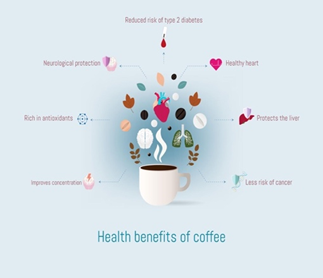
Fig 5.
Moderate intake (2–4 cups/day) is associated with: ↓ risk of cardiovascular disease/stroke
Mechanisms:
Improved endothelial function
Antioxidant effects reducing oxidative stress
Possible improvement in insulin sensitivity
Consistent association with:
↓ risk of type 2 diabetes
Improved glucose metabolism
Mechanisms:
Chlorogenic acids slow glucose absorption
Enhanced insulin sensitivity
Strongest and most consistent benefit:
↓ risk of:
Liver cirrhosis
Hepatocellular carcinoma
Improves liver enzyme levels

Coffee and coronary circulation. (Fig 6)

Coffee and cerebral circulation. (Fig 7)
The bottom line in the meta-analyses is that there is a U-shape curve with best results noted with no more than 3-5 cups a day4,5,6,7,8.

Fig 8 |
The data are tantalizing. In another meta-analysis by Carlström6, the studies showed that the risk of type II DM decreases by 6% for each cup of coffee per day, regardless of caffeine content. It’s postulated that “Possible mechanisms behind this association include thermogenic, antioxidative, and anti-inflammatory effects; modulation of adenosine receptor signaling; and microbiome content and diversity.6”
The health benefits of drinking coffee continue to accumulate as more studies are conducted. In 2 remarkable meta-analyses, “The magical bean for liver diseases7” and “Coffee and liver disease8” we learn that the following findings keep getting reported:
· Decrease in liver enzymes
· Protection against hepatitis B, C
· Decrease risk of fibrosis seen in metabolic syndrome, NAFLD (non-alcoholic fatty liver disease) and alcohol-related liver disease
· Decrease in liver mortality
· Decrease risk of hepatocellular carcinoma
· Decrease risk of colon as well as rectal cancer.
The benefits are particular to coffee and are not seen with green tea. Many of the benefits are dose-related, starting with 1 cup a day (8oz) and up to 4 and beyond7,8.
In conclusion, coffee is certainly no panacea, but its health benefits, as documented by numerous studies, are impressive. It’s refreshing that a cultural habit has positive health outcomes. One note of caution is that the studies didn’t account for the sugar content of the coffee consumed. It may or may not matter; however, we do know that in our population, the sugar content tends to be high.
References:
1) Robin Poole et al.BMJ 2017;359: j5024 http://dx.doi.org/10.1136/bmj.j5024
2) Parras P, Martínez-Tomé M, Jiménez AM, Murcia MA. Antioxidant capacity of coffees of several origins brewed following three different procedures. Food Chem 2007;3:582-92. doi:10.1016/j. foodchem.2006.05.037
4) Ming Ding et al. Long-Term Coffee Consumption and Risk of Cardiovascular Disease. Circulation. Volume 129, Number 6. https://doi.org/10.1161/CIRCULATIONAHA.113.005925
5) Crippa A, et al. Coffee consumption and mortality from all causes, cardiovascular disease, and cancer: a dose-response meta-analysis. Am J Epidemiol. 2014 Oct 15;180(8):763-75. doi: 10.1093/aje/kwu194. Epub 2014 Aug 24. PMID: 25156996.
6) Poole R, Kennedy O et al. Coffee consumption and health: umbrella review of meta-analyses of multiple health outcomes BMJ 2017; 359 :j5024 doi:10.1136/bmj.j5024
7) Grosso G, et al. Coffee, Caffeine, and Health Outcomes: An Umbrella Review. Annu Rev Nutr. 2017 Aug 21;37:131-156. doi: 10.1146/annurev-nutr-071816-064941. PMID: 28826374.
8) Sohani et al. Does genetic heterogeneity account for the divergent risk of type 2 diabetes in South Asian and white European populations? Diabetologia. 2014;57(11):2270–2281. https://doi.org/10.1007/s00125-014-3354-1
9) Carlström M, Larsson SC. Coffee consumption and reduced risk of developing type 2 diabetes: a systematic review with meta-analysis. Nutr Rev. 2018 Jun 1;76(6):395-417. https://doi: 10.1093/nutrit/nuy014. PMID: 29590460.
10) Heath RD, Brahmbhatt M, Tahan AC, Ibdah JA, Tahan V. Coffee: The magical bean for liver diseases. World J Hepatol 2017; 9(15): 689-696 [PMID: 28596816 DOI: 10.4254/wjh.v9.i15.689]
11) Wadhawan, M., & Anand, A. C. (2016). Coffee and liver disease. Journal of Clinical and Experimental Hepatology, 6(1), 40–46. https://doi.org/10.1016/j.jceh.2016.02.003
Reynald Altéma, MD
Palm City FL


Jean Laventure Renelien MD, n’est plus de ce monde. Notre Dieu de Misericorde l’a rappelé à ses cotes, le 6th May 2026, à la suite d’une brève maladie. Il a grandi à la Croix des Bouquets et a fait ses études primaires à l’Ecole Normale Centrale des Arts et Métiers de Carrefour et une bonne partie de ses études secondaires au Petit Seminaire College St Martial. Comme le dit si bien Frere Buteau (Brother Tob), il était un fils de la ville de Croix des Bouquets qui l’a vu naitre et grandir. Il a aussi poursuivi des études en Medecine, a La Faculté de MEDECINE et de Pharmacie (FMP) de Port-au Prince.
Le Petit Seminaire College St Martial, Radio Télé Solidarité and La AMHE, présentent leurs sincères condoléances à sa fille Marie Gerard Gaetane Renelien, avocate de formation, et a tous les membres de sa famille affectes par son départ
Les funérailles du Regretté Docteur Jean Laventure Renelien seront chantées le vendredi 20 Mars 2026 à la paroisse St John The Evangelist Catholic Church, sise au 10300 Yamato Rd, Boca Raton, FL.
Bon voyage Jean Laventure Renelien et que la terre te soit légère !
Maxime Coles MD
AMHE

Andre Jean Talleyrand
September 24, 1939 — March 13, 2026
West Palm Beach, Florida
Dr. Andre Jean Talleyrand (known as Jean by his family and many friends) was born in Port-au-Prince, Haiti on September 24, 1939, to Dr. Lys Talleyrand and Amelia Pierre-Noel Talleyrand. He passed away in his sleep on the morning of Friday March 13th, 2026. He was 86 years old.
Andre Jean was the third born of six siblings. He spent his early years surrounded by his siblings, extended family members and friends in Port-au-Prince. As a youth, he was very active in soccer and track & field. He also achieved high honors in the Haitian Boy Scouts organization, and he was at the top of his class in his academic studies. Adults considered him an “old soul,” often requesting him to serve as the ‘protector’ of his peers in social settings.
After completing his secondary studies, he was selected to attend medical school in Haiti. At the age of 20, he met his future wife, Raymonde Noel, while she was studying at the School of Pharmacy in Port-au-Prince. They were married five years later on December 11,1965. They continued living in Port-au-Prince and had two children--a daughter Christine (1966) and a son Jean-Lys (1967), before moving to Puerto Rico to escape political persecution in their native Haiti.
In 1969, while completing his medical internship in Puerto Rico, Andre Jean was invited to complete his residency at Montefiore Hospital in the Bronx, New York. He left Puerto Rico with his wife and two children and moved to Queens, New York where he was welcomed by many family members who had already immigrated to the U.S. He had two more children (daughters) born in the U.S.—Regine, born soon after their arrival in 1969 and Isabelle, born in 1972.
At the age of 35, Andre Jean moved his family from Queens to South Orange, New Jersey, a suburb conveniently close to New York City and just outside of Newark, New Jersey. Andre Jean spent over 30 years working as a pathologist at Beth Israel Medical Center in Newark, serving as Director of the Department of Pathology and Laboratory Medicine at Beth Israel later in his career.
Motivated to provide a top-notch college education for each of his four children, Andre Jean took on additional duties as an adjunct professor at Rutgers New Jersey Medical School in Newark (formally known as the University of Medicine and Dentistry of New Jersey - UMDNJ) and as a medical examiner (the “Quincy”) of Essex County.
Andre Jean retired in 2006, at the age of 67, and moved with his wife to West Palm Beach, Florida. There he spent his retirement years as an avid fan of all sports. He frequently encouraged his grandchildren in their endeavors. He supported Haitian underserved communities by travelling back to Haiti and hosting medical clinics with mission groups, including immediately after the Haiti earthquake of 2010.
Andre Jean played an active role in the Association des Medecins Haitiens a L’Etranger [Association of Haitian Physicians Living Abroad], also known as A.M.H.E. He soon became A.M.H.E. President. Andre Jean also participated for decades in CASEGHA, a powerful, international scouting organization that took him and his wife to many countries throughout the world. After retirement, ballroom dancing lessons with his wife in West Palm Beach rounded out his life as a retiree.
Andre Jean was an educator, an avid learner, a respected leader, a consummate professional, a speaker of multiple languages, a social justice pioneer in his community and profession, and a paternal mentor. He had a great sense of humor, and loved to talk, dance and laugh. He was a man committed to his Haitian community and culture (both home and abroad), a man of Catholic faith, a man of humility, practicality, and loyalty and most importantly, a man who truly loved, protected and provided for his family.
Andre Jean Talleyrand, M.D. is survived by his wife, Raymonde Noel Talleyrand, his four children, Christine Talleyrand Sims, Jean-Lys Talleyrand, MD, Regine Talleyrand Abrams, PhD and Isabelle Talleyrand, three siblings, Josette (Talleyrand) Toulme, Arnold Talleyrand, and Monique (Talleyrand) Jabouin, six grandchildren, Gena Sims, Olivia Sims, Indigo Funk, Alex Talleyrand, Nicolette Abrams, and Colin Abrams, and many cousins, nieces, nephews, great nieces and nephews.
To order memorial trees or send flowers to the family in memory of Andre Jean Talleyrand, please visit our flower store.

C’est avec infiniment de peine que nous avons appris le décès subit de Dr André Jean
Talleyrand, survenu le 13 mars 2026, en Floride, USA.
Dr Talleyrand était un membre actif de l’AMHE (Association Médicale Haïtienne à l’Étranger). Il a été président de chapitre de l’association, puis trésorier de l’AMHE-foundation. Il a joué un rôle significatif dans l’association pendant de nombreuses années.
En cette pénible circonstance, l’AMHE adresse ses sympathies à la famille, à ses collègues et aux proches affectés par ce deuil.
Paix à son âme !
Schiller Castor MD
Président de l’AMHE - CEC

A Mes Amis Disparus, A Jean Talleyrand MD
Maxime Coles
Errer durant toute une vie
A la recherche du Bonheur,
Vous donne cette envie
De fuir tout en pleurs.
Comme l’eau d’une rivière qui s’écoule
Sans jamais se laisser saisir,
Emportant vers la foule
Le message d’un désir,
La vie est éphémère et le temps s’enfuit
Oubliant les amis qui nous laissent
L’un après l’autre, dans la nuit
Souvent sans un Au revoir qui blesse..
Sur un chemin parsemé et court
Nous amasserons des fleurs
Pour embellir leur parcourt
En formant un bouquet en pleurs.
Efforçons-nous de sourire
Pour leur préparer une liqueur
Du nectar d’un profond soupir,
Qui s’apprécie de tout chœur.
Amis d’enfance et amis de toute une existence
Soyez heureux dans votre nouvelle demeure
Et préparez-nous le terrain, dans l’essence
De nous revoir, sans peur.
Maxime Coles MD
3-28-19
ANOTHER FALLEN ANGEL
Reynald Altéma, MD
Our friend, Dr. André Jean Talleyrand left us on the 13th of this month, calmly in his sleep. Hopefully, he didn’t suffer, and if so, that’s cause for comfort, the silver lining shine of a somber event. I have known him for the past 40-plus years, and I feel honored to have met a person of his caliber. Our relationship began when I was a Resident in Internal Medicine at Newark Beth Israel, in NJ, and he was already a senior attending physician. He was always affable and welcoming, and he encouraged me to join AMHE and to become a member of the NJ Chapter's Executive Committee. A few years later, when I became the president of that EC, and it became our responsibility to organize the annual convention, I made the unusual suggestion to hold it in Haiti. I found no stronger advocate to pursue the goal than him. He was then the president of the CEC. At that time, the idea of holding a convention at home was a sulfurous topic, hotly debated, but his support was ironclad. History will remind us that it was jointly organized with our sister association, AMH, for the first time, and that it was then the one convention that drew the largest crowd, a record that still stands. The memory of a man who kept his word despite pressure to reverse it has stayed with me to this day. He impressed me as a self-effacing person of strong convictions, always willing to talk the talk and walk the walk, as it were, and not a weathervane simply spinning with the wind’s bends and changing allegiance. We therefore bonded together. He became my patient and relied on my advice, and over the years, we have had numerous conversations spanning many topics. He would regale me with stories about his days as a Boy Scout, his medical adventures, and experience gained working in rural areas of the homeland, and quite naturally about sports. He was an avid tennis fan and knew the players and the rules inside and out. We became friends like an extended family. I took care of his household as the family physician. That included his lovely wife, Raymonde, the artist and published author, as well as her mother, who used to spoil me by graciously providing grapefruit preserves whenever she had a chance. Raymonde’s mother used to have her call me, especially to remind me to come and get that delicacy as soon as it was made. Such simple gestures go straight to one’s heart and can never be forgotten. I drove past their house twice a day on my way to the hospital or my office.
Our friend poured a lot of his efforts into AMHE, and after his presidency of the CEC, he remained a member of the AMHE Foundation as its treasurer, like a fixture, until he grew less enthused about the tedious work. At every step of the way, he always gave his all. Jean, as we all called him, was a reliable old-school type. Punctual like a clock, preferring the warmth of person-to-person meeting or conversation over texting, handling everything by hand rather than going the digital way. He would never consider online banking due to its impersonal nature. Going to the bank to see and talk to the teller or manager was the way to do it, the human way, not the cold, albeit efficient, digital method so popular these days. I, for one, always threw my support toward him, and he did likewise. Our last conversation was a few months ago, when I called him to thank him for his generous and recurring contribution to the AMHE-GRAHN project. Incidentally, a man devoid of vanity, I once asked him if he wanted to name a room at the newly created health center in Génipailler near Milot in Haiti either in his name or the name of a person of his choice. He smiled and told me, “Not necessary. Knowing that I am contributing to a project leaving a legacy for the country of my birth is enough of a satisfaction for me.” During our last conversation, I promised him to come one day and have lunch with him and Raymonde. Anyone who knows this couple will tell you that breaking bread with them at their home is an entry into a sumptuous feast. He always makes sure there's dessert, and Raymonde always encourages me to cheat on any diet on such occasions. That lunch wasn’t to be because I procrastinated. Now, he is watching from somewhere in the firmament, looking down and hopefully sending us his blessings.
I feel sad about his passing, even though we all know this day is bound to come. At the same time, I have moved mountains to be present and offer these few words for a good friend, a man of principles for whom I have the deepest respect. I wish him farewell, and as we say, “Que la terre lui soit légère.”
Reynald Altéma, MD
Palm City FL
Eulogy for Jean Talleyrand M.D.
My name is Dr.Yves J. Manigat. I have been on Jean’s path throughout most of his life, from Port-au-Prince to New Jersey where we were both practicing and then to West Palm Beach Florida while on retirement. Therefore, I think I have a good insight into the person that he was, admired by all, for his principles, his rectitude and his passion.
Jean Talleyrand was born in Port-au-Prince, Haiti. He completed his primary and secondary education at Saint Louis de Gonzague and earned his medical degree from the State University of Haiti, where he studied from 1959 to 1965. He began his medical career by providing care to the residents of Port-a-Piment in southern Haiti, demonstrating early on a strong commitment to underserved communities.
Dr. Talleyrand later completed his medical internship in Puerto Rico and pursued specialty training in pathology at Montefiore Medical Center in the Bronx, New York. He went on to serve as an attending physician at Beth Israel Medical Center in Newark, New Jersey, where he distinguished himself and ultimately became Chief of the Section of Cytopathology.
A respected leader within the Association Médicale Haïtienne à l’Étranger (AMHE), Dr. Talleyrand founded the New Jersey Chapter in 1990 and served as its first president. He later held the roles of Second Vice President at the national level and President of the Association from 1996 to 2000. Under his leadership, the New Jersey Chapter achieved significant milestones, including the successful first chapter convention in Absecon in 1991 and the first accreditation of AMHE scientific programs.
In 1998, during his presidency, AMHE entered into a formal agreement with the Dean of the School of Medicine at the State University of Haiti to strengthen collaboration and promote continuous improvement in medical education. As Treasurer of the AMHE Foundation until 2024, Dr. Talleyrand played a pivotal role in establishing its initial financial management structure.
His service extended beyond AMHE. He was actively involved in organizations such as CASEGHA and participated regularly in medical missions, providing care to residents of smaller and underserved communities. His charitable efforts reflected a lifelong dedication to serving those most in need.
Dr. Talleyrand was deeply devoted to his family. He is survived by his wife, Raymonde, a pharmacist and writer; their three daughters, Christine, Régine, and Isabelle; and their son, Lys, a physician. Many who knew the family witnessed its growth from the couple’s early years in medical school, where their partnership was admired for its warmth, mutual respect, and shared values.
Jean Talleyrand will be remembered and greatly missed by his family, colleagues, classmates, and friends, including those in West Palm Beach who cherished his companionship during retirement. Throughout his life, he remained steadfast in his commitment to Haiti and its people—a commitment reflected in his enduring service, leadership, and compassion, particularly within the AMHE and the AMHE Foundation.
May he rest in Peace!
Yves J. Manigat MD
West Palm Beach FL
En tant que membre du CEC, du Board of trustees et de la fondation de l’AMHE, je voudrais présenter mes plus sincères condoléances à la famille du Dr. André Jean Talleyrand, à l’assistance éplorée et aux membres de l’AMHE ici présents.
Du coup, je me découvre avec le plus grand respect, la plus grande admiration devant la mémoire du Dr. Talleyrand dont nous saluons le départ aujourd’hui.
Dr. André Jean Talleyrand a milité pendant de nombreuses années au sein de notre association. D’abord comme membre et président du CEC et ensuite comme Trésorier au niveau de la fondation. Dans l’exécution des tâches qui lui avaient été confiées, il était d’une extrême rigueur. Il exemplifiait la rectitude, le sens du devoir et le désir de bien faire, et de toujours mieux faire. Il était plaisant, ouvert à tout débat et toujours capable de trouver le juste milieu sans recouvrir aux extrêmes qui ne mènent jamais nulle part sinon qu’à l’implosion.
Son absence pèsera lourdement sur notre association et déjà nous la ressentons. Quand Voltaire disait qu’il faut “cultiver son jardin”, il parlait du jardin de notre vie. En effet, la vie est un vaste champ que Dieu nous confie en venant au monde, et qu’il nous demande de labourer du matin au soir, du lever au coucher du soleil. Il nous convie à mettre de l’ordre dans nos affaires, et à être prêts, à rendre compte à tout moment des “talents “ qui nous sont confiés. Car, la mort n’a pas d’âge. Elle est l’apanage de tous et de chacun.
Le départ de notre collègue Jean nous interpelle tous. Et maintenant que son combat terrestre est terminé, on peut tous crier, sans peur d’être contredits, que Jean a gagné. Il aura donc bien rempli sa journée. Puisse-t-il trouver sa voie dans le nouveau pèlerinage entamé désormais ; et puisse son œuvre continuer de nous inspirer et de nous guider dans notre tâche à nous pour les temps à venir !!
Bon courage cher ami ! Que la terre te soit légère !
RONY JEANMARY, M.D.
Le 28 Mars 2026
Andre Jean Talleyrand September 24, 1939 — March 13, 2026
West Palm Beach, Florida Condolences to the Talleyrand, It is with a heavy heart that the AMHE family extends our deepest condolences to the family of Dr. Anre Jean Talleyrand during this time of profound loss. Dr. Talleyrand played an active role in the Association des Medecins Haitiens a L’Etranger [Association of Haitian Physicians Living Abroad], also known as A.M.H.E. He soon became A.M.H.E. President. Dr. Talleyrand also participated in CASEGHA for decades, a powerful international scouting organization that took him and his wife to many countries. After retirement, ballroom dancing lessons with his wife in West Palm Beach rounded out his life as a retiree. May you be surrounded by strength, uplifted by the support of those who care for you, and granted moments of peace as you navigate the days ahead. Please know that you are not alone in your grief, and that you are held in thought and in prayer. Service Schedule Upcoming Services
Visitation Saturday, March 28, 2026 9:30 - 10:30 am (Eastern time) Palms West Funeral Home and Crematory, Inc. Royal Palm Beach, FL 33411 Text Directions
Funeral Service Saturday, March 28, 2026 10:30 am - 12:00 pm (Eastern time) Palms West Funeral Home and Crematory, Inc. Royal Palm Beach, FL 33411 Text Directions With deepest sympathy and heartfelt compassion, AMHE Central Executive Committee |
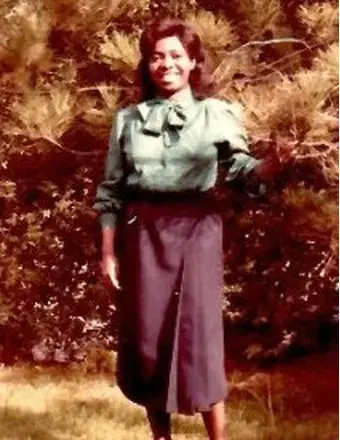
Obituary. Dr. Mona Myrtha-Dorsinville Phanor
With profound sorrow and unwavering faith, we announce the peaceful passing of Dr. Mona Myrtha Dorsinville-Phanor, who departed this life on February 27, 2026, in Hyde Park, Massachusetts. A devoted woman of God, loving mother and wife, esteemed educator, humanitarian, and community leader, Dr. Myrtha-Dorsinville’s legacy will forever live on in the countless lives she touched.
Dr. Dorsinville-Phanor was born on May 20, 1952, in Port-au-Prince, Haiti, to Cécile Magloire Dorsinville and Marc Dorsinville. She grew up alongside her siblings, Rachel Dorsinville Vieux and Marc Evans Dorsinville, in a home deeply rooted in faith through the Seventh-Day Adventist Church, education, entrepreneurship, philanthropy, and service. She cherished her early years in Haiti, as well as the time she spent in Puerto Rico and the Dominican Republic, experiences that shaped her global perspective and lifelong love of languages and culture.
She later emigrated to the United States, where she met and married the love of her life, Jacques Edy Phanor. Together they built a life centered on faith, family, and service, and were blessed with a son, Eddy Phanor, whom she loved beyond measure and who made her feel proud all the time.
Dr. Dorsinville-Phanor was vibrant, compassionate, and intellectually curious. She found joy in reading, learning new languages, traveling, savoring good cuisine, and being surrounded by the people she loved most. Her warm embrace, listening ear, and wise counsel made her a trusted advocate and confidant, especially within the Haitian and Latino communities of New England. She lived selflessly — always willing to pause her own work to uplift someone else. Her generosity, grace, and unwavering commitment to helping others defined her life.
As a lifelong scholar and educator, Dr. Dorsinville-Phanor earned her medical degree in the Dominican Republic before immigrating to the United States, where she pursued advanced graduate studies at Harvard University, Tufts University, and Northeastern University. She deeply believed that education was both empowerment and liberation, a value she instilled in her family and every student she mentored.
As a professor, she taught languages at Brandeis University, Northeastern University, and other Boston-area institutions, inspiring generations of students. Beyond the classroom, she founded and operated two highly respected institutions: New England Fellowship Academy and Massachusetts Institute for Health Careers. They have graduated more than 10,000 multicultural students since the 1990s. Through programs in Nursing Assistant training, Home Care, Home Health Aide, Phlebotomy, and Food Care certifications, she opened doors of opportunity for immigrants and minorities seeking stable, meaningful careers in healthcare. Dr. Dorsinville-Phanor also dreamed of establishing Maranatha Intercontinental University, a vision her family is committed to continuing in her honor.
Her extraordinary contributions led to numerous local and federal recognitions, including an invitation to the White House as an honored guest. She devoted much of her work to educating medical and healthcare professionals about the impact of cultural differences on care delivery, ensuring dignity and equity for underserved populations. Her humanitarian efforts on behalf of women and children in impoverished communities, her involvement in the Haiti Democracy Project, and her service on multiple boards throughout her lifetime reflect the breadth of her commitment to justice, education, and public health.
Dr. Dorsinville-Phanor’s life was a testimony of faith in action. She believed in putting others first, in lifting as she climbed, and in serving God by serving people. Her impact stretches far beyond titles and accolades — it lives in the healed, the educated, the empowered, and the encouraged.
She is survived by her loving husband, Jacques Edy Phanor; her son, Eddy Phanor; her siblings, Rachel Dorsinville Vieux and Marc Dorsinville; brother in-law, Serge Vieux; 5 nephews, Serge Vieux Jr., Daniel Vieux, Joel Vieux, Ralph Vieux, Alex Vieux; aunts, uncles, cousins and a vast extended family, friends, colleagues, students, and community members who will continue to carry forward her light.
Though our hearts are heavy, we rejoice in the promise of eternal life and in the extraordinary legacy she leaves behind. Her faith, brilliance, compassion, and boundless love will remain a guiding force for generations to come.
“Well done, thou good and faithful servant: thou hast been faithful over a few things, I will make thee ruler over many things: enter thou into the joy of thy lord.” Matthew 25:21
In a meeting with the then-governor of Massachusetts, Michael Dukakis, she was at the far right. This was a task force of Haitian physicians who went to see the governor following the removal of Haitians as a risk group for AIDS.
Corrections made by Reynald Altema MD
Palm City FL

Armand,
Isaac Asimov, a biochemistry teacher, once said: "life is pleasant and death is peaceful, but it is the transition that is troublesome". We would like to always remember your leadership in an Association you loved and supported over the years.
Bon voyage, my friend but while reaching your eternal home, be sure to prepare us the way because the memory of Death leaves always a hearthache that no one can heal.
Armand, que la terre te soit legere.
Maxime Coles MD
AMHE


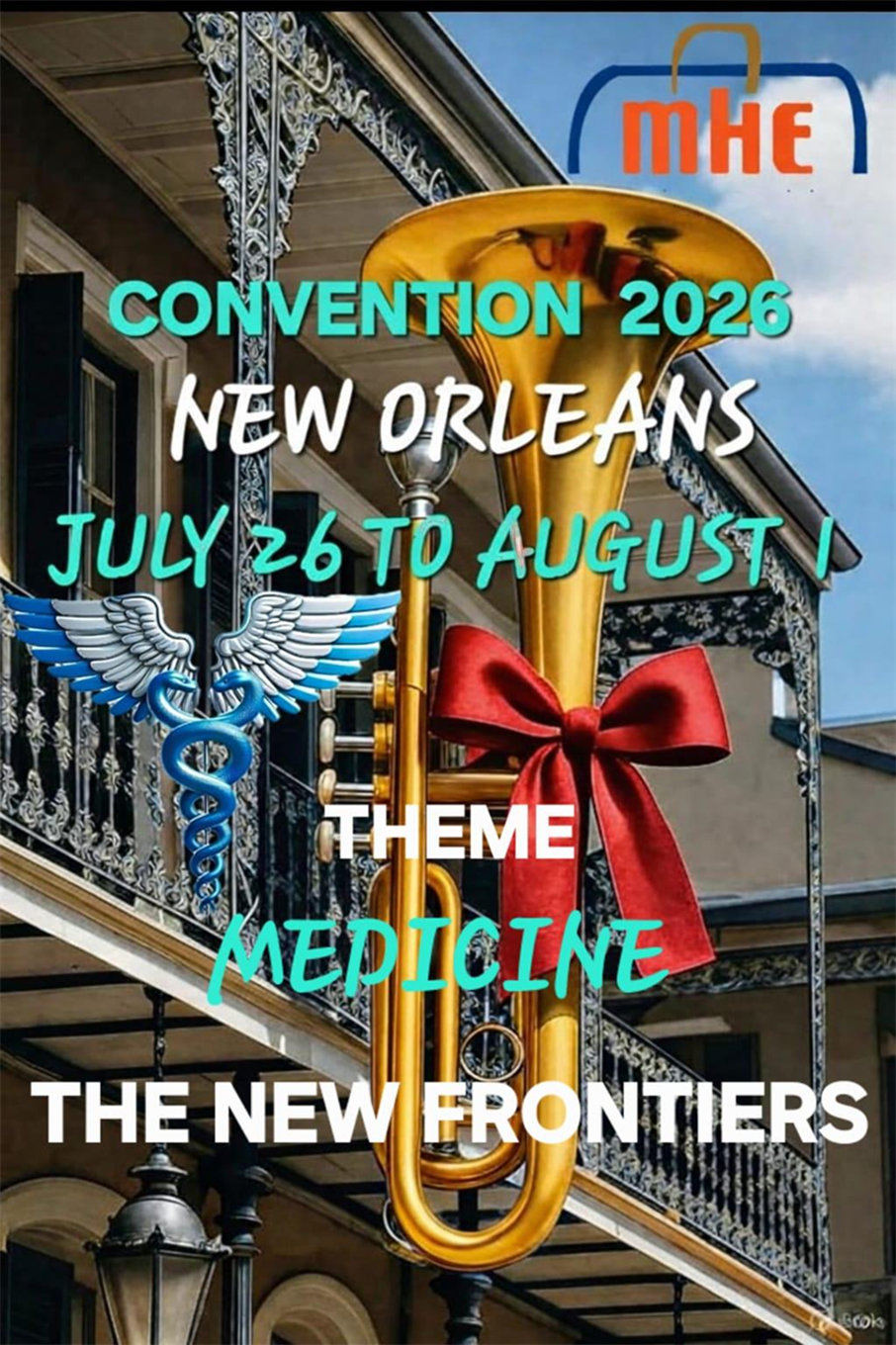
Good afternoon AMHE Friends and Families, LAST CHANCE TO LOCK IN THE EARLY BIRD RATE WHICH ENDS TONIGHT AT MIDNIGHT PACIFIC TIME. THANK YOU to those of you who have already registered and have paid. Invite your families and friends to join you and be ready to have a WONDERFUL time and make long lasting MEMORIES. YOUR RESPONSES THUS FAR HAS BEEN AWESOME. Please use the link below to register for the 53rd Annual AMHE Convention. https://forms.gle/gs763v6fTUAnQ2e3A Date July 26 to August 1st, 2026 Site: New Orleans Hotel: Luxury Accommodation
PRICES: EARLY BIRD UNTIL MARCH 31ST, 2026 Single Occupancy: $2,599.00 per person Double Occupancy : $1,899.00 per person
REGULAR PRICE AFTER MARCH 31ST, 2026 Single Occupancy : $3,299.00 per person Double Occupancy: $2,599.00 per person
Children under 15 and staying in the same room with parents: $899.00 Children 15 and older are adult price
EARLY Bird price requires a NON-REFUNDABLE deposit of $1,000.00 per person at time of registration and balance must be paid by June 1st.
Freshly made bread... Be ready for Mardi Gras in July and Let us get on the trolley Be prepared to engage in three days of high-level scientific sessions highlighting the latest advances in medicine and health sciences, while also experiencing the rich cultural heritage and distinctive Mardi Gras spirit of New Orleans. Can't wait to see and welcome you to the city of Louis Armstrong.
Dr. Laroche, Treasurer, AMHE INC, Member, Convention Committee |


Direction de Formation et de Perfectionnement en Sciences de la Santé
(DFPSS)
Liste des Facultés de Médecine reconnues par le MSPP
1- Université Chrétienne de la Communauté Caiman (UCCC)
2- Université d’Etat d’Haïti (UEH) (2 Campus: FMP et Limonade)
3- Université de la Fondation Aristide (UNIFA)
4- Université Lumiere (ULUM)
5- CUREME (Université Mont-Everest d’Haïti/UMEDH et Université Episcopale d’Haïti/UNEPH)
6- Université Notre Dame d’Haïti
7- Université Quisqueya (UNIQ)
8- Université Saint Francois d’Assise d’Haïti (USFAH)
9- Université Yaveh Nissi (UNYN)

Clavicle Fracture
The clavicle is a slender “S” shape , collar bone connecting the arm and the trunk, and running horizontally to the shoulder blade. It connects the breastplate (sternum) to the shoulder through a cartilaginous articulation, at the sternoclavicular joint medially and on the other end, laterally, it joints the shoulder blade forming an Acromioclavicular cartilaginous joint as well. It plays a crucial role, as part of the shoulder girdle, providing structural support and protection to the underlying artery and nerves while supporting the range of motion of the upper extremity.
The clavicle is the first bone to begin its ossification during the embryonic period and one of the last to finish it around the mid 20’s in age. This is a bone, commonly injured at the birth canal because of its early ossification. In males, it seems that the clavicle is generally larger and longer with a more pronounced curvature and even some anatomists believe that the left clavicle is generally longer on the right side and even weaker. In its critical position, the clavicle is prone to trauma when severe forces are directed toward the chest and the clavicle or during falls or in direct blows.
It is maybe the reason why the clavicle is the most frequently broken bone in the body. In practice, most of the clavicle fractures are seen after a fall on an outstretched arm or on the shoulder causing the snaps (brake). Clavicle fractures count for 2,6 % of all fractures of the human body, A broken collar bone can render the motion of the arm difficult and painful at mobilization. Swelling and deformity can be a striking finding because of bleeding in the soft tissues. Pain and bony crepitation as well as deformity are noted, creating an angle between both ends and excessive imposing pain at mobilization of the extremity involved.
On a suspicion of a clavicle fracture, an immobilization in an arm sling or simply the limited use of the upper extremity, would allow you to reach an urgent care facility for radiographical studies. Ice can be applied while mild pain medication like Advil or Tylenol can be given to relieve discomfort. Occasionally such fractures can become open because of their proximity to the skin or their level of comminution. Injuries involving either ends of the bones can also result in dislocation, rendering the treatment more difficult.

“S” shaped clavicle ”
Anterior and posterior dislocations at the medial end of the clavicle need to be given special consideration. This is the sternoclavicular (SC) joints which forms one of the 4 joints associated to the shoulder motion ( Sternoclavicular, Acromioclavicular, Glenohumeral and scapulothoracic joints). Injuries to the SC joint is of rare occurrence but is always related to a trauma to the chest. “SC” joint is a saddle joint surrounded by ligaments , containing an articular disc and facilitating a wide range of motion of the shoulder. Pain, tenderness, deformation with swelling and stiffness result from an injury to this joint.
High energy injury in motor vehicle accidents or direct blow from playing sports like football may cause such strains or dislocations of the SC joint. In that case conservative or operative treatment may be needed because of the dislocation of the SC joint, especially when dealing with a posterior dislocation with compression of the trachea.
Injury to the sternoclavicular joint is very uncommon and can be diagnosed occasionally by plain radiographs but often a CT scan may be the best way to evaluate such joint. This traumatic dislocation can be anterior (most common) or posterior with possible compression on the mediastinal structure, especially the trachea, causing shortness of breath or difficulty in swallowing which will require immediate attention or lifesaving procedures. The medial aspect of the clavicle presents as a growth plate which generally remains open until the ages 20-25 and a fracture can go through it.
Clavicle fractures can demonstrate a wound over the fracture site or a defect in the skin which may indicate that bone fragments may have punctured through the skin. In such cases, surgical treatment with a washout in the operating room may be suggested to remove any bone debris or foreign bodies which may have entered the fracture site. More combination with numbness and weakness of the upper extremity may push the physician to choose surgical treatment as well. As far as any posterior displacement of the medial end of the clavicle, shortness of breath or difficulty in swallowing can result, necessitating immediate medical intervention like a reduction of the Sternoclavicular joint or even a surgical stabilization.
Clavicle fractures are particular and can be divided mainly into three categories in relation to their locations. The 1/3 closed to the sternum (medial end), another 5% are located near the Acromioclavicular (AC) joint, The most common type of fracture of the clavicle involves the midshaft portion and depending on the orientation of the fragments, conservative versus surgical treatment may be offered. In general, most of the mid shaft fractures can be treated with immobilization using a sling or a figure-8-splint although many may find it uncomfortable while in use for a period of 6 to 8 weeks. Cold therapy and pain medication have been recommended to ease the symptoms for around 20 minutes every couple of hours to minimize swelling. Many patients may prefer sleeping in an erected position like sitting up.
The location and the comminution at the fracture site as well as the age of the patient being treated may present some importance. The younger you are the faster a fracture will show healing. Before the age of 8, such fracture may heal in a period of 4 to 5 weeks in an adolescent, but can take longer and up to eight weeks, especially if the fracture involves many fragments. The pain will improve, allowing the patient to move the shoulder and prevent stiffness while initiating exercises to avoid more secondary problems (Frozen shoulder). Suggestions can even be made to allow one to perform physical therapy, which can be as well beneficial to the healing process.
A typical clavicle fracture will heal well with no restriction in motion, months after. Most patients will re-gain their strength although some fracture may take up to six to nine months of time to heal. If a fracture refuses to heal. Surgery may become the last option in the armamentarium of an orthopedic clinician although, occasionally, the use of a bone stimulator may enhance the healing process. Many factures may never heal satisfactorily to a point that one will need to determine the cause of such non-union or mal union.
Surgery will require the exposure to the fracture fragments with removal of any interposed soft tissues which may have contributed to the delayed union. Then, the application of a contoured plate with screws fixing the defect with or without the layout of bone grafting material. The clavicle, being a subcutaneously located bone, is well known to encourage complaints from individuals who may have benefited from surgical treatments, especially when bony prominence or painful scars are encountered following surgical repairs, especially in competitive athletes. In general, fractures at both ends of the clavicle are subject to different kinds of treatment because of ligaments involved.
It seems to have a peak incidence of fracture, in the growing children between the ages of 13 and 20, less often in women (20%), more involving the middle thirds of the bone (69%). Other studies in the past have shown the involvement of the medial clavicle from 3%.to 9.3%. Being the first bone to ossify, it serves as a connection between the arm and the trunk through atypical synovial joints: the AC (Acromioclavicular) and the SC (Sternoclavicular) joints,
The Clavicle is in a “S” shaped bone, with a convex proximal half protecting the neurovascular bundle of the upper extremity while the distal end is more concave with ligamentous attachments to the scapula at the coracoid and acromion processes. This may be why fractures are seen generally at the mid-level of the clavicle, the thinnest segment. 90% of the clavicle fractures occur at the middle third in children aged ten and under but the majority will be nondisplaced while, above the age of ten, most of these fractures are displaced and require treatment.
Proximally, any clavicle fracture is always consequent of the pull of the sternocleidomastoid muscle while the weight of the arm and the gravity counteract the pectoralis and the subscapularis muscles. The distal fragments are displaced inferiorly (caudal) by the weight of the arm. It is important to correct the deformities because, frequently, over tenting of the skin, may lead to skin necrosis if left unattended. Such situation may later contribute to an open fracture. If most fractures are due to a fall onto the shoulder, others are seen in sport injuries and motor vehicle accidents with direct blow.
Patients with a clavicle fracture describe localized pain, exacerbated with the motion of the upper extremity arm with snapping and cracking sounds over the affected area. Deformity, ecchymosis with tenting of the skin is occasionally appreciated, with often bony crepitation over the fracture site. It is imperative to evaluate also the neurovascular system as well as the respiratory system to rule out any lung or vascular injuries especially in patients’ victims of a motor vehicle or motorcycle injuries. Rib fractures, pneumothorax, brachial plexus injury can be appropriately and rapidly treated or stabilized for any patient who may require transfer to a higher facility to handle the injury.
Surgical management is considered for displaced, middle third clavicle fracture especially in the presence of extensive comminution as well as fracture dislocation at both ends. We will discuss surgical approaches in another paper. The goal of treatment for middle third fracture of the clavicle is pain control to improve range of motion in restoring a near normal anatomy. Moderate strength opioids (Oxycodone and acetaminophen) for less than a week and the use of anti-inflammatory medication.
Patients with complete displacement may also chose conservative treatment and consider a figure-eight- bandage in order to prevent shortening while non-displaced and uncomplicated fracture through the mid-third can do well in an arm sling as well, while range of motion exercises are performed,
Neurovascular complications, long-standing painful deformities, brachial plexus injuries, mal-unions and non-unions or even neuropathies can represent serious complications requiring expert opinions and further operative management. Some may confuse distal clavicle fractures and AC joint separations with both presenting swelling and ecchymosis with a cross-arm test (adduction) to the chest painful.
Proximal clavicle fractures may occasionally be missed on standard X-rays but using a 45-degree cephalic tilt views can simplify the task. The use of CT and MRI studies have facilitated the diagnosis.
I tried to provide an overview on a vast topic dealing with different aspects of fractures and dislocation of the clavicle to help our residents in diagnosing and treating such injuries in polytraumatized patients, Although, most clavicle fractures result from a fall onto the shoulder, traffic accidents or sport injuries. Remember that 69% of these fractures involve the middle third and 28% are seen in the distal third but only 3% are seen in the proximal end.
Maxime J-M Coles MD
Boca Raton FL
Références :
1- Eiff, MP, Hatch, et al. Clavicle and Scapula Fractures. “ Fracture Management for Primary Care, 2nd ed, WB Saunders, Philadelphia 2002, p 198.
2- Throckmorton T, Kuhn JE, Fractures of the media; end of the clavicle. J Shoulder Elbow Surg 2007; 16:49.
3- Herscovici D Jr, Fiennes Ag, Allgower M, Ruedi TP. The Floatting shoulder, ipsilateral clavicle and scapular neck fractures. J Bone Joint Surg Br 1992;74:362.
4- Zhang D, Earp BE, Dyer GSM, Skin Tenting in displaced medial shaft clavicular fracture.
5- Yan MZ, Yuen WS, Yeung SC, et al. Operative management of midshaft clavicle fractures demonstrates better long-term outcomes.
6- McKee MD, Wild LM, Schemitsch EH. Midshaft malunions of the clavicle fracture. J Bone and Joint Surg Am 2003; 31:30.

LE MOYEN ORIENT, UNE GUERRE AU DÉNOUEMENT INCERTAIN.
LE MOYEN ORIENT, UNE GUERRE AU DÉNOUEMENT INCERTAIN. Quand les États-Unis et Israël attaquèrent l’Iran au beau milieu des négociations le 28 Février dernier,ils s’attendaient à une victoire éclaire qui amènerait au changement de régime qu’ils avaient espéré depuis très longtemps. Par suite d’une attaque surprise qui emporta près de quarante hauts gradés de l’armée Iranienne, des gardiens de la Révolution ainsi que le guide suprême l’Ayatollah Ali Khamenei, même les plus sceptiques pensaient que c’en était fini de la révolution iranienne , que le peuple allait sortir dans les rues et offrir le même spectacle de déboulonnage des statues des dirigeants Iraniens, comme ce fut le cas à la chute de Sadam Hussein, à Bagdad en 2003. Mais c’était mal comprendre le nationalisme et la fierté d’un peuple enraciné sur sa terre depuis près de deux mille cinq cents ans et qui était habitué aux pires privations qui lui sont imposées par l’occident depuis l’arrivée au pouvoir en 1979 du présent système de gouvernement à la suite du renversement de Mohamed Reza Pahlavi , le dernier shah de l’Iran.. Le Président des EUA, demandait alors au peuple de sortir dans les rues pour renverser le régime des ayatollahs, en place depuis près de cinq décennies. Le Mossad , service d’intelligence Israélien, pariait fort sur cette décapitation pour en finir une fois pour toutes avec le système en place. Pourtant, il n’en fut rien. Et en moins de 24 heures, l’Iran commençait déjà avec sa réplique. Par un système dit “en mosaïque” de commandement qui accorde à chaque district militaire, trente et un au total , toute son autonomie et tout son pouvoir de décision en matière de défense du territoire, les installations militaires des EUA, et les infrastructures civiles du golfe et d’Israel, allaient vivre des jours jamais connus au paravant, pour ne pa dire les pires moments de leur existence. Le peuple est resté chez lui. Et la guerre qu’ils comptaient gagner en moins de six jours, va bientôt rentrer dans sa sixième semaine. Le président de la plus grande armée au monde qui demande un cessez-le- feu depuis plus d’une semaine ne parvient pas semble-t-il, à l’obtenir. L’Iran se préparait à cette guerre depuis des années. Il savait qu’il n’allait pas être capable de se mesurer à la plus puissante armée conventionnelle du monde. Il avait vu l’Iraq succomber en très peu de temps. Il avait alors monté un vaste système de défense souterrain qui le mettrait à l’abri des bombardements aériens. il avait aussi compris que pour neutraliser l’ennemi, il fallait le combattre de manière asymétrique , c’est à dire qu’il fallait taper sur le centre névralgique de cette guerre .En fait, le vrai talon d’Achille des Pétromonarchies du golfe, et des puissances environnantes, c’est d’abord l’or noir, qui s’exporte en milliers de barils de pétrole journaliers , ce sont les complexes gaziers, les hôtels et les aéroports, le détroit d’Hormuz et les installations militaires de l’occident, en particulier de l’Amérique. L’Iran s’est donc mis, avec la capacité des missiles balistiques et autres dont il dispose, à les détruire de manière systématique. Cela a donc porté les EUA à reculer plus d’une fois à la suite de menaces de représailles sévères proférées contre l’Iran s’il n’ouvrait pas le passage du détroit au commerce mondial. D’après l’Iran, si les EUA devaient s’attaquer à ses usines de production d’énergie et d’électricité, il détruirait toute les usines de dessalement d’eau de la région, toutes les installations électriques et pétrolières du golfe. Ce qui conduirait au pire désastre que l’humanité ait connu. Imaginez un instant des millions d’individus vivant dans des gratte-ciels sans eau dans les robinets et dans les toilettes, et cela pendant des semaines et des mois!. On sait aussi qu’il est capable de mettre ses menaces à exécution. L’Iran semble donc prêt à jouer le tout pour le tout. Il ne voit non plus aucune raison à revenir à la table des négociations puisque, par deux fois déjà, il a été bombardé au beau milieu de ces négociations. Il contrôle maintenant le détroit d’Hormuz par où transitent 20% de la production mondiale de pétrole, d’autres produits combustibles, sans compter les engrais et les fertilisants. Il pilonne tous les jours Israel dont les intercepteurs de missiles sont devenus de simples passoires. Alors quel dénouement peut-on espérer? Pendant combien de temps l’Iran pourra-t-il tenir ? Qu’en sera-t-il de l’hégémonie américaine après cette guerre ? Comment le pétrodollar survivra-t-il à cette crise après que les monarchies du golfe ont été livrées à elles-mêmes sans la protection pour laquelle elles investissaient de colossales fortunes dans l’économie américaine ? Où sont la Chine et la Russie dans et derrière tout cela ?
Rony Jean-Mary, M.D.
Coral Springs, FL.
Le 2 Avril 2026

Merlot en Éthiopie
Lucner Roland Pierre-Marie Barthelemy Astor Valoir, mieux connu comme Merlot par ses intimes, passe une carrière comme cadre technique à l’ONU, stationné en Afrique. En vertu de nombreuses expériences vécues, il rédige au fur et à mesure, pendant des années, un journal privé, à la fois pour sa mémoire et comme passe-temps. Il l’utilise de temps à autre comme source de référence, en tant qu’avide conteur. Retraité depuis des années, il fait la navette entre la maison familiale à Savanne Zombi et le Madagascar, lieu de naissance de sa compagne, Miora.
Un soir, assis côte à côte avec Miora sur la terrasse de sa maison, admirant le firmament garni d’un tapis étincelé, bercé par une brise lénitive sur fond de musique des insectes, la monotonie lassante des coassements de crapauds. Un feu de bois de pin réchauffe la froidure ambiante du plateau. Un châle bigarré kenyan les protège aussi. Merlot boit son troisième verre de merlot, autant dire qu’il veut parler sans arrêt et, surtout, raconter des histoires. Miora, elle-même aussi loquace, amorce la conversation : « Alors tu veux me conter une de ces aventures qui t’ont marqué » ?
—Alors il est grand temps que je te parle de cet épisode que je considère si fâcheux que je l’ai nommé « la sueur froide ». Une fois en vacances, je crois en 1965, je visite Addis-Ababa et je rencontre un jeune couple, des étudiants de Sciences Po, intéressés à pratiquer le français. J’accepte une proposition alléchante : pour continuer nos échanges dans la langue de Firmin, ils vont me guider et ils m’encouragent à aller sur la côte pour voir un phénomène spectaculaire, « la Mer Rouge en pleine floraison ». Moi, l’éternel curieux, captivé par cette offre, je l’accepte. Donc je loue une voiture et nous voici sillonnant le paysage. Le parcours nous mène de la capitale fédérale à une autre capitale régionale, Asmara, puis à Assawa, sur la côte nord. On peut résumer ce voyage en paraphrasant Dickens et dire « le récit de trois randonnées : une à travers des montagnes fraîches, une autre en passant par une savane sèche et la dernière en traversant une zone aride/désertique d’une chaleur insupportable. Les deux premières randonnées se font sur un plateau, tandis que la dernière est une descente jusqu’au bord de la mer. » Ce voyage me façonne à plusieurs niveaux. Il satisfait ma curiosité, enrichit ma connaissance de ce globe sur lequel nous vivons et m’expose aux différentes mœurs et coutumes des sociétés qui peuplent notre terre.
Ma première découverte, le repas partagé littéralement, écarquille mes yeux. Le jeune couple, détectant mon embarras, s’évertue à m’expliquer les dessous de cette pratique. Imagine-toi que mes années passées à maîtriser les règles du couvert sont en prise avec la pratique de manger, sans ustensiles, un plat commun que l’on déguste avec les doigts. Une galette dénommée injera remplit plusieurs fonctions simultanément : nourriture, assiette, et couverts. Chaque personne découpe un morceau d’injera pour prendre les différentes portions du menu. « Au demeurant, cet acte sublime de manger ensemble trouve son incarnation ultime dans le partage », me disent les deux étudiants. L’expérience culinaire ne représente qu’une partie de cette aventure. Parlons maintenant du paysage. Le panorama ne cesse de surprendre, allant de l’éclectique, même idyllique, au désolant, ou décevant, et du plaisant, tel un climat tempéré, au suffoquant, comme une chaleur excessive. La flore et la faune se joignent pour tapisser un tableau qui vous laisse coi. Le climat de la zone géographique de la capitale, située à plus de deux mille mètres d'altitude, ressemble à celui où nous sommes, mais est encore plus frais, car plus verdoyant. Naturellement, ici, on voit peu d’animaux sauvages, tandis qu’en Éthiopie, sur le plateau, un aigle planant à rase-motte, un babouin gélada ou un lion noir (à cause de sa crinière noire) ne sont point des apparitions insolites. Les cultures en terrasse pour la production de céréales (l’orge, le teff qui donne l’injera) ou de café nous régalent par l’ingéniosité de la construction et le finissage cosmétique. Les églises creusées dans le roc, le style rupestre, émeuvent comme des merveilles d’architecture. Le jeune couple tient sa promesse, m’enseigne ces emblèmes sur notre trajet. Je me rappelle leur long discours étreint de fierté à la vue des grands eucalyptus, « l’Amérique a ses séquoias et nous avons nos eucalyptus » ! Cette même réaction accompagne la visite d’une église taillée dans le roc. « Construite à la main, sans outils électriques modernes, en équerre »!
Le prix d’entrée pour ces observations s’appelle la sueur froide. En effet, la conduite, en maintes occasions, devient un effort périlleux, avec des virages en épingles, notamment en présence d’escarpements. On s’imagine chuter dans ces falaises, ce qui donne un haut-le-cœur, un serrement de la gorge et une peur bleue que l’on cache, mais qui reste à fleur de peau. Les deux étudiants, jusque-là très polis, m’encouragent à passer quelques jours dans la région du Tigré. Alors débute ma vraie sueur froide. Étudiants, oui, mais aussi des guérilleros, membres du « Front Populaire de la Libération de l’Érythrée ». À ma grande surprise, ils reçoivent de la part de quelques amis une valise lourde, chargée d’armes à feu. « Monsieur, vous bénéficiez de l’immunité en tant que cadre de l’ONU. Nous comptons sur votre coopération pour arriver à bout ». On me le dit d’une façon calme, directe. Sans coup férir et sans mon gré, je deviens un participant à une insurrection intestine et je risque d’y laisser ma peau. Maintenant, de guides du paysage, ils deviennent des propagandistes qui, chaque jour, éclaircissent mon ignorance des faits. « Nous, Érythréens, avons toujours voulu notre indépendance. Nous ne sommes pas des Éthiopiens ; nous les considérons comme nos cousins. Nous n’avons pas les mêmes droits civiques qu’eux. Cela nous emmerde et nous avons ras-le-bol ». Moi qui suis étranger à ce conflit, je me trouve dans une position mitoyenne et n’ose pas offrir une opinion honnête sinon contraire à leur prêche. Je me demande si je suis un otage — de mon point de vue—, ou un adhérent au mouvement — du point de vue des forces de sécurité fédérales—, donc de la chair à canon des deux côtés. La chaleur ambiante pendant la descente d’Asmara jusqu’à la côte, normalement insupportable, car le changement est abrupt et la température s’accélère jusqu’à atteindre le chiffre indicible de 45 degrés centigrade dans un endroit aride, me met face à une mort pénible. La sueur perle mon front d’abord puis déferle en petit ruisseau. Je frissonne. Une poussière fine laisse une couche sur ma peau ; elle devient humide, et forme une petite bulle de boue et un résidu poisseux. Néanmoins, sous l’effet d’une chaleur intense, il se transforme en une croûte en un cillement. Allant de mal en pis, une démangeaison cutanée sous la forme d’un picotement amorce une torture. Le picotement fait concurrence à une douleur de chair brûlée sous les rayons d’un soleil de plomb, d’un air si chaud qu’il est immobile et dense. Malgré l’apparition à l’horizon d’un long croissant de sable de teint d’ivoire contre un océan de carnation rougeâtre, une image olympienne en temps normal, le stress de la douleur et l’inquiétude de la découverte des armes à feu rendent l’humeur sombre et le tableau blême.
Mon salut arrive soudainement. Les deux étudiants descendent de la voiture et, peu de temps après, grimpent chacun sur le dos d’un chameau. Ils mettent un doigt sur les lèvres pour m’indiquer de me taire, sinon… « Assawa, 20 km », annonce le panneau. Assawa, ville côtière, station balnéaire : peu importe, lorsque le cœur est gros. Arrivé en ville, une seule hantise me nargue, trouver une chambre climatisée et prendre une douche d’eau froide pour chasser la canicule suffocante, me débarrasser de cette poisse, soulager ma souffrance épidermique et l’agonie de frôler la visite de la faucheuse. Fatigué, déprimé, après la douche, je vais au lit et je dors pendant 10 heures. Je me lève à sept heures du matin, avec une faim de loup. Pour la première fois, mon appareil auditif prête attention au son lénitif du ressac des vagues. Je me pince pour m’assurer que je suis libre comme le vent et non un otage. Alors, je prends une autre douche, je m’habille en tenue estivale et je prends un petit déjeuner. Le café local a une saveur particulière et me revigore l’esprit. Comme premier mets du jour, je déguste un foul (purée de fèves assez épicée). La serveuse me dit : « J’espère que le repas et la plage vous aideront à avoir une bonne mine. Vous paraissez triste. Il y aura une fête ici ce soir et la musique sera pulsante. Bonne journée ». Ce jour-là, pour la première fois, je fais l’expérience d’une mer teintée d’une couleur autre que le bleu ou le turquoise. Le teint rouge produit par des algues me paraît étrange au début. La chaleur ambiante me fait oublier cette distinction mineure.
Merlot se tait, ne voulant pas attiser la jalousie de sa compagne. Il ne donne aucune information ni sur la fête ni sur ses aventures pour le reste du voyage. Disons que Merlot garde de tendres souvenirs de son passage à Massawa.
Reynald Altéma, MD
Palm City FL

Are They Forever Cursed? The term “Failed state” is not an official United Nations or formal legal designation. The term first entered common policy and academic usage in the early 1990s. The Oxford English Dictionary dates the earliest known use of the term to 1993, citing Gerald B. Helman and Steven R. Ratner, two former Foreign Service Officers who co-authored an article entitled “Saving Failed States” published in in the Winter 1992–1993 issue of Foreign Policy magazine. Today, analysts frequently relate to the term through indices such as the Fund for Peace’s annual Fragile States Index (FSI). But before looking at today’s failed or fragile states, it’s important to bar in mind that the notion of state fragility and collapse does not apply only to countries of the developing world. So first let me present a brief historical background. Part 1: Before the mid 1990’s Before the article by Helman and Ratner, the term “failed state” did not appear in general usage. Instead, there were primarily three different ways of characterizing states in various conditions of fragility and collapse that were used primarily by academicians, economists and political scientists. Briefly, they were as follows: 1) Weberian Capacity Criteria A common set of criteria used in state-capacity research is a government’s ability to raise resources (e.g., taxation), enforce rules, and provide services at scale. These criteria looked at state capacity and administrative capability. “Weberian Capacity” refers to the extent to which a state possesses a professional, rule-bound, and effective bureaucracy capable of implementing decisions, collecting revenue, enforcing law and order, and delivering core public services. An illustrative list of typical indicators used to describe Weberian Capacity are: · Professionalized public administration (meritocratic recruitment, bureaucratic insulation, predictable rules); · Fiscal capacity (ability to levy and collect taxes, manage public finances); · Administrative reach (ability to implement policy throughout the territory, not only in the capital); · Basic service provision (public order, justice, infrastructure maintenance, education/health at minimum levels). The key idea was that low Weberian capacity tends to produce “weak” or “fragile” states, and that very low Weberian capacity tends to resemble “state failure”, especially when combined with violence or territorial fragmentation. 2) Rotberg’s ‘vacuum of authority’ threshold The Robert I. Rotberg model treats “state collapse” as a rare, extreme version of failure. The Rotberg model characterizes collapse as exhibiting a “vacuum of authority.” In a collapsed state, the central authority effectively disappears and is replaced by ad hoc rule. In this situation, political goods (most importantly security but also rule of law, education, and health) increasingly degrade as failure deepens. In the Rotberg model, political goods are obtained privately or irregularly, and security becomes “the rule of the strong.” Practical implications of the Rotberg threshold: · No single domestic authority can credibly claim or exercise sovereignty across most of the territory. · Security and dispute settlement are provided by warlords, militias, occupying forces, or local strongmen rather than state institutions. · Core institutions (executive, courts, administration) are non-functional or absent. 3) Loss of the state’s monopoly on violence / core service delivery (failed state) A widely used state-centric criterion (rooted in Weber, described above) is whether the state can successfully maintain a monopoly of the legitimate use of physical force within its territory. That is to say, there are no armies run by warlords, clans, powerful cartels, or other non-government armed actors. When the monopoly on armed force is broken by competition between non-state armed actors, the state’s basic governing function becomes doubtful. The state’s loss of the monopoly on force is often paired with a provision of the most basic “political goods” such as physical security, rule of law, dispute settlement, and core services. During the 1900–1950 period, polities were treated as exhibiting ‘failed state’ conditions when: · they lost a practical monopoly on coercion across large parts of their territory for an extended period, and · their central institutions were not able to provide basic security and routine administrative services at a national scale. What did these categories look like during 1900–1950 in some of the countries that we would have call ‘failed’ or ‘fragile’ state? The list below are countries that experienced “failed/fragile conditions”, i.e. sustained loss of effective monopoly on coercion and/or severe breakdown of central authority and core governance functions. (As in the “failed state” category described in Section II below, these conditions often exist during civil war, revolution, or immediate postwar collapse.) Country/approx. period: Russia / former Russian Empire (1917–1922) Why it plausibly fit ‘failed’ or ‘fragile’ conditions: Revolution in 1917 overthrew the imperial government and placed the Bolsheviks in power; followed by civil war with multiple armed forces contesting authority, undermining the country’s monopoly on force and coherent nationwide governance. Country/approx period: Albania (1914–1920) Why it plausibly fit ‘failed’ or ‘fragile’ conditions: Departure of Prince Wilhelm in 1914 produced a political vacuum and the end of central state authority and created competing authorities. External interventions contributed to prolonged fragmentation. Country/approx period: Germany (May–June 1945) Why it plausibly fit ‘failed’ or ‘fragile’ conditions: After unconditional surrender, the Allies formally assumed ‘supreme authority’ over Germany (June 5, 1945), reflecting the absence of an effective German national government at that moment. Country/approx period: Spain (1936–1939) Why it plausibly fit ‘failed’ or ‘fragile’ conditions: A failed coup attempt led to a civil war and de facto divided control across the country. These conditions were consistent with sustained competition over the legitimate use of force and impaired national governance. Country/approx period: Hungary (1918–1920; acute in 1919) Why it plausibly fit ‘failed’ or ‘fragile’ conditions: Post–World War I political rupture and rapid regime change, including the brief Hungarian Soviet Republic in 1919, occurred amid severe instability and contested coercive authority, consistent with state fragility. Country/approx. period: Finland (1918) Why it plausibly fit ‘failed’ or ‘fragile’ conditions: The Finnish Civil War (1918) pitted rival armed authorities (Reds vs. Whites), temporarily fragmenting coercive control and governance within the new state. Country/approx. period: Greece (1944–1949) Why it plausibly fit ‘failed’ or ‘fragile’ conditions: The Greek Civil War involved sustained armed contestation for state power and major disruption to security and governance capacity, consistent with ‘failed/fragile’ conditions in affected regions. Country/approx period: Yugoslavia (1941–1945) Why it plausibly fit ‘failed’ or ‘fragile’ conditions: During World War II, overlapping occupation and resistance/civil conflict produced competing armed authorities and fragmented sovereignty, severely impairing the state’s monopoly on violence and routine administration. (Note that cases driven primarily by foreign occupation, e.g. Poland 1939–1945, and France 1940–1944, can look ‘failed’ by a strict territorial-control test, but many analysts treat conquest/occupation as analytically distinct from “endogenous” state failure. Part II: Since the mid 1990’s Since the Helman-Ratner article, many papers referring to failed states have used various criteria to describe countries in a failed status. Perhaps most notably was the Fund for Peace (FFP), founded in 1957, which developed the Failed States Index scoring matrix in 2005 using its Conflict Assessment System Tool, a methodology it had developed after the Helman-Ratner article. FFP’s objective in developing the index was to help policymakers and practitioners understand and measure conflict drivers and dynamics by triangulating quantitative data, qualitative research/content analysis, and using standardized indicator scores. The Index uses 12 indicators that score and rank countries by various pressures associated with state fragility. Generally speaking, the working definitions are: · Full (near-total) state collapse: a sustained period in which there is no effective central authority able to exercise nationwide control or provide basic security/administration for most of the territory (often multiple competing authorities). · Broader failed/fragile-state: periods of severe state failure or near-collapse; major, prolonged loss of territorial control and/or core functions, even if some national institutions or a capital-based government persists. A Fragile State differs from a Failed State in that while governments of failed states have totally lost legitimacy, fragile states are characterized as simply having a limited ability to address crime, control corruption, and provide basic services to their populations. Fragile states tend to include those experiencing internal conflict, post-conflict/crisis, war or political transition situations. States move along a spectrum between different levels of capacity. As failed states recover their capabilities they often transition through a “fragile state” condition. Conversely, as fragile states lose capacity they can degenerate into a “failed state” condition. As the term “failed state” has only come into frequent usage since the mid 1990’s, the countries generally defined by the term are newly independent or have suffered from extreme poverty and long history of poor governance and corruption. Some of these countries are Somalia, Central African Republic, Afghanistan, Haiti, Democratic Republic of Congo, Sudan, Iraq and Libya. The reasons why these countries are considered “failed” or “fragile” differ starkly. In some cases the national boundaries were established by colonial powers with no regard for local affinities, resulting in ethnic clans in violent conflict with each other for control of the government. In other cases powerful gangs supported by political and business elites (“oligarchs”) have usurped the functions of weak national governments. In yet other cases mineral-rich provinces are attempting to break away from the central government because equitable resource-sharing formulas are thwarted by local powers and foreign interests. The many root causes are rarely unique. They are often linked with each other and sometimes have related origins dating from the colonial or precolonial past. The indicators most widely used to measure state fragility are from the Fragile States Index. (See Fragile States Index – Indicators. https://fragilestatesindex.org/indicators/). They are grouped into four categories. Cohesion indicators · Security Apparatus · Factionalized Elites · Group Grievance Economic indicators · Economic Decline and Poverty · Uneven Economic Development · Human Flight and Brain Drain Political indicators · State Legitimacy · Public Services · Human Rights and Rule of Law Social & cross-cutting indicators · Demographic Pressures · Refugees and Internally Displaced Persons · External Intervention Irrespective of the root causes of their FSI indicators, “failed” or “fragile” states generally seem to suffer from varying degrees of governance problems including inequitable revenue distribution, corruption, rule of law, crime and social injustice. Some of these challenges, because of their history of painful, complex colonial atrocities, are in deeply engrained low-trust countries that have not developed mechanisms to overcome deep complex conflicts such as ethnic genocide. As the root causes of the FSI profiles can differ considerably, there is no set formula to solve the problems of failed or fragile states. Each country’s issues have to be identified and addressed, often requiring the involvement of all the country’s stakeholders and sometimes taking many years. Often other countries or international organizations have to get involved as mediators or interested parties, guarantors or trustees. For example, the members of the United Nations Security Council directed the UN to administer certain countries such as Western Samoa, New Guinea, Tanzania, and Cameroon. These efforts have had limited success, as they were generally designed by outsiders and their implementation has rarely been handed over to stakeholders.
Mar 10, 2026 © 2026 Bertrand LaurentWinston Salem, NC |

Announcing My New Book
Who Put the Devil Into The Pig? (How Society Absolved Itself From Blame For Almost Everything)
Mar 29, 2026
I’m pleased to announce the publication of my book, Who Put the Devil into the Pig? (How Society Absolved Itself From Blame For Almost Everything).
The title of the book is a play of words and images. “The devil” in our title refers to society’s guilt or failures, while “the pig”, being Man’s oldest domesticated food animal, refers to society’s relationship with nature. To “put the devil in the pig”, therefore, is an allegory that refers to assigning society’s guilt to nature, i.e. absolving human society of guilt for our failures through history.
Who Put the Devil in the Pig? is my first book, and I would sincerely appreciate all comments! It is a nonfiction social history that combines anthropology, political history, law, and economics to explain how throughout history societies sought scapegoats through which guilt (i.e. evil) could be punished, especially when Man’s laws, institutions and cultures were not yet robust enough to directly confront transgressors.
The relationship between Man’s social systems and the laws of nature has grown through many phases and, shall we say, “trials”. The book reveals how, in the beginning of that relationship, the domestication of food animals introduced Man to economic concepts such as capital gains and compound interest, and then to social concepts such as inclusion, social class and hierarchy. (Both professional and amateur investors will be interested to know how the concept of compound interest evolved.)
Of course, being our earliest domesticated food animal, the pig became a social symbol and economic asset ever since the dawn of society. So when early conflicts between societies escalated into existential conflicts between values, the pig was a natural candidate to be society’s first and most enduring scapegoat. The pig was society’s perfect representative for nature, an excellent proxy for the evils in society.
The book delves into prehistory and recorded history to tell colorful stories of how animals (especially pigs) were used in animal court trials; as horrific physical and psychological weapons of war; as entrapment for heretics during the Inquisition; as unwitting players in the Underground Railroad; in cold war politics; and even in a country’s revolution for independence. Using riveting stories to illustrate society’s religious, legal, social and political issues, Who Put the Devil in the Pig? explains and also debunks many of our most widely held myths in anthropology and social history, revealing new insights on today’s most urgent environmental and governance issues.
However, through the ages what could be called “the arc of social evolution” has defined our progression from the practice of blaming nature for our shortcomings to today’s more sophisticated and inclusive relationship with nature. The book explains how human society eventually “evolved” beyond needing scapegoats from nature and how our relationship with the environment has always been a reflection of the relationship between human beings. As such, human society is now redefining its relationship with the environment. This is a refinement of the Anthropocene, a redefinition based on incorporating nature in our governance systems. The new definition places governance at the ideological center of the concept of the Anthropocene.
Who Put the Devil Into The Pig? is my first book. It is independently published and can be found on Barnes & Noble and Amazon.com

Matching IMG's in 2026 |
Issue 434 – March 23, 2026 IMGs Continue to Strengthen U.S. Health Care in 2026 Residency MatchInternational medical graduates (IMGs) matched to a total of 9,682 first-year residency positions in the 2026 Main Residency Match® (The Match®), according to results released by the National Resident Matching Program® (NRMP®). IMGs accounted for approximately 23.6% of all matched applicants, filling critical roles across high-need specialties and underserved communities throughout the United States. Of the 9,682 total IMG matches, 2,949 are U.S. citizens and 6,733 are non-U.S. citizens. U.S. IMGs achieved a match rate of 70.0%, the highest recorded for this group in at least five years, even as their overall applicant pool declined. Non-U.S. IMGs reached a record absolute high of 6,733 matches despite a slightly lower match rate of 56.4% compared to the match rate in 2025, reflecting the substantial growth in internationally educated physicians seeking U.S. training. An infographic detailing IMG outcomes in the 2026 Match is available here. These outcomes reflect far more than statistics. IMGs filled approximately 42% of all first-year Categorical Internal Medicine positions, along with significant representation in Categorical Pediatrics (30.4%), Pathology (34.7%), and Neurology (22.4%). Many of these physicians will train, and potentially practice, in rural and underserved communities that depend heavily on internationally educated doctors to meet local health care needs. The 2026 Match saw 44,344 total positions offered, a record, alongside 53,373 registered applicants, also a record. As the physician workforce pipeline continues to grow, IMGs remain an essential and irreplaceable component. Persistent physician shortages in primary care and rural medicine underscore the urgency of maintaining robust pathways for qualified IMGs to enter and complete U.S. graduate medical education.
Intealth® remains committed to supporting IMGs throughout their journey into U.S. graduate medical education. Through rigorous certification, primary-source credential verification, assessments, and educational initiatives offered by its divisions, ECFMG® and FAIMER®, Intealth works to uphold quality and integrity in the training of internationally educated physicians, helping ensure that patients benefit from well-prepared, highly qualified physicians at every stage of care. Intealth will continue to monitor trends in IMG residency participation, certification outcomes, and residency placement, and will work alongside graduate medical education stakeholders to inform policies that expand access for qualified IMGs and strengthen health care delivery across the United States. About Intealth Intealth is the nonprofit organization that brings together ECFMG and FAIMER. Through certification, research, and global education programs, Intealth promotes quality in international medical education and supports the entry of qualified IMGs into U.S. graduate medical education. For more information, visit www.intealth.org. About the 2026 Main Residency Match The Main Residency Match® is conducted annually by the National Resident Matching Program® (NRMP®). In 2026, 44,344 positions were offered across accredited U.S. graduate medical education programs, with 53,373 applicants registered and 38,354 matched to first-year (PGY-1) positions. All data cited in this release are drawn from the NRMP’s 2026 Match by the Numbers and Advance Data Tables, released March 20, 2026. |
David Walmer MD
David Walmer | 5:14 AM (13 hours ago) | ||
AI Overview · David informed the Haiti Without Cervical Cancer Consortium of its UNITAID application submission by April 9. · Jim confirmed their willingness to help and shared that Dr. Allison Cargnel is a new board member specializing in cervical cancer.
|
|
|
In addition to the HPV lab in Hinche (Midwives for Haiti), we also have a new lab up and running in Marjofre, Gran-Gosier, Sud-Est (Hispañola Health Partners). One more is in the planning stages. We also have three organizations entering data into the registry and 3 others trained and ready to start entering data. We will have a chance to look at this first wave of data and get progress reports from the working groups April 9.Exciting times!
Dear Members of the Haiti Without Cervical Cancer Consortium (HsCC),
We hope this message finds you well.
On behalf of the HsCC Board, we are writing to inform you that the Consortium will submit an application to the UNITAID Cervical Cancer Call for Proposals, with a deadline of April 9, 2026.
This opportunity represents an important step forward in advancing our shared vision of reducing the burden of cervical cancer in Haiti through coordinated, high-quality prevention, screening, and treatment efforts. As a consortium, we are uniquely positioned to bring together local expertise and global partnerships to deliver meaningful, scalable impact.
In the coming days, we will be reaching out to select organizations within the Consortium to request letters of support and, where appropriate, letters of commitment. These contributions will be critical in demonstrating the strength, alignment, and readiness of our collective effort.
We are grateful for your continued partnership, collaboration, and dedication to improving women’s health outcomes across Haiti. Your engagement remains central to the success of this initiative.
With appreciation,
The Board Haiti Without Cervical Cancer Consortium (HsCC)
Dear Members of the Haiti Without Cervical Cancer Consortium (HsCC),
We hope this message finds you well.
On behalf of the HsCC Board, we are writing to inform you that the Consortium will submit an application to the UNITAID Cervical Cancer Call for Proposals, with a deadline of April 9, 2026.
This opportunity represents an important step forward in advancing our shared vision of reducing the burden of cervical cancer in Haiti through coordinated, high-quality prevention, screening, and treatment efforts. As a consortium, we are uniquely positioned to bring together local expertise and global partnerships to deliver meaningful, scalable impact.
In the coming days, we will be reaching out to select organizations within the Consortium to request letters of support and, where appropriate, letters of commitment. These contributions will be critical in demonstrating the strength, alignment, and readiness of our collective effort.
We are grateful for your continued partnership, collaboration, and dedication to improving women’s health outcomes across Haiti. Your engagement remains central to the success of this initiative.
With appreciation,
The Board Haiti Without Cervical Cancer Consortium (HsCC)
Have you considered a research component in the grant? If so, ZL would be happy to help with a research component, as well.
Best,
Mary
C'est l'un des textes les plus gentils et les plus doux que j'ai lus depuis longtemps : pas de politique, pas de religion et pas de questions raciales - juste de quoi réfléchir. Tu sais, ......, le temps a une façon de passer rapidement et de te prendre par surprise pour les années qui passent. Il me semble que c'était hier que j'étais jeune et que je me lançais dans ma nouvelle vie. Pourtant, d'une certaine manière, j'ai l'impression que c'était il y a des lustres, et je me demande où sont passées toutes ces années. Je sais que je les ai toutes vécues. J'ai des aperçus de comment c'était à l'époque et de tous mes espoirs et rêves. Pourtant, voici ...... le dernier quart de ma vie et cela me prend par surprise. Comment ai-je pu en arriver là si vite ? Où sont passées les années et où est passée ma jeunesse ? Je me souviens bien avoir vu des personnes âgées au fil des ans et avoir pensé que ces personnes âgées étaient à des années de moi et que je n'en étais qu'au premier quart et que le quatrième quart était si loin que je ne pouvais pas le visualiser ou imaginer pleinement ce à quoi il ressemblerait. Pourtant, nous voici sur le site ....... Mes amis sont à la retraite et grisonnent - ils bougent plus lentement et je vois maintenant une personne âgée. Certains sont en meilleure et d'autres en moins bonne forme que moi, mais je vois le grand changement. Ils ne sont pas comme ceux dont je me souviens, qui étaient jeunes et pleins de vie ......, mais comme moi, leur âge commence à se faire sentir et nous sommes maintenant ces personnes âgées que nous avions l'habitude de voir et que nous n'aurions jamais pensé devenir. Chaque jour maintenant, je trouve que le simple fait de prendre une douche est un véritable objectif pour la journée ! et faire une sieste n'est plus un plaisir, c'est obligatoire ! car si je ne le fais pas de mon plein gré, je m'endors là où je suis assis! Et donc ...... j'entre maintenant dans cette nouvelle saison de ma vie sans être préparé à toutes les douleurs et à la perte de force et de capacité à faire des choses que j'aurais aimé faire mais que je n'ai jamais faites ! Mais au moins, je sais que, même si j'en suis au dernier quart et que je ne sais pas combien de temps cela va durer, quand c'est fini sur cette terre... c'est fini. Une nouvelle aventure va commencer ! Oui, j'ai des regrets. Il y a des choses que j'aimerais ne pas avoir faites ...... des choses que j'aurais dû faire, mais en réalité, il y a beaucoup de choses que je suis heureux d'avoir faites. Tout cela fait partie d'une vie. Donc, si tu n'en es pas encore au dernier quart, laisse-moi te rappeler qu'il sera là plus vite que tu ne le penses. Alors, quoi que tu souhaitais accomplir dans ta vie, fais-le vite ! Ne reporte pas les choses trop longtemps ! La vie passe si vite. Alors, fais ce que tu peux aujourd'hui, car tu ne peux jamais savoir si tu es dans le dernier quart ou non ! Tu n'as aucune promesse de voir toutes les saisons de la vie.... alors, vis pour aujourd'hui et dis toutes les choses dont tu veux que tes proches se souviennent - et espéres qu'ils t'apprécient et t'aiment pour tout ce que tu as fait pour eux au cours des années passées ! La vie est un cadeau pour toi. La façon dont tu vis ta vie est ton cadeau à ceux qui viendront après toi. Fais-en un cadeau fantastique. Vis la bien ! Profite de la journée ! Fais quelque chose d'amusant ! Sois heureux ! Passe une excellente journée ! N'oublie pas que c'est la santé qui est la vraie richesse et non les pièces d'or et d'argent. Tu peux penser ; Sortir c'est bien - mais rentrer à la maison c'est mieux ! Tu oublies des noms - mais ce n'est pas grave car certaines personnes ont oublié qu'elles te connaissaient ! Vous réalisez que vous ne serez jamais vraiment bon au football, par exemple, mais vous aimez le plein air ! Les choses que tu avais l'habitude de faire ne t'intéressent plus autant - mais tu ne te soucies pas vraiment de ce manque d'intérêt. Vous dormez mieux sur une chaise longue avec la télévision allumée que dans votre lit - vous appelez cela le "pré-sommeil" ! Vous regrettez l'époque où tout fonctionnait avec un simple interrupteur " On " et " Off " ! Vous avez tendance à utiliser davantage de mots de 4, 5 lettres - "quoi" et "quand". Tu as beaucoup de vêtements dans ton armoire, dont plus de la moitié ne seront jamais portés - mais juste au cas où ! Le vieux est bon - L'ancien est confortable - L'ancien est sûr - Les vieilles chansons - Les vieux films - ...... et le meilleur de tous, - Des amis de longue date ! Alors, porte-toi bien, mon vieil ami ! Passe une journée fantastique ! Passe un excellent trimestre - quel que soit celui dans lequel tu te trouves ! Prends soin de toi Envoie ceci à d'autres "vieux amis" et laisse-les sourire en signe d'approbation ! Ce n'est pas ce que tu recueilles mais ce que tu éparpilles qui indique le genre de vie que tu as mené...
Maxime compliments. Ton poème pour les amis disparus est très bien écrit. J’aime bien le message et l' accompagnement de Music. Compliment encore et bon travail.
Maxime, is everything ok. I thought I would have se you at Jean’s Funeral. Hope all is well. Take care.
Michele T.
Merci Michele, tu sais bien comment j'etais proche de Jean et il a fallu ces circonstances extremes pour m'empecher de lui presenter mes dernieres salutations. Qu il repose en paix dans sa derniere demeure. Maxime

LES ENTREPRISES TAURIER, S.A.
Reynald Altéma, MD
LES ENTREPRISES TAURIER, S.A.
Angéline Taurier, la benjamine de la famille, ne partageait pas la philosophie de son frère Albert quant à la pérennité de l’entreprise. Par chance, elle avait rencontré le cousin de son cousin Jean, « ti Rouge », musicien de talent qui évoluait à La Nouvelle-Orléans. Frédérique, le père de Jean, était retourné à Camp-Perrin avec Catherine, l’Arcadienne, enceinte, pour rejoindre son héros Rigaud. Contrairement à la rumeur, il n’avait point hérité de grandes superficies. Fanfaron, il se vantait. Coureur de jupons, il pouvait convaincre avec des mots gentils, énoncés avec un ton si sincère qu’on aurait du mal à distinguer un acteur en pleine performance d’un individu accroché. Catherine mit au monde deux enfants en un laps de quatre ans. Le deuxième est parti pour l’au-delà à l’âge de six mois, victime d’une méningite. Catherine, peu de temps après, succomba à la malaria. Frédérique, qui convoitait constamment les jolies femmes mariées, lui aussi, connut un sort fatal quand il fut pris en flagrant délit au lit avec l’épouse d’un lieutenant de l’armée. Il fut abattu comme un chien. Ainsi, il laissa au monde un orphelin, Joseph Monpetit, âgé de dix ans. Il avait appris de son père qu’il avait un demi-frère à La Nouvelle-Orléans, né d’une mère du nom de famille Taurier originaire de Cap-Haïtien. Le rhum Taurier, la fierté de cette ville, se vendait à travers le pays. Écolier de performance moyenne, élevé par sa grand-mère, une chabine aux moyens très modestes, il dut se débrouiller pour réussir à chaque étape. Il n’avait pour atouts que son physique, éphèbe tel que son père, une pigmentation très claire et une personnalité extravertie. Il serait disposé, grâce à son bagou et à son bon sens, à trouver une solution à chaque situation épineuse.
Après la mort de sa grand-mère, âgé de dix-huit ans, il prit une décision assez insolite pour l’époque. Au lieu d’émigrer, il décida de rester au pays tout en changeant de zone géographique. N’ayant rien à perdre et beaucoup à gagner, Joseph décida de tenter sa chance et d’aller au Cap-Haïtien. Il n’avait pratiquement que les habits sur le dos et presque pas un sou, à part quelques billets que sa grand-mère gardait dans sa tire-lire. Une fois arrivé sur les lieux, il s’enquiert de la famille Taurier et apprend que la benjamine prend des leçons de piano chaque après-midi chez madame Wolfgang, une Allemande.
—Chère demoiselle, mes compliments. Vous jouez bien. Je m’appelle Joseph et je crois que nous avons des liens de parenté, même éloignés. Mon père a eu un garçon avec votre tante à La Nouvelle-Orléans. Comme vous, j’ai ouï dire qu’il est un madré au piano. Donc, le sang distribue le même talent, quel que soit l’environnement.
Joseph se courba pour faire la révérence. Ainsi débuta la liaison entre Angéline et lui. Par coïncidence, cette scène se déroula exactement une semaine avant le tremblement de terre. Angéline fut à la fois intriguée par ce récit et flattée par le compliment. D’habitude, les garçons qu’elle ne connaissait pas l’ignoraient, et jusqu’à présent, elle n’avait pas été courtisée. Cet Adonis, modeste, paraîssa-t-il, suscita tout de même sa curiosité. Curieuse assez pour dire :
—Quelle était cette tante ?
—Je ne connais pas son nom. Mon père est mort depuis huit ans. Il ne m’a jamais expliqué les détails. Au fait, il me l’avait dit un jour, alors qu’il buvait une bouteille de votre rhum. Ce rhum est de très bonne qualité, par ailleurs. Une fois de plus, mes compliments à la famille Taurier pour cette belle initiative.
Les ailes des papillons dans la poitrine d’Angéline battaient de plus en plus vite et ses palmes s’humidifiaient rapidement. Mal à l’aise et submergée par ces émotions, elle ne souhaitait pas les dévoiler si tôt, alors elle répondit :
—Merci pour ces compliments. Je dois m’en aller. Au revoir.
Naturellement, chaque après-midi, Joseph venait pour converser avec Angéline. Astucieux, il avait choisi de résider au presbytère de l’église. Le curé avait accepté de le loger temporairement jusqu’à ce qu’il trouve un emploi salarié. En réalité, il avait bluffé le prêtre en prétendant que sa mère — non sa grand-mère — venait de mourir, fauchée par la malaria. « Une Arcadienne de la Louisiane. » Ces lettres de créance suffisaient à satisfaire la crédulité et à galvaniser la générosité du religieux. Angéline eut la confirmation que sa tante et ses oncles avaient quitté le pays en direction de la Louisiane. Cette confirmation rehaussa l’estime qu’elle portait à ce bel homme. Estime ou quelque chose d’autre ? Certainement, un sentiment jamais éprouvé jusqu’ici pour un autre. Spontanément, il offrit son soutien après le séisme. Sa présence auprès d’elle, en peu de temps, se métamorphosa en un élément incontournable. Assez incontournable pour donner l’avis suivant au sujet de la distillerie :
—Les Entreprises Taurier, S.A. représentent un joyau. Le rhum distillé a un cachet qu’on ne peut ignorer. C’est un produit de qualité exceptionnelle. Au fait, je te propose cette offre : tu m’engages comme démarcheur pour trois mois et, si tu n’es pas satisfaite de ma performance, tu embauches quelqu’un d’autre.
Lorsqu’Albert, influencé par sa femme, changea de profession pour s’engager dans l’enseignement, par un accord amical, Angéline prit la direction du négoce moyennant un paiement amorti sur cinq ans. Le siège social changea d’adresse temporairement pendant les réparations. Joseph avait le nez assez fin pour aider Angéline à prendre des décisions d’affaires bien éclairées, ce qui fit croître le volume des transactions et des revenus. En un clin d’œil, il acquit la position de numéro 2 dans la hiérarchie de la gestion de l’entreprise et celle de numéro 1 dans le cœur d’Angéline. Joseph Monpetit épousa Angéline Taurier lors d’une célébration aux antipodes de celle de son beau-frère, Albert Taurier. De sa perspective, il n’y avait pas de partition étanche entre sa vie privée et les affaires. Tout devait être fait pour améliorer la position de l’entreprise. Amadouer les ronds-de-cuir, ficeler les relations publiques, renflouer les caisses de la paroisse de temps à autre, maintenir de bonnes relations avec les politiques et les militaires en distribuant subtilement des pots-de-vin, pour éviter les ennuis et, par-dessus le marché, maintenir une position pérenne. Il ne voulait pas aller à l’encontre du système. Il savait bien comment jouer sur les sensibilités des gens. Un homme de belle prestance, les femmes s’offraient à lui tout le temps. Il ne disait non que si elles étaient mariées, ne voulant pas répéter l’erreur de son père. Sa femme le suivait cependant de près.
Angéline Monpetit avait aussi ses propres dilemmes. Elle savait qu’elle était entourée de rivales et en tirait suffisamment d’exemples pour semer la peur parmi elles. Ses explosions de jalousie étaient devenues légendaires. Elle n’hésiterait pas à gifler en public une femme suspectée de s’intéresser à son mari. Joseph s’efforçait d’éviter ces explosions de jalousie, car elle se comportait comme une vraie Amazone, prête à tout détruire à son passage. Entre-temps, elle s’ingénia à servir de bouclier ou de tampon à son frère et à sa femme. Au début, Micheline, sa belle-sœur, n’agissait qu’à sa guise, pensant que la confrontation accoucherait les résultats souhaités. Angéline dut tenir plusieurs séances avec elle et son frère pour calmer les esprits et les guider.
—Nous vivons dans une société reflétant les vestiges esclavagistes. C’est la réalité, qu’on le veuille ou non. Cette société est machiste ; cela ne changera pas du jour au lendemain. Pourquoi se mettre en tête qu’on pourra faire autrement ?
Les interventions d’Angéline auprès du couple n’apportaient qu’un effet minime. Leur association ouverte avec une aile politique charriait toujours le risque de rétributions ciblant les parents et les amis, et, par extension, leurs établissements et commerces. Maintenir un commerce pendant les périodes de soubresauts a toujours été un casse-tête. Les passions politiques dégainées ne connaissent pas de limites. Les armes à feu et le feu servent de méthodes pour régler les différends. Les commerces sont presque toujours les victimes. Pour enrayer cette tendance, la réaction instinctive est de fermer les portes et d’espérer qu’il n’y aura pas de dérapage. Un jeu sans gagnants, auquel le peuple s’amuse à participer. Ces dilemmes parfois prenaient le dessus et rendaient la vie d’Angéline difficile. Heureusement qu’elle était féconde et qu’elle s’entourait de quatre enfants en trois ans de mariage. Leurs cris, balbutiements, vagissements, gazouillis, pleurs, larmes et rires remplissaient son cœur de joie, quelle que soit l’heure du jour ou de la nuit. Son instinct maternel prenait toujours la priorité.
Bien que les Entreprises Taurier, S.A. aient connu des difficultés, elles continuaient à approvisionner tout le pays en rhum et à employer des centaines de personnes, tout en remportant des compétitions internationales. Angéline et Joseph Monpetit étaient millionnaires. Les candidats aux différentes positions s’alignaient pour obtenir une contribution pour leur campagne politique. Malheur si l’on ne les aide pas. Une contribution ne garantissait pas une protection.
Reynald Altéma, MD
Palm City FL

HOMMAGES ET GLOIRE À LA FEMME NOIRE
FEMME DE MON PAYS
C'EST DIEU QUI FIT LA NUIT PLUS BELLE QUE LE JOUR ;
C'EST DIEU QUI FIT LA NUIT PLUS MAJESTUEUSE QUE LE JOUR ;
C'EST DIEU QUI FIT LA NUIT PLUS FRAÎCHE QUE LE JOUR,
PLUS INTIME QUE LA LUMIÈRE.
C'EST DIEU QUI FIT TA PEAU
PLUS SOMBRE QUE LE JOUR,
PLUS DOUCE QUE LA CLARTÉ,
PLUS DISCRÈTE QUE L’OMBRE,
PLUS RÉSERVÉE QUE LE CRÉPUSCULE.
C'EST DIEU QUI FIT TON CORPS PLUS ARDENT QUE LE CHARBON ;
PLUS GÉNÉREUX QUE LE NIL NOURISSIER ;
PLUS SOUPLE QUE LA TIGE DU ROSEAU ;
PLUS CARESSANT QUE L'EAU DU RUISSEAU ;
PLUS EXPRESSIF QUE LE CRI DE L'OISEAU ;
PLUS SUCRÉ QUE LE JUS DE LA CANNE ;
PLUS SAVOUREUX QUE LES FRUITS DE LA FORÊT ;
PLUS ONCTUEUX QUE LE MIEL DE L'ABEILLE ;
PLUS FLUIDE QUE LA SÈVE DES ARBRES ;
PLUS ENIVRANT QUE L'ELIXIR MAGIQUE ;
PLUS APAISANT QUE LE BAUME GUÉRISSEUR ;
PLUS ODORIFÉRANT QUE L'ARÔME DES FLEURS ;
PLUS PARFUMÉ QU''UN PÉTALE DE ROSE .
Jean Serge Dorismond MD
Hollywood FL

Sarcasme de Bonheur
Un regard qui transforme un visage
Laissant paraitre une ride profonde,
Tel un sillon de mauvais augure :
Une fissure que la Destinee semble imposer.
Serait-ce une entaille l’acculant aux mensonges
Comme pour refléter une ligne de conduite ?
Un visage de femme, combien transformé,
Sans harmonie, aucune, à mon âme qui s’étonne.
Des yeux qui semblent chanter le désir d’exister
Pour séduire ou ramener les plaisirs de l’amour,
Dans une rivière de baisers, sur des lèvres sèches
Ou l’infidélité se permet d’ouvrir une porte.
Un temps qui creuse la peau, telle une brèche,
Sur des traits chiffonnes par les plis,
Dessinant un chemin de vie en guise de passage,
Dans une atmosphère de mensonge et de malice.
Maxime J-M Coles MD
Boca Raton FL
March 2026


Comments