
AMHE Newsletter # 365

Updated: Jan 31

Table of Content of the AMHE Newsletter # 365
1- Words of the Editor-in-Chief: A cure for sickle cell disease
2- Maxime J-M Coles MD : Malpractice Litigations
3- Rony Jean Mary MD : Medecine et Croyances Medicales.
4- Reynald Altema MD : Bacterial Vaginosis, a common problem revisited
5- Requiem AMHE pour tous ceux qui ont peri pendant le tremblement de terre de 2010. Promotion 76 (Jacqueline Pierre-Pierre Dorismond MD, jacqueline Benoit MD, Gerard Agenor MD, Gerard St Cyr MD, Phill[p Lecorps, Charles Epps Jr MD, Father Victor Laroche, Jean Claude Nerrette MD.
6- AMHE News, Resident-Program, Teaching and Medical Missions in Haiti, AMHE Foundations, AMHE Chapters
7- Maxime J-M Coles MD, David Walmer MD: Un pas vers la dispaririton du Cancer du Col de l Uterus en Haiti et dans le monde.
8- Rony Jean Mary MD: Le Grand Pele-Mele de la Vie.
9- Reynald Altema MD: Leon
10- Emmanuel Francois MD, Maxime J-M Coles MD and al: Solution for Lowering Language Barriers in the Medical Settings.
11- Coin des Lecteurs: Correspondences about the AMHE Newsletter to be reported
12- Aldy Castor MD: DCAONG 2.0: Modernizing the State to Better Serve Development, a Diaspora in Haiti
13- Bertrand Laurent: A New Model Links Governance to Neanderthal Decline.
14- Erold Joseph MD: Sante, Pauvrete et Inegalites Sociales (Previously paru dans notre revue-soeur Info Chir).
15- Rony Jean Mary MD: Le Tafia des Regrets
16- Jean Serge Dorismond MD: Honneur au Pere de la Nation Haitienne
17- Maxime J-M Coles MD: Melancholie
18- Maxime J-M Coles MD: Une histoire d'Amour.
Editorial Board
Maxime J-M Coles MD
Rony Jean Mary MD
Reynald Altema MD
Yasmine Titus Pompey MD
Fahimy Saoud MD

Words of the Editor-in-Chief: A cure for sickle cell disease
A cure for sickle cell disease
We heard about a “miracle cure” two years ago for a disease as old as we can remember the world existed, but there are only few facilities delivering such complex treatment. Senior investigator John Tusdale, at the National Heart , Lung and Blood Institute’s Cellular and Molecular Therapeutics Laboratory at the National Institutes of Health, led an early gene therapy treatment trial program in the treatment of sickle cell disease.
Recent governmental news has left us to believe that the treatment will be available to treat this hereditary disease, condition known to impose a lifetime debilitating pain with other health issues among mostly blacks Americans. This disease brings also pain due to vaso occlusive episodes manifested by thrombosis in all tissues, vision problems, delay in puberty. Sickler’s may have a tendency of having frequent visits to their physicians or their emergency rooms. The “gene therapy” may become the solution to all their problems. Unfortunately, most of the medical institutions in the United States are not equipped yet to deliver such treatment.
The first time I voiced my opinion on such treatment was at an AMHE Cardiology/Hematology conference at Interfaith Hospital in New York but none of the hematology specialists were aware of it. The news discussed a young adolescent who received the treatment and was believed to be free of the disease. The present administration is trying to offer such program to at least half of the low-income population suffering from Sickle cell. A program was launched last year allowing different states to negotiate payments for the implementation of the project in the delivery of the cure. 33 states have signed up to receive discounts and rebates from the drug manufacturers. One may believe that we are witnessing a “historic step” as stipulated by the administrator of the Centers for Medicare and Medicaid services (Mehmet Oz MD).
The therapy can be provided only at an authorized center where specialized and highly trained personnel deliver the treatment safely. Metropolitan areas like Boston or Los Angeles and many other treatments center will become available to choose from where people would be able to receive the treatment, especially when the state Medicaid program will be able to pay for the costly fee. In rural areas, access to these facilities may be sparse.
More than a dozen states are presently enrolled in the program including North Dakota, Montana, Mississippi, and Oklahoma. The treatments with Casgevy (Boston’s Vertex Pharmaceutical and Switzerland’s CRISPR Therapeutics or Lyfgenia from Boston’s Genetix Biotherapeutics cost between $2.2 million and 3.1 million, but it is not presently always covered by Medicaid. These gene therapies are potentially curative, one-time treatment by modifying the patient’s own blood stem cells to produce a healthy hemoglobin. This will eliminate the painful crisis and the anemia using either of these two approved treatments (Casgevy =CRISPR gene editing} or Lyfgenia (Gene addition) in patients older than 12.
It was a year ago that the first successful cure of a 12-year-old adolescent boy was reported at a Washington hospital, after receiving the Genetix therapy which involves a bone marrow aspiration to collect the patient’s stem cells and the genetically altering them in a lab to make a healthy gene and re-infuse the aspirate into the body.
With Casgevy, the fetal hemoglobin is boosted while with Lyfgenia, a functional gene is added. It will take months for the preparation to be ready for re-injection into the designated individual, making the process lengthy, lasting months while being orchestrated through a painful procedure. Such infusion will follow a session of Chemotherapy, used to clear the old cells. Although most people with sickle cell disease may have experienced painful vaso-occlusive pain, obstructing their blood flow, this is the hallmark of sickle cell disease. Once treated, with the genetic material, such pain disappears. Gene therapy can be given to children as young as 12-years-0ld.
The cure rate is extremely high to a point that some researchers have described the process as a life-changing procedure. They no longer experience the life of misery, driving them to the hospital while experiencing their vaso-occlusive crises. I remember the suffering of such patients while being admitted through the Emergency room at Howard University Hospital and requesting pain medication and hydration. Such patients will become happier with no fear of a painful crisis, after they have benefited of the treatment upon the approval of Medicaid for the gene therapy. It will be a difference between life and death.
One must remember that Sickle cell disease (SCD) is an inherited blood disorder in which condition, the red blood cells become stiff and deformed in the shape of a crescent, blocking the small blood vessels while causing severe pain, anemia, organ damage with an increase in infection rate. The disease derives from a faulty hemoglobin inherited gene from both parents. Often, in crisis, the patient may experience swelling, jaundice and a high rate of infection, involving lungs (Acute chest syndrome) or stroke due to the loss of blood flow to the brain. The red blood cells become deficient while deformed by showing their inability to move freely through the body for the delivery oxygen from the lungs to the heart, kidneys and other peripheral tissues.
A genetic mutation deprives the hemoglobin of its capability of carrying the oxygen, resulting in an abnormal hemoglobin S (HbS) which become inherited from both parents (autosomal recessive Hb SS) or from one parent (carrier Hb AS). If both parents have the trait, there is a 50% chance of having a child with the disease and 25% chance of having a child with the trait, but only 25% chance of having a child unaffected. But if only one parent carries the gene Sickle cell, 50% of children will have the trait (HbAS) and 50% will be unaffected (HbAA). Although, if one parent has the disease (SCD) and the other one has the trait (HbAS), each child will heritage a 50% chance of inherited SCD (Hb SS) and a 50% chance of having the trait (HbAS). You can’t catch sickle cell disease because it is not an infectious disease, you are born with it.
People with Sickle cell trait (SCT) enjoy significant protection against Malaria especially by causing the red blood cells to sickle and preventing the parasite for multiplying and leading to their premature removal by the spleen, Although, they may carry the parasites longer while increasing the transmission to the mosquitoes. On the contrary, the one who suffers from sickle cell disease (SCD) may face a higher malaria risk because of their impaired spleen function. Many in our country of Haiti have benefited from this protection, especially when, nowadays, we are observing so much resistance from to the different pesticides used to destroy the mosquitoes.
Grossly, there are advances in the treatment of sickle cell disease. We will have to follow the instructions of the Medicaid programs, because they may require prior authorization for the implementation of such costly gene therapy treatments. Surely the FDA will impose guidelines for approval while the therapy is being administrated at an authorized treatment center on a patient who has not previously received such treatment (Stem cell transplant) or tested negative for any infection or with a documented history of intolerance to hydroxyurea, used in the treatment of sickle cells.
Recently, a South Carolina center has treated successfully three more patients with the disease, others may have received a denial from Medicaid. Let us hope that such treatment will avoid multiple admissions for the painful crises. A Mega bill was recently signed allowing the government to negotiate contracts as well and as we have already stipulated 33 states are ready to participate in the program as well as Washington DC and Puerto Rico.
The hope for cure is based on a complex bone marrow transplantation although many may struggle prior to find a matching donor. States may require fertility preservation to patients as chemotherapy can cause infertility. I urge you to discuss such option with your physician if you suffer from sickle cell disease with painful crises.
Maxime Coles MD
Boca Raton FL
February 2026
References:
1- Audun Brendbekken MD. Stacie B Dusetzina PhD : Advancing a US Single -Payer Model for Cell and Gene Therapy

Medical Malpractices
I am not sure that our medical schools have prepared our generation of physicians to face a medical malpractice case during our active life as practicing physicians. It remains a challenge and we need to learn how to handle such event, no matter what the specialty is. It is an adversity which may become a reality for many Physicians.
I will focus more on the orthopedic aspect because as specialists, we practice in a field which consistently ranks in the most frequently litigated. Most of the time, malpractice in Orthopedics involve surgical errors, or misdiagnosis, delayed treatments or inadequate post-operative care, associated with extensive and emotional consequences for a healthcare practitioner.
Many orthopedic subspecialities, especially spine and adult reconstruction or joint replacement have seen the highest litigation rates in relation to possible nerve injuries, post operative infections, instabilities of the prosthetic components etc. Substantial settlements in favor of the plaintiff are seen especially when damages are irreversible or due to technical errors whenever, it is not explained on a pre-operative permit (consent).
Risk management and legal preparedness certainly can help to mitigate liability and protect any physician facing a malpractice suit. Clear supportive communications to build patient thrust , comprehensive documentation re-enforcing the accuracy of the diagnosis, have helped patients to understand better the need for a surgical procedure.
In a striking case, a South Carolina jury awarded 5.1 million in damages to a woman who accused wrongly her surgeon for removing her entire thyroid gland. The Jury sided with the plaintive, stating that the surgeon breached the standard of care and directly caused injuries, by removing the entire thyroid gland without her authorization. He was supposed to remove only the left lobe (2017). Furthermore, she was told that if cancer was found, the surgeon would have to remove the entire gland. No cancer was detected. The patient stated that life without her thyroid has proved to be difficult because of anxiety, difficulty in swallowing and choking.
In another case in Chesapeake Va, more than 500 women are seeking $10 Million each from Chesapeake Regional Medical Center (CRMC) in connection to unnecessary operations conducted by a former doctor, accusing him of performing unnecessary and uninformed gynecological procedures at the hospital, in a misconduct in his obstetrics and gynecology practice (2026). The physician was convicted and sentenced to a 59-year-federal prison time for conducting hysterectomies, sterilizations and other procedures, telling women that they have cancer
Legal preparedness and risk management can certainly prepare one to manage and litigate such case. Nowadays, It has become evident that supportive communications can help build up thrust while comprehensive documentation in adherence to the evidence-based guidelines as well as the accuracy of the diagnosis can help win the confidence of the patient.
On an orthopedic point of Vue, less than 2% of prosthetic devices will become infected , requiring lavage and possibly a revision procedure with removal of the components and cement. In fact, infections have become the primary indication for revision.
In a previous article, I explained the way generally a prosthetic infection can present months or years after the original surgical procedure, impacting the patient emotional and social capabilities, while rendering him/her physically disabled. Such problems add to morbidity as well as to the mortality rate. Meanwhile, there has been a profound human cost in periprosthetic joint infections while advances in the design of the prosthesis are seen.
One must know that prosthetic infections remain one of the most devastating complications in the field of orthopedics. Although we have learned better approaches and improved the pre and post-operative management to preserve the musculature, avoiding much soft tissue destruction to enhance a rapid recovery. Robotic techniques of bone preparation have also enhanced the outcome as well as better refined prosthetic designs, facilitating bone ingrowth. Brief, advances in the operative and rehabilitative management have allowed patients to become more aggressive in the post-operative period.
Still, it remains that an individual undergoing a total joint replacement faces a 5-year mortality rate of 15% to 25%, and such percentage is higher than common cancer.
Often, patients with prosthetic joint replacement lose strength and confidence as well as mobility, especially when they are old. They may face emotional, financial and familial problems, often exposed to litigation while contemplating the biology and the complexity of an infection which may be challenged by the medical teams themselves.
Hopefully, multidisciplinary specialists in the fields of orthopedics, Infectious disease, Microbiology and Immunology remain involved in research to try to elucidate the problems around prosthetic joint replacements and offer a solution to the patient dealing with poor mobility and return to work.
Malpractice litigation is an unfortunate reality that I will not wish anybody to ever face but often, our daily clinical decision making contributes to defensive medicine.
Many claims do not demonstrate a clear deviation from the standard of care, reinforcing those adverse outcomes or poor expectations as well as communication breakdown, frequently drive to litigation not negligence alone. If most cases are resolved in favor of the surgeon, this is a process which spans over months or years, imposing substantial emotional and professional distress.
Create clear documentation and look for early engagement of legal counsel while avoiding any defensive discussions with the patient, should be the best approach to the problem. It is also recommended to keep a strong patient-surgeon relationship and always obtain informed consent. We encourage one to engage in advocacy at local or national levels to help create a medicolegal environment , encouraging learning and high quality of care
Maxime J-M Coles MD
Boca Raton FL (Déc. 2025)
References
1. Ramos MS, Benyamini B, Kompala V, Khan ST, Kunze KN, McLaughlin JP, Visperas A, Piuzzi NS. Periprosthetic Joint Infection Mortality After Total Hip Arthroplasty Is Comparable to 5-Year Rates of Common Cancers: A Meta-Analysis. J Arthroplasty. 2025 Apr 29:S0883-5403(25)00373-0.
2. Campbell DG, Davis JS, de Steiger RN, Lorimer MF, Harries D, Harris IA, Manning L, Lewis PL. Long-Term Mortality Associated with Periprosthetic Infection in Total Hip Arthroplasty: A Registry Study of 4,651 Revisions for Infection. J Bone Joint Surg Am. 2025 Jun 3;107(14):1620-7.
3, JBJS new JBJS Current Concepts Review, Medical Malpractice Litigation in Orthopaedica Surgery in the United States, Risk Factors, Outcomes and Strategies foe Navigating Lawsuits, Prevention and Reform.
4. Maxime J-M Coles, Periprosthetic Joint Infections, AMHE Newsletter # 364, : Word of the Editor-in-Chief. Jan 2026.
5. Erin Holley, Chesapeake Regional Medical Center (CRMC), Dec 30, 2025.

MĖDECINE ET CROYANCES POPULAIRES
En abordant un tel chapitre sur la médecine et les croyances populaires, je me propose de faire un petit tour d’horizon sur certaines des pathologies prévalant dans les communautés rurales haïtiennes, et de voir comment certaines croyances entravent non seulement le développement de la médecine, mais empêchent également de dispenser avec efficacité des soins de santé à travers le pays.
Ma démarche ne vise guère à dénoncer ni à diaboliser les spécificités culturelles, enracinées de toujours dans la pratique médicale haïtienne. Je reconnais sans restriction que nombre de produits pharmaceutiques sont à base de plantes médicinales dont la contribution ne devrait être sous-estimée.
Cette réflexion se limite donc aux croyances populaires et à leurs conséquences potentielles sur le traitement des maladies en général. Je n’aborderai pas non plus le sujet relatif à l’existence ou non de ce que beaucoup appellent les maladies surnaturelles.
Force est de reconnaître que nombre de ces croyances sont associées à une peur de l’autre, une méfiance qui a ses bases profondément ancrées dans la superstition, et qui transforme l’Haïtien en un être paranoïde, constamment aux aguets.
En fait, dans la psyché du paysan, la superstition est éternellement présente. Il y a toujours un mort qui n’est pas bien mort ou qui est mort prématurément, victime d’envoûtement ; comme si la mort était une sentence sur la tête des vivants, et découlant de leurs actes.
Quand l’enfant ne progressait pas à l’école, la responsabilité était toujours imputée à quelqu’un qui lui avait volé son livre ou en avait arraché une page pour lui faire du mal.
L’homme qui se levait un matin et perdait sa faculté de parole, était victime d’une attaque zombifiante qui lui aurait coûté la vie, s’il n’avait été protégé par les esprits de son habitation. Mais pourquoi la protection n’était-elle que partielle ? Or, on sait très bien qu’il existe nombre de facteurs médicaux dont l’AVC, capables de provoquer une aphasie motrice ou sensorielle.
Un voisin me disait, alors que j’étais jeune adolescent, que sa fille de 13 ans avait six paires de zombies dans la tête, qu’il en avait déjà chassé trois et qu’il lui restait à chasser les trois dernières paires. Rétrospectivement, j’en conclus que cette fille était malade dès l’enfance et présentait des signes d’une schizophrène, bien avant que les troubles du comportement ne se soient réveillés en elle. Elle riait toujours de manière inappropriée, comme si elle entendait des voix qui lui parlaient de l’intérieur ou qu’elle était sujette à des hallucinations. En fait, bien avant d’embrasser la psychiatrie comme spécialité, je décelais déjà une certaine incongruité et des sautes d’humeur dans son tempérament.
Pendant longtemps, les gens mouraient du Sida en Haïti avec de la diarrhée profuse et d’autres symptômes débilitants. C’étaient souvent des gens qui quittaient la capitale pour aller mourir dans les provinces d’où ils étaient originaires. Pourtant, aux yeux du profane, c’était une maladie due à un envoûtement, ou qui leur avait été infligée : « des doses de laxatifs » qu’on allait prendre en leur nom et qui leur donnaient une diarrhée sans discontinuité. On parlait d’un sort, d’un esprit SIDA qu’on « envoyait » sur eux. Et hier encore, un pasteur évangélique parlait d’une femme diagnostiquée positive au test VIH et qui ne le serait pas vraiment. D’après le pasteur, il s’agissait d’un cas de fausse positivité causée par une grande sœur, qui refusait que sa petite sœur se marie avant elle. Si la science a fini par gagner et que les gens comprennent de mieux en mieux qu’ils ont besoin de se protéger en pratiquant le sexe dans des conditions sûres, reste et demeure que la fin des croyances en ce qui a trait à certaines maladies n’est pas pour demain.
Enfin, je passais une nuit à la campagne chez une tante protestante et de surcroît femme de pasteur, lorsqu’un cri strident me réveilla. Il s’agissait d’un homme qui était soi-disant possédé par des démons, et que l’on battait et brutalisait pour les chasser. Il criait « oui je vais partir ». Mais que pouvait-il dire d’autre, alors qu’on le battait, et qu’on lui demandait de partir de la salle où l’on priait pour lui ? Le pasteur se référait au soi-disant mauvais esprit qui le possédait et l’enjoignait de partir. Le jour d’après, il était tellement fatigué qu’on le croyait dépossédé de ses démons. Car il dormait toute la journée. Quelques années plus tard, il était encore là, répondant à ses propres interrogations, et riant sans cesse.
Les paysans accepteront plus facilement une maladie congénitale ou génétique, qu’une maladie déclarée tardivement ou dans l’adolescence. Surtout, prenez garde à ne pas utiliser le mot maladie « raciale » (telle la drépanocytose appelée aussi anémie falciforme) en parlant des maladies génétiques, car ils en déduiront que des esprits de la famille sont là pour les attaquer, ou les réclament depuis des générations, et les maintiennent dans leur maladie.
On pourrait extrapoler de mille et une manières pour prouver combien la superstition a fait du tort à la société.
Avec cette croyance abstraite, la raison et la logique disparaissent de la psyché du paysan qui se laisse emporter dans la fatalité et la conviction, que tout est fixé d‘avance et qu’il faut ou bien prier sans cesse, sans même agir, ou consulter un devin, pour se protéger et protéger les siens, avant même d’entreprendre quoi que ce soit, attendant son tour devant Dieu. Cela dilue l’esprit d’initiative et paralyse l’ingéniosité et la productivité chez les gens. La médecine en souffre. Ce n’est jamais à cause de la négligence ou de l’incompétence du médecin ou de l’infirmière qu’un cas empire et que la mort s’ensuit.
Dans ce chassé-croisé où le syncrétisme religieux s’imprime à l’encre forte, et atteint toutes les couches de la paysannerie, les chances de progrès s’amenuisent, et le potentiel pour un développement durable est marginal. La superstition et la chance sont des soeurs siamoises faisant toujours bon ménage dans l’inertie et la paralysie des initiatives.
Ces croyances ne datent pas d’hier. La Bible elle-même a fait référence aux démons et à leurs suppôts disséminés un peu partout sur la terre, dans le but de troubler les humains. Haïti semble être un terrain de prédilection pour ces démons, car l’Église ne parle que de cela, et nourrit la peur chez les gens.
Comme toujours, seules des actions tangibles avec une participation collective et des résultats probants pourront amener à une refonte des mentalités. C’est l’absence d’électricité dans les villes et les campagnes qui fait penser aux loups-garous ; tout comme l’absence de soins materno-infantiles fait augmenter le taux de mortalité à l’accouchement et entretient des suspicions infondées vis-à-vis du voisin.
Dans le même registre, au lieu de croire que la dysenterie infantile et la gastro-entérite sont causées principalement par des sorts maléfiques dont les tous petits sont victimes, il faudrait d’abord penser à des infections virales (rotavirus, norovirus), bactériennes (salmonelle, E.coli, Shigella) ou parasitaires (Giardia, amibes), transmises par des aliments ou de l’eau contaminés par des matières fécales ou un contact direct, le manque d’hygiène favorisant grandement leur propagation, surtout chez les enfants ( AI Google ).
La superstition n’est pas fondamentalement liée à une culture donnée. Chaque peuple a de bonnes pratiques, et de mauvaises pratiques, dont il doit se défaire pour avancer dans la lumière. C’est aux leaders et aux intellectuels, aux sociologues et ethnologues, aux religieux de tous bords, qu’il revient de faire ce travail d’éducation, ce triage nécessaire, en vue de séparer le bon grain de l’ivraie.
RONY JEANMARY, M.D.
Coral Springs, Florida
Le 15 Janvier 2026

Bacterial vaginosis: a common problem revisited.
Bacterial Vaginosis or BV, the most common vaginal infection in women of child-bearing age, is not infrequently the bane of some women due to its recurrent tendency. The offending agent, Gardnerella vaginalis, is sensitive to metronidazole, and on the face of it, it should be a cinch to get rid of it. Several factors seem to be at play in explaining this irritating infection. Research being conducted is offering new paths to keep the recurrence at bay.
Pathogenesis.
The microbiome of the vagina needs to be healthy to avoid overgrowth of pathogenic species. It’s often stated that a predominance of Lactobacillus ensures a healthy vagina. The pathogenesis of the disease reminds us of the havoc antibiotics can wreak on the gut microbiota, disrupting the harmony among bacterial populations. C diff colitis is notorious in that setting. The same pattern occurs in the vaginal flora when perturbations occur: the lactobacillus population is reduced or downregulated, while the Gardnerella population is upregulated. To be more precise, in a review on the matter by Glick et al3, four different species of Lactobacillus are identified: L. crispatus, L. jensenii, L. gasseri, and L. iners. Crispatus offers the most protection, and iners gives the least. The predominance of L. crispatus is associated with the production of anti-inflammatory cytokines. In fact, as the name implies, the lactobacillus bacteria produces lactic acid that then suppresses activation of proinflammatory cytokines for the benefit of vaginal and cervical epithelial cells. A healthy vaginal environment is characterized by a predominance of lactobacilli, preferably the crispatus variety3. Several factors have facilitated the overgrowth of Gardnerella and reduced the population of lactobacillus. For example, low socio-economic status, douching, smoking, use of IUD, absence of condom, alcohol consumption, and stress. Just as important, the inheritance of the sialidase A gene made a difference because the enzyme disrupts the mucus membrane4,5 and decreases the population of the lactobacillus. Ethnic origin does seem to play a role. In the US, African American females have a tendency to harbor more Gardnerella when not pregnant compared to Caucasian females. Pregnancy inverts this phenomenon. The same pattern is observed among sub-Saharan African women 4,5.
Consequences of the infection.
GV can lead to several negative outcomes. It makes it easier to catch over STIs, including the dreaded HIV. It can also be a menace to a normal pregnancy. The prevalence of the disease makes it a public health concern.
New therapeutic means.
A seminal clinical trial on the efficacy of a novel treatment for this old disease was published in March of last year and created a buzz percolating the medical world1. The design was simple and elegant: 2 groups, one with 81 couples in which both the patient and the partner received treatment, and another with 83 couples in which only the patient was treated. The treatment of the male partners itself was novel: in addition to the metronidazole, a 2% clindamycin cream applied to the tip of the penis was also included. After 12 weeks, the trial was stopped because 24 out of 64 women in the partner-treated group had a recurrence, whereas 43 out of 68 were observed in the patient-only treatment group. This topic is of importance because Bacterial Vaginosis (BV) is common in women during their child-bearing years. There is a debate about its inclusion as STD based on the data from the above study. We need to bear in mind that virgins and sexually inactive women can get it also. This murky pattern is somewhat reminiscent of UTI, a common infection in females due to the anatomy, but occasionally it can be precipitated by frequent, forceful intercourse with a new partner, the so-called “honeymoon cystitis.”
This trial took place in Australia, and one still needs to be careful not to automatically expect the same outcome in this heterogeneous society. As cited above, will the treatment of the patient and partner yield the same impressive results among black females who carry a heavy burden? The innovative treatment of the partner, a combination of metronidazole and clindamycin cream applied to the meatus and prepuce, was never used in previous trials, and this seems to make a difference.
New direction for treatment.
Some public health clinics are advocating automatic treatment of the male partner with the combination of metronidazole and the clindamycin cream. Others recommend it for persistent infection. The last word on this matter is pending. Out of curiosity, I perused the CDC website, and it doesn’t endorse treatment of the male partner. This is a direct quote: “Data from earlier clinical trials indicate that a woman’s response to therapy and the likelihood of relapse or recurrence are not affected by treatment of her sex partner (998). Therefore, routine treatment of sex partners is not recommended. However, a pilot study reported that male partner treatment (i.e., metronidazole 400 mg orally 2 times/day in conjunction with 2% clindamycin cream applied topically to the penile skin 2 times/day for 7 days) of women with recurrent BV had an immediate and sustained effect on the composition of the vaginal microbiota, with an overall decrease in bacterial diversity at day 28 (1034).” Chances are that the trend will include partner treatment early. Studies about its efficacy in women more prone to have this infection are sorely needed.
Reynald Altema MD
Palm City FL
References:
1. Vodstrcil LA, Plummer EL, Fairley CK, Hocking JS, Law MG, Petoumenos K, Bateson D, Murray GL, Donovan B, Chow EPF, Chen MY, Kaldor J, Bradshaw CS; StepUp Team. Male-Partner Treatment to Prevent Recurrence of Bacterial Vaginosis. N Engl J Med. 2025 Mar 6;392(10):947-957. doi: 10.1056/NEJMoa2405404. PMID: 40043236.
2. Peebles K, Velloza J, Balkus JE, McClelland RS, Barnabas RV. High global burden and costs of bacterial vaginosis: a systematic review and meta-analysis. Sex Transm Dis 2019; 46: 304-11.
3. Glick, Virginia J. et al. Vaginal lactobacilli produce anti-inflammatory β-carboline compounds. Cell Host & Microbe, Volume 32, Issue 11, 1897 - 1909.e7
4. Morsli M, Gimenez E, Magnan C, Salipante F, Huberlant S, Letouzey V, Lavigne JP. The association between lifestyle factors and the composition of the vaginal microbiota: a review. Eur J Clin Microbiol Infect Dis. 2024 Oct;43(10):1869-1881. doi: 10.1007/s10096-024-04915-7. Epub 2024 Aug 3. PMID: 39096320; PMCID: PMC11405494.
5. Sara A, Ramanujam A, Ram D, Davis KL, Nagy S, Kesselman MM. Suggested Screening Criteria for Gardnerella vaginalis Based on Established Risk Factors. Cureus. 2024 Oct 21;16(10):e72036. doi: 10.7759/cureus.72036. PMID: 39569266; PMCID: PMC11578625.
6. Fredricks DN, Fiedler TL, Marrazzo JM. Molecular identification of bacteria associated with bacterial vaginosis. N Engl J Med 2005; 353: 1899-911.
7. Gardnerella revisited: species heterogeneity, virulence factors, mucosal immune responses, and contributions to bacterial vaginosis. Shvartsman E, Hill JE, Sandstrom P, MacDonald KS. Infect Immun. 2023;91:0. doi: 10.1128/iai.00390-22.
8. Bump RC, Buesching WJ III. Bacterial vaginosis in virginal and sexually active adolescent females: evidence against exclusive sexual transmission. Am J Obstet Gynecol 1988; 158: 935-9.

A tous ceux qui ont peri durant le tremblement de terre en Haiti (Jan 2010), a mes compagnons de Promotion 1976 Jean Price-Mars: Gerard Agenor MD, Gerard St Cyr MD, Jacqueline Benoit MD, Marie Jacqueline Pierre Pierre Dorismond MD: Rest in peace dear friends. Maxime Coles MD

Louis Philippe Lecorps, age 68, of Clayton, North Carolina, passed away on Wednesday, January 14, 2026, at UNC Rex Hospital in Raleigh, North Carolina following a battle with cancer.
A memorial mass service will be held at 12:00 p.m. on Friday, January 23, at Saint Ann Catholic Church, 4057 US-70 Business Highway, Clayton, North Carolina with a reception to follow.
Born on June 3,1957 in Port-au-Prince, Haiti, he was the son of the late Dr. Jacques Lecorps and the late Marie André Denize Lecorps.
Philippe earned a Bachelor of Science in Industrial Management from the University of Puerto Rico-Mayaguez. He spent many years working as a Financial Comptroller for GB Group’s Huileries Haitiennes S.A. in Haiti. He married his college sweetheart, Florence Kénol, in 1982, and together they raised two sons.
Philippe cared deeply for his family. He was also a generous man who helped many to pursue an education and a career. He loved playing badminton with neighbors and colleagues, playing card games, like Monopoly, Go, and Bezique, and above all else spending time by the beach surrounded by family and friends. In his most recent years, he particularly enjoyed spending time with his grandchildren who affectionately called him Pipi. He played such an important role in all his family members lives and left them with beautiful memories.
Philippe is survived by his wife, Florence Kénol Lecorps; his children, Jean-Philippe Lecorps, and his wife Anissa Oriol, of Clayton, NC, and Dimitri Lecorps of Montreal, Canada. He was the grandfather of Gabriela and Liam Lecorps. He is also survived by his brothers, Michael Lecorps, and his wife Genevieve Lecorps, Patrick Lecorps, and his partner Karine Chenet, his sister Josiane Lubin, along with his many nieces, nephews, and cousins.
Online condolences may be made to the family at: www.mclaurinatpinecrest.com.
McLaurin Funeral Home in Clayton, North Carolina is honored to be assisting the family...
Dear Florence, I am sorry for your loss. My toughts are with you and your family during this difficult time. I would like to present our sicere condolences to you, the kids and little kids, to his brothers Patrick Lecorps MD and Family, and Michael Lecorps and family and to all other family and friends touched by his loss.
Phillipe's mission on earth is over and while he has returned to his Creator, we would like to keep the souvenirs of a man of principles. Bon voyage Phillipe et que la terre te soit legere.
Maxime Coles MD
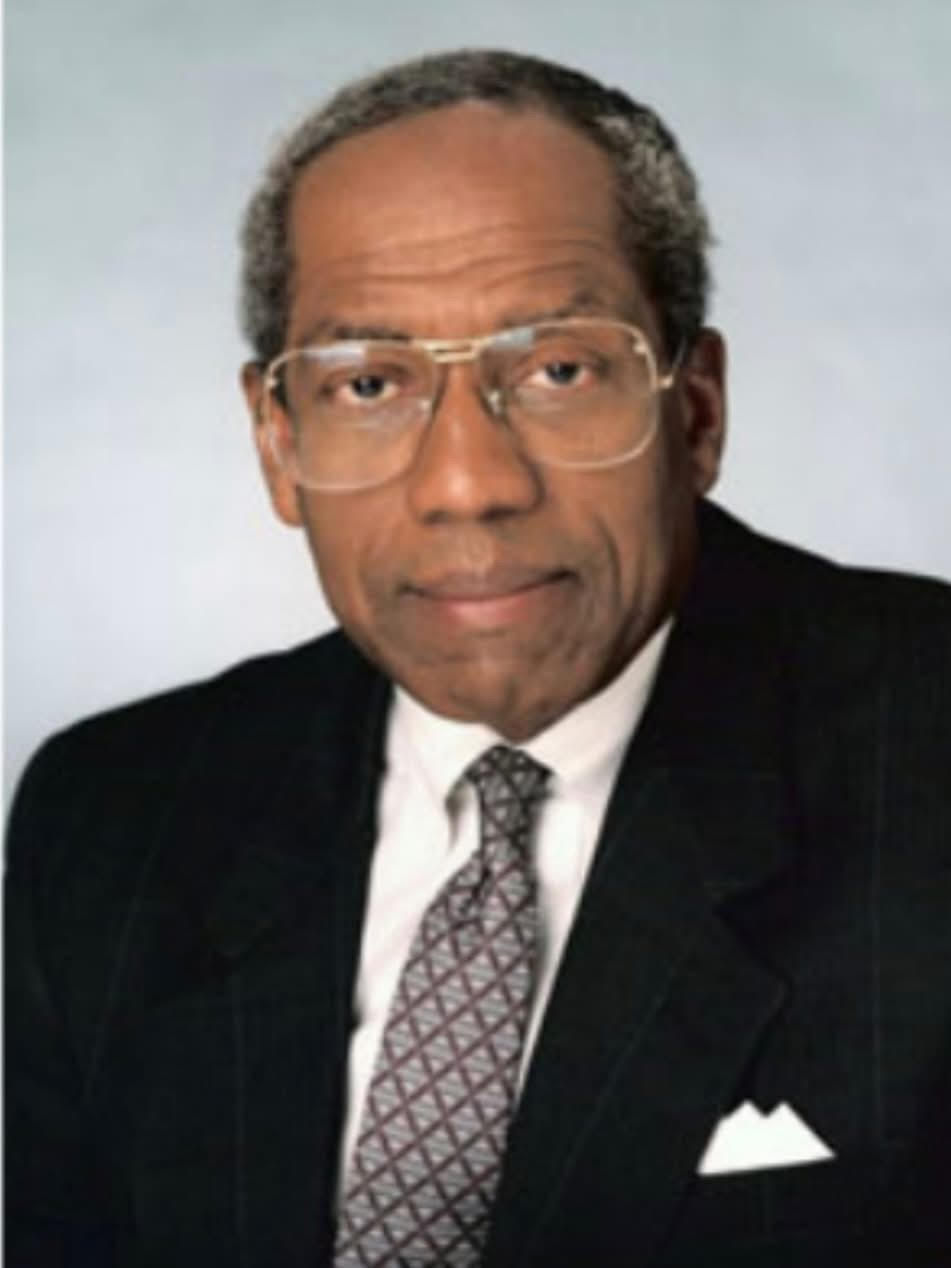
To Charles Epps Jr MD
We have lost a great teacher and an excellent orator as well as a good human being. I want to pray the Almighty God to give enough strength to his family members to overcome his departure. I knew him well, for being one of the many residents in Orthopedics he fashioned at his image.
He grew up in a segregated America where it was almost impossible to have a physician like him, reaching the field of Orthopedics. He told us the ways he worked hard to reach his dreams. He succeeded in becoming Orthopaedic Surgeon and Chair of Orthopedics at Howard University Hospital, claiming all medical honors in the field and becoming the first black physician ever elected as President of the American Orthopedic Society.
I was proud when my research at Howard University Hospital allowed me to write and publish one of my first scientific papers on Osteomylitis in Sickle cell Disease, in the most prestigious orthopedic journal of the country (JBJS). To each resident who has graduated under his leadership, he has always given special consideration and a warm welcome back, once we met at different national and international meetings.
Charles Epps Jr MD returned to his Creator because his mission on earth is over. He left in our collective memory, a distinct variation capable of reaching our soul. We may have lost his voice but through his work, he has exposed his life, allowing us to appreciate his sincerity and his dignity. May he rest in peace. He will be a loss to many of us but we will forever remember him as a great human being and a fabulous teacher.
Professor, we will miss you.
Maxime J-M Coles MD, FRCS, FICS, FAANOS-C
Orthopedic Surgeon and Traumatologist

This is with great sadness that we announce the sudden and untimely passing of Dr Lucienne Laroche younger brother , Father Victor Laroche. He was the beloved chaplain of Xavier University and special assistant to the president for catholic identity. He was beloved by all on Campus.
Dear Lulu, on behalf of my family and A.M.H.E, please accept our sincere condolences.. Be consoled by the fact that he had such an impactful Life and done so much in a short time... He had, just last week , graciously volunteered to have Xavier university Participate in our annual convention in New - Orleans and to deliver graces at the convention Gala. We bow before his remains and pray that God give you, Lucita and the entire family the strength to go through this very trying times . Requiem note from Xavier University is attached below.
Yasmine Titus Pompey MD

Tribute to Dr. Jean-Claude Nerette
It is with profound sadness that we have learned of the passing of our colleague, Dr Jean-Claude Nerette, on Saturday, January 24, 2026, at his Weston, Florida, residence. Jean-Claude was a 1962 graduate of La Faculté de Médecine de l’Université d’État d’Haïti. After two years of residency in Thoracic Surgery at the Sanatorium Hospital in Port-au-Prince, he travelled with his wife, Suzie, to West Germany to pursue four years of postgraduate training. In 1968, he moved to San Juan, Puerto Rico, where he worked as a pulmonologist until 1978, when he accepted a position at the Veterans Affairs Hospital in Tampa, Florida. He spent 18 years in this organization, culminating as the Chief of Spinal Cord Injury Service at Hampton Veterans Hospital in Hampton, Virginia. But what is very significant in Jean-Claude’s Curriculum Vitae and what was the subject of great pride for him is his 13-year career in the United States Army. In 1977, he enlisted in the Army Reserve as a major and was promoted to colonel in 1984. Jean-Claude received several Badges and Decorations, among them the highly coveted ARMY COMMENDATION MEDAL. From my time at the Medical School with Dr. Nerette, I remember a classmate who was consistently polite, kind, and modest, someone deeply respected and genuinely liked by both his peers and his teachers. He was especially known for his wonderful sense of humor, which permeated even in most ordinary conversations, bringing lightness and joy to those around him. From our year of rotating internship at the State University Hospital, I remember Jean-Claude as a knowledgeable and competent intern who showed compassion and respect for the patients, also as a reliable colleague always on time to start his shift when he was on call of duty. From our frequent telephone conversations and occasional face-to-face encounters, especially during these past ten years while both of us were living our retirement in South Florida, I will cherish the memory of a friend who believes in high human values such as integrity, intellectual humility, accountability, empathy, and compassion for the underserved and the underprivileged. Our conversations often turned to politics — at first mostly Haitian politics, and more recently American ones as well. We found ourselves frequently reflecting together on the painful reality of Haiti’s condition: the entrenched corruption of its political class and the heartbreaking descent into chaos that continues to grip the nation today. We want to express our deepest and heartfelt condolences to his wife, Suzie Nerette, to his daughters, Dominique Cumins and Sandra Soriano, to his sons, Stefan and Dr Jean-Claude Nerette Jr., to his grandchildren, and to his sons and daughters-in-law. May his soul rest in Peace!
Fritz Apollon MD Promotion 1962 Faculté de Médecine d’Haiti |


It is with a profound sense of pride that I extend my warmest and most sincere congratulations to Dr. Girardin Jean-Louis on his recent recognition among the top 2% of the world’s most influential scientists.This prestigious distinction is a powerful testament to the exceptional quality, rigor, and global impact of his scholarly work. Dr. Jean-Louis’ contributions to scientific research have not only advanced knowledge within his field, but have also elevated the visibility and credibility of academic excellence on an international stage.Such recognition is the culmination of years of dedication, intellectual leadership, and an unwavering commitment to scientific integrity. Dr. Jean-Louis’ achievement comes at a moment when our diaspora is in great need of affirmation and inspiration. His success stands as a source of pride and encouragement for colleagues, students, emerging researchers and members of the Haitian diaspora worldwide.I commend Dr. Jean- Louis for this remarkable accomplishment and wish him continued success in his research, mentorship, and future endeavors. This acknowledgement underscores the enduring value of impactful scholarship and visionary leadership, bringing honor, not only on Dr. Jean-Louis, but also to the broader academic and professional communities he represents. Excelsior, Dr. Girardin Jean-Louis! With highest regards, Karl Latortue MD PresidentAMHE-NY President-Elect AMHE-Central Executive Committee |
Dear AMHE Members, On behalf of the Executive Board, we extend our heartfelt gratitude to each of you for your continued commitment to AMHE and to our shared mission of advancing healthcare within our community and in Haiti. To all who joined us at the Fundraising Gala, thank you for your presence, your energy, and your unwavering support. Your participation helped make the evening a meaningful celebration of unity, purpose, and progress. Your engagement strengthens our work and inspires us to continue striving for excellence. To our valued members who were unable to attend, please know that your contributions to AMHE are deeply appreciated. Whether through your service, your advocacy, your expertise, or your ongoing involvement throughout the year, you play an essential role in the growth and success of our organization. AMHE thrives because of the collective dedication of its members, each contributing in their own way. We are grateful for every one of you and look forward to continuing this important work together. With sincere appreciation, The Executive Board of AMHE South Florida Chapter |
You’re Invited: AMHE Foundation’s 50th Anniversary Conference & Gala
Emmanuel Francois MD AMHE Foundation | |||
I have the pleasure of announcing that the new webpage is live now. I am inviting you to go to www.amhefoundation.org not only to admire its beauty, but primarily to catch any mistake or mishap that may have slipped through, in spite of our very thorough scrutiny. We know already that the Dear AMHE Foundation affiliates:
contact page has mistaken that have been undetected by me before deployment. We implore you to make a symbolic donation to the program of your choice to test the essential function of the website: the possibility to collect donations and to give the receipt for the tax-deductible donation in a smooth fashion.
I implore you to spend a few minutes going through the website and report all mistakes you may have found.
Thank You for your contribution and best regards.
Emmanuel Francois MD, MPH

Why AMHE 2026 Matters Join the Movement For 50 years, the AMHE Foundation has stood at the intersection of healing, service, and hope—mobilizing healthcare professionals, educators, and advocates to improve lives in Haiti and across the global Haitian diaspora. AMHE 2026 is more than a conference and gala.It is a powerful tribute to a legacy built on compassion, resilience, and action. From expanding access to quality healthcare to advancing medical education and delivering life-saving humanitarian relief, AMHE’s impact has touched generations—and the work continues. Join the AMHE Foundation, May 22–24, 2026, at the Grand Hyatt Washington in Washington, D.C., for a historic 50th Anniversary Fundraiser Gala and a transformative three-day conference experience honoring the past, activating the present, and investing in the future of global Haitian healthcare. By joining us, you are: · Celebrating five decades of measurable healthcare impact · Supporting a mission rooted in service to underserved communities · Connecting with a global network of medical and philanthropic leaders · Helping shape the next era of healing across borders This is your moment to connect purpose with action.Attend. Support. Celebrate. Join the movement at AMHE 2026 and be part of the next 50 years of impact. |
Felicitations au Dr. Girardin Jean-Louis C’est avec une grande fierté que l’on a appris que Dr Giradin Jean-Louis, un des nôtres fait partie des 2% de scientifiques les plus influents au monde. La nouvelle circule sur les réseaux sociaux. Le nombre impressionnant et la qualité de ses publications fait de lui un scientifique de renommée internationale. Dr Girardin Jean-Louis est un professeur émérite de Psychiatrie et de Neurologie à l’Université Miller School de Médecine de Miami et Professeur Associé de Psychiatrie à NYU Langone Health. Il est l’auteur de plus de 400 articles, dont 280 parus dans des revues à comité de lecture ( Science, The Lancet, JAMA, and NEJM). Il a présenté 260 conférences dans des congrès scientifiques et écrit des chapitres d’ouvrages scientifiques. Son influence a été reconnue par les nombreux titres prestigieux et honneurs qu’il a reçus au cours de sa carrière. Son parcours exceptionnel rejaillit sur la communauté médicale de l’AMHE toute entière et particulièrement sur notre chère Haiti qui a tant besoin d’images positives comme lui. Il fait honneur à la communauté haitienne dans son ensemble. Au nom du comité exécutif de l’AMHE, je tiens à le féliciter pour l’ensemble de ses réalisations. Qu’il continue à porter bien haut l’excellence du savoir et à faire rayonner Haiti à travers ses accomplissements. Cordialement, Dr Schiller Castor, MD Président de l’AMHE, Comité exécutif Central |
David Walmer MD / (Maxime Coles MD)
Cervical Cancer Prevention and Treatment registry
Friends and colleagues,
I would like to compile a bibliography of peer-reviewed research publications related to cervical cancer prevention and/or treatment that have been authored by people affiliated with HsCC. I know the history of the research that I have participated in but there is a lot of high-quality research that has been published over the years by many of you. I would like to include research that was done in Haiti as well as other countries. For example, Rachel Masch (BHI) has done a lot of research with chemoablation in El Salvador, China,... Many of our partners have university affiliations (Dartmouth, Harvard, Duke, Mt. Sinai, Cleveland Clinic, etc.) and have strong research backgrounds. I think that all of that research is a demonstration of the strength and potential of the HsCC coalition of partners. Even though the funding of global health research has dwindled, the talents of the researchers are still here and a resource for Haiti. This bibliography could help us establish new research collaborations, assist with grant applications and provide insights into who might serve as experts to guide us as we build our health network together. If you want to include grants related to ongoing unpublished research, that would be fine as well.
I am hoping that this should be an easy exercise for us to just copy relevant articles from our CVs and to forward them. I will make the bibliography available and if we all agree, we could put it on our website.
I wanted to let everyone know that HsCC's Redcap registry is ready for data entry if you are screening patients with VIA, VIAM, cytology or HPV testing. Louise Lindenmeyr has been the guinea pig for beta testing, and she has entered 77 records so far. Thank you, Louise.
Form 1 is a patient demographic information
Form 2 is a series of questions to determine if the patient is eligible for screening
The logic that is in the system at this point is based on WHO guidelines so we might make some minor changes later based on what the guidelines working group decides. At the meeting in November, I believe that Dr. Batsch thought that we should allow screening 5 years earlier than WHO recommendations. We will wait for them to deliberate.
Form 3 records screening data (repeatable form for future screens)
Form 4 records treatment data (repeatable form for future treatments)
If your organization is actively screening, I would like to set up a data access group for you and to train your team to begin entering data.
David Walmer MD

LE GRAND PÊLE-MÊLE DU TEMPS ET DE LA VIE
Nous vivons dans un monde où, à priori, tout semble parfait.
À contempler un coucher de soleil, ou une aube qui s’annonce, on est comme ébahi devant la beauté de cette nature vaste et sublime, si mystérieuse. Une main habile aurait-elle présidé à sa création ? Il en va de même des feuilles observées de loin, qui jaunissent graduellement en automne, s’offrant en fresque pittoresque, majestueuse, avant de tomber de leurs branches, et ne sauraient laisser indifférents.
De même voudrait-on croire que cette main tient encore en équilibre les forces de l’univers, les planètes, pour qu’ils ne s’écrasent les uns sur les autres et ne déclenchent un cataclysme généralisé. Reste et demeure que tout y est harmonie, splendeur, beauté et majesté.
Cependant, dans le même ordre, et suivant la même hiérarchie, nous n’aurions espéré aucun chaos dans le quotidien des humains : les vieux seraient appelés à mourir avant les jeunes, ou mieux, on vivrait en éternel printemps ; les justes rendraient l’âme en paix entourés de l’affection des leurs ; les richesses seraient équitablement réparties entre tous les humains.
Or, ce que nous constatons c’est un quotidien à l’envers, sans ordre et sans rigueur : quelque chose que nous appellerions un pêle-mêle universel. Dans ce pêle-mêle, un ordre injuste se profile chaque jour à nos yeux, sans qu’on n’y puisse rien changer. Les puissants dévorent les faibles, les grandes nations envahissent les plus faibles. Dans cette arène où les uns ont un pouvoir abusif et démesuré sur d’autres, tout semble concourir à la protection des forts et au maintien du statu quo à l’encontre des plus fragiles.
Et le monde souffre en permanence de cette oppression naturelle, sans cour où déposer ses doléances, sans refuge et sans recours. À la force du droit se substitue le droit de la force.
Aussi, on observe que tel homme travaillant toute sa vie parviendra à peine à se nourrir et à prendre soin de sa famille, alors qu’un autre réussira du premier coup dans tout ce qu’il entreprendra. Un petit groupe s’empare de tout et ne laisse rien aux autres. Dieu lui-même semble se moquer de nous quand nous l’implorons.
L’issue se trouverait-elle dans la voie que montrait Alfred de Vigny dans « La mort du loup » : « Gémir, pleurer, prier est également lâche/ Fais énergiquement ta longue et lourde tâche /Dans la voie où le sort a voulu t’appeler/ Puis après, comme moi, souffre et meurs sans parler ».
Mais ne nous a-t-on pas appris que « la main de l’Éternel, n’est pas trop courte pour sauver. Ni son oreille trop dure pour entendre », et que « mille ans sont comme un jour » ? Alors combien de vies faudra-t-il pour enfin voir de ses propres yeux régner la justice sur la terre ?
Prenons l’exemple de deux hommes qui empruntent la même voie. L’un d’eux réussit là où l’autre échoue. Est-ce un certain destin qui les conduit à des résultats différents ? Si le destin préside au devenir de l’homme et des choses en général, pourquoi serait-on responsable de quoi que ce soit ? Pourquoi un enfer, un purgatoire ou un paradis ?
J’ai vu en Ouganda les couloirs sombres des cachots où Idi Amin Dada entassait les opposants de son régime. Ils m’ont donné un aperçu des cachots de Fort Dimanche sous Papa Doc, que je n’ai pas visités. J’ai vu au Sénégal les cachots de l’Île de Gorée, où étaient entassés les esclaves avant de passer la porte de non-retour et d’embarquer vers le Nouveau Monde dans la cale des navires.
Il y a alors quelque chose que je ne comprends, ni ne veux accepter de cette divine bonté, de cette harmonie sans fissure : comment des humains ont-ils eu un tel pouvoir de destruction et de dévastation sur leurs semblables ? Comment une harmonie si parfaite a-t-elle pu supporter une injustice si flagrante, si horrible, et si longtemps ?
Serions-nous si nombreux que nous échapperions à tout contrôle divin, à toute règle, toute justice et toute équité ?
En naviguant dans cet ordre parfait, nous observons que des ethnies, des races entières, sont réduites à la famine et à la privation, tandis que d’autres jouissent de superflu. Nous nous demandons alors : Y a-t-il un seul Dieu ou un dieu pour chaque peuple, pour chaque catégorie d’humains ? Quelle incohérence dans l’administration humaine !
Oui, il faut se demander à juste titre pourquoi Dieu fait-il pleuvoir sur les bons comme sur les mauvais ; pourquoi certains progressent-ils dans leur méchanceté alors que Dieu garde le silence sur leurs actes ?
Face à tant d’absurdité et d’incohérence, il ne reste plus qu’à admettre que le divin est indéfinissable, impénétrable. Qu’il est comme un gaz, épousant la forme et le contenu que notre récipient lui assigne : bonté, amour, cupidité, crainte, paix, sagesse, richesse ou pauvreté, etc. et que dans ce monde schizophrène, dans cette nébuleuse où le réel et son image, les choses et leur contraire sont soudés en un tout, chercher la vérité relève de la folie ; c’est comme tâtonner dans un labyrinthe, sans fil conducteur, où aucune logique ne semble suivre l’ordre des choses.
Alors, quelle voie prendre, quelle réalité sublimer, quel dogme incarner dans notre subconscient, afin d’avoir une idée, infime, du chaos dans lequel nous nous débattons ?
Rony JeanMary M.D.
Coral Springs. FL
Le 13 Décembre 2025

Leon
Au royaume des fanfarons, Léon Bora serait sacré roi car il était un pédant hors pair. Pour se distinguer des autres élèves de sa classe, il affichait son trait non-conformiste comme un badge d’honneur. Adolescent, il créa le Club des Humanistes dans son école congréganiste. Pour le joindre, on devait maîtriser l’art de la déclamation, de la mémorisation des poèmes et, par-dessus tout, celui de Rudyard Kipling, « Si », comme billet d’entrée. Le terme « déclamation » ne reflète pas la prestation requise. On devrait dire « faire une démonstration de l’art oratoire », avec l’ostentation comme sous-entendu.
Il essayait de son mieux de se placer du côté opposé à la majorité. Tandis que la littérature française semait la rage parmi ses condisciples, il basculait vers la russophilie. Ainsi, il se complaisait à transformer son nom en Léonid Pétrovich Borazov. Originaire de Baie-de-Henne, un endroit délaissé et appauvri même par le standard local, il prendrait plaisir pour expliquer à tout un chacun la vraie raison de l’abandon de sa vie natale par les autorités : « Dussé-je vous rappeler que lors de la formation de Baie-de-Henne sur le littoral de notre île, une conjuration des autres régions, jalouses de ce joyau olympien avec des plages d’eau limpide et turquoise se mirent en tête qu’elles feraient mieux de maudire ce lieu en Baie-de-Haine. N’oubliez pas : notre cher Dostoïevski l’a bien démontré, ce phénomène de haine entre Mitia et son père, Fiodor, dans le roman superlatif Les Frères Karamazov. Aujourd’hui, les sept plaies d’Égypte ont envahi cette zone, qui pourrait servir de station balnéaire de première classe. » Il aimait conclure un tel exposé en déclamant ces vers : Nous assistons au règne de l’esprit pauvre en fleur Qui a remplacé l’esprit vif maintenant en pleurs. C’est l’histoire de cœurs qui ont pris peur Lorsque, à dessein ou non, nous provoquons nos malheurs. En évitant le tri de l’ivraie du bon grain, On sème la tempête mais on prie pour le temps serein. Puisqu’il vivait au royaume des fanfarons, un de ses comparses pour le taquiner trouva une réplique aussi percutante : Ce que monsieur a oublié de nous dire Est une vérité sombre mais juste, qui nous porte à rire. Dieu avait légué aux habitants de Baie-de-Henne Une lagune, une baie pittoresque et une garenne À condition de ne pas héberger des loups-garous Pour ne pas susciter son courroux. Les habitants se croyant malins l’ont désobéi. Donc, à la misère et à l’enfer sur terre, il les a soumis. Le Club des Humanistes pullulait de ces élèves doués, mais espiègles qui n’hésitaient jamais à monter au créneau pour tailler la surenchère sur mesure. Tantôt on parlait de poésie classique, tel le texte sublime de Pouchkine, « Je vous aimais », tantôt on chantait ensemble les vers lubriques de « De Profundis Morpionibus ». Léon siégeait toujours au centre du cercle, animant la partie, crépitant de calembours, de blagues, imitant la célérité d’une pluie, l’aplomb d’un as ou l’audace d’un imitateur ou d’un épigone. Son affinité russophile, du jour au lendemain, devint un fardeau autour du cou quand le gouvernement décida qu’une telle préférence était menaçante. Alors, adieu Léonid Pétrovich Borazov. Bienvenue, Léon Bora, réformé en tant que membre pieux du groupe Les Témoins de Jéhovah. Imaginez Léon, un prosélyte, dans la cour d’une école congréganiste ! Aucune chance de survivre. Le Club des Humanistes cessa d’exister ou de fonctionner. Cette cessation ne fut qu’un hiatus d’un trimestre. Alors, revenu en tant que membre de la religion catholique en bonne et due forme, le club recommença. Cette fois-ci l’accent se tourna vers la culture indigène. Les membres du club épatèrent l’assistance lors d’un spectacle digne de ce nom. Quatre élèves, à tour de rôle, déclamèrent, dans un style persuasif, les poèmes légendaires d’Etzer Vilaire, « Les dix hommes noirs ». Une transformation subtile au début, mais apparente se manifestait chez Léon. En effet, au milieu d’un cénacle machiste, il s’exprimait de manière efféminée. La taquinerie, un sport parmi ses pairs, ne rata pas une telle aubaine pour briller à ses dépens. Immédiatement, une effigie portant le sobriquet « Léonide » apparut et le nom colla, comme s’il s’agissait de celui qu’il avait reçu sur les fonts baptismaux. Cette caricature de sa personnalité, vexatoire certes, éveilla chez lui une lutte interne qui grandissait avec le temps. Tel un bras de fer, il essayait de supprimer des désirs qu’il ressentait, eu égard aux us et coutumes de la société. Il riait en public mais pleurait en privé. Ce fut le début de son calvaire. Cinq ans plus tard, à fleur de l’âge, il rendit l’âme sur un lit d’hôpital, son corps devenu squelettique depuis des mois, ravagé par une diarrhée chronique, crachant constamment ses poumons, le visage vieilli, la bouche chargée de muguet. Un avide lecteur, il avait une copie d’« Ainsi parla l’oncle », de Jean Price-Mars, sur son chevet, et elle contenait une enveloppe scellée et un titre : « À ouvrir à ma mort ». *********
Son père avait peur de lire le contenu de la lettre, car la honte liée à sa maladie et à son mode de vie le rongeait tant. Sa mère avait tout accepté depuis belle lurette, mais n’avait osé s’opposer à son époux qu’elle aimait tant et qui la dominait. Il ne dit pas non quand elle suggéra de le faire elle-même. Les yeux pleins de larmes, les mains tremblantes, le cœur gros, une sueur froide coulant sur sa nuque, elle décacheta l’enveloppe en silence, en retenant le souffle, prête à découvrir des secrets qu’elle s’était jurée de ne dévoiler à nulle autre personne que son père, s’il voulait les savoir. « Papi et maman, Je passe en revue les événements de ma vie, en attendant l’arrivée de la faucheuse sous peu, et je dois dire que j’ai beaucoup souffert tout en cherchant le bonheur. Tout d’abord, je dois vous remercier pour l’amour que vous m’avez toujours porté, même lorsque mon choix d’orientation sexuelle vous a déçu, surtout Papi, qui ne comprendra jamais pourquoi la nature permet une telle anomalie. Le fait est que j’ai été piqué par le même moustique que Platon, Aristote et les filles de l’île de Lesbos, sans le chercher.
Qu’on le veuille ou non, une partie de la population, depuis la nuit des temps, a toujours adopté ce comportement. En vain j’ai essayé de réprimer cette attraction que j’ai éprouvée pour les hommes. Je l’ai fait avec une telle force que, finalement, elle a explosé, et je suis passé d’une extrême de chasteté à une autre de promiscuité, et pour cela j’ai payé un prix très cher : ma vie. Mes partenaires dans le plaisir m’ont abandonné dans mon malheur et c’est un goût amer à avaler. J’ai souffert, en adolescent, émotionnellement des taquineries de mes camarades. J’ai beaucoup souffert physiquement sur mon lit de mort. J’ai souffert émotionnellement et physiquement aux mains d’un professeur, un religieux, qui m’avait violé. Je ne me sentais pas capable de vous en parler car vous aviez une admiration aveugle pour ces gens-là. Ma vie aurait été différente si j’avais vécu dans un monde tolérant. Je vous dis merci de m’avoir donné la vie. Je vous aime. Prière de jouer la chanson ‘Alfonsina y el mar’ chaque année à l’occasion de mon anniversaire, tout en lisant sa traduction, pour comprendre les déboires d’une âme tourmentée ».
Reynald Altema MD
Palm City, FL

AI Solutions for Lowering Language Barriers in Medical Settings
Emmanuel S. Francois MD, MPH, Maxime Jean-Marie Coles MD, FICS, FRCS, FAANOS-C,
Nathaëlf Hyppolite MD, MSHI, Daniel Lamaute MBA
Authors Contact Info : info@aimedpros.com
Abstract
Language barriers in healthcare pose significant challenges, hindering effective communication between providers and patients, leading to misunderstandings, misdiagnoses, and suboptimal treatment. Multilingual AI offers a transformative solution to bridge these gaps and enhance healthcare equity. This paper explores the potential of AI-driven language tools to improve healthcare access and quality in diverse populations. We discuss the challenges of healthcare communication due to language barriers, the advancements in translation accuracy, and the various applications of AI language tools such as remote interpretation, multilingual chatbots, and live meeting translations. The paper also presents examples of existing health AI language platforms and examines the efficiency and cost-effectiveness of these tools compared to traditional human interactions. Furthermore, we address the ethical considerations in implementing multilingual AI and provide a roadmap for healthcare organizations to successfully integrate these technologies. As multilingual AI continues to evolve, it holds immense potential to promote inclusivity, fairness, and improved patient outcomes, ultimately contributing to greater global health equity.
Introduction
Language barriers significantly hinder effective healthcare delivery, presenting challenges in communication between healthcare providers and patients from diverse linguistic backgrounds. Multi-language AI offers a transformative solution to this issue, breaking down language barriers and enhancing healthcare equity. By providing accurate and timely translations, these advanced systems enable healthcare providers to understand and meet the needs of patients who speak different languages, ensuring that everyone receives the care they deserve regardless of their language.
Challenges in Healthcare Communication Due to Language Barriers
Effective communication in healthcare is crucial for patient safety and quality care, and the shortage of healthcare interpreters exacerbates communication challenges. Although English is the dominant language in scientific and medical publications, it is not widely understood globally, creating barriers to healthcare access for many, particularly in underserved communities.
Language barriers can lead to misunderstandings, misdiagnoses, and inadequate treatment, exacerbating healthcare disparities among non-native speakers and immigrant communities. Healthcare communication hampered by language barriers is faced with several challenges:
● Accurate Symptom Description: Patients may struggle to describe their symptoms accurately, thereby making it a challenge for healthcare providers to reach a diagnosis.
● Understanding Medical Jargon: Non-native speakers might find it hard to understand medical terminology, resulting in poor adherence to treatment plans and worsened health outcomes.
● Trust Issues: Language barriers may contribute to a lack of trust between patients and healthcare providers, which can deter patients from seeking care.
● Emergency Situations: Delays in communication in emergency settings can be particularly dangerous, highlighting the critical need to overcome language obstacles.
Advancements in Translation Accuracy
Recent advancements in Multi-language AI have significantly boosted translation accuracy in healthcare. The integration of neural networks and deep learning has revolutionized the field, allowing modern algorithms to grasp nuances and complex phrases with greater precision. Ongoing improvements in real-time processing enable instant translations without noticeable lag, ensuring that healthcare providers can rely on accurate multilingual support during critical interactions. Concurrently, the costs associated with these capabilities are being reduced through open-source models, and efficient optimization of AI platforms.
Open-source AI models "No Language Left Behind (NLLB)" were introduced by Meta, and they are capable of providing accurate translations between 200 languages—including low-resource languages like Asturian, Haitian Kreyol, Luganda, Urdu, and more
By Applying AI Techniques to Facebook and Instagram for translation of low-resource languages, Meta’s platforms help people communicate with anyone regardless of their language preferences. So far, the technique is not reliable yet, but it is a beginning. One needs to be careful and revise the translated document prior to submitting it as the official one. Unfortunately, the translation is not always accurate, nor it represents always the ideas that you wanted to expose
 |
Multilingual AI can improve healthcare access by providing translations in various languages.
To accurately translate medical content, AI translation tools must possess and master not just language proficiency and translation skills, but also a solid understanding of medicine in general and medical terminology.
|
Photo by Cedric Fauntleroy: https://www.pexels.com
Possible Applications of AI Language Tools
Remote Video and Over-the-Phone Interpretation:
The adoption of remote interpretation services is growing, providing access to interpreters in situations where in-person interpreters are not available. Platforms like Stratus Video offer 24/7 remote interpreter access in hundreds of languages, facilitating visual connections between patients, doctors, and interpreters.
Multilingual Chatbots:
Chatbots and virtual assistants in healthcare are incorporating support for multiple languages, enabling users to interact in their native language for guidance on symptoms, medications, and scheduling.
Conduct Live Meetings In Multiple Languages:
Microsoft just introduced Livecaption by Copilot+, a software which allows real-time translation for any video or video conference call. Organizers can choose from over 50 languages for live captions.

Image Source: Microsoft
This feature allows meeting content to be instantly translated into the participants' preferred language. For instance, an organization having a multi-language constituency such as AMHE, can easily break the language barrier with these tools. Large meetings conducted in one language such as English, can be simultaneously translated in French and be captured by affiliates in Haiti, Canada and anywhere else in the world.
Another example is the possibility of improving what is being presently done at La Paix Hospital, Port au Prince by Dr Pierre-Marie Wooley MD, Assistant-Chief of Orthopedics there. For many years, he had organized weekly Orthopedics Grand Rounds, where Professors mainly from the US, but also from Haiti and European countries conduct learning sessions via Zoom, to discuss latest technologies in the Orthopedics field. In a recent conversation, Dr Wooley can foresee how his series of Grand Rounds, having reached its one hundredth session milestone, can be expanded thanks to Livecaption, to include not only the targeted audience of orthopedics trainees at area hospitals in Haiti, but also any interested orthopedic specialist, who having subscribed to Livecaption translation module software, can participate in, while seating in the comfort of his/her home.
The software also supports multilingual responses during meetings, improving communication and understanding among team members who speak different languages.
Examples of Health AI Language Platforms:
● Ada Health: An AI-driven platform that currently provides medical information and diagnostics in English, German, French, Spanish, Portuguese, Romanian, and Swahili. [1]
● Microsoft’s Azure AI Health Bot Service is a cloud platform designed to help create AI-powered virtual health assistants that understand clinical terminology. These virtual assistants or AI bots can handle administrative workloads and engage with patients to determine the type of care needed. with an adaptive questionnaire and recommends the type of care needed.
Efficiency and Cost-Effectiveness of AI Language Tools in Patient
AI language tools offer substantial benefits that cannot be overlooked. Their ability to provide consistent, efficient, and cost-effective communication makes them a valuable addition to healthcare systems. As technology continues to advance, the role of AI in patient communication is likely to expand, complementing human interactions and enhancing overall patient care.
The integration of AI language tools in healthcare communication presents a compelling case for enhanced efficiency and cost-effectiveness over traditional human interactions. While the human touch remains an essential component of healthcare, several factors illustrate why AI can be a superior option in certain contexts.
Consistency and Calibrated Empathy
One of the primary advantages of AI language tools is their ability to provide consistent and measurable levels of empathy. Unlike humans, whose empathetic responses can fluctuate based on personal factors such as mood, stress, or fatigue, AI can be programmed to deliver a uniform level of empathy in every interaction. This consistency ensures that all patients receive the same quality of care and communication, which can be crucial in maintaining patient satisfaction and trust, plus the added advantage of having them less likely to switch providers because of dissatisfaction in the practice.
Efficiency in Handling Repetitive Tasks
AI tools excel at handling repetitive tasks that do not necessarily require human intervention. Scheduling appointments, providing medication reminders, and offering initial consultations based on symptoms are areas where AI can operate more efficiently than humans. This efficiency not only saves time for healthcare providers but also reduces the workload on human staff, allowing them to focus on more complex and nuanced patient care.
Cost-Effectiveness
The deployment of AI tools can lead to significant cost savings for healthcare institutions, and a substantial decrease in healthcare inflation . The initial investment in AI technology is offset by the reduction in labor costs over time. AI systems can operate 24/7 without the need for breaks, benefits, or overtime pay, leading to more economical operations. Additionally, the ability of AI to quickly process and analyze large volumes of data can enhance decision-making and improve outcomes, further contributing to cost savings.
Reduction in Human Error
Human interactions are prone to errors, which can have serious implications in healthcare settings. AI language tools, when properly programmed and monitored, can reduce the likelihood of such errors. By ensuring that information is conveyed accurately and consistently, AI can help mitigate risks associated with miscommunication or oversight.
Scalability and Accessibility
AI tools offer scalability that human resources cannot match. They can be deployed across multiple locations and can handle an increasing number of interactions without a proportional increase in costs. This scalability is particularly beneficial in underserved or remote areas where access to healthcare professionals may be limited. AI can bridge this gap by providing reliable and timely communication with patients, ensuring that they receive the necessary guidance and support.
Empirical Support for AI Translation in Healthcare
Recent research has highlighted the potential of AI-driven machine translation in improving patient outcomes in multilingual healthcare settings in poor communities. Banik (2023) and Ji (2023) both emphasize the importance of accuracy and accessibility in medical translation, with Banik's regression-based approach and Ji's principles for designing assistive health communication tools. Khoong (2022) and Gangavarapu (2024) further underscore the need for research in this area, particularly in evaluating the use of machine translation in clinical care and in developing context-aware multilingual medical language models. These studies collectively point to the potential of AI-driven machine translation in addressing language barriers and improving healthcare access and quality in underserved communities.
For instance, AI-driven chatbots have been used successfully to manage patient inquiries and provide information, resulting in high levels of patient satisfaction (Bickmore et al., 2018). Moreover, AI applications in telemedicine have demonstrated their ability to maintain effective patient engagement and improve health outcomes (Wang et al., 2020).
Ethical Considerations in Implementing multi-language AI
AI is not a solution without problems. We need to manage some of the ethical concerns when implementing multi-language AI in healthcare, such as:
● Transparency: Patients and providers need clear information about AI's role in medical decisions to foster trust and promote informed consent.
● Algorithmic Biases: Developers must ensure that AI systems do not perpetuate existing Health inequalities or exclude minority dialects through regular audits and diverse data inputs.
● Patient Confidentiality: AI systems must comply with strict data privacy regulations to protect sensitive health information, using secure encryption practices and robust cybersecurity measures.
● Dependency on AI: Healthcare professionals should view AI tools as supplements, not substitutes, for human judgment. Continuous training and oversight are vital for ethical and effective application.
Implementing Multilingual AI: A Roadmap for Healthcare Organizations
Realizing the potential of multilingual AI in healthcare requires more than just acquiring the right technology. It demands a comprehensive strategy that addresses the technical, organizational, and human factors involved in deploying and managing AI systems (Gao et al., 2022; Mehandru et al., 2022). The following roadmap provides a step-by-step guide for healthcare organizations looking to implement multilingual AI solutions. By following this roadmap, organizations can ensure a smooth and successful transition to AI-enabled language access and equity (Ji et al., 2023; Khoong et al., 2022).
Figure 1 Multilingual AI Roadmap
1. Needs Assessment and Goal Setting
o Identify language needs of patient population
o Determine specific use cases for multilingual AI (e.g. telemedicine, patient intake, patient education) (Gangavarapu, 2024)
o Set clear goals and success metrics
2. Data Acquisition and Preparation
o Collect high-quality texts in relevant languages and domains (Banik et al., 2023)
o Ensure data is diverse, representative, and ethically sourced (Xie et al., 2021)
o Preprocess and clean data, handling formatting, noise, and inconsistencies
3. Model Selection and Training
o Evaluate state-of-the-art multilingual models (e.g., transformers, NLLB) (Meta, 2022)
o Fine-tune pretrained models on in-domain medical data (Han et al., 2023)
o Experiment with transfer learning, domain adaptation, and low-resource techniques
o Validate model performance, fairness, and robustness (Zeng-Treitler et al., 2010)
4. Integration and Deployment
o Determine deployment architecture (cloud vs. on-prem, API vs. embedded)
o Integrate AI components with existing systems (EHR, telehealth platforms, etc.) (Microsoft, 2023)
o Implement user-friendly interfaces for providers and patients (Ada Health, 2022)
o Conduct thorough testing to ensure reliability and performance
5. Governance and Monitoring
o Establish clear protocols for AI usage, oversight, and accountability
o Continuously monitor model performance and collect user feedback
o Implement strategies to detect and mitigate bias and fairness issues (Mehandru et al., 2022)
o Regularly update models with new data to maintain relevance
6. Training and Change Management
o Educate staff on AI capabilities, limitations, and appropriate use cases (Bickmore et al., 2018)
o Provide hands-on training for interacting with AI interfaces
o Foster a culture of openness, collaboration, and continuous learning
o Monitor for unintended consequences and adjust processes as needed (Wang et al., 2020)
Implementing multilingual AI in healthcare requires a strategic and holistic approach (Gao et al., 2022). The roadmap presented above provides a general framework that organizations can follow, but it should be adapted to fit each organization's unique needs, resources, and contexts. Factors such as the size and diversity of the patient population, the complexity of the healthcare system, and the available budget and expertise will all shape how the roadmap is implemented in practice (Khoong et al., 2022).
Healthcare organizations should approach multilingual AI as an iterative process, starting with small pilot projects and gradually scaling up as they build confidence and capacity. Throughout the process, it is crucial to engage all relevant stakeholders - including providers, patients, administrators, and IT staff - to ensure buy-in, address concerns, and incorporate diverse perspectives (Ji et al., 2023). By following a structured approach and maintaining a commitment to continuous improvement, healthcare organizations can successfully harness the power of multilingual AI to enhance access, quality, and equity in care delivery (Gangavarapu, 2024; Xie et al., 2021).
Future of Multi-language AI in Healthcare Equity
Exploring Potential
Multi-language AI holds immense potential for making healthcare more accessible and equitable. By providing accurate translations, it ensures that patients can effectively communicate their symptoms and concerns, leading to more accurate diagnoses and effective treatments. As AI technology advances, real-time translation will become more precise and context-aware, likely being integrated into telemedicine platforms, hospitals, and clinics worldwide.
Challenges and Opportunities
While integrating Multi-language AI into healthcare sectors presents challenges such as high initial costs and the need for ongoing tech support, the opportunities are immense. Multi-language AI can enhance patient satisfaction, bridge gaps in doctor-patient communication, and offer scalable solutions to language barriers. As technology evolves, these systems will become more cost-effective and widely available, making equitable healthcare more attainable.
Conclusion
Multi-language AI is a transformative technology that addresses the critical issue of language barriers in healthcare, promoting inclusivity, fairness, and improved patient outcomes. The case studies highlighted demonstrate the significant benefits of recent AI advancements in improving healthcare delivery to underserved communities, showcasing the potential for AI to enhance accessibility, accuracy, and patient satisfaction. As advancements continue, the integration of Multi-language AI into healthcare systems worldwide will play a pivotal role in achieving global health equity.
References
Banik, D., et al. (2023). Improving Access to Medical Information for Multilingual Patients using Pipelined Ensemble Average based Machine Translation. ACM Transactions on Asian and Low-Resource Language Information Processing.
Ji, M., et al. (2023). Translation Technology in Accessible Health Communication.
Khoong, E. C., et al. (2022). A Research Agenda for Using Machine Translation in Clinical Medicine. Journal of General Internal Medicine.
Gangavarapu, A. (2024). Introducing L2M3, A Multilingual Medical Large Language Model to Advance Health Equity in Low-Resource Regions.
Xie, W., et al. (2021). Supporting Risk-Aware Use of Online Translation Tools in Delivering Mental Healthcare Services among Spanish-Speaking Populations. Computational Intelligence and Neuroscience.
Han, L., et al. (2023). Neural Machine Translation of Clinical Text: An Empirical Investigation into Multilingual Pre-trained Language Models and Transfer-Learning. Frontiers in Digital Health.
Zeng-Treitler, Q., et al. (2010). Can Multilingual Machine Translation Help Make Medical Record Content More Comprehensible to Patients? Medinfo.
Mehandru, N., et al. (2022). Reliable and Safe Use of Machine Translation in Medical Settings. Conference on Fairness, Accountability and Transparency. PDF.
Bickmore, T. W., Trinh, H., Olafsson, S., O’Leary, T. K., Asadi, R., Rickles, N. M., & Cruz, R. (2018). Patient and Consumer Safety Risks When Using Conversational Agents. Journal of Medical Internet Research, 20(9). DOI: [link]
Wang, F., Casalino, L. P., & Khullar, D. (2020). Deep Learning in Medicine—Promise, Progress, and Challenges. JAMA, 323(15), 1464-1465. DOI: [link]
Meta: No Language Left Behind (NLLB) | AIGlobalLab. (2020). Retrieved from https://ai.meta.com/research/no-language-left-behind/
Ada Health. (2020). Retrieved from https://ada.com/help/360000309305/
Microsoft Azure Health Bot. (2020). Retrieved from https://learn.microsoft.com/en-us/azure/health-bot/
SolaB AI. (2020). Retrieved from https://www.solab.ai/c/27b09a5b-edcd-b8dd-feb0-3a12fa2c644c
National Center for Biotechnology Information. (2020). Retrieved from https://www.ncbi.nlm.nih.gov/pmc/articles/PMC11135232/
arXiv. (2020). Retrieved from https://arxiv.org/html/2310.02374v4
National Center for Biotechnology Information. (2020). Retrieved from https://www.ncbi.nlm.nih.gov/pmc/articles/PMC8285156/
Binariks. (2020). Retrieved from https://binariks.com/blog/multimodal-ai-for-healthcare/
AI Index. (2020). Retrieved from https://aiindex.stanford.edu/wp-content/uploads/2023/04/HAI_AI-Index-Report_2023.pdf
Nature. (2020). Retrieved from https://www.nature.com/articles/s41746-024-01074-z
Encord. (2020). Retrieved from https://encord.com/blog/gemini-google-ai-model/
LinkedIn. (2020). Retrieved from https://www.linkedin.com/pulse/microsoft-codi-multimodal-ai-healthcare-louis-charles-mba-cissp-uzgse
ResearchGate. (2020). Retrieved from https://www.researchgate.net/publication/378354823_Generative_AI_for_Transformative_Healthcare_A_Comprehensive_Study_of_Emerging_Models_Applications_Case_Studies_and_Limitations
AIMS Press. (2020). Retrieved from https://aimspress.com/article/doi/10.3934/era.2023334?viewType=HTML
Journal of Medical Internet Research. (2020). Retrieved from https://www.jmir.org/2018/9/e11510/
Microsoft LiveCaption Copilot+. (2024). Retrieved from https://support.microsoft.com/en-us/office/use-live-captions-in-microsoft-teams-meetings-4be2d304-f675-4b57-8347-cbd000a21260

DCAONG 2.0: Modernizing the State to Better Serve Development, a Diaspora in Haiti
By Aldy Castor, MDJanuary 2026
I still remember.
On January 12, 2010, during Haiti’s earthquake, Baudelaire Petit-Frère Petit, then Director of the Coordination Unit for the Activities of Non-Governmental Organizations (UCAONG), disappeared beneath the rubble, tragically taking with him a part of the country’s administrative memory: NGO files, archives, traces of work, and countless quiet efforts.
That memory returned to me with great force during my presentation on the modernization of the DCAONG, organized by the Ministry of Planning and External Cooperation on Friday, January 15, 2026. It recalls a truth too often forgotten; administrative memory is not a technical detail. It is a condition for continuity, transparency, and effectiveness.
Today, UCAONG, now the Direction for the Coordination of NGO Activities (DCAONG), wants to modernize. What if this reform became a structural lever for development in Haiti? Modernizing the DCAONG means modernizing the framework in which NGOs operate in the country: less paperwork, more clarity, and a more credible State serving communities.
From Paperwork to Performance: A Governance Choice
Within the Haitian diaspora in the United States, I often heard a simple expression: “in at 8, out at 4.” In Haiti, I would translate it this way for my Haitian compatriots, from 8 to 4, files come in the morning and go out in the afternoon, within a clear, organized system focused on results.
That formula captures the spirit of DCAONG 2.0: making our institutions work with greater efficiency and less administrative burden. This is not about looking modern for the sake of it, but about building an administration that meets the demands of our time and strengthens the country’s credibility. Modernizing DCAONG is, above all, a governance decision.
A Long-Standing Reality: A Heavy, Fragmented, and Costly Procedure
I have always been interested in the role of NGOs in Haiti: in their usefulness, of course, but also in their limitations when they operate within a fragile administrative environment. As far back as 2004, I dedicated a booklet to this issue: The Actions and Limits of NGOs: The Example of Haiti. Twenty years later, the evidence remains: the effectiveness of humanitarian action also depends on the quality of the public framework that supports it.
Even today, for fiscal year 2025, the annual submission of NGO files remains a heavy and burdensome process, both for organizations and for the administration. Inherited from the 20th century and poorly adapted to today’s requirements, this model creates delays, weak coordination, and limited capacity for evaluation. It ultimately undermines national effectiveness and Haiti’s institutional credibility, including in the eyes of its partners.
One figure highlights the scale of the gap. In the United States, there are roughly 1.5 to 2 million 501 (c) (3) non-governmental organizations for a population of about 350 million, a ratio of 4,300 to 5,700 NGOs per million inhabitants. In Haiti, the Ministry of Planning and External Cooperation published, on December 13, 2025, in Le Nouvelliste, the list of NGOs recognized for fiscal year 2025–2026, numbering 130. If we estimate between 250 and 300 total registered NGOs for a population of about 12 million, that corresponds to 21 to 25 NGOs per million inhabitants. In other words, the United States has proportionally about 170 to 275 times more NGOs per capita than Haiti.
Such a difference is not explained by generosity alone. It also reflects a more supportive legal and tax framework, a more deeply rooted culture of giving, and a more predictable public administration, factors that make it easier to create organizations, ensure compliance, and promote transparency.
Elsewhere, the World Moves Forward: Method Makes the Difference
The comparison is striking. In the United States, the Haitian Resource Development Foundation’s experience with the Internal Revenue Service reflects a different approach: online filing, immediate confirmation, automated tracking, and secure centralized archiving.
In just a few minutes, a file can be submitted, verified, and stored. The difference is not primarily about money. It is about methods, organization, and the willingness to simplify without losing control.
This is exactly the kind of change Haiti must pursue to modernize its public administration and allow NGOs to work faster, more clearly, and ultimately serve communities better.
Why “DCAONG 2.0”? Useful Modernity, Not Decorative Modernity
I deliberately chose the label “DCAONG 2.0.” It conveys a simple idea: advancing an essential institution toward a modernized, structured, and measurable version of public service.
In contemporary language, “2.0” means an upgrade: the identity and mission remain, but tools, processes, and outcomes improve. In other words, DCAONG 2.0 does not deny DCAONG; it gives it the means to meet the demands of its time.
DCAONG 2.0: A Single Platform, Clear and Transparent
The vision of DCAONG 2.0 is based on an integrated digital platform aligned with international standards. Simplified procedures, a structured database, and real-time access to information would improve coordination with sector ministries while making partners’ work easier.
Contrary to some concerns, digitalization does not weaken oversight; it strengthens it. In a digital system, every step leaves a trace, recorded and retrievable. Paper gets lost, scattered, forgotten. A well-designed digital system preserves institutional memory, protects decision-making, and makes audits easier.
Technologies such as blockchain, particularly Cardano, can, when needed, strengthen traceability and reassure certain donors. But let us be clear: this is not an obligation. It is an option that can be activated progressively, depending on priorities and capacity.
One principle, however, must remain non-negotiable: the data stays Haitian. Technology is not an authority. It is only a tool in service of institutional sovereignty.
DCAONG 2.0 also represents a smart reallocation of existing costs: unnecessary travel, repeated delays, paper management, duplicated work, lost time, and administrative fatigue. In reality, failing to modernize often costs more than modernizing.
But to be sustainable, this modernization must inspire trust and respond to a more demanding international environment. Three dimensions therefore deserve special attention.
Building Trust: Diaspora, Foreign NGOs, and Structured Dialogue
Having lived in the United States for more than half a century, I have participated in humanitarian actions led by NGOs, particularly the Haitian Resource Development Foundation and the Haitian Medical Association Abroad, as well as initiatives carried out with public institutions, including U.S. Southern Command. This experience taught me a simple lesson: effectiveness depends not only on resources, but also on the public framework that organizes action.
In that spirit, modernizing the DCAONG would benefit from a structured dialogue with the Haitian diaspora and foreign NGOs. Working meetings, especially in Florida, could help align expectations, clarify governance rules, and share proven methods.
It is time to move from occasional contact to an organized partnership focused on results. This dialogue then becomes a driver of trust. And trust grows stronger when the State proves it can align with international standards now rooted in transparency, traceability, and measurable impact.
Transparency and Results: The New International Standard
This approach makes even more sense considering recent shifts in U.S. policy. On December 22, 2025, the U.S. Department of State issued a policy orientation titled “Restoring America’s Global Health Leadership,” led by Secretary of State Marco Rubio. It is based on a clear observation: the old aid model, too loosely structured and insufficiently evaluated, did not deliver the expected results.
Today, the United States prioritizes concrete outcomes, rigorous traceability, and shared accountability with governments. For Haiti, the goal is not to endure this shift, but to anticipate it intelligently.
By aligning with this approach, the DCAONG strengthens the role of the Haitian State as a credible counterpart, facilitates dialogue with partners, and opens access to more stable, better monitored, and better structured development funding.
The Sensitive Issue: Customs Verification Fees
Haiti must face a crucial issue: the customs verification fees applied to shipments intended for humanitarian action and development.
The debate is not whether fees should exist. A State has the right and even the duty to regulate and control. The real question is: what levels of fees are reasonable, predictable, and compatible with the goal of helping the population, without discouraging partners?
In many countries, nonprofit organizations benefit from adapted tax frameworks precisely because their activities serve the public interest. The challenge is always the same: facilitating aid while guaranteeing traceability and oversight.
Let us take a concrete example. An NGO brings in a forty-foot container of nutritional supplies to support a population facing food insecurity. According to the latest data from the World Food Program and FAO, more than half of Haiti’s population, about 5.7 million people, lives in acute food insecurity, and nearly 2 million are in emergency conditions.
In several countries in the region, such as the Dominican Republic, El Salvador, Honduras, Nicaragua, and Guatemala, verification fees for this type of shipment generally range from 50 to 250 dollars. In Haiti, these fees rose from 250 dollars in 2019 to 4,000 and even 6,000 dollars in 2025, with no clearly visible link to improved service.
The problem is therefore not the existence of fees, but the fact that they become excessive, unpredictable, and discouraging. Under these conditions, some donors and NGOs make a simple decision: deploy their projects elsewhere, where the environment is more stable.
The result is immediate: fewer projects, less aid, and less support for Haitian families exposed to food insecurity. At the national level, it reduces inflows and worsens social impact.
This is not about removing State control, but about establishing reasonable and proportionate fees aligned with regional standards so that projects remain in Haiti. Clear rules and predictable costs enable the State to control better and enable the population to benefit more fully from assistance.
What Haiti Gains: Efficiency, Credibility, Impact
The benefits of DCAONG 2.0 are concrete. The DCAONG gains reliable data, predictable procedures, and stronger coordination capacity. NGOs gain simpler administration, reduced costs, and stronger institutional visibility.
The result is clear: more trust, more credibility, and more effective impact on the ground.
In a country where needs are immense, administrative time lost always translates into social opportunities lost. Modernizing here means saving time for everyone, especially for those who have the least.
A Modernization Possible in 12 to 18 Months
Implementing DCAONG 2.0 can be carried out in a progressive and controlled manner over a period of twelve to eighteen months.
A first phase, focused on governance, would structure the project: a steering committee bringing together the DCAONG, NGOs, and partners; a validated roadmap; and clear technical requirements.
A second phase would focus on deployment: launching the platform, training teams, and then adjusting based on feedback from the field.
However, it must be said realistically: when a ministry switches to electronic filing without sufficient preparation of teams and procedures, the same problems often reappear. A new channel ends up reproducing the old disorder. Digital files pile up like paper files. And the platform becomes, through lack of method, a simple digital graveyard. Frustration comes quickly, “Sistèm nan pa mache,” (the system does not work) even though, very often, it is the process that was never redesigned.
That is why the “8 to 4” pilot project is an essential transition step: a temporary crutch, but a necessary one, to secure the reform, correct practices, and install a modern management culture for the long term.
The goal is to be an operational platform, measurable results, and modernization adapted to the realities of the country.
Conclusion: Choosing “8 to 4”
At its core, DCAONG 2.0 is a simple choice. Either files come in and pile up, or we make a decisive leap into modernity: “8 to 4.”
Choosing “8 to 4” means choosing efficiency over waiting, transparency over opacity, and concrete results over endless procedures.
Because modernizing the DCAONG is not just about improving administration, it is about protecting the efforts of those who help, strengthening the country’s credibility, and delivering more dignified responses to Haitian families in need.
And if we may allow ourselves a brief smile, without losing the seriousness of the point, let us say it this way: Haiti already has enough mountains to climb. By removing the mountain of paperwork, we would open a more direct path toward development
Aldy Castor MD
Weston FL

A New Model Links Governance to Neanderthal Decline.
The Model of Neanderthal Absorption
Jan 20, 2026
About this post
Neanderthals were part of the human story. Yet, perhaps because we have assumed they contributed little to our lives, and because our knowledge has long been limited, we have rarely applied a governance lens to the fossils and archaeology that have shaped most interpretations of their world. We are now in a position to apply a governance framework to emerging evidence in ways that incorporate Neanderthal lives, society, and disappearance into a wider human narrative of discovery, resilience, and survival that individuals and communities have always confronted over time.
A governance framework helps illuminate what may have been unfolding in Neanderthal Eurasia as anatomically modern humans (AMH) arrived, and why survival under those conditions may have depended on cooperation and eventual integration rather than simple displacement. What follows is a summary of the Model of Neanderthal Absorption, a hypothesis I was proud to propose in Who Put the Devil Into The Pig? (Amazon.com, Barnes & Noble) and have now presented in full on ResearchGate.
The summary follows the structure of the model but, to keep it brief, I have limited each section to three key items.
Summary: The Model of Neanderthal Absorption
Abstract
· This summary presents the Neanderthal Absorption Model as an explanation for Neanderthal decline driven by slow demographic pressure rather than conquest, inferiority, or a single climate shock.
· It highlights three interacting conditions: fire-enabled aggregation, sustained proximity to canids enabling zoonotic spillover risk, and patrilocal/exogamous social structure shaping governance networks.
· The model argues that under compounding fertility pressure, cooperation and interbreeding with Anatomically Modern Humans (AMH) could become adaptive, yielding asymmetric assimilation rather than straightforward replacement.
Introduction: The Model of Neanderthal Absorption
· The model is framed as a testable hypothesis that revises AMH–Neanderthal relations from competition-centered narratives toward integration-centered ones.
· It proposes that AMH neither eradicated nor simply outcompeted Neanderthals, but that interbreeding and social integration contributed to Neanderthal absorption under specific ecological and demographic constraints.
· It calls for further governance, paleogenetic, and archaeological research to evaluate the hypothesis and its predicted signatures.
Political Science and Governance Anthropology Help Address the Barrier of Time
· The time barrier thins evidence and increases the risk of presentism and teleology, complicating inference about ancient governance.
· The approach therefore treats governance broadly as lived coordination in families, bands, and small communities, not only as state-level institutions.
· It argues that long-run outcomes can still function as signals of earlier governance dynamics when assessed with disciplined, cross-disciplinary methods.
Overcoming the Pacing Problem
· Climate forcing, competitive displacement, and hybridization each account for part of the record but do not fully explain the tempo, geography, and demography of the Neanderthal transition.
· These gaps have left room for biased or pseudoscientific narratives that treat Neanderthal decline as either sudden catastrophe or simple defeat.
· The model advances a synthesis in which interacting ecological, demographic, and governance-relevant factors better fit the observed archaeological, genomic, and epidemiological patterns.
Evidence Across the Time Barrier
· In the absence of written records, governance can be inferred by combining material signals, spatial context, and biological evidence from remains.
· Artifacts are interpreted through placement and use (e.g., hearth vs. burial; refuse vs. display), and repeated patterns across sites strengthen inference beyond isolated cases.
· Environmental traces such as repeated site use, hearth intensity, and patterns of resource extraction can provide additional clues about decision-making, coordination, and social obligations.
Ecological Setting: Climate Pressure and Why Cooperation Becomes Adaptive
· Two late-Pleistocene disruptions, specifically the Mount Toba eruption (~74kya) and the recurring Dansgaard–Oeschger (“D-O”) rapid temperature oscillations (to ~40kya), are presented as intensifying ecological stress and survival costs for AMH and Neanderthals in Eurasia.
· These pressures plausibly shaped migration and demanded repeated cultural and technical adaptation that could be transmitted across generations.
· Within this setting, the model argues that sustained conflict would be maladaptive and that cooperation and interbreeding could offer major survival advantages under constraint.
Complementary Physiques and the Limits of Simple Replacement Narratives
· The summary contrasts AMH traits that favor stamina and mobility with Neanderthal traits that favor cold tolerance and high short-term power, suggesting functional complementarity rather than a decisive advantage of either species.
· It notes that popular accounts emphasizing a simple weapons-gap, cognitive superiority, or widespread lethal conflict are weakly supported by direct evidence at continent-scale.
· It argues that neither “hybridization alone” nor a straightforward replacement narrative resolves the pacing problem, motivating attention to demography, ecology, and social coordination.
Fire as a Social Anchor and an Epidemiological Multiplier; Canids as a Zoonotic Bridge
· The model treats Neanderthal ability to make fire at will (~400kya) as enabling colder-latitude habitation and denser, more stable gatherings around hearths.
· It argues that repeated aggregation in enclosed shelters would have increased vulnerability to communicable disease by raising contact intensity and shared-air exposure, especially in cold seasons.
· Combined with sustained canid–hominin proximity (a new social relationship), these conditions are presented as increasing spillover risk and circulation potential for a respiratory pathogen class consistent with a morbillivirus-like agent.
A Quiet Pandemic and the Arithmetic of Demographic Decline
· The model proposes that, in small structured populations, a slow-spreading respiratory pathogen can be evolutionarily consequential even without high mortality if it reduces effective fertility.
· Repeated shelter reuse plus periodic interclan mixing in an exogamous network are presented as mechanisms that could sustain transmission despite low population density.
· A stylized demographic example illustrates how modest fertility reductions can compound over decades into shrinking cohorts, older hunting parties, simplified toolkits, and irreversible metapopulation decline without mass graves.
Governance, Family Structure, and the Transmission Network
· Genetic patterns from Neanderthal burials are summarized as consistent with patrilocality and exogamy, implying female movement between groups and male philopatry.
· Mate selection and periodic gatherings are treated as governance-relevant coordination processes that also create “amplifier” settings for respiratory infections by mixing otherwise separated networks.
· The summary notes likely benefits of exogamy (resource ties, skill transfer) while emphasizing uncertainty about property, leadership, and authority structures, and it contrasts this with limited knowledge about early AMH social organization.
Why AMH Would Not Be Affected Until the Progenitor Virus Was No Longer a Danger
· The model argues AMH would likely avoid equivalent impact because they lacked sustained association with the canid reservoir during high-risk emergence and did not participate in Neanderthal-style interclan gatherings that sustain transmission.
· It adds three outcome-skewing factors that do not require dramatic differences: timing/intensity of exposure, differing immunity landscapes, and contact-network structure.
· It concludes that small percentage differences in susceptibility or contact continuity can produce large demographic divergence over centuries.
Contact: Caution, Gradualism, and the Logic of Integration
· First contact is described as gradual and cautious, involving long periods of mutual observation, signaling, and limited encounters at predictable nodes rather than immediate violence.
· Under conditions of abundant game and low population density, the summary suggests low initial perceived threat alongside sustained attention to each other’s hunting behaviors and cultural practices.
· It then flags governance questions raised by interbreeding in a patrilocal context—especially mate selection and union structure—while noting that genetics has not resolved whether unions were long-term or whether women moved between clans.
Genetics: Enabling Conditions for Partnership and the Signature of Asymmetric Assimilation
· The model highlights a human-specific variant in the ADSL gene (present in AMH and absent in Neanderthals). This difference may be relevant to aspects of cognition and social coordination, but any downstream behavioral effects and any survival advantage remain uncertain.
· It argues that any advantage would most likely express through managing novelty, trust formation, teaching, and cross-group coordination, helping stabilize mixed partnerships under harsh conditions.
· It frames the predicted genetic pattern as uneven, long-term admixture consistent with gradual assimilation under demographic pressure, not a sharp replacement event.
Sex
· The model notes that many living humans carry ~1–4% Neanderthal ancestry and points to evidence consistent with Neanderthal-AMH admixture as suggested by recent fossil finds in Southern Romania.
· It reports genetic findings interpreted as consistent with female-biased dispersal (lower Y-chromosome diversity than mtDNA diversity), aligning with patrilocal/exogamous structure.
· It argues that reduced Neanderthal mtDNA persistence relative to autosomal segments is compatible with asymmetric reproduction and assimilation dynamics under fertility pressure rather than wholesale replacement.
Counterarguments and Alternatives
· Pure climate forcing is treated as real but insufficient: Neanderthals persisted through earlier harsh intervals, and AMH later succeed in many of the same regions, suggesting an added internal demographic headwind (e.g., reduced fertility, skewed effective breeders, elevated infant/child loss, and small-population fragility).
· Direct competition and violence are acknowledged as possible contributors, but the archaeological signal is presented as too limited to bear the explanatory weight of continent-scale replacement.
· Claims of cultural or cognitive inferiority are treated as increasingly undermined by evidence, and hybridization alone is argued to be insufficient without asymmetric reproductive pressure.
A Measured Conclusion
· The hypothesis is explicitly framed as provisional: no virus has been sequenced from Neanderthal remains and fertility parameters cannot yet be read directly from bone, but the proposal is constrained by virology, demographic logic, and observed archaeological/genomic patterns.
· The hypothesis rests on converging indicators such as enclosed-space gathering, sustained human–canid proximity, pathogen-consistent ecology, demographic contraction with uneven gene exchange, exogamy, and recurring gathering locations. It gains strength only insofar as these indicators align in the right order and over the right timescale.
· The very strategies that improve survival can introduce new risks, and AMH–Neanderthal integration may serve as an adaptive response that reshapes how later human groups are structured and coordinated over time.
Jan 20, 2026
References
· The references span paleogenomics (admixture and kinship structure), governance in prehistory, domestication/canid interaction, and paleoclimate (including the Dansgaard–Oeschger fluctuations).
· They support the model’s interdisciplinary framing, linking governance anthropology to genetic evidence and epidemiological reasoning.
· They also point to the most testable components of the model, especially via genomic signatures, site-use patterns, and paleoclimate chronologies.
2 Likes
Discussion about this post
Bertrand, I particularly appreciate the cross-disciplinary approach in your argument, and the fact that all time and place chronologies dealing with humans and non-humans must lose the eurocentric bias that has up to now defined what history is.
Like
Reply
Share
Brilliant synthesis of Y-chromosome patterns and patrilocal social structure. The asymetric mtDNA vs autosomal persistence is such a elegant indicator of absorption dynamics. I hadnt considered how exogamy networks could sustain demographic pressure across sparse populations. Really changes how we think about late Pleistocene population interactions beyond the usual replacement narratives.
Like
Reply

SANTÉ, PAUVRETÉ ET INÉGALITÉS SOCIALES
Une approche interdisciplinaire
« A quoi cela sert-il de traiter les personnes malades pour les renvoyer vivre dans les mêmes conditions qui les ont rendues malades? » (1)
Michael Marmot
EN GUISE DE PRÉAMBULE :
Si la richesse, le luxe et le profit ont toujours fasciné l’Homme au point qu’il leur a trop souvent sacrifié son corps, son âme et sa conscience, le spectre hideux de la “pauvreté-misère” l’a par contre toujours repoussé. L’histoire de la pauvreté est intimement liée à celle de l’hôpital. Ce dernier, en tant qu’institution, apparait au VIème siècle après J.C. Au VIIIème, l’initiative est lancée officiellement par l’Eglise, pour atteindre son apogée au Moyen Age, période de l’Inquisition, des guerres religieuses ou Croisades, mais aussi des grandes épidémies mortelles. Néanmoins, il faut attendre les XVIIème et XVIIIème siècles pour voir naitre le mouvement de “l’Hôpital Général”. Celui-ci fut alors créé dans toute l’Europe pour isoler les pauvres, les chômeurs, les mendiants et les vagabonds. L’hôpital était alors assimilé à l’Hospice.(2) Cette « population de gueux » était alors internée de gré ou de force dans ces établissements pour échapper au regard de “la société”. Plus près de nous, sur le mur d’un établissement public du Chili, un humoriste a écrit: “Vous voulez combattre la pauvreté? Tuez un mendiant”. Cette déclaration est certainement cynique; mais elle le paraîtra moins si l’on rappelle qu’il y a mille façons de tuer, entre autres par le chômage, l’inflation, la faim, la guerre, l’obsession pathologique du profit ou la violence programmée. La révolution de 1789 et la prise de la Bastille en France, la révolution dessalinienne de 1804 en Haiti avaient déjà démontré la force de la plèbe, de ces “oubliés de Dieu”, ainsi que le parti qu’on pouvait en tirer. Ainsi, le “populisme démagogique” utilise le peuple, parle en son nom, le béatifie, sans s’évertuer réellement à changer sa condition. Aujourd’hui, la pauvreté et les pauvres sont devenus source et condition de financement, sujets d’étude ou moyen de conquête de territoire.
Aborder les liens entre santé et pauvreté revient inéluctablement à soulever le problème des « Inégalités de Santé ». Ces dernières peuvent être définies comme des « différences de santé entre des individus, ou mieux, entre des groupes d’individus ». Comme ces écarts s’avèrent, en majeure partie, d’origine sociale et économique, on parle d’ « Inégalités Sociales de Santé » (ISS). Cette relation entre santé et niveau socio-économique, perçue depuis l’Antiquité, était déjà abordée par Hippocrate, le père de la médecine occidentale. Jusqu’au Moyen Age, peu de données étaient pourtant disponibles sur la question. Il faut attendre le XVIIème siècle pour que l’on notifie clairement l’influence de la hiérarchie sociale sur la mortalité et la morbidité. L’apparition de l’épidémiologie moderne au XIXème siècle, puis un siècle plus tard, du fameux « Rapport Lalonde » (3) avec sa notion de « déterminants sociaux de la santé » contribua à renforcer cette notion. Néanmoins, de grands naturalistes et philosophes français comme Buffon dans son “Histoire Naturelle” ou Jean-Jacques Rousseau dans son “Discours sur l’origine de l’inégalité parmi les hommes” croyaient que la santé et la durée de vie étaient les mêmes pour tous et qu’elles étaient déterminées par la nature. (4)
SANTÉ ET PAUVRETÉ
La santé varie en raison directe du niveau socioéconomique. Autrement dit, aisance et bonne santé, vont généralement de pair. Il en est de même pour pauvreté et maladie. Plus vous êtes riche, plus vous avez généralement une meilleure santé et vivez longtemps. En temps de famine, d’épidémie, de crise économique et même en période normale, ce sont toujours les pauvres qui sont les plus frappés par la maladie et par la mort. L’industrialisation survenue aux XVIIIème et XIXème siècles en Europe et en Amérique du Nord a, certes, amélioré les conditions de vie des populations et donc, leur santé. Mais, elle a parallèlement creusé les inégalités entre les groupes sociaux. Aujourd’hui encore, les progrès considérables accomplis dans le domaine de la santé, ou plus précisément de la découverte biomédicale, profitent essentiellement aux pays du Nord et à l’intérieur de ceux-ci, aux couches favorisées. L’écart n’a donc cessé de progresser, en matière de santé, entre pays développés et pays « dits en voie de développement » et, à l’intérieur de ces nations, entre classes aisées et défavorisées. Le néolibéralisme débridé, “l’évangile du marché”, pour reprendre l’expression du prix Nobel d’économie, Joseph Stiglitz, avec leur cortège de chômage et de misère, n’ont fait que creuser le fossé de l’inégalité en général, celui de l’inégalité de santé en particulier. (5) et (6)
INDICATEURS DE SANTÉ ET INDICATEURS SOCIOÉCONOMIQUES : UN PARALLÉLISME ÉTROIT
L’importance de l’environnement social et économique sur la santé est apparue de plus en plus grande avec l’essor de l’épidémiologie, science des statistiques sanitaires. Il existe, en effet, un parallélisme étroit entre indicateurs socioéconomiques et sanitaires.
Le Produit Intérieur Brut (PIB), indicateur économique par excellence, mesure la somme des richesses produites par un pays en l’espace d’une année. Divisé par le nombre d’habitants, il donne une moyenne : le PIB par habitant. Ces deux indicateurs traduiraient le niveau global de développement d’un pays. Plus un pays est riche, plus ces deux valeurs sont élevées. Par contre, pour apprécier le niveau de santé d’une population, l’on utilise essentiellement deux paramètres : l’espérance de vie à la naissance et le taux de mortalité infantile. Le premier traduit le nombre moyen d’années que peut espérer vivre en moyenne un membre d’une population donnée. Le second mesure spécifiquement la proportion d’enfants nés vivants qui meurent avant leur premier anniversaire. (voir tableau page 4) Les deux sont des mesures de longévité. Il existe un troisième indicateur : l’espérance de vie en bonne santé qui évalue le nombre d’années de vie sans incapacité ou infirmité dans une population donnée. Il apprécie donc la qualité de vie, du moins dans une certaine mesure . Comme le dit fort bien, Jean Trémollières : « Il ne s’agit pas d’ajouter des années à la vie, mais de la vie aux années. » (7)
Les observations montrent de manière irréfutable qu’un PIB général (ou par habitant) élevé s’associe généralement à une espérance de vie à la naissance élevée, un taux de mortalité infantile bas, et une bonne espérance de vie en santé. Autrement dit, les gens meurent beaucoup plus tard dans les pays dits développés. Les enfants y décèdent très rarement en bas âge, notamment avant un an. Par ailleurs, on y a beaucoup plus de chance de vivre sans maladie, infirmité ou incapacité. C’est systématiquement l’inverse pour les pays dits « en voie de développement ». Il s’agit là d’une inégalité entre les nations.
Toutefois, ces constatations d’ordre global représentent l’arbre qui cache la forêt. « Les statistiques, c’est comme les sous-vêtements : elles donnent des idées, mais cachent l’essentiel ». L’essentiel, ici, ce sont les inégalités entre les différentes couches de la population. En effet, les chiffres observés dans les pays du Nord et du Sud peuvent ne se rapporter en fait qu’à une petite frange aisée de la société, masquant la réalité du plus grand nombre. Pour mettre en évidence ces inégalités « intra-pays », l’on observe le niveau de santé dans certaines tranches spécifiques de la population, lesquelles partagent des paramètres socioéconomiques similaires. Ainsi, dans les enquêtes épidémiologiques, l’on croise le niveau de santé des gens avec leur catégorie professionnelle, leur niveau de revenu ou d’études, leur milieu de résidence, leur sexe. etc.
Ce qui est vrai au niveau mondial entre les nations, l’est donc également à l’intérieur de ces dernières. Plus vous vous situez à un niveau élevé dans la hiérarchie sociale, plus vous êtes en meilleure santé, et vice-versa. Dans n’importe quel pays donné, les pauvres meurent davantage et plus tôt que les riches, et fort souvent peu de temps après leur naissance. Par ailleurs, ils tombent plus souvent malades et ont moins accès aux soins. Ce parallélisme étroit entre hiérarchie sociale et niveau de santé a été baptisé « gradient social de santé ». En fait, le problème à la base, comme l’a montré avec brio, le brillant professeur britannique Michael Marmot, n’est pas tant la pauvreté elle-même que les écarts entre les différentes couches de la population, autrement dit, les inégalités sociales lesquelles entrainent ces « inégalités de santé » (8)
Le tableau 4 met en relation le niveau économique de quelques pays (évalué à travers leur PIB par habitant) avec l’état de santé de leur population respective (vu à travers l’espérance de vie à la naissance et le taux de mortalité infantile). Ce dernier est exprimé en nombre de décès avant un an pour chaque 1000 bébés nés vivants.
PAYS | FRANCE | CANADA | HAITI | DOMINICANIE | MALI |
Espérance de vie à la naissance en 2018 | 83 ans | 82 ans | 64 ans | 74 ans | 59 ans |
PIB par habitant en 2019 (US$) | 40.493,9 | 46.194,7 | 7.546 | 8.282,1 | 8.90,7 |
Taux de mortalité infantile en 2019 | 4 décès pour 1000 naissances vivantes | 4 décès pour 1000 naissances vivantes | 48 pour 1000 naissances vivantes | 24 décès pour 1000 naissances vivantes | 60 pour 1000 naissances vivantes |
Tableau 4 Comparaison entre indicateurs socioéconomiques et sanitaires (2018 et 2019) Source : Banque Mondiale
PAUVRETÉ ET SANTÉ : UNE RÉACTION RÉVERSIBLE
Quelle est la nature des relations entre la pauvreté et la santé ? Est-ce la pauvreté qui engendre la mauvaise santé, ou l’inverse ? Et comment ?
Il est évident que la mauvaise santé (donc, la maladie), via l’incapacité et les débours souvent considérables qu’elle occasionne, peut précipiter dans la pauvreté même une personne aisée. Ceci est particulièrement vrai dans les pays du sud avec un système de soin désuet, inefficace, coûteux, désorganisé, voire quasi inexistant et souvent dominé par le privé lucratif. Quant au pauvre, le peu d’argent dont il dispose ne suffit même pas à ses dépenses quotidiennes de survie, ce qui l’exclut d’ailleurs du système de santé. La maladie est, en effet, un luxe de riche. Aussi le pauvre se réfugie-t-il dans la médecine traditionnelle, accessible, peu coûteuse, dédaignée et combattue par la médecine officielle. Happé par le « primum vivere », sa principale priorité, c’est souvent sa survie. Entre dépenser pour se faire soigner à un prix inaccessible et se mettre quelque chose sous la dent pour ne pas crever, que choisir? Abraham Maslow (9) avec sa théorie de la hiérarchie des besoins, nous en dit long. Le personnage Pyram, l’exprime d’ailleurs fort bien, dans la fameuse pièce de théâtre « Pèlen Tet » des années 90 du grand écrivain, peintre et dramaturge Haitien, feu Frank Etienne : « Li pa ka pèmet li malad ». Il (le pauvre) ne peut se permettre de tomber malade (traduction). Ces réflexions valent aussi jusqu’à un certain point, pour les gens de la classe moyenne, ces « pauvres à visage de riches » des pays « dits en voie de développement ».
La maladie appauvrit donc par les débours qu’il entraine, mais aussi en raison des difficultés d’accès aux soins de santé ce qui perpétue l’incapacité. Cette inaccessibilité aux services peut être due à des raisons financières : manque d’argent. Elle est également imputable à la distance sociale et culturelle entre le système de santé et les couches défavorisées. Il peut encore s’agir de difficultés d’accès d’ordre géographique ou politique (violence) notamment dans les régions reculées ou encore à un dysfonctionnement, voire une inadaptation du système de soin. Au sein même de la capitale, en Haiti et dans les autres « pays dits en voie de développement » les centres de santé, dispensaires et hôpitaux universitaires s’avèrent, le plus souvent, de belles boites vides avec des étiquettes pompeuses où l’on prescrit tout, du médicament d’urgence à la seringue, aux gants et même au simple coton alcoolisé. L’ordonnance médicale devient souvent une condamnation à mort, d’autant plus que les disciples d’Esculape se croient obligés de prescrire, par snobisme ou convenance sociale, les spécialités les plus coûteuses au détriment des médicaments essentiels ou génériques, se faisant ainsi complices involontaires ou non des grandes chaines d’industrie pharmaceutique lesquelles visent essentiellement le profit. (10 )
Donc, dans environ 10% des cas, c’est la mauvaise santé qui produit ou aggrave directement la pauvreté. Un système de soin inaccessible, inadapté et/ou dysfonctionnel en constitue alors le chainon intermédiaire.
Toutefois, l’inverse est encore plus courant, statistiquement parlant, soit 90% des cas. Autrement dit, c’est la pauvreté qui génère la mauvaise santé physique et mentale, de manière indirecte, en paramétrant les “déterminants sociaux de la santé”. Il s’agit des facteurs non biologiques, mais économiques, sociaux et environnementaux qui influencent positivement ou négativement la santé des individus et des populations. (11), (12) et (13) Selon cette théorie baptisée “théorie environnementale”, ce sont les conditions de vie des gens en général du pauvre, en particulier qui provoqueraient la maladie en impactant les deux autres grands groupes de « déterminants de la santé » à savoir : les « comportements et habitudes de vie » d’une part, l’environnement et ses diverses composantes, d’autre part. L’environnement physique insalubre du pauvre (habitat, quartier) le prédispose quotidiennement aux maladies infectieuses. Quant au milieu familial ou social, il est délétère, fait de bruit, de violence, de mille petits soucis quotidiens qui le minent à petit feu. Il en va de même de son milieu de travail. Cette « souffrance sociale », cette sensation de n’avoir aucune prise sur sa destinée le prédisposent aux pathologies cardiovasculaires et au cancer, sans parler bien sûr des affections mentales.
Les composantes économiques, sociales, culturelles, structurelles, inhérentes à la pauvreté contribuent donc à générer la mauvaise santé. Il existerait même, selon l’avis de certains experts, une véritable “culture de la pauvreté”. Des facteurs structurels et d’exclusion sociale encourageraient à vivre uniquement dans le présent, à en profiter au maximum et à ignorer totalement un futur sombre sur lequel on n’a aucune prise.. Aussi l’alcoolisme, la dépendance à la drogue, à la cigarette sont-ils statistiquement beaucoup plus répandus dans les milieux défavorisés. Ces habitudes de vie, néfastes à la santé aideraient à s’évader, à supporter les difficultés de la vie. Elles entraînent et valorisent les comportements à risque. Par ailleurs, la pauvreté est le plus souvent corrélée à un faible niveau d’instruction et d’éducation, lequel conduit à la maladie, par ignorance de l’hygiène et des comportements liés à une bonne santé. Apprécier le poids de ces facteurs ne résout pas le problème : des obstacles structurels, financiers et autres, empêchent d’en tenir compte.
LA PAUVRETÉ, UN CONCEPT FLOU POUR UNE RÉALITÉ CONCRÈTE
Richesse et pauvreté s’avèrent des concepts à géométrie variable. Être riche ou pauvre aux États-Unis, au Canada ou au Japon n’a certainement pas la même signification dans un pays d’Afrique subsaharienne, d’Asie du sud, de l’Amérique latine ou des Caraïbes. Si les réalités concrètes traduites par ces deux termes, varient selon les peuples et les communautés, ceci est encore plus vrai de la pauvreté avec ses multiples visages les uns plus hideux et inhumains que les autres. Dans un pays comme Haïti, des gens des classes moyennes, ou même aisées, peuvent être vus en fait comme pauvres si l’on considère leur revenu et leur niveau de vie, comparativement aux pays du nord, plus fortunés. Par ailleurs, en raison du manque global d’infrastructures, ils sont obligés de consentir des débours considérables pour avoir accès à des services de base comme l’eau, l’alimentation, l’électricité, l’internet, le téléphone, la locomotion (véhicule privé). Cette ponction importante et régulière dans leur revenu (allant jusqu’à 80%) pour des commodités et services pourtant essentiels à un coût accessible dans un pays du nord, les conduit au surendettement, à l’appauvrissement et les met à la merci du moindre impondérable. Ajoutez-y l’éducation, la santé, les dépenses de façade, celles guidées par le “fè wè” (le paraitre), et vous comprendrez le drame de ces “pseudo-riches ». Riches en deçà des Pyrénées, pauvres au-delà. Vous réaliserez également le drame de la migration sud/nord que vivent aujourd’hui nombre de compatriotes et autres « damnés de la terre » pour reprendre l’expression de Frantz Fanon.
Après cette brève excursion dans la pseudo-richesse des « classes aisées et moyennes », tentons donc de définir l’autre pôle du binôme à savoir la pauvreté en pays pauvre. Cette dernière consisterait dans “l’insuffisance des ressources matérielles et des conditions de vie, empêchant des êtres humains de vivre dignement, et les condamnant aux dures difficultés de la survie au jour le jour”. (14) Étudiée largement par les économistes, la pauvreté est devenue, depuis 1990, le sujet de prédilection de deux grandes organisations internationales : la Banque Mondiale et le Programme des Nations Unies pour le Développement (PNUD). Si la première centre davantage ses réflexions sur l’aspect économique de la question, à savoir le revenu nécessaire aux dépenses d’un individu ou d’une famille, les deux institutions admettent que l’essentiel consiste dans la possibilité de se procurer les moyens de base nécessaires à une vie humaine décente: nourriture, logement, eau, électricité. etc. Par ailleurs, le grand économiste et prix Nobel, Amartya Sen, d’origine indienne, a attiré l’attention, dans ses travaux, sur d’autres besoins de base non matériels liés à l’éducation, la santé, la longévité, et même les loisirs. Il a ainsi mis l’accent sur la « pauvreté humaine » laquelle consiste dans l’incapacité d’influencer sa trajectoire de vie et qui se traduit par la « souffrance sociale ». (15) Ces éléments apparaissent désormais dans l’Indice de Développement Humain (IDH) utilisé par les Nations Unies, plus spécifiquement le « Programme National des Nations Unies pour le Développement (PNUD)pour classer régulièrement les pays du globe en fonction de leur niveau de développement..
Il existe par ailleurs des degrés de pauvreté définis à travers le « seuil de pauvreté ». Ce dernier désigne le niveau minimal de revenu par jour, en deçà duquel, dans un pays donné, un individu est considéré comme pauvre. Autrefois estimé à US$1 par jour , il a été revu à la hausse, en 2017 par la Banque Mondiale à US$2,15 par personne et par jour. Tout individu qui ne dispose pas quotidiennement et pour lui seul, de ce montant, vit dans l’extrême pauvreté. (source : Banque Mondiale) Que dire alors d’Haiti et des autres pays du sud?
A côté de cette approche absolue de la pauvreté, existe l’approche relative, privilégiée par le Programme des Nations Unies pour le Développement ( PNUD). Selon cette institution, la pauvreté est définie en fonction de la richesse collective. Vous êtes pauvre si vos moyens sont trop modestes comparativement à la majorité de vos compatriotes. Cette dernière vision repose sur l’équité et la justice sociale. La pauvreté varierait donc suivant les communautés, les nations. L’approche relative considère essentiellement la pauvreté comme la résultante des inégalités sociales, d’une mauvaise répartition des richesses. L’on peut aujourd’hui se poser la question hautement pertinente à savoir si, en raison de l’Histoire, de l’esclavage, de la colonisation -mais aussi, avouons-le,- de la mauvaise gouvernance interne qui s’ensuivit, la pauvreté n’est pas devenue le lot “normal” des pays du sud (le nôtre plus spécifiquement) et la situation de richesse, celui des pays du nord. Autrement dit, les pays qualifiés euphémiquement « en voie de développement » ne peuvent accéder, dans le meilleur des cas, qu’à la “pauvreté du nécessaire”, s’ils veulent maintenir un certain degré d’équité, de justice sociale. La richesse se nourrissant de la pauvreté, l’inverse devrait se produire également. Quand on parle de pauvreté, l’on doit préciser si l’on fait allusion à la “pauvreté-misère” qui est le lot quotidien des pays dits développés, ou si l’on fait allusion à cette carence des moyens “acceptable” dans le sud , mais qui fait pousser les hauts cris dans le nord. « Le développement est un banquet qui réunit peu d’invités » a écrit Eduardo Galeano dans son magistral ouvrage « Les veines ouvertes de l’Amérique latine ».(16)
Le géographe Haitien Georges Anglade, aujourd’hui décédé, dans un discours-texte intitulé « Ochan pou malere », traduit en français et publié en 1983 au Québec sous le titre « Éloge de la pauvreté » établissait déjà une nette distinction entre la pauvreté et la misère. Il soutenait que, dans les pays du sud où l’extrême précarité est omniprésente, les autorités devraient, de manière réaliste, viser dans un premier temps, le stade intermédiaire de pauvreté au lieu de chercher d’emblée la richesse. Il s’agirait de ne pas placer d’emblée, la barre trop haut, de diminuer l’écart entre l’idéal et la réalité, donc de sortir de l’utopie en privilégiant la stratégie des pas progressifs. “Si la misère persiste et se colle toujours à nous, dit-il, c’est que nous n’avons pas choisi de partir de la pauvreté, mais des méthodes de travail et des modes de penser de la richesse”. Il utilisait l’expression “désenveloppement” en lieu et place de celle de développement pour désigner “l’accès de tous à la pauvreté du nécessaire pour construire la richesse nationale collective”.(17)
La pauvreté est un phénomène multidimensionnel, à la fois, économique, psychologique, sociologique, politique, anthropologique et sanitaire. Elle est mesurée scientifiquement, avec régularité, par les institutions internationales qui classent les différents pays de la planète en fonction de leur niveau de développement. Partant de cette évaluation, elles élaborent, pour la combattre, les fameux Objectifs du Millénaire pour le Développement (OMD) qui sont devenus des Objectifs de Développement Durable ou ODD lesquels n’ont jamais été vraiment atteints et ne le seront probablement jamais, par manque de réalisme. On a fait, malheureusement du pauvre un objet de laboratoire, un sujet d’étude technique, scientifique, un concept avec des indicateurs, des mesures, des OMD, lesquels se sont mués en ODD, oubliant sa souffrance et sa réalité concrète d’être humain. Sans l’équité, une gouvernance éclairée, la redistribution des richesses, la compassion agissante, la solidarité, le partage, rien ne changera.
La santé publique, la politique, l’éducation, l’économie devraient être des sciences éthiques, pour répéter le prix Nobel d’Économie, l’Indien Amartyen Sen. (18) et (19) Ceci exige une réforme en profondeur de l’éducation laquelle devrait accorder une importance au moins égale au côté éthique et scientifique.
Erold JOSEPH
Est médecin, pneumologue, ex Conseiller à l’Association de Santé Publique d’Haiti, ex Créateur et Directeur de la Direction de Santé Scolaire au Ministère de l’Education Nationale. Son premier ouvrage « Comprendre la Santé autrement » a été publié sur Amazon en 2023.
RÉFÉRENCES BIBLIOGRAPHIQUES
1. Michael Marmot, The status syndrom, Times Books, 2007
2. Adam J.Davis, The medieval economy of salvation, (charity,commerce and the rise of the hospital), Cornell University Press, 2019
3. Marc Lalonde, Ministre de la Santé et ses Services Sociaux, Nouvelle perspective de la santé des Canadiens, Document de travail, 1974
4. Jean-Jacques Rousseau, Discours sur l’origine et les fondements de l’inégalité parmi les hommes, Folio Essais, 2014
5. Joseph E. Stiglitz, La grande désillusion, livre de poche, 2003
6. Joseph E. Stiglitz, Quand le capitalisme perd la tête, Editions Fayard,2003
7. Jean Trémollières, Partager le pain, Editions Robert Laffont, Paris, 1975
8. Michael Marmot, The health gap: the challenge of an unequal word, Bloomsburys Press,2015
9. Abraham H. Maslow, Hierarchy of needs: a theory of human motivation, Psychological classics, 2011
10. Erold JOSEPH, Médicaments génériques et essentiels : la bête noire de l’industrie pharmaceutique, Info RHCA no 37, page 40 et Le Nouvelliste et Le National, 4 novembre 2021
11. Riddle Valéry , Anne GUICHARD et David HOUÉTO, les inégalités sociales de santé d’Ottawa à Vancouver: agir pour une égalité équitable des chances, IUHPE-Promotion et education, vol 2 ,2007
12. Wagstaff Adam, Pauvreté et inégalités dans le secteur de la santé, bulletin Organisation Mondiale de la Santé,2002
13. Valéry Riddle Réduire les inégalités sociales de santé: santé publique, santé communautaire ou promotion de la santé, IUHPE-Promotion et Education ,vol XIV no2 ,2007
14. Amartya Sen, L’économie est une science morale, Livre de poche, 1999
15. Amartya Sen, Repenser l’inégalité, Paris, Seuil 2000
16. Eduardo Galeano, Les veines ouvertes de l’Amérique latine, Pocket Edition, 2001
17. Georges Anglade, Éloge de la pauvreté (Ochan pou malere), Montréal : ERCE Études et recherches critiques d’espace, 1983, 63 p. ; 17cm ISBN
18. Amartyen Sen, L’idée de justice, Flammarion, 2016
19. Danielle Zwarthoed, Comprendre la pauvreté : John Rawls et Amartyen Sen, PUF, 2014
Erold JOSEPH, MD, pneumologue
Montreal PQ
18/06/2025
LE TAFIA DES REGRETS
Je regardais le soleil descendant vers la plaine
Et se perdant dans le lointain
Sans un regard rétrospectif, sans broncher,
Quand soudain,je réalisais que la journée,
Déjà tirait à sa fin, s’écoulant tristement dans l’éternité du soir.
Que resterait-il de tout cela, au soir ?
Que resterait-il du dernier baiser d’une mère mourante, dont la voix s’éteignit lentement
Privant ainsi son enfant d’une tendresse qu’aucune richesse, aucune fortune, ne viendrait à combler?
Et lorsque de cette tendresse, de cette compassion reçues en chemin,
On avait tout gardé, sans un geste en retour;
Que de l’enfant qui criait famine,
Cherchant un cœur compatissant,
On avait détourné son regard, trop préoccupé par de vaines conquêtes,
Que resterait-il de tout cela ?
Rien que les pires remords…
Parfois, on songe avec douleur qu’on a raté le dernier bateau;
Et tandis que pris d’un désir ardent de quitter le rivage,
On tente à la nage de rattraper l’équipage,
C’est pour se réveiller déboussolé, se demandant:
Est-ce qu’un jour de plus, une heure de moins, aurait pu tout changer ?
Alors, contemplant les vagues déferlant au loin,
On remonte dans le temps vers ses regrets.
Là, observant les cotons blanc sornant le crâne de tant d’amis, jadis enfants,
On s’interroge perplexe.
Où sont-ils passés, les jours verts d’autrefois ?
Où est-elle passée la force d’une jeunesse
Qui nous rendait imprudents, indomptables ?
Des regrets, il y en aura toujours.
Des opportunités ratées,
Des occasions gâchées,
Des positions défendues
Qui n’ont pas servi à faire avancer la cause humaine.
Ah ! les non-dits, les mots de trop;
Les silences murmurés qui culpabilisaient bien plus qu’ils n’innocentaient;
Les gestes retenus qui auraient pu sauver une vie.
Ainsi, on s’enivre dans les regrets du passé
Comme on se noie à corps perdu,
Dans le tafia d’un jour de fête,
Oubliant dans la désinvolture
Qu’avec demain, après la fête, les tambours seront lourds…
Car les regrets, mémoire d’un passé mal desservi,
Avec la gueule de bois,
Sans cesse nous hantent;
Et sans démordre, à notre âme se cramponnent.
Rony Jean-Mary, M.D.
Le 17 Janvier2026

HONNEUR AU PÈRE DE LA NATION HAÏTIENNE : JEAN-JACQUES DESSALINES
L’ORGUEIL HAUTAIN DU COLON DÉDAIGNE, COMPRIME,
PAR MÉPRIS, LA CULTURE DES PEUPLES, SUPPRIME.
LEURS RITES, LES HUMILIE JUSQU'À LA DÉPRIME,
SE JUGEANT SUPÉRIEUR PAR CONVICTION INTIME,
POUVANT, PAR DROIT DIVIN, COMMÈTTRE TOUS LES CRIMES,
POUR L’AFRICAIN DES GRANDS FORÊTS PEUPLÉES DE NEEMS,
DANS TOUT CE QUI VIT, C'EST LA LIBÈRTÉ QUI PRIME,
L’INSTINCT DU PLUS GRAND DES VIVANTS AU PLUS INFIME.
L’HOMME NAÎT LIBRE AVEC LA TÊTE DANS LES CÎMES,
DANS L’ESPRIT ET LE COEUR, LE GRAND RËVE ULTIME
D’ABOLIR L’ESCLAVAGE, L’INHUMAIN RÉGIME.
DESSALINES EST LE NOM DES HÉROS ANONYMES,
QUI ONT TOUS JURÉS DE N'ÊTRE PLUS DES VICTIMES,
QUI ONT CRÉE LE DRAPEAU OÙ LEUR COEUR S’IMPRIME.
LE PREMIER DES NOIRS EST CE GÉNÉRALISSIME,
DONT LE NOM ET LA LIBERTÉ SONT SYNONYMES.
C’EST L'ÉNERGIE LA PLUS PUISSANTE QUI L’ANIME.
DESSALINES INCARNE LA FORCE MAGNANIME,
DONT L’A PUISSANCE SURVOLE TOUS LES ÂBIMES,
CREUSÉS PAR LA CUPIDITÉ DES RICHISSIMES,
RENDUS AVEUGLES PAR L'ORGUEIL ILLÉGITIME
DU POUVOIR ET DE LEUR CONSENSUS UNANIME.
LORSQUE L’HISTOIRE REDRESSE LA TÊTE ET S’EXPRIME,
POUR QU'ELLE SOIT ENCOR PLUS GLORIEUSE LA RÎME,
ELLE NOMME CE GUÈRRIER : "" LE CHAMPION SUBLIME ""
JEAN SERGE DORISMOND MD
3 SEPTEMBRE 2025.
PLANTATION FLORIDA USA.

Mélancholie
L’amour amène ses regrets dans l’existence
Quand un coeur se lasse de tout intérêt.
Peut-on encore espérer en essence,
Chasser les souvenirs du plaisir d’aimer… ?
Un vide s’installe dans ce jardin de rancœur,
Pour effacer ces moments d’innocence
Dans l’espoir de se libérer le cœur
Et de s’éloigner des fausses présences.
Le temps de méditer dans la pénombre,
Sous un ciel triste et orageux
Remaniant sa vie à travers un nuage sombre
Et surtout se redresser et rester silencieux.
Comment se consoler d’une triste matinée
Pour mieux embellir son parcours en solitaire,
Chassant cette poussière de la destinée
Qui nous invite à regretter une vie adultere.
Des moments qui reflétent un sourire
A l’ombre des plaisirs de romance,
Annonçant une nuit a proscrire
Ou les roses perdent leur flagrance.
Je crois avoir bu jusqu’à la lie
Ce nectar qui émanait de son être
Et je ressens une lyre sans harmonie
S'entourer de fleurs en clochette.
Maxime Coles MD
Boca Raton FL (Déc. 2025)

A la petite "sauvageonne" qui a ose defier le monde. Maxime Coles MD
Une histoire d’Amour
Un visage tel une mer paisible
Ou se reflète un firmament étoilé.
Un coeur aux profondeurs abyssales
Ou nos poissons baladent en toute quiétude.
Elle s’évade avec mesure dans un monde
Que seul l’amour contrôle inlassablement.
Apportant lumière et allégresse
Comme un feu d’artifice dans la nuit.
Un esprit trébuchant a force de nager,
Vers le chemin mouvant de sa Destinee.
Nul ne peut la détourner de cette course
Tant l’espoir d’une vie meilleure la hante.
J’ai arpenté la profondeur de son âme
Pour lui permettre de vivre dans le bonheur,
Sans plaintes aucunes, comme l’élu de mon coeur.
A la recherche d’un petit coin paisible.
J’ai compris qu’elle a dû donner la clef de son cœur
Car ses élans d’amour m’ont paru hésitants
Alors qu’une incertitude maladive l’accapare
Dans un tableau sombre, avec peu d’espoir.
Pourtant, elle sourit en toute insouciance
Sans apprécier ceux qui l’entourent
Chassant la peine des moments difficiles
Pour vaquer aux occupations journalières.
Elle rappelle cette marquise des anges
Qui a refusé l’affection de son mari, en défiance
Alors que les circonstances de vie, vont la pousser
A s’assoupir dans un amour vrai et sain.
Maxime Coles MD
January 2026
NB: Ce poeme est aussi dedie a tous les amoureux du monde alors que Saint Valentin se prepare a frapper a leurs portes.


Comments