
AMHE Newsletter # 373

Updated: Oct 2

Table of Content of the AMHE Newsletter # 373
1- Words of the Editor-in-Chief: Needs for underserved HIV populations
2- Maxime J-M Coles MD : Merkle cell carcinoma
3- Rony Jean Mary MD : Un peuple Haitien entre frustration, haine, confusion et désir de vengeance
4- Reynald Altema MD : STRANGE BEDFELLOWSHIP
5- Frantz Bonnaire Fils MD: How Reimbursement Models Shape Clinical Practice, Access, and Outcomes in the American Healthcare System
6- Bertrand Laurent: Every Society Has Blasphemy Laws
7- Requiem AMHE: Guy J Pean MD, Pierrot Alcindor MD, Jacques Vital Herne MD, Georges Henri Robert Neree MD, Michele Joseph Francois MD
8- AMHE News, Resident-Program, AMHE Foundation and Second Teaching Session at Justinien Hospital, AMHE-GRAHN Report on Genipailler recent opening of Gynecology, AMHE-AMHE Chapters
9- Jean Serge Dorismond MD: LE VOYAGEUR IMPÉNITENT
10- Maxime J-M Coles MD: Are physicians and Nurses leaving the profession?
11- Rony Jean Marie MD: TEMPÉRAMENT, CARACTÈRE ET PERSONALITÉ.
12- Reynald Altema MD: AI IN OUR LIVES
13- Darlyne Christy Janvier MD, DNP: Complications of Uncontrolled Type 2 Diabetes: A Focus on Diabetic Gastroparesis
14- Louis Franck Telemaque MD: Atlas de Diagnostic Chirurgical
15- Coin des Lecteurs: "Niveau Royal Lecture" sent to the Lecteurs by Fritz Apollon MD,
16- Reynald Altema MD:
17- Jean Robert Leonidas MD: Sur du papier d'aquarelle
18- Jean Serge Dorismond MD: Mon Jardin secret
19- Maxime J-M Coles MD: Ma solitude
Editorial Board
Maxime J-M Coles MD
Rony Jean Mary MD
Reynald Altema MD
Yasmine Titus Pompey MD
Fahimy Saoud MD
Needs for underserved HIV populations
An effective anti-retroviral therapy has over the years demonstrated the will to end the HIV epidemic and no longer hinges on the ability to bench science in their desire to innovate ways to suppress the HIV virus. This can’t be performed without addressing the myriad social determinants of health which prevent individuals from obtaining and taking ART in the goal of achieving viral suppression.
Studies have shown that 80% of new HIV infections arise from people living with HIV, but who are unaware of their status or may be virally suppressed. People unstably housed living in marginalized populations, migrants in rural areas or people with a history of incarceration, may face barriers to accessing HIV care. They may be unable to access the communities where the preventive care services can be offered to them. You will agree with me that such situation brings barriers to accessing proper Healthcare.
The Department of Health Human Services and Prevention Services has identified 48 counties in which the incidence of HIV is known to be disproportionate, like San Juan PR, Washington DC, and other rural counties in the southwest of the USA. There is a disproportionate burden to care for new HIV cases. It was noted in the past that other infectious diseases like Gonorrhea and Chlamydia were becoming again prominent in these areas of the nation (Southwest) of the United States. It becomes imperative to keep the transmission of HIV as undetectable as untransmutable, in optimizing treatment access to all.
The addition of some long-acting injectable (LAI) medications like cabotegravir and rilpivirine has helped in the feasibility of the treatment especially at the Ward 86, the oldest HIV clinic that the SNA Francisco General Hospital clinicians opening as a primary model called “POP-UP to meet the need of patients fighting their viremia. This program started in 2021and 133 patients living with HIV signed out for it to initiate the program with LAI ART with HIV. Others have received the oral ART regardless of their level of viremia.
The majority were non-white in ethnicity (62%) while also half were homeless or experienced unstable housing or have endorsed active stimulants use. They were skipping the 28-day oral phase regardless of the baseline viremia but allowing patients to maintain the viral suppression. In most of the patients, the viral suppression was clinically appropriate with a mean of 10 HIV viral load of 4.21 and a median CD4 count of 215 cells/mm, meaning that these patients were at sufficient risk for sequelae, including opportunistic infections. 54 of the 57 patients were using drugs and presented with housing instability, but they achieved and maintained viral suppression by a median of 33 days, receiving around 7 injections.
It may become an innovative program for people infected with the HIV virus. Such advances in pharmacology can allow the use of antiviral technology and strategies for injection delivery capable of meeting the need of a strategic plan through the social determinants of the health system to encourage compliance among recalcitrant patients.
Authorities reviewed a project from Massachusetts General Hospital dealing with the expenses in the prevention of AIDS-related complications and noticed significant barriers in achieving viral suppression, survival, mortality and cost on the ART models. It seems that the combination LAI-ART may in fact increase not only the viral suppression rate but also improve the survival rate as well as the cost while using the long-acting Cabotegravir and Rilpivirine in patients with HIV non-adherent to their daily pills. The survival rate would increase between 6 months and more than 5 years especially when novel strategies and long-acting injectable antivirals are perhaps improving the outcomes for patients living in the underserved communities.
It is the hope that such combination will impact patients with low CD4 counts in addressing all disparities in the distribution of care based on insurance coverage and medical or socials barriers like racism, etc. This will allow authorities to build on the concept that the HIV epidemic can be stopped once for all if we built on equitable healthcare access for all with perhaps transportation for all special for the one residing in different projects and housings. Hopefully, access to long-acting therapeutics used in the treatment of HIV patients can also become available for all.
Maxime J-M Coles MD
Boca Raton FL

Merkel cell carcinoma
Merkel cell carcinoma is a very rare cancerous disease in which malignant cells grow into the skin. It is amazing to notice during a casual conversation with a good friend that he announced to me the way he became a victim of such disease. A pathology which I was completely unfamiliar with, despite my numerous years in General surgery and Orthopedic residencies. Frankly, it surprised me to discover my poor knowledge on the topic. Certainly, an extremely rare incidence with a paucity of cases, demonstrates why such pathology perhaps may be more difficult to treat. These facts encouraged me to investigate on details in the treatment.

It is always a friend or somebody even closer to you who seem to bring to us such challenges while being victim of a rare pathology. One may describe the disease like a simple aggressive skin cancer found in 3000 persons yearly in the Unites States. We know also it being considered as a cutaneous APU Doma, a form of “Primary neuroendocrine carcinoma” of the skin or a primary neuroendocrine carcinoma of the skin or trabecular carcinoma of the skin.

The factors involved in the development of Merkel cell carcinoma (MCC), include the Merkel cell polyomavirus (MCPyV or MCV), a weakened immune system after exposure to ultraviolet radiation. These Meckel cell carcinomas arise generally on the head, neck and extremities as well as the perianal region and the eyelids. You find this lesion among the older white population in the septuagenary with a male predominance but less common in children.
A small mass removed on a forearm, presented as a painless and indurated nodule on which the pathologist diagnosed a Merkel cell carcinoma..

This Merkel cell carcinoma may present a flesh-color red or blue tumor
Some risk factors for Merkel cell carcinoma (MCC) like smoking, sun exposure and even weight can certainly be controlled while others like age, family history are fixed determinants. The Merkel cell polyomavirus (MCV), a small double stranded DNA virus is believed to contribute to the development of most of the MCC (80%) but majority of people with MCV infection do not develop MCC. This virus is found often in cancer cells about 8 to 10 times. It is a common virus most often contracted during early years, not causing any symptoms or carcinoma. It was discovered in 2008 by scientists, but nobody can state why such virus may induce cancer nor that we do not get more cancer.
I would like to return to my friend who confessed the existence of his small right groin mass, pea size, painless to palpation but firm, reminding of a lymph node. No other lesions were noted. He was an Afro-American, multiracial, with a fair-skin. Although Caucasians especially coming from Nordic countries of Finland and Scandinavia might be a little more prone to develop such skin lesions. My friend did not want to take any chances and underwent a second opinion at the Memorial Sloan Kettering Hospital (MSK) Cancer Center in NY after removal of the inguinal lesion. Males are found two times more likely than women to develop MCC.
People with a weakened immune system may not be able to fight against the disease, as for people who underwent transplantation of organs or people with HIV (AIDS), or blood cancers like Lymphomas or Leukemias.
The pathological report on the mass removed, stated that the lesion represented a “metastatic neuroendocrine lesion” which required further radical lymph node dissection of the right groin in a second procedure. He is still enjoying perfect health with no other lymph node (sentinel) positive and subsequently, he has benefited from a yearly follow-up with CT-Scan and Pet Scan, one for two years after the negative exploration. He is still seeing his physicians.

These tumors can vary in size and present differentiated in red or blue flesh-coloured tissues or can be tender to palpation or even present as a plaque or as a granuloma in places exposed to the sun or can demonstrate itchiness, especially, the head, neck and extremities. Classically, these tumors are asymptomatic or non-tender, expanding rapidly with autoimmune suppression. They may mimic basal cells or squamous cells carcinoma, lymphoma or even a benign cyst. They have also been described in children as well.
The Merkel cells are found in the top layer of the skin, very close to the nerve ending responsible for the sensation of touch. This type of carcinoma is also called neuroendocrine carcinoma of the skin or trabecular cancer that forms in the Merkle cell which grows fast and out of control in a single lump, red or violet, often discovered in exposed areas to the sun, like the head and neck, the arms and legs as well as the trunk. These tumors tend to grow quickly and metastasize at an early stage with a tendency in spreading to the lymph nodes, and distant parts of the body including lungs, brain, bones and other organs. It is considered the second most common cause of skin cancer after melanoma.
A physical examination will help in the discovering of an unusual lump, abnormal in colour reddish or violet, in texture with a certain induration of the mass, the presence of lymph node, etc. Merkel tumors tend to invade locally, infiltrating the subcutaneous tissues, fat and muscles or fascia while metastasizing early. They can also spread to the organs like liver, lungs, brain, and bone via the blood vessels or locally.

Merkel cell as an unusual lump reddish or violet in areas exposed to sun
After diagnosing the tumor, it becomes important to stage the lesion by knowing the size of the tumor and whether it has spread locally to the lymph nodes or through the body or whether it is a new or a recurrent lesion while we are taking count of the patient age and his/her state of health.
CT-Scan with and without dye injected into the veins will allow you to evaluate if the tumor has spread to the lymph nodes and to different organs in the body, confirming the extension of the disease. Pet-Scan (Positron emission tomography scan) performed with radioactive glucose also injected into a vein. Since malignant tumoral masses attract the glucose, the organ affected with be “brighter” on the test.
Lymph nodes biopsied at the time of the exploration are also important in the staging of the lesion. They represent the first lymph nodes to receive the drainage from the mass removed after a blue dye or radioactive dye is injected to facilitate their removal. They represent the “sentinel” lymph nodes. Others may choose to perform a fine needle aspiration or a Core needle biopsy to enhance the chance for a more accurate diagnosis.
Finally, immunohistochemistry uses antibodies to detect certain markers (antigens) in the patient’s tissues. These antibodies are generally linked to an enzyme or a dye for proper activation, allowing them to be observed under the microscope to determine the type of cancer. The cancer may spread locally and through the bloodstream or via the lymphatic system. I will refer the lector to the textbook for more details on the staging of these soft tissue tumors. “Stage 0” is in situ, “Stage I” is a tumor of less than 2 cms in size, stage IIA and may spread to the connective tissue, the muscle or bone and cartilage. Stage III A presents a larger tumoral mass invading muscle and bone or cartilage and extending to lymph node but also visualized on CT scan. Stage IV now extends to other parts of the body and organs. The Merkel cells tumors may have been treated in the past but showing recurrences to the skin, lymph nodes muscles and bones.
The treatment of a Merkel cell carcinoma is based on Surgery and Nodes dissection, especially after the excision of the sentinel node to secure a diagnostic and allow staging. Then decision to perform Radiation therapy or Chemotherapy as well as Immunotherapy. There are some new types of treatment being explored in different clinical trials but not enough perfected to be advertised. Radical lymph node dissection may follow the removal of the tumor.
Chemotherapy Radiation therapy can be used before surgery (Neoadjuvant) to shrink the tumor size and control its extension in the soft tissues or after surgical treatment (Adjuvant) one the staging is performed after wide excision and lymph node dissection. Chemotherapy can be offered by mouth or by injections through a vein (systemic) or intramuscularly.
Finally, Immunotherapy has innovated the treatment by using substances (proteins) fabricated on the surface (body) of the cancer cells permitting them to resist the T cells attacks as well as some proteins on the cancer cells called checkpoint proteins that keep the immune response system in check. The cancer cells, once they have enough of those proteins, are able to defend themselves better against the T-cells. So, there are two types of immune check points therapy, the PD-1 and the PD-L1.
The PD-1 is a protein found on the surface of the T-cells, while PD-L1 is a protein found on some type of cancer cells. When the PD-1 attaches to the PD-L1, it stops the T-cells from killing the cancer cells. But, when the PD-1 and PD-L1 proteins keep PD-1 and PD-L1proteins from attaching to each other, allowing the T-cells to kill cancer cells. “Pembrolizumab” is a PD-1 inhibitor and “Avelumab” is a PD-L1 inhibitor and are both used in the treatment of advanced Merkle cell carcinoma. Another PD-1 inhibitor “Nivolumab” is being studied for the treatment of advanced Merkle carcinoma.

CTLA-4 is a protein on the surface of the T cells that help keep the body immune response in check. When it attaches to another protein called B7 on the cancer cell, it stops the T cells from killing the cancer cell. CTLA-4 inhibitors attach to the CTLA to allow the T cells to kill cancer cells. ”Ipilimumab” is the last of CTLA-4 inhibitor being studies to treat advanced Merkel cell cancer. I would refer the lector to review the new data about this vast field of Immunotherapy.

Merkel cell carcinoma (arrow) infiltrating skin tissue
In conclusion, Merkel cell carcinoma is a type of cancer that tends to develop in any part of the body exposed to the sun, like the neck, head as a raised, shiny, hard and rounded, painless and reddish-purplish bump that grows quickly during weeks or months. This cancer arises from a special cell of the epidermis called “Merkel” cell, a type of neuroendocrine cell which get linked to a polyomavirus to trigger the formation of the Cancer.
When Merkel cell carcinoma is discovered and treated early with no local or systemic extension, the prognosis is good but the outcome tends to worsen when metastases are discovered.
Maxime J-M Coles MD
Boca Raton FL
Références :
1- Pulitzer, Melissa (June 2017). « Merkel Cell Carcinoma” . Surgical Pathology Clinics: 10 (2): 399-408.
2- “Merkel Cell Carcinoma Treatment”. National Cancer Institute. 2006-02-21. Reviewed 2018-03-04.
3- Engels, Eric A; Frisch, Morten; Goedert, James J; Biggar, Robert J; Miller, Robert W (February 2002). “Merkel cell carcinoma and HIV infection”. The Lancet. 359 (9305): 497-498.
4- DE Caprio, James A. (11 September 2017). “ Merkel cell polyomavirus and Merkle cell carcinoma”. Philosophical Transactions of the Royal Society B: Biological; Sciences. 372 (1732).
5- Harpe, Arlene H; Pauken, Kristen E. (13 November 2017). “The diverse functions of the PD1 inhibitor pathway”. Nature Reviews Immunology. 18 (3): 153-167.
6- “Survival Rates for Merkel Cell Carcinoma by Stage”. www.cancer.org.
7- National Cancer Institute “Merkel Cell Carcinoma treatment. (February 1, 2018.
8- Coggshall K, Tello TL, North JP, Yu SS. Merkel cell carcinoma: An update and reviewL Pathogenesis, diagnosis and staging. J Am Acad Dermatol. 2018;78(3):433-442.

Un peuple Haitien entre frustration, haine, confusion et désir de vengeance
Seigneur, ne vois-tu pas que nous périssons ?
Sauve-nous, Seigneur, nous t’en supplions !
Un avocat bien connu du barreau de Port-au-Prince - autrefois activiste politique, aujourd’hui rallié au pouvoir en place - a été enlevé par un groupe armé près de la ville des Gonaïves, le lundi 7 septembre dernier.
Depuis lors, une rumeur mauvaise parcourt les rues et enfièvre les réseaux sociaux. Certains de ceux qui désapprouvent son récent changement d’orientation politique paraissent se réjouir du malheur qui vient de le frapper, alors qu’il se trouvait, dit-on, en mission dans l’Artibonite pour le compte du gouvernement. D’autres vont jusqu’à demander que les gangs le jugent et le condamnent pour toutes sortes de crimes dont ils seraient eux-mêmes bien incapables d’établir juridiquement la réalité.
Voilà donc le grand événement qui, depuis plusieurs jours, occupe le devant de l’actualité.
Ceux qui s’impatientent de voir les meurtriers du président défunt traduits en justice - bien que plusieurs d’entre eux aient également combattu ce président de son vivant - reprochent aujourd’hui à l’avocat kidnappé d’avoir été un opposant farouche du chef de l’État assassiné il y a près de cinq ans, puis de s’être mis, depuis quelque temps, au service du gouvernement actuel.
Faisant fi du principe de la continuité de l’État, certains jusqu’au-boutistes voudraient que le monde s’immobilise, que la nation retienne son souffle et que l’État cesse de fonctionner aussi longtemps que ce procès n’aura pas eu lieu.
Un événement aussi grave ne pouvait manquer de retenir notre attention. Il nous oblige à formuler quelques observations.
D’abord, il est tragique que la situation sécuritaire se soit à ce point détériorée qu’à des centaines de kilomètres de la capitale, un citoyen ne puisse plus circuler librement sur le territoire de son propre pays.
Nous subissons désormais chez nous ce que nous redoutons parfois de subir ailleurs. Nous voici étrangers dans notre propre patrie, suspects sur nos propres routes, prisonniers derrière les murs mêmes de nos demeures.
Nul n’est épargné. Nul n’est à l’abri.
Nous courons tous le risque de tomber un jour entre les mains de ces malfaiteurs qui, grâce à l’impuissance, à l’incompétence ou à la complicité de ceux qui nous gouvernent, se sont arrogé le droit d’enlever, de séquestrer, de torturer et même de tuer de paisibles citoyens en toute impunité.
Nous sommes devenus semblables à des rats contraints de sortir de leur trou pour chercher de quoi survivre, avançant dans la peur, le regard inquiet, le cœur serré, sans savoir si nous reverrons notre maison au soir de la journée.
Plus grave encore : une partie de notre société, y compris certains animateurs des médias en ligne, nourrit contre certaines personnes une haine si viscérale qu’elle en vient à demander à des criminels notoires de juger un citoyen, de l’humilier et, peut-être, de lui ôter la vie.
Quel renversement effroyable de toutes les valeurs !
En adressant de telles demandes aux barbares, nous leur donnons carte blanche. Nous acceptons qu’ils agissent à leur guise. Nous leur conférons une légitimité qu’eux-mêmes, jusque-là, n’avaient jamais osé revendiquer ouvertement.
En faisant des bandits les maîtres et les garants de la justice nationale, nous avançons avec eux dans le piège de la déstabilisation. Nous contribuons nous-mêmes à élever le gibet sur lequel, demain, nous pourrions tous être pendus.
Notre intolérance nous pousse à considérer toute personne qui ne pense pas comme nous, qui ne nous ressemble pas ou qui refuse de rejoindre notre camp comme une ennemie, une traîtresse, une tête à abattre. L’avocat aujourd’hui kidnappé ne fait pas exception à cette funeste règle.
Mais est-ce ainsi que se comporte un peuple qui prétend vivre sous le règne du droit, de la justice et de l’équité ?
Nous sommes favorables à un procès équitable dans l’affaire de l’assassinat du président. Nous voulons cependant un procès véritable, méthodiquement préparé, solidement instruit et publiquement débattu - un procès dont l’ampleur rappellerait celui des timbres des années soixante-dix.
Nous voulons la justice, mais nous refusons la vengeance.
Car la vengeance n’éclaire rien, ne répare rien et ne ressuscite personne. Elle ajoute seulement une tombe à une autre tombe, une veuve à une autre veuve, un orphelin à un autre orphelin.
Comme le disait Manuel dans Gouverneurs de la rosée :
« Les intérêts des vivants passent avant la vengeance des morts. »
Nous sommes devenus des radicaux prisonniers d’une conception manichéenne de la réalité : ceux qui ne sont pas avec nous doivent nécessairement être contre nous. Nous devenons chaque jour plus haineux, plus méfiants et plus cruels les uns envers les autres. Nous ne savons plus trouver cette place commune, cette agora nationale où des adversaires pourraient se rencontrer sans s’égorger, se contredire sans se maudire et débattre ensemble des questions essentielles à notre survie collective.
Pourtant, cette détente nationale n’est plus seulement souhaitable : elle est devenue une nécessité vitale.
Je ne dis pas qu’il faille s’asseoir avec ceux qui ont délibérément choisi la violence, les exécutions sommaires, le pillage, l’incendie et les tueries de masse pour terroriser la population. Ceux-là ont souscrit, en pleine conscience, à l’entreprise du sabotage national.
Je ne parle pas davantage de ceux qui ont alimenté le chaos afin de tirer leurs marrons du feu, de bâtir leur fortune sur les ruines du pays et de s’enrichir de la souffrance des autres.
Mais je reconnais que, si ce pays doit un jour survivre, il faudra procéder à une refonte profonde des structures vermoulues qui font chanceler la nation et l’enlisent dans des crises sans cesse recommencées.
Haïti a un besoin pressant de justice sociale. Il faut harmoniser et appliquer les lois afin qu’elles soient véritablement les mêmes pour tous. Une loi sévère pour le pauvre et indulgente pour le puissant n’est pas une loi : c’est un fouet entre les mains du maître.
La justice élève une nation ; l’injustice creuse sa tombe.
Nous semblons aujourd’hui confondre la justice et la vengeance. Cette confusion survient souvent lorsque la justice disparaît et cède la place à l’impunité. Car de l’impunité naît la frustration ; de la frustration surgit l’agressivité ; et de l’agressivité jaillissent la haine, la vengeance et le désir de revanche.
Une société dans laquelle la souffrance des uns devient un spectacle et un sujet de réjouissance pour les autres porte déjà en elle le germe de sa disparition.
Une société où les droits fondamentaux sont méprisés, piétinés et traînés dans la boue ; une société où le temple de Thémis est devenu une caverne de voleurs ; une telle société marche, les yeux ouverts, vers son propre anéantissement.
Force est de l’admettre : notre peuple est plongé dans une confusion profonde.
Chose étrange, le même peuple qui maudit les bandits lorsqu’ils terrorisent et massacrent des innocents à Kenscoff, à La Saline, à Carrefour ou dans l’Artibonite, se tourne soudain vers eux pour leur demander de devenir ses juges.
Le même peuple qui dénonce le gouvernement et la classe possédante pour leur indifférence à ses misères ira peut-être, au prochain jour d’élection, acclamer ceux qu’il maudissait la veille et les couronner de ses propres mains.
Le peuple ne sait plus à quel saint se vouer, car sa confiance dans les institutions s’effrite chaque jour davantage.
Le drame d’une démocratie abandonnée par l’éducation, la justice sociale et la conscience civique est qu’elle livre le suffrage d’un peuple affamé aux marchands de promesses et aux trafiquants de misère. Comment celui qui ne peut nourrir ses enfants refuserait-il toujours quelques liasses de billets, un sac de provisions ou quelques verres de tafia en échange de son vote ?
Ce n’est pas le peuple qu’il faut accuser, mais le système qui entretient sa faim afin d’acheter plus facilement son consentement.
Privée d’éducation et de justice sociale, la démocratie devient parfois un mirage : une démagogie savamment orchestrée par les puissants pour maintenir les plus faibles dans la dépendance, repousser l’heure des comptes et prolonger des privilèges arrivés depuis longtemps à expiration.
Mais revenons à cette haine que nous avons développée les uns contre les autres dans notre petite société de près de douze millions d’êtres humains.
D’où vient cette haine ? D’où vient ce désir de vengeance qui nous consume ?
Ils sont les enfants des frustrations accumulées, des inégalités devant la loi et des injustices sociales qui, depuis trop longtemps, constituent le modus operandi de notre société.
Aujourd’hui, au cœur de la débâcle, certains semblent prêts à tout sacrifier, à tout incendier, à tout faire sauter, même s’ils doivent disparaître avec les ruines.
Nous sommes entrés dans une logique de suicide collectif. Chacun veut entraîner l’autre dans sa chute ; chacun veut que le monde finisse avec lui.
La crise haïtienne est multidimensionnelle. Elle est politique et sociale, morale et économique, éducative et intellectuelle. Elle est aussi spirituelle. Elle s’étend partout, pénètre tout, empoisonne tout. Et, sous chacune de ses formes, on retrouve la même haine, la même crispation, la même colère qui ne parvient plus à s’apaiser.
Nous sommes comme un malade couché dans une unité de soins intensifs, atteint d’un mal si avancé que chaque respiration semble annoncer la dernière.
Nous sommes dans le ciel, à bord d’un avion lancé à pleine vitesse, abandonné au pilotage automatique, tandis que l’équipage, ivre de pouvoir et de liqueur, danse au-dessus du précipice.
Nous sommes aussi sur une mer déchaînée, entassés dans une barque sans gouvernail et sans boussole. Les flots rugissent. Le vent brise les voiles. La nuit a dévoré l’horizon. Nul ne sait plus qui peut prendre la barre ; nul ne voit le canot de sauvetage ; nul ne distingue encore la terre ferme.
Pourtant, au milieu de cette nuit immense, une voix doit continuer de s’élever.
Elle doit rappeler que la haine n’est pas une politique, que la vengeance n’est pas la justice et que le meurtre d’un adversaire ne fonde jamais une nation.
Elle doit rappeler que, sous nos opinions contraires, sous nos colères et nos blessures, nous portons tous le même nom : Haïtiens.
Et si nous devons nous sauver, ce ne sera ni par la haine, ni par le sang, ni par le feu. Ce sera par la justice, la vérité, la responsabilité et la réconciliation.
Sans cela, il ne restera bientôt plus personne pour gouverner, plus personne pour protester, plus personne pour vaincre - seulement un pays vide, debout comme un tombeau au milieu de la mer.
Seigneur, ne vois-tu pas que nous périssons ?
Sauve-nous, Seigneur, nous t’en supplions !
Rony Jean-Mary, M.D.
Coral Springs, Florida
Le 14 Septembre 2026

STRANGE BEDFELLOWSHIP
Jean-Baptiste Darius, known as JB, unsettled the room the moment he sat down at the Thelonious Monk piano competition. Son of Haitian immigrants, he took on Monk’s sacred evergreen, Round Midnight, and refused to treat it like museum glass. Instead of a polite variation, he bent the piece toward konpa, then let morna move through it, making the old standard sound as if it had crossed an ocean and come back speaking in two accents. One reviewer caught the charge in the room: “What a pleasure it was to see a young Turk ready and able to brace the elements and use his bravado to take us to unexpected territory and challenge our comfort level all the while delighting us with a convincing performance to back it… Who wins is academic; this rendering of Round Midnight is for the ages for its hutzpah.”
As a pianist, he looked the part: large hands, small frame, shoulders drawn tight until his fingers found the keys. At first, stages terrified him. Before a performance, he would lower his eyes, close out the room, and give himself over to the keyboard, imagining the sound he wanted before he dared release it. In time, that concentration became therapy, discipline, and incentive all at once, a private pact between his fear and his hands. At the keyboard, fear could be rehearsed, managed, even transformed into sound. What waited after the music was harder: rooms where applause turned into expectation, and expectation came with a glass in someone’s hand.
Onstage, JB could command a room; offstage, he mostly wanted to disappear. After participating in the Newport Jazz Festival, still riding the lift of his success, he began making the rounds through the jazz joints of the Big Apple. At the Blue Note, tradition continued: a senior member invited the new kid to sit in. JB left enough of a mark that a seasoned singer at the bar offered him a rehearsal spot with her band; her pianist was stepping out on his own. JB felt flattered and giddy. “This is happening; I am now in the big league,” he said to himself. Barely twenty and fresh out of Berklee School of Music, he was used to the discipline of long hours at the keyboard, listening to the masters—Art Tatum, Oscar Peterson, and those who followed. Lately, he had added Chucho Valdés and Gonzalo Rubalcaba to that esteemed canon, each deepening his conviction that the left hand had to be used to its fullest if one meant to master the keyboard. The limelight drew him in and made him wary at once. He liked the approving nods from older musicians, the applause that rose before he had fully lifted his hands from the keys, but he distrusted what came afterward: the lingering hands on his shoulder, the easy promises, the drinks pushed toward him as if acceptance were part of the performance.
Yet applause solved only the easiest problem. It proved that JB could enter the room; it did not prove he knew how to survive what waited there—the favors, the rituals, the drinks, the invitations that asked for more than music.
“You wuz pretty good, young fella. Keep it up,” he heard more than once from patrons and musicians alike. By then it was a little past midnight, and he had begun edging toward the door when someone called after him, “Hey, where are you going, young lad? Come and take a drink with us.” JB stopped, caught between politeness and escape. He had never cared for alcohol, and the sudden attention made him feel exposed. “Ok, give him some whisky, it’s on me,” said the singer. “Tell us about you.” Not used to being the center of attention, he stuttered a bit, his eyes dropping to the floor before he began telling the story of his life. “My dad got me into jazz because he is an avid fan. I have been listening to that type of music for as long as I can remember. I chose the keyboard because it just sounded right to my ear. I want to follow in the footsteps of the likes of Erroll Garner, who could always captivate listeners with his rhythmic style. That’s what I did when I faced the jury: I inserted some konpa and morna rhythm into my performance. I believe syncopation expresses itself in many ways, and a grooving beat speaks a universal language.” “That rap is heavy, young man. Stay off the riffraff and you should do well,” an old musician advised him while patting him on the back. JB barely touched his glass. The others noticed. Their eyes moved from his face to the whisky and back again, as if the untouched drink had said something about him before he could speak for himself. That put him in an unenviable social position: that of a square. JB noticed them too: the emptied glasses, the refills, the easy way liquor kept returning to every hand but his.
JB’s first job, part of a trio backing that seasoned singer, introduced him to a world more tangled than fame and glory, one ruled by late hours, whispered bargains, frequent touring, private appetites, and the vices that traveled with the music. He was fast discovering what “staying away from the riffraff” meant. Socializing almost always began with a drink at the club. Before long, he was meeting characters who seemed to arrive already lit by their own spotlight. One such character was a sinewy young woman in high heels and a flashy wide hat who drew a little beehive whenever she made her rounds. The security guard described her as Stella with her own starlight. She came late, accepted drink after drink, and moved through the room with the polish of someone performing even when no one had invited her to the stage. By the third night of a weeklong engagement at the club, a glass of whisky sour came his way, compliments of the woman the guard had called Stella, who smiled and winked at him. Avoiding rudeness, he approached her during intermission. “Thanks for the drink,” he said politely. “No kidding! You mean the drink you barely touched. What’s up with that?” “Here we go again, being considered a square,” he thought to himself.
He turned the glass once in his hand. Two sips were missing, no more. Her eyes dropped to the glass, then came back to him. Somehow the idea of gathering joy from alcohol had gone over his head long ago, and he just couldn’t jibe with its central role in the entertainment world. Noblesse oblige, he sat down, and as if on cue, a few fellows who were engaging her in a hushed-up conversation ever so gently walked away. “First, let me congratulate you on your fine playing,” she said. “But unless you want to stick out like a sore thumb, you need to understand that liquor is the currency in the entertainment world. It’s like breaking bread.” JB had no answer, and for a minute this felt awkward, till finally he said, “After all is said and done, conversations still carry the day. Fact of the matter is that my stomach can’t handle liquor; it makes me sick.” “No shit! Are you an altar boy or what?” Stella smiled as if she had found the soft place in him. “Entertainment and religion don’t mix, man. Religion preaches against sinning; entertainment glorifies sinning. Look here, sooner or later, after being on the road and playing long hours, the body develops some needs. We are alike. Patrons come to listen to music and to soothe the soul. Musicians have needs too. It’s that simple. They need people to carry them through.” “No worry, you will learn. Just in case, next time you come to town, here is my card. Look me up; I can hook you up.” She gave him a professional card, STEL-LA Entertainment, and capped it with a feline smile. She was clearly drumming up business and sounded like she had a steady clientele. When he returned for the rest of the set, she picked up where she had left off with the fellas.
JB was getting his first lesson in the entertainment world. The old warning about keeping the riffraff at arm’s length returned to him. Hangers-on did not announce themselves as danger; they arrived with compliments, bought drinks, soft laughter, and hands that lingered too long. The security guard had already warned him about the men’s room in the comp suite, where a trip promising heaven almost always delivered life in hell through an insatiable appetite for visiting LaLa land.
Only later, away from the club noise, did the conversation return to him: her eyes on the glass, the men drifting from her table, the whisky sour sweating untouched in his hand. The woman the guard called Stella with her own starlight had not moved JB to ask more questions that night; maybe she was too brazen, or he was not yet in heat. Still, her words stayed with him. Later, he found himself turning them over against the stories he already knew—the giants whose music had seemed untouchable, yet whose lives had been dragged down by drugs or alcohol. Ray Charles, Charlie Parker, Billie Holiday, Miles Davis, John Coltrane, Stan Getz, and Bill Evans had all struggled with one or the other. The thought unsettled him. He began to wonder whether touring was the right life for someone who already knew how easily admiration could become invitation, and invitation could become a test of appetite, pride, and restraint.
JB did not want to become another cautionary tale, but he knew better than to be cocky and ignore warning signs. On the radio, he heard a jazz musician speak about the insidious pull of alcohol and drugs among players, and about the ways some of them had fought their way clear. Sonny Rollins came up as an example: during a sabbatical, he spent long hours practicing on the Williamsburg Bridge in Brooklyn, choosing discipline over the habits that had swallowed so many others. JB also found himself drawn to Dizzy Gillespie’s autobiography, To Be, or Not… to Bop, especially its talk of square people like himself—musicians who abstained from alcohol, let alone drugs.
JB kept returning to the interviews, to Dizzy’s book, to any proof that a musician could stand near the fire without calling it home. Still, he knew the dragon would not arrive roaring. It would come softly, with applause still warm in the room, with beauty leaning close, with loneliness dressed as company. He was not too pure to be immune to the pull. That night, he took Stella’s card from his jacket, held it a while, then slid it between the pages of To Be, or Not… to Bop. Not gone. Not chosen. Only marked. When the club emptied, he returned to his place. He chose instead to fixate on the piano through more rigorous practice. All the while, the card kept waiting, resting snugly inside the book, always within reach.
Reynald Altéma, MD
Palm City, FL

How Reimbursement Models Shape Clinical Practice, Access, and Outcomes in the American Healthcare System
Introduction
Reimbursement models are among the most powerful yet least visible forces shaping the American healthcare system. Far from serving as neutral payment mechanisms, they actively influence clinical decision-making, organizational behavior, patient access, and the quality of health outcomes. In the United States, where care delivery is deeply intertwined with a complex and fragmented financing structure, reimbursement determines not only how providers are compensated, but also which services are prioritized, which populations receive timely care, and how healthcare institutions define value. Understanding reimbursement is therefore essential for anyone seeking to comprehend the operational logic of American healthcare. This article examines how reimbursement models shape clinical practice, access, and outcomes, and argues that payment design functions as a hidden architecture of power within the healthcare system.
Reimbursement models occupy a constitutive, rather than merely administrative, place within the architecture of the American healthcare system because they determine not only how providers are paid, but also which services are prioritized, how organizations allocate labor and capital, what kinds of patients and conditions are more easily accommodated, how care pathways are standardized, which preventive interventions are underused or expanded, and ultimately how clinicians interpret the boundaries of reasonable practice under financial constraint; in this sense, payment design functions as a hidden clinical governance mechanism, structuring the everyday behavior of hospitals, physicians, post-acute providers, insurers, and patients far more deeply than public discourse often acknowledges, and any serious analysis of quality, equity, or efficiency in U.S. healthcare must therefore begin from the proposition that reimbursement is not external to care delivery but one of its primary organizing logics (Berenson & Rice, 2015; Centers for Medicare & Medicaid Services [CMS], 2025a).
Under the traditional fee-for-service model, providers are reimbursed for discrete units of care, a structure that historically rewarded volume, procedural intensity, and encounter frequency rather than longitudinal coordination or outcomes, thereby encouraging a system in which high margin interventions often enjoy greater institutional support than prevention, counseling, chronic disease management, or social care integration. However, fee-for-service can preserve a certain degree of clinical autonomy and may facilitate rapid access to billable services in well resourced markets; it also fragments accountability, incentivizes duplication, and makes it rational for organizations to expand profitable lines such as imaging, specialty procedures, and short-cycle How Reimbursement Models Shape Clinical Practice, Access, and Outcomes in the American Healthcare System interventions while underinvesting in care coordination and population health infrastructure whose returns are diffuse or delayed (Tsugawa et al., 2017; Mechanic, 2014).
The consequences for clinical practice are profound: physicians and health systems do not simply choose among therapies based on evidence alone, but within an institutional ecology shaped by billing codes, prior authorization rules, relative value units, quality bonuses, network design, and denial risk, so that what appears at the bedside as a clinical decision is frequently the endpoint of a reimbursement-conditioned pathway involving utilization management, staffing ratios, documentation burdens, and organizational revenue strategies; accordingly, clinicians may shorten visits, favor reimbursable procedures over time-intensive counseling, refer patients across fragmented systems, or experience moral distress when medically appropriate care becomes administratively difficult or financially misaligned (American Medical Association, 2024; Shrank et al., 2021).
The move toward value-based care emerged as a corrective to these distortions, with policymakers and payers seeking to tie reimbursement more explicitly to quality, efficiency, and outcomes through accountable care organizations, bundled payments, shared savings contracts, readmission penalties, and various population-based payment arrangements, all of which attempt, with varying success, to reconfigure provider incentives away from volume maximization and toward stewardship of total cost and patient outcomes; yet value-based care has not displaced fee-for-service so much as layered new incentive systems on top of it, producing a hybrid landscape in which organizations must simultaneously chase traditional revenue, document quality metrics, manage risk pools, and comply with proliferating reporting requirements, a complexity that may advantage large integrated systems while burdening smaller or undercapitalized providers lacking analytic infrastructure, care management teams, or legal and contracting sophistication (CMS, 2025b; McWilliams, 2016).
This hybridization matters greatly for access because reimbursement shapes not only what care is delivered but also where, by whom, and to whom it is realistically available: Medicaid’s comparatively low payment rates, for example, have long been associated in many markets with narrower provider participation, while Medicare’s standardized but often administratively demanding rules shape post-acute placement, home health eligibility, and the economics of rural and safety-net facilities, and commercial payment disparities allow cross-subsidization in some settings while deepening inequities between institutions serving privately insured populations and those caring disproportionately for publicly insured or uninsured patients (MACPAC, 2025; MedPAC, 2025).
In other words, reimbursement is an access policy by another name, because payment adequacy influences whether clinics remain open, whether specialists accept certain insurance products, whether hospitals maintain obstetric or behavioral health lines, whether How Reimbursement Models Shape Clinical Practice, Access, and Outcomes in the American Healthcare System telehealth platforms can be sustained, and whether high-need communities encounter timely care or only nominal coverage without meaningful service availability; this distinction between formal insurance status and actual access is critical in the United States, where a patient may possess coverage yet still face delayed appointments, high cost-sharing, out-of-network exposure, prior authorization barriers, transportation gaps, or the absence of local providers willing to furnish care under the prevailing payment terms (Kaiser Family Foundation [KFF], 2024; Cole et al., 2023).
Outcomes, too, are inseparable from reimbursement design because provider behavior responds to what is measured, rewarded, penalized, and documented, meaning that improvements in selected metrics may coexist with persistent blind spots in domains that are clinically important but financially weakly recognized; hospitals facing readmission penalties may invest in discharge planning and transitional calls, which can improve continuity, yet if the broader financing environment does not support housing stability, primary care capacity, medication affordability, or behavioral health follow-up, then outcome gains may plateau or distribute unevenly across populations, revealing the limits of payment reform when detached from social and public health infrastructure (AHRQ, 2024; Joynt Maddox et al., 2019). Moreover, some reimbursement-linked quality programs risk encouraging metric fixation, whereby organizations optimize for reportable indicators while underappreciating unmeasured aspects of care such as diagnostic reasoning, relational continuity, patient comprehension, or the cumulative burden of treatment on medically and socially complex individuals; thus, reimbursement can elevate quality but can also narrow its operational definition, especially when the pressure to meet benchmarks interacts with staffing shortages, documentation overload, and revenue volatility (Casalino et al., 2016; National Academy of Medicine, 2022).
For frontline clinicians, the practical effect is that reimbursement becomes embodied in workflow: nurses experience it through staffing models, discharge pressures, and care coordination gaps; physicians experience it through coding requirements, time compression, and utilization review; case managers experience it through payer negotiations and placement delays; and patients experience it through formularies, network restrictions, surprise bills, and the uneven availability of post-acute or preventive services, all of which make reimbursement not an abstract fiscal concern but a daily determinant of whether care feels coherent, humane, and accessible.
The American system’s reliance on multi-payer complexity further amplifies these effects because providers must navigate heterogeneous rules across Medicare, Medicaid, Medicare Advantage, employer-sponsored insurance, Affordable Care Act marketplace plans, managed care contracts, and specialized carve-outs, creating administrative expenditures that consume resources which could otherwise support direct care, prevention, or workforce stability; indeed, administrative burden itself has become a clinical variable insofar as time spent on billing compliance, prior How Reimbursement Models Shape Clinical Practice, Access, and Outcomes in the American Healthcare System authorization, and claims management reduces time available for patient engagement and contributes to burnout, turnover, and reduced continuity, thereby influencing outcomes through organizational strain rather than bedside incompetence (Tseng et al., 2018; American Hospital Association, 2024).
A further paradox is that reimbursement reform often asks providers to solve problems whose origins are partly upstream from medicine, such as food insecurity, unstable housing, transportation barriers, and fragmented long-term care supports, without always supplying durable financing for the relational, interdisciplinary, and community-based work required to address them; some newer models now incorporate screening for health-related social needs or allow limited support for community health integration, but these efforts remain uneven and often programmatically fragile, leaving healthcare leaders in the contradictory position of being held accountable for outcomes they can influence only partially under existing payment rules (CMS, 2025c; Alderwick & Gottlieb, 2019). For this reason, healthcare leadership in the United States increasingly requires reimbursement literacy as a form of strategic and ethical competence: leaders must understand not only margins and payer mix, but also how payment incentives redistribute attention across service lines, how they affect equity in marginalized communities, how they shape staff morale and patient trust, and how they can be leveraged or redesigned to support high-value, patient-centered care rather than episodic throughput alone.
The central lesson, then, is that reimbursement models do not merely finance the healthcare system; they script much of its behavior, mediate its inequities, channel its innovations, and delimit its moral imagination, such that any aspiration to improve clinical practice, expand access, or enhance outcomes without confronting payment design will remain structurally incomplete. In contrast, a more coherent future for American healthcare depends on aligning reimbursement with continuity, prevention, interdisciplinary coordination, equity, and real-world patient well-being rather than with the fragmented production of billable events.
Conclusion
In the American healthcare system, reimbursement models do far more than distribute financial resources; they structure incentives, shape professional behavior, and influence who receives care, when, and under what conditions. Clinical practice, access to services, and patient outcomes are all deeply conditioned by the logic of payment.
For this reason, reimbursement must be understood not as a technical or secondary matter, but as a central determinant of healthcare performance and equity. Any meaningful effort to improve quality, reduce disparities, strengthen care coordination, or promote patient-centered practice must confront the financial structures that organize care delivery. A healthcare system cannot consistently produce humane, equitable, How Reimbursement Models Shape Clinical Practice, Access, and Outcomes in the American Healthcare System and effective outcomes if its reimbursement logic rewards fragmentation more than continuity, volume more than value, and administration more than healing. References Agency for Healthcare Research and Quality. (2024). Care coordination. ahrq.gov Alderwick, H., & Gottlieb, L. M. (2019).
Meanings and misunderstandings: A social determinants of health lexicon for health care systems. The Milbank Quarterly, 97(2), 407-419. doi.org American Hospital Association. (2024). The cost of administrative complexity in U.S. health care. aha.org American Medical Association. (2024). 2024 AMA prior authorization physician survey. ama assn.org Berenson, R. A., & Rice, T. (2015). Beyond measurement and reward: Methods of motivating quality improvement and accountability. Health Services Research, 50(Suppl. 2), 2155 2186. doi.org Casalino, L. P., Gans, D., Weber, R., Cea, M., Tuchovsky, A., Bishop, T. F., Miranda, Y., & Frankel, B. A. (2016). US physician practices spend more than $15.4 billion annually to report quality measures. Health Affairs, 35(3), 401-406. doi.org Centers for Medicare & Medicaid Services. (2025a). National health expenditures 2024 highlights. cms.gov Centers for Medicare & Medicaid Services. (2025b). Value-based programs. cms.gov Centers for Medicare & Medicaid Services. (2025c). Accountable health communities model. cms.gov Cole, M. B., Nguyen, K. H., Galarraga, O., & Sommers, B. D. (2023). Insurance coverage and access to care in the United States: Recent evidence and remaining gaps. Annual Review of Public Health, 44, 301-323. doi.org Joynt Maddox, K. E., Reidhead, M., Hu, J., Kind, A. J. H., Zaslavsky, A. M., Nagasako, E. M., McHugh, J. P., & Ryan, A. M. (2019). Adjusting for social risk factors impacts performance and penalties in the hospital readmissions reduction program. Health Services Research, 54(2), 327 336. doi.org Kaiser Family Foundation. (2024). Key facts about the uninsured population. kff.org How Reimbursement Models Shape Clinical Practice, Access, and Outcomes in the American Healthcare System MACPAC. (2025).
Report to Congress on Medicaid and CHIP. macpac.gov McWilliams, J. M. (2016). Cost containment and the tale of care coordination. The New England Journal of Medicine, 375(23), 2218-2220. doi.org MedPAC. (2025). Report to the Congress: Medicare payment policy. medpac.gov Mechanic, R. E. (2014). Post-acute care - the next frontier for controlling Medicare spending. The New England Journal of Medicine, 370(8), 692-694. doi.org National Academy of Medicine. (2022). Implementing high-quality primary care: Rebuilding the foundation of health care. nam.edu Shrank, W. H., Rogstad, T. L., & Parekh, N. (2021). Waste in the US health care system: Estimated costs and potential for savings. JAMA, 322(15), 1501-1509. doi.org Tseng, P., Kaplan, R. S., Richman, B. D., Shah, M. A., & Schulman, K. A. (2018). Administrative costs associated with physician billing and insurance-related activities at an academic health care system. JAMA, 319(7), 691-697. doi.org Tsugawa, Y., Newhouse, J. P., Zaslavsky, A. M., Blumenthal, D. M., & Jena, A. B. (2017). Physician age and outcomes in elderly patients in hospital in the US: Observational study. BMJ, 357,
Frantz Bonnaire Fils, MD, MHA,
MCRM, EHS, C-PAdv

Every Society Has Blasphemy Laws The sacred is not always religious, and violation is never just speech. A society reveals itself by what it cannot bear to hear mocked. That may be God. It may be a prophet, a holy book, a ritual object, or a sacred animal. But it may also be a flag, a constitution, a national myth, a founding hero, a revolutionary principle, a protected identity, or a collective memory of suffering. We tend to think of blasphemy as an offense against God. A person insults a prophet, mocks a sacred text, desecrates an image, or violates a rule of reverence, and the result is called blasphemy. But this understanding is too narrow. Blasphemy is not only, or even necessarily, about God. It is about the sacred. And the sacred is not always divine. This essay grows out of Chapter 12 of my book, “Who Put the Devil Into the Pig?”, where I argue that the road from morality to legality often begins when a community decides that something is not merely offensive, but intolerable. The older and deeper issue is not theology but social order. The greater my exposure to different societies, the more I realized that every society has a moral center of its own. Every society has things it treats as untouchable, unquestionable, or foundational. The content changes from society to society, but the structure is remarkably consistent. A community identifies certain values as essential to its identity, and then it protects them. This is where the older social meaning of religion becomes useful. The word religion is commonly associated with belief in God, but its deeper social function is binding. Religion, in this sense, is not simply a doctrine. It is a glue. It binds members of a community to one another by giving them a shared worldview, a shared moral vocabulary, and a shared sense of what cannot be violated. A society does not survive merely because people live near each other. People can live near each other and still belong to different moral universes. A society survives when people accept, or are compelled to accept, a common framework of meaning. That framework tells them what is honorable, shameful, clean, unclean, loyal, treacherous, noble, obscene, permissible, and forbidden. Blasphemy is the negative image of that framework. If religion binds, blasphemy tests the binding. In my book I describe blasphemy and morality as twin sisters because each makes the other visible. At its core, blasphemy is the denigration of whatever a society treats as basic to its moral life. It may be an attack on a god, but it may also be an attack on a symbol, institution, relationship, object, ritual, or moral assumption. A blasphemer is not merely someone who insults. He is someone who refuses the community’s hierarchy of value. That is why blasphemy has so often produced extreme reactions. From outside the community, the reaction may look irrational. Why should a word, gesture, drawing, or piece of behavior provoke punishment, exile, or death? But from inside the community’s worldview, blasphemy is not just expression. It is social danger. The blasphemer threatens to make the sacred negotiable. He shows that the supposedly untouchable can be touched, mocked, degraded, or ignored. In doing so, he endangers not only a belief but the authority of the whole moral order built around that belief. This is why blasphemy is rarely treated as a private injury. If I insult you personally, the dispute is between you and me. But if I insult what your community treats as sacred, the injury belongs to the group. The offense is public, even if the act itself is small. It is not simply that someone’s feelings have been hurt. The social order has been challenged. The normal response to such a challenge is expulsion. The blasphemer is pushed out, literally or symbolically. He is declared beyond the bounds of the community. He may be shunned, banished, excommunicated, imprisoned, or killed. The method varies, but the logic is the same: the community reasserts its boundaries by removing the person who has violated them. In more extreme cases, blasphemy is treated as an existential threat. The offender must not merely be excluded. He must be obliterated. His act is perceived as contagious, capable of spreading doubt, disorder, or impurity. Those responsible for protecting the community’s worldview may then see themselves as having little choice. Their reaction is not experienced as optional cruelty but as social necessity. This helps explain why blasphemy survives even in societies that consider themselves secular. Modern states may no longer punish insults to God, but they often punish insults to other sacred things. National flags, founding principles, revolutionary heroes, racial or ethnic identities, historical traumas, military dead, constitutional doctrines, and protected moral vocabularies can all become secular sacred objects. The name of the offense changes. It may be called hate speech, treason, sedition, desecration, disinformation, extremism, denialism, or contempt. Sometimes such categories are necessary to protect vulnerable people or public order. But socially, they often perform an older function. They define the boundary between acceptable dissent and moral exile. Every society claims to distinguish between legitimate criticism and intolerable violation. But the location of that line tells us a great deal about what the society truly worships. The key point is that blasphemy is not an archaic leftover from religious societies. It’s one of the basic mechanisms by which societies defend their moral centers. The sacred need not be supernatural. It need only be treated as essential to group identity. Once we see this, the history of law begins to look different. Law is not born only from reason, contract, or administration. It grows out of moral boundaries. It formalizes what a community already feels must be protected. The road from morality to legality often begins when an offense against values becomes an offense against order. Blasphemy, then, is one of the oldest bridges between morality and law. It is the moment when a society says: this is not merely wrong; this is intolerable. This is not merely offensive; this threatens who we are. And in that moment, the sacred becomes political. I am using this Substack to explore the larger argument behind “Who Put the Devil Into the Pig?”: how animals, taboos, food, violence, belief, and law became part of the way human beings govern each other. Your comments would be helpful! Subscribe for free if you would like to follow the series.
Bertrand Laurent Winston Salem, NC |


Sinceres condoleances de la AMHE a toute la famille et les amis eprouves par son depart. Que la terre te soit legere Guy Jean Pean MD.
AMHE

J’ai bien connu Pierrot Alcindor MD pour l’avoir côtoyé sur les bancs d’école au Petit Seminaire Collège St Martial en classes primaires et secondaires. Bientôt, l’instabilité politique du pays nous pousse vite à chercher refuge au Canada. Et nous nous sommes retrouves sur le Campus du Collège Bourget, à Rigaud Canada, dans le comte de Vaudreuil, au Québec. La vie va encore nous séparer plus tard alors que je termine mes études académiques et collégiales au Collège Français et a l Universite de Montréal.
Pierrot alors se dirige vers les universités de Puerto Rico. Nous sommes restes séparés quand il s’est rendu à Puerto Rico pour terminer ses études mais nous nous sommes encore retrouves sur les bancs de la Faculté de Medecine et de Pharmacie, a l’Universite d’Etat d’Haiti et durant nos résidences hospitalières.
Finalement, il choisit de s’adonner à la Medecine Interne dans le pays qui l’a vu naitre et rarement durant mes missions médicales je le rencontrais.
Pierrot était d’une nature joviale et jouissait d’un calme reposant. Je suis sûr que ses patients ont pu apprécier pleinement cet aspect de son caractère. Sa mission sur terre est bien terminée et il est parti rejoindre son Créateur, suite a une longue maladie qui le rongeait. Certes, Il sera difficile de combler ce vide qu’il laisse en nous quittant.
Je veux profiter de l’occasion pour présenter nos sincères condoléances a son ex-femme Maryline, a ses enfants Natacha, Caroline et Laurent ainsi qu’à leurs familles et proches, a tous les parents et amis affectes par son départ, tant en mon nom personnel qu’en celui de la AMHE.
Mon cher ami, que la terre te soit légère. Nous nous rêverons certainement un jour. Puisse ce Dieu de Misericorde te recevoir a bras ouverts dans ta nouvelle demeure.
Bon voyage Pierrot.
PS: Les Funérailles de Pierrot Alcindor MD, seront chantees le Samedi 12 septembre 2026, a l' Eglise Ste Therese - Salutations 9h - Messe 10h
Maxime J-M Coles MD
Editeur en Chef de L’Infolettre de la AMHE.

Eulogie au Dr Jacques Vital Herne MD
Dear members of the Vital-Herne family
Dear friends and relatives:
I am grateful to the Vital-Herne family for giving me this opportunity to bid farewell to our regretted Dr. Jacques Vital-Herne, on behalf of the McCune Smith Cordice Medical Society, on behalf of the Haitian Medical Association Abroad and on my own behalf.
I have known Jacques for more than 40 years and over this long span of time, we have gotten to know each other quite well. I would like to open for you a window on the life of this extraordinary man, a fascinating and multifaceted family man, an accomplished professional and a devoted friend, who has impacted so many lives.
I honestly cannot quite remember when or how our relationship begun, but back in the early 80s, I was head of surgical oncology at Long Island Jewish Medical Center and Jacques was Chief of the Research Unit and of the Depression Service at Hillside Hospital, then part of the Long Island Jewish complex. Everyday, whenever our schedule allowed it, we would meet at the cafeteria to have lunch together. He in his suit and tie and me the same. Always at the same table, the same corner of the cafeteria. We would have these long conversations about everything, from life in general, to our research and of course about music.
His story starts back in Port-au-Prince where he was born. His family had a summer home in Brochette, a community of artists, where musicians and painters mingled freely. He told me that the legendary Haitian troubadour Ti Paris, used to come and play his guitar and sing on his parents’ porch. It wasn’t long before Jacques, still a teenager, picked up a guitar as well and together with his friends Fritz Duval and Jose Tavernier, they self-taught how to play. The mini-jazz movement was rapidly gaining popularity in these days in Haiti. The three friends added Jacques Bellande and Fritz Edouard as singers and Eddy Glaudin as drummer and they formed the group “Les Blousons Noirs” that made appearances at the bigger movie theaters and on the television channels. I believe there is somewhere in the house a small black and white photo of the group with their black leather jackets. That picture is really priceless.
One by one, the members of the group were recruited by the major orchestras of that time, such as Webert Sicot and the Jazz des Jeunes. Jacques joined the Sublime Ensemble. All this passion for music left little time for schoolwork, and after starting at Saint Martial College, he had to transfer to Toussaint Louverture high School. That did not sit well with Daddy Vitale-Herne, a bishop of the Church of God and he decided to break it all up by sending Jacques to study medicine in Spain. Jacques landed in Cadiz and enrolled at the University of Sevilla. However, the passion for music was still burning strong. He left medical school after two years and joined several professional music groups, such as Los Castellanos, Los Troyos, and Los Triunfos, performing in concerts and on Spanish television.
Bishop Vital-Herne, not too pleased with the news he was receiving from Spain, encouraged, perhaps more than encouraged, his son to move to Mexico to finish his studies. Maturity dawned on our young guitar virtuoso. He obtained his medical degree at the University of Puebla, completed his required social service in Mexico and practiced for a short period in Belize. Eventually, he migrated to the United States. He completed a residency in psychiatry at Harlem Hospital and a fellowship in Psychopharmacology and Biologic psychiatry at Albert Einstein College of Medicine. This opened the doors to Hillside Hospital, where he reached leadership positions and conducted many significant studies about suicides among depressed psychotic patients and some new approaches for electro-shock therapy for depression. A simple search on Google Scholar will amaze you at the number of high-level articles he was able to produce. He initiated in research and trained many generations of students and residents while at Hillside.
He remained close to all his colleagues in psychiatry of the diaspora and regularly participated at the national conventions of the AMHE, either through brilliant presentations or by entertaining all the participants while showcasing his dexterity on the six strings.
He was also a great supporter of any initiative that would benefit the community. He joined the team when we launched the REFLETS Magazine that we published for 24 years. He contributed regularly with articles on many aspects of psychiatry geared to the public as well as a plethora of articles on Haitian music, particularly the Twoubadou movement.
He showed a strong confidence in me when he asked me to operate on his brother who was ill as well as other members of his family. Later on, he contracted an illness that twice nearly caused his death. I was there for him and helped him in these critical moments. Our bonds grew tighter. Unfortunately, he became increasingly debilitated and had to give up his position at Hillside hospital. However, he never stopped being a psychiatrist as he volunteered to provide free services to different clinics in the area.
When I discussed with him the creation of a society that would regroup all black physicians of the area, he enthusiastically supported the idea and although already ill, he came to the first few meetings of the society and became an active member of the McCune Smith Cordice Medical Society.
I will be remiss if I do not mention that in sickness or health, Jacques has never failed to support every member of his family, his brothers who preceded him in the other world, his sister, his nephews and their respective families. His impact on the family was so strong that no less than four younger members of the family chose to become psychiatrists. I want to specially recognize his beloved wife Suzie that was always by his side, his strong and successful daughters, Guitelle and Lynn and their respective families, who have been there every step of the way during his last few weeks, providing him with comfort and love beyond any human limits. He deserved all of it. On behalf of all his colleagues of the AMHE, HAPA and the McCune Smith Cordice Medical Society, all the family members, all the friends, all the patients, all his trainees that he has helped along the way, allow me to present my most sincere condolences.
We have known a great MAN. He has lived a Great Life. Now may he rest in eternal peace! Jacques we will always love and remember you
Louis Joseph Auguste MD
AMHE, HAPA, McCune Smith Cordice Medical Society

Michael Rhodes MD, FACS1943-2026
1993 President Eastern Association for the Surgery of Trauma
The Eastern Association for the Surgery of Trauma is mourning the loss of Michael Rhodes, MD, FACS — a dedicated leader, mentor, and friend whose contributions helped shape the organization for decades. Dr. Rhodes peacefully passed away on September 9, 2026. Dr. Michael Rhodes was a true pioneer in trauma care and an important part of the history and legacy of the Eastern Association for the Surgery of Trauma (EAST). His leadership and vision were instrumental in establishing EAST as a leader in the development of Practice Management Guidelines, an enduring contribution that has helped advance evidence-based care for injured patients and shaped the practice of trauma and acute care surgery. Dr. Rhodes' EAST Presidential Address which featured EAST Practice Management Guidelines is available on the EAST Website - https://www.east.org/about-east/leadership-governance/leadership/east-presidents Dr. Rhodes’ passion for trauma and EMS was evident throughout his career, and his dedication to improving the care of injured patients touched countless lives. His contributions to EAST and to the trauma community will remain an important part of EAST’s history and legacy.
EAST extends its deepest condolences to Dr. Rhodes' family, friends, colleagues,and all who had the privilege of working alongside him.
Eastern (EAST) Association of Trauma
NB: I want to thank you Dr Michael Rhodes for your leadership and your devotion to the East Practice Managememt Guidelines which allowed me to participate with Bridegeport Yale Health, our level one trauma, in the management of Long bone fractures. Your mission on earth is over and it is time to return to your creator. May He receive you with open arms. Long Eternal Life.
Maxime J-M Coles MD
Orthopedic Surgeon and Traumatologist
EAST Emeritus member

Homage a Georges Henri Robert Neree MD
Un autre confrère de la promotion Jean Price Mars de 1976, vient de nous quitter. Le train de la vie a ralenti pour le laisser descendre à la station désignée, mais ne s’est pas arrêté. Bob Neree MD s’est esquive sans bruit, sans compte, lui qui aimait nous enjoliver de détails, dans ses publications. Nous nous souviendrons bien sûr, de lui sur les bancs de notre Ecole de Medecine et de Pharmacie.
Fils unique du Pasteur Luc Neree de l’Eglise Baptiste et de notre bien-aimée professeur « Madame Germaine Neree » qui nous enseignait la Sémiologie et l’Histologie médicale, a la faculté, Bob était jovial et paraissait même timide. Il entretenait rarement une conversation, mais il me semblait convainquant alors qu’il participait a une plaidoirie entre confrères.
Nous avons su de tres tôt qu’il n’avait que trois passions : La Medecine, le Journalisme et la Politique, mais plus tard il rencontrera celle avec qui il partagera sa vie : Michaele. De cette union, naquit quatre enfants qui se donneront à cœur joie, pour épauler leur mère a tour de rôle, à prendre soin de Bob durant sa longue maladie.
Apres sa graduation, nous pouvons confirmer qu’il avait fait une résidence hospitalière en Pédiatrie, mais je ne saurais en aucun cas dire qu’il avait trouvé le temps nécessaire pour pratiquer. Nos chemins ont diverges et j’ai su qu’il a fait partie du staff d’un des grands ministères. Sa grande passion était sans aucun doute satisfaite dans la rédaction d’articles pour les journaux du pays et pour la revue mensuelle « Jeune Presse Hebdo » qu’il publiait régulièrement. Enfin, une vie chargée qui serait difficile a explorer à petits pas.
Il décide à un certain moment de nous rejoindre en terre étrangère et se prépare à subir les examens pour obtenir son Matching, et essaie de s’adapter à la vie aux Etats Unis. La Promotion Jean Price Mars est toutefois ravie de constater qu’il a pu patienter longuement comme l’ont fait Georges Edouard MD et Claude Pean MD, pour fêter avec nous le 50ieme anniversaire de la Promotion, avant de faire sa révérence.
Nous remercions sa femme Michaele, d’avoir allégé ces moments difficiles dans la vie de Bob, en lui apportant l’aide nécessaire, à la suite d’une longue maladie qui le rongeait. Je profite de cette occasion pour lui présenter nos sincères condoléances ainsi qu’aux enfants issus de leur union, Luc Robert, Andre Robert, Nathalie et son nouveau mari, et Axelle, aux petits-enfants et parents proches, aux allies et amis affectes par son départ, tant en mon nom personnel qu’en celui de la AMHE et de la Promotion Jean Price Mars. Il sera difficile de combler ce vide que Bob laisse en nous quittant.
Sa mission sur terre est bien terminée, et George Henri Robert Nérée MD va rejoindre son Créateur. Puisse-t-il etre recu à bras ouverts, dans sa nouvelle demeure. Ce n’est qu’un aurevoir, compagnon de promotion. Prépare-nous le chemin et que la terre te soit légère.
Bon voyage mon ami.
Maxime J-M Coles MD
AMHE Newsletter Editeur en Chef
Membre de la Promotion Jean Price Mars



Seconde Justinien Lecture 2026
Hôpital Universitaire Justinien Lecture Series September 26, 2026 Récapitulatif La réunion a porté sur une conférence à distance animée par le Dr Louis-Joseph Auguste sur les soins postopératoires en chirurgie, destinée aux résidents de l’hôpital Justinien au Cap-Haïtien. Louis-Joseph a détaillé la physiologie de la période postopératoire, la gestion des liquides, de la douleur, de la nutrition, de la prophylaxie des thromboses et de l’usage des antibiotiques, en insistant sur l’importance de pratiques fondées sur les preuves et de réduire les usages routiniers non justifiés. Dr, Maxime Coles et d’autres participants ont discuté des pratiques actuelles en Haïti, des difficultés matérielles et logistiques, et de la nécessité de moderniser la formation des résidents et de favoriser la recherche et la publication. Plusieurs questions ont été posées sur l’anticoagulation, l’usage de l’héparine et de la warfarine, la gestion des drains, la nutrition postopératoire et la prévention des infections, avec des échanges sur les différences entre contextes de soins et l’importance d’une approche scientifique et critique. La séance s’est terminée par des remerciements et la perspective de futures formations. Prochaines étapes Dr Enioth Bright • Contacter le directeur de l'hôpital pour vérifier l'inventaire des mannequins et du matériel pour le cours de Advanced Trauma Life Support "ATLS". • Organiser la prochaine présentation dans environ 15 jours sur le sujet "abdomen chirurgical pendant la grossesse". • Initier une étude de recherche à la résidence sur l'utilisation des antibiotiques en post-opératoire, en comparant les résultats avec et sans antibiothérapie systématique. Louis-Joseph Auguste, MD • Faire le suivi avec Dany (Daniel Westerband) concernant l'organisation d'un programme de trauma à distance pour Haïti. • Mettre Dr Bright en contact avec le docteur Westerband pour la planification du cours d'ATLS. • Envoyer la présentation (diapositives) à Dr Bright pour qu'il puisse la partager avec les résidents. • Envoyer la présentation (diapositives) à Maxime Coles, MD également. Synthèse Formation post-opératoire avec résidents Les participants ont discuté de l'organisation d'une formation post-opératoire avec des résidents qui se connectaient en retard en raison de problèmes de connexion. Maxime Coles a confirmé que le programme de formation sur le trauma pourrait être organisé à distance, avec Dany Westerband, MD comme contact principal au Collège, et Dr. Bright a demandé à être mis en contact avec Dr. Westerband pour planifier la formation. Dr. Auguste a également proposé de faire un inventaire du matériel existant à l'hôpital, bien que Louis-Joseph ait précisé que les mannequins loués n'étaient pas conservés sur place. Soins Post-Opératoires Le Dr Auguste a dirigé une discussion sur les soins post-opératoires, expliquant que cette période s'étend entre la fermeture de la plaie chirurgicale et le retour aux activités normales. Il a détaillé les caractéristiques de cette période, notamment les réactions hormonales et Neuro- sympathiques qui peuvent affecter le métabolisme du patient. La discussion a couvert les aspects pratiques des soins post-opératoires, incluant les ordonnances médicales, la surveillance des signes vitaux, la gestion des fluides et l'importance de la prophylaxie des thromboses veineuses et des embolies pulmonaires. Stratégies de Gestion Douleur Post-Opératoire Le Dr Auguste a expliqué les stratégies pour gérer la douleur post-opératoire, soulignant l'importance d'une balance appropriée entre analgésiques et sédation, et la préférence pour les anti-inflammatoires non narcotiques comme l'ibuprofène. Il a également discuté des avantages de la laparoscopie et des blocs locaux pour réduire la dépendance aux narcotiques, ainsi que des progrès récents permettant aux patients de sortir plus tôt de l'hôpital après des interventions chirurgicales. Le Dr Auguste a souligné que ces changements de pratique peuvent réduire les coûts hospitaliers et améliorer l'accès aux lits d'opération dans une population en croissance. Protocoles Nutrition et Prévention Thrombophlébites Le Dr. Auguste a présenté les changements opérationnels concernant la nutrition a l;hopital en soulignant que près de 30% des patients hospitalisés peuvent être mal nourris et que la nutrition est particulièrement importante après une opération majeure. Il a expliqué les facteurs de risque de thrombophlébites post-opératoires, incluant l'âge, les comorbidités et l'intensité de l'opération, et a détaillé les protocoles de prévention utilisant des bottes de compression et des anticoagulants comme l'héparine. La discussion a également porté sur les signes cliniques de l'embolie pulmonaire et les options de traitement, notamment l'utilisation d'apixaban ou d'Eliquis pour les cas majeurs.
Formation des Résidents dans les services Chirurgicaux en Haïti: L'équipe a discuté de la formation des résidents en chirurgie en Haïti, avec Dr Bright expliquant qu'il travaille sur le renouvellement des pratiques chirurgicales pour éviter que les anciennes méthodes soient transmises de génération en génération. Dr Bright a mentionné que de nouveaux examens pour le choix des résidences se feront en octobre, pour les nouveaux venus (résidents) attendus en novembre, et que le processus d'admission a maintenant un examen de sélection plutôt qu'un tirage au sort. La discussion a également porté sur les solutes (fluides) post-opératoires et les drains chirurgicaux, avec des questions sur l'utilisation du dextrose et les indications pour les drains, mais la réunion a été interrompue en raison de problèmes techniques avec les diapositives partagées. Protocoles de Soins Postopératoires Dr Auguste a présenté une discussion détaillée sur les protocoles de soins postopératoires, couvrant les techniques de drainage, la gestion des infections, et les mesures de prévention des complications. Il a mentione certaibes recommandations du American Collège of Surgery concernant la nutrition préopératoire et les protocoles de mobilisation précoce. La discussion a également porté sur l'utilisation du Caprini score (Surgical Risk Calculator) pour évaluer les risques de complications et améliorer la qualité des soins chirurgicaux. Antibiotiques post-opératoires et traitement diabétique L'équipe a discuté l'utilisation des antibiotiques en periodes post-opératoires, où Dr. Cavalier a expliqué que la décision dépend du contexte, notamment si le patient est hospitalisé ou non. Louis-Joseph a recommandé d'effectuer une étude comparative entre l'usage et l'absence d'antibiotiques pour valider les résultats, ce que Dr Auguste a approuvé comme étant important pour stimuler les résidents à la recherche scientifique. L'équipe a également abordé l'utilisation du warfarine dans le traitement des patients diabétiques, avec des discussions sur la nécessité de mesurer les niveaux de PT et PTT pour ajuster les dosages de manière appropriée. La prochaine présentation portera sur la chirurgie abdominale pendant la grossesse, pGenerated Reportrévue dans 15 jours.
(AI Generated Report)
AMHE and GRAHN Report on Genipailler
This past week, the AMHE-GRAHN Ambulatory Center in Génipailler reached two milestones:
the launch of an electronic medical record developed by our IT colleagues at Montreal Polytech and the beginning of a campaign against cervical cancer. The campaign addresses a preventable disease associated with an especially high mortality rate in our country. Australia has virtually eliminated new cases within a generation through a systematic vaccination program for young
boys and girls, offering an example we ought to emulate.
The clinic is located in a rural area, with the iconic Citadelle perched on Bonnet à l’Évêque and towering in the background—a reminder of what can be achieved with a gimlet eye and a laser-focused mind.
On October 17, the Center will mark its first anniversary, commemorating the spirit of Dessalines rather than mourning his death. Although the Center still has a way to go before it can fully blossom into a clinical and teaching facility, it became a reality through the steady commitment of a steering committee and the support of sympathizers, whom we thank warmly.
Rémy Chérisol, MD, president of the Center Executive Committee, and I, chair of the Board, just spent a week there seeing patients. As expected, we encountered quite a bit of pathology but scarcely any sign of the obesity epidemic so commonly seen on this side of the Atlantic. Because AMHE created the Center as part of its mission to improve health-care
delivery to our brethren, this is a propitious time to appeal to members’ patriotism and invite their participation in the effort. Many of us have clinical experience in a wide variety of specialties and can come to teach our two staff physicians while also rendering excellent care to patients who are eager for this type of service.
A question people often ask concerns safety. Having traveled to the area twice since the inauguration, I can attest that I felt safe during both visits to the Cap-Haïtien metropolitan area. Its airport is open, and daily flights arrive from the United States and Canada. Lodging is n available in Cap-Haïtien, but the trip from there to Génipailler can be taxing because significant population growth and heavy motorcycle traffic place considerable strain on the road network.
Having experienced this problem firsthand, we are developing an arrangement that would provide volunteers traveling to Génipailler with comfortable lodging in Milot and transportation to the clinic. The goal is to find solutions rather than allow obstacles to stall our progress.
Without our steadfast commitment, we would have abandoned this project quite some time ago. Whenever we considered quitting, we needed only to remember the feat accomplished by formerly enslaved people in erecting the Citadelle Laferrière and to press forward despite the hardships.
We acknowledge that this project will never be smooth sailing, but we also know that determination can move mountains. We are searching for other like-minded kinfolk to accompany us on this voyage and help us leave a legacy for the ages.
Do feel free to email me at reyaltema@gmail.com if interested.
Reynald Altema MD
Palm City FL

LE VOYAGEUR IMPÉNITENT
BONNE FÊTE, CONQUÉRANT AMATEUR DES PLAGES,
COLLECTIONNEUR SAVANT DE PLUMAGES, RAMAGES,
QUI FAIT UNE OEUVRE D’ART, D'UN SIMPLE COQUILLAGE
TU CHANGES UNE PENSÉE EN GLORIEUSE IMAGE,
TES DOIGTS D'ARTISTE CRÉENT. D'UN RIEN, UN BEAU MIRAGE,
ÉFFACENT LES CICATRICES, OUTRAGES,
RAVAGES INÉXORABLES DU TEMPS QUI, SUR SON PASSAGE,
ABÎME LA BEAUTÉ DES RADIEUX VISAGES.
TON ESPRIT PLUS PUISSANT QUE L'ÉCLAIR ET L'ORAGE
LEUR DONNE, Ô MIRACLE D’AMOUR, UN NOUVEL ÂGE
LA TÊTE ÉRUDITE DU SAVOIR DE MILLE PAGES,
LE VISAGE RAYONNANT DE LA FLEUR DE L’ÂGE,
TU PARS EXPLORER, DE LA VIE, TOUS LES PASSAGES,
CONNAÎTRE LES MYSTÈRES DE MILLE VOYAGES,
T'ENRICHIR AUX CONQUÊTES DE MILLE RIVAGES,
POUR, UN JOUR, T'ÉVANOUIR DANS L' OCÉAN DES ÂGES,
TOUTE TRACE ÉFFACÉE PAR LE VENT ET LES NUAGES,
CAR LE TEMPS PROUVE QUE LA VIE N'EST QU'UN MIRAGE.
Jean Serge Dorismond MD
Pembroke Pines FL
PS: Ce poeme est dedie a Maxime J-M Coles MD a l 'occasion de son anniversaire de naissance et puisse-t-il representer pour nous ce voyageur impenitent qui nous decrit le monde sous sa plume...
Jean Serge Dorismond MD

Are physicians and Nurses leaving the profession?
Being a healthcare professional appears to be nowadays the most dangerous profession, because of workplace violence. Yesterday, in the street of New-York, a gentleman was seen ambulating with an automatic and military weapon, in a calm but impressive assurance. Moments later, he shot five persons, killing four of them, including a police officer.
He was a casino employee who drove from Las Vegas to commit such crime… Years ago, a patient, unhappy with the outcome of his spinal surgery, walked into the office of his physician in Tulsa OK and shot him without any consideration. The physician was a friend of mine who trained under me at Yale University in the orthopedic department.
Some months ago, a healthcare CEO, leaving his hotel in New York to attend a conference, was shutdown coldly by a gentleman who seems to have problems in dealing with his healthcare insurance issues. You can ask if the life of a human being has still some value in the world in which we are living.
The sister of a friend of mine, suffering from Rheumatoid arthritis, has undergone a Total Hip Replacement on one side and two years later, she becomes ready to have the other side operated upon. She benefited from another total hip replacement which resulted in a mild leg-length discrepancy. Although, ambulating free of pain, she is unhappy with the outcome of the operation and do not remember having discussed such complication with her operating surgeon.
She is irritable and refusing to accept the use of a shoe-lift. This is maybe the best that one can expect with bilateral hip disease and total hip reconstructions, but it may be difficult for her physician to discuss the matter, because of her mindset. She is already assured that she was never told about the possibility that such problems may develop following surgical treatment. It is always better to stay away from such explanations because her mind is already set and it will be difficult to change the outcome.
Being a healthcare employee has become a dangerous profession to a point that most statistics claim that such workers are five times more likely to be assaulted while working in the USA. This explosion of violence may reflect consumer dissatisfaction with the healthcare system per se. The stage of litigation appears to have been replaced by an aggression perhaps toward the healthcare practitioner or other employee.
This sensation of dissatisfaction or distrust appears to be certainly alarming, bringing certain hostility into the offices or in the hospitals and even in public places while the “victims” are benefiting from a huge public outpouring of sympathy. He or she may be a shooter or an aggressor of a healthcare employee and still get the sympathy of the public for his act. Inversely, thrust in the healthcare system or in the physician is reaching an all-time low.
One may have to realize that the system has become too expensive and often out of reach, forcing many to go bankrupt. The healthcare system has often forced an individual to claim bankruptcy while medical or dental procedures are being denied too often, forcing the consumer to pay out of pocket.
Employees in the healthcare (physicians, nurses etc.) appear to be trapped in a system which is not getting better while overworking in abusive conditions and often becoming victims of assault in the workplaces. They are facing more discontent patients who often react with aggressivity. Physicians and nurses are often ready to abandon such violent places in search of better conditions, aggravating the existing shortage in the healthcare system.
We can’t stop thinking that in our actual society, people express their dissatisfaction in using violence in social discussions on different topics like politics or a banal argument between workers or friends or even members of the family, where all discussions bring implications affecting the usual cordial relations.
The same is seen in the healthcare industry with the patients when it is a question of time taken to deliver care or when some may be unsatisfied with the care received. Perhaps, it took too long or the perception of being better treated somewhere else or simply not being happy with the care received. Also, a more obvious problem is with the disparities and the different choices of treatment because of their place in society.
Often, for many, the only way to make a change is to demonstrate their violence or voice their distrust. We need certainly to find a way to repair the system and offer a more affordable Healthcare in responding to the needs of the community. Perhaps revise the system of insurance as well.
The trend for violence will not disappear. The professional healthcare staff are leaving hospital and other facilities because they are tired of providing help in this daily tumult and insecurity. If substantial changes are not offered, we will certainly witness the exode of our medical personnel.
Maxime J-M Coles MD
Boca Raton FL

TEMPÉRAMENT, CARACTÈRE ET PERSONALITÉ.
Ce qu’il faut en retenir… En décrivant l’être humain, rares sont les fois où l’on n’a pas à se référer à son caractère, à son tempérament et à sa personnalité. Ces trois termes semblent parfois interchangeables tant ils touchent tous trois à notre manière d’être et de réagir, pourtant chacun éclaire une facette particulière de la personne.
1).- LE CARACTÈRE : UNE MANIÈRE HABITUELLE DE RÉAGIR.
On dit volontiers d’une personne qu’elle a « bon caractère » lorsqu’elle est agréable, bienveillante et facile à vivre. Dans un sens plus large, le caractère désigne un ensemble de façons relativement habituelles de penser, de ressentir et de réagir aux situations de la vie. Il est, en quelque sorte, une empreinte personnelle.
La typologie des caractères varie d’un auteur à l’autre. Dans cet article cependant , nous nous concentrerons sur celle de RENÉ Le SENNE (cités dans Fernández, s.f)et sur celle de KARL GUSTAV JUNG.
La caractérologie proposée par Gérardus Heymans, puis développée par René Le Senne, distingue plusieurs types de caractères à partir de trois dimensions :-L’émotivité : la facilité avec laquelle une personne est touchée par les événements.
L’activité : sa disposition à agir et à surmonter les obstacles.•Le retentissement : la durée pendant laquelle une impression continue d’exercer son effet.
Par exemple, une personne dite primaire réagit rapidement et passe plus vite à autre chose ; une personne dite secondaire peut réagir plus tardivement, mais conserver plus longtemps l’impression reçue.De même La personne peut être émotionnelle ou pas. Tout comme elle peut être active ou non.
La combinaison de ces dimensions donne lieu à huit types dans cette classification. Celle-ci offre une façon historique de réfléchir aux différences individuelles, sans pour autant résumer toute la complexité d’une personne.
TYPES DE CARACTÈRES . ( RENÉ le SENNE)
Nous commencerons par décrire la proposition de Le SENNE, en définissant les notions clés qui y figurent : Un caractère Émotionnel (E) : fait référence à la capacité de s’émouvoir facilement…Alors qu’un caractère non-émotionnel (nE) : fait référence à la difficulté à s’émouvoir.
Un caractère Primaire (P) : signifie que les impressions ont un effet sur le comportement au moment de l’excitation. On réagit rapidement aux offenses, mais on les oublie vite.
Alors qu’un caractère Secondaire (S) : signifie que les impressions influencent un moment après l’excitation. On met beaucoup plus de temps à réagir à une offense, mais il est plus difficile de l’oublier.
Le caractère Actif (A) : désigne la personne ayant un besoin d’agir. Les obstacles renforcent son action.
Tandis qu’un caractère Non actif (na) : caractérologiquement parlant, c’est cette personne qui est découragée par l’obstacle. Elle est inactive, agit avec effort et s’use. Elle hésite, se décourage et abandonne.
A cette classification, il est juste d’ajouter les CARACTÈRES TYPES JUNGIENS.:
Carl Gustav Jung a proposé, lui aussi, une typologie fondée sur deux attitudes, "extraversion” et "l’introversion" associées à quatre fonctions psychologiques : la pensée, le sentiment, la sensation et l’intuition. Leur combinaison conduit à huit types psychologiques.
Les types de caractères jungiens (de Karl Jung) reposent sur les attitudes de la conscience (introversion et extraversion) combinées aux quatre fonctions psychologiques principales de Carl Jung. À savoir: le sentiment, la sensation , la pensée et l’intuitionces types de caractères correspondent à des intérêts et à des fonctions bien particuliers qu’il est juste de noter ici..
CARACTÈRES JUNGIENS : LES ATTITUDES DE BASE .
Extraversion : une orientation de l'énergie vers le monde extérieur et les autres.
Introversion : une orientation vers le monde intérieur, les idées et la réflexion.
LES QUATRE FONCTIONS PSYCHOLOGIQUES
Pensée : l'analyse rationnelle, logique et objective.Sentiment : l'évaluation par la valeur émotionnelle et les relations.Sensation : la perception concrète par les sens physiques.Intuition : la perception globale des possibilités abstraites et du futur.
LES 8 TYPES PSYCHOLOGUES
De la combinaison de ces éléments naissent huit profils de personnalité distincts:
Extraverti Pensé : rationnel, objectif et guidé par des principes logiques.
Introverti Pensé : indépendant, guidé par ses propres idées et concepts.
Extraverti Sentiment : sociable, guidé par les normes relationnelles et l'harmonie.
Introverti Sentiment : discret, profond et guidé par des valeurs émotionnelles cachées.
Extraverti Sensation : ancré dans le concret et la recherche de plaisirs sensoriels.
Introverti Sensation : réceptif aux impressions sensorielles intérieures et artistiques.
Extraverti Intuition : entrepreneur, toujours en quête de nouveautés et de changements.
Introverti Intuition : idéaliste, visionnaire et concentré sur les visions de l’esprit.(À évaluer dans le tableau ci-dessus)Ces catégories peuvent aider à décrire certaines tendances, mais aucun individu ne saurait être enfermé dans un seul portrait.
2) LE TEMPÉRAMENT, NOS DISPOSITIONS SPONTANÉES.
Lorsque nous parlons du tempérament d’une personne, nous la décrivons parfois comme calme, flegmatique, vive, irritable ou impétueuse. Le mot renvoie aux dispositions qui influencent sa manière spontanée de réagir.
Le tempérament possède une composante biologique importante.Le fonctionnement du système nerveux, les mécanismes hormonaux et d’autres caractéristiques physiologiques contribuent à la sensibilité, à l’énergie et à la réactivité de chacun. Cela ne signifie pas que la biologie dicte à elle seule notre conduite : le milieu dans lequel nous vivons et les expériences que nous traversons comptent également.
Le tempérament présente souvent une certaine continuité au fil du temps, même si son expression peut changer selon l’âge, l’état de santé ou les circonstances. Une maladie, un manque de sommeil ou un bouleversement hormonal, par exemple, peuvent modifier temporairement les réactions d’une personne sans définir à eux seuls ce qu’elle est.
Si dans le premier cas (caractère), l’adjectif utilisé définit les caractéristiques externes de la personne, son énergie et ses réactions émotionnelles habituelles,Dans le second cas (tempérament), ce qui est défini, c’est la nature profonde, et l'ensemble des dispositions physiques et psychologiques innées qui influencent les réactions d'une personne.
Autrement dit, le tempérament est inné alors que le caractère se façonne en grande partie par l'éducation et l'expérience.
Le tempérament n’est pas l’opposé ou le contraire du caractère : il est surtout le socle à Partir duquel se forme le caractère.
C’est une disposition générale de l’humeur et de la sensibilité d’un individu dans sa relation avec lui-même et avec le monde.
3). - LA PERSONNALITÉ: UNE MANIÈRE D’ETRE DANS SON ENSEMBLE.
La personnalité est une notion plus vaste. Elle désigne l’ensemble relativement durable des façons de penser, de ressentir, d’agir et d’entrer en relation avec les autres. Elle se développe au fil de l’existence, sous l’influence de dispositions biologiques, de l’éducation, des relations et des événements vécus.
Elle ne se réduit donc ni au tempérament ni au caractère, même si elle comprend des aspects de l’un et de l’autre. Elle porte aussi la trace de notre histoire, de nos valeurs et de la manière dont nous donnons un sens à nos expériences.
La personnalité se rapporte à un complexe social, psychologique, mental , moral et spirituel qui est la somme des expériences vécues par quelqu’un au fil de son existence.
EN CONCLUSION, on pourrait résumer ces trois notions ainsi :
"le tempérament concerne surtout nos dispositions spontanées ; le caractère, les traits qui se dessinent et se consolident au cours de la vie ; la personnalité, l’organisation plus générale de notre manière d’être. Cette distinction aide à réfléchir, à condition de ne pas en faire des frontières rigides.Certaines déviations dans le caractère et la personnalité peuvent s’observer lorsque les habitudes prennent le dessus sur la façon de penser et d’agir d’un individu ;ou mieux, lorsque les modèles de comportement ainsi que les perceptions émotionnelles s'écarter fortement des attentes de la société et de l'environnement.
Entre dispositions et liberté
La réflexion sur ces notions rejoint une question philosophique : sommes-nous déterminés d’avance, ou nous construisons-nous nous-mêmes par nos choix ? Dans L’Être et le Néant, Jean-Paul Sartre développe l’idée que « l’existence précède l’essence » L’être humain ne naît pas avec une destinée entièrement écrite : il se définit aussi par ses actes.
Cette pensée ne nie pas l’influence de la biologie ou de l’histoire personnelle. Elle nous rappelle que comprendre les forces qui nous façonnent peut nous aider à agir plus consciemment.
Quand la souffrance apparaît, certains traits de personnalité peuvent devenir source de souffrance lorsqu’ils sont durables, rigides et qu’ils perturbent profondément la vie relationnelle, familiale ou professionnelle. Les troubles de la personnalité résultent d’interactions complexes entre des facteurs biologiques, psychologiques et environnementaux. Ils ne se déduisent pas d’un trait isolé, d’un conflit ponctuel ou d’un simple « mauvais caractère ».
Les soins reposent notamment sur une évaluation attentive et, selon la situation, sur une psychothérapie. Des médicaments peuvent être utiles pour traiter certains symptômes ou troubles associés, mais la prise en charge doit être adaptée à chaque personne. Reconnaître sa souffrance et accepter de se faire aider peuvent constituer des étapes difficiles.
En définitive, distinguer tempérament, caractère et personnalité ne sert pas à classer les êtres humains dans des cases. Cela nous invite plutôt à mieux comprendre ce qui, en chacun de nous, relève des dispositions premières, de l’expérience vécue et de la possibilité de changer. C’est peut-être là que commence une connaissance plus juste de soi et des autres.
Rony Jean-Mary, M.D.
Coral Springs, Florida
Le 26 septembre 2026
RÉFÉRENCES:
1) Google :Tempérament: forme le socle inné de la personnalité, caractérisé par des réactions affectives et motrices stables. [1, 2, 3]En histoire de la médecine : Il correspond aux quatre types de caractères liés aux humeurs du corps (sanguin, colérique, mélancolique, flegmatique). [1, 2]En musique : Il s'agit d'un système d'accord des instruments à sons fixes (comme le piano) qui modifie légèrement les intervalles pour permettre de jouer dans toutes les tonalités. [1, 2]En commerce : Il désigne un mode de paiement fractionné (vente à tempérament, c'est-à-dire à crédit). [1, 2]Google.
2) Pourcentage de facteurs composant les troubles de la personnalité:: biologiques <0.6.9, 0.6.20>génétiques</0.6.9, 0.6.20>, <0.6.9, 0.6.20>neurobiologiques</0.6.9, 0.6.20> et <0.6.5, 0.6.20>environnementaux</0.6.5, 0.6.20>, souvent ancrés dès l'<0.6.1, 0.6.5>enfance</0.6.1, 0.6.5>.
3) Le dictionnaire LarousseLe dictionnaire Larousse donne du mot tempérament la définition suivante 3)-Disposition générale de l'humeur et de la sensibilité d'un sujet dans sa relation avec lui-même et le milieu extérieur. · 2. Ensemble des dispositions de tempérament vient du latin temperatum signifiant juste proportion …
4. Personnalité: La personnalité est l'ensemble des caractéristiques psychologiques, émotionnelles, des attitudes et des comportements qui rendent une personne unique et relativement stable au fil du temps. [1, 2]Selon le Dictionnaire Larousse, le mot désigne l'individualité psychologique d'une personne telle qu'elle se manifeste dans ses actes. [1]
5.-En psychologie: • Structure stable : Elle organise la façon de penser, de ressentir et d'agir d'un individu face à différentes situations.
• Origine du mot : Le terme vient du latin persona, qui désignait le masque porté par les acteurs au théâtre.
• Différence avec le caractère : Contrairement au caractère qui possède souvent une forte connotation morale (jugement de valeur), la personnalité est un concept plus neutre et descriptif. [1, 2, 3, 4]
6.- Autres sens du mot• Originalité : Un trait distinctif fort qui différencie quelqu'un des autres (« Avoir de la personnalité »).• Personnage public : Une personne importante, connue ou influente sur le plan social ou politique (« Une haute personnalité »).• Sens juridique : L'aptitude à être sujet de droit (personnalité juridique). [1, 2, 3]Si vous le souhaitez, je peux vous donner plus de détails surs :• Les grands modèles de la personnalité (comme les 5 grands traits ou Big Five)• La différence précise entre inné et acquis dans sa formation
7.- Larousse personnalité, personnalités - Dictionnaire de français Laroussepersonnalité. Nom féminin. (Bas latin personnalisas, de personales, personnel). 1. Individualité psychologique de la personne telle qu'elle se manifeste dans ses...
8.-Dico en ligne Le Robertpersonnalité - Définitions, synonymes, prononciation, exemplespersonnalité déf. syn. colloc. ex. ... Définition de personnalité nom féminin. Ce qui différencie une personne de toutes les autres. ➙ identité. Avo...
9.- Wikipédia Personnalité - Wikipédia
La personnalité est la somme de l'ensemble de toutes les caractéristiques émotionnelles, d'attitudes et de comportements d'une personne. Elle suit un parcours
10.- Psychologie - Histoire de la personnalité Encyclopédie Universelle PERSONNALITÉ - Encyclopædia UniversalisEn psychologie, la personnalité est une construction théorique qui caractérise un individu en particulier à partir de comportements observés, de dispositions ou...Dictionnaire de l'Académie française
11.- Personnalité | Dictionnaire de l'Académie française | 9e édition1. Ensemble des traits distinctifs qui composent le caractère propre d'une personne. Une personnalité attachante, retorse, hors du commun. Une personnalité aux ...
12.- VISIPLUS AcademyPersonnalité - Définition - VISIPLUS AcademyLa personnalité, c'est un ensemble de caractéristiques d'une personne qui va influencer de façon unique ses pensées, ses motivations et ses comportements dans d...Personality :What is it, exactly? # psychology
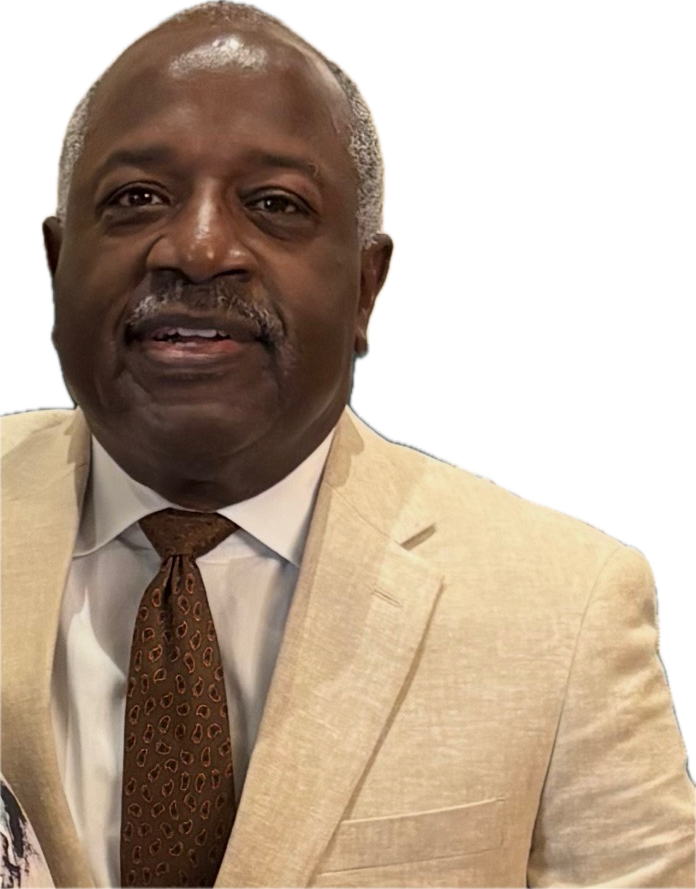
AI IN OUR LIVES
The intense debate surrounding Thelyson Orélien’s tragic novel, C’était ça ou mourir, has focused on allegations that AI played a role in its composition. Given the poignancy of the novel’s theme, the accusation has left many of us flabbergasted: try as we may, it is difficult to imagine AI producing such a wrenching narrative. A full evaluation of the novel will appear in the next edition of this newsletter. For now, let us consider AI itself and the extent to which it has become inseparable from our lives.
One might think that AI is a new force that has taken us by storm and transformed our lives for the worse. The truth, however, is not so black and white. AI has been with us in various forms for a long time; we simply did not call it that. One could argue that when we exchanged the slide rule for the calculator’s convenience and efficiency, we began allowing information technology to make our lives easier. Once we experienced the benefits of technology, the genie sprang from the bottle with such force that there was no going back. Those of us who struggled in the 1970s to produce term papers on typewriters—especially when making tedious corrections—rejoiced when the word processor appeared a decade later. Although we may not remember it this way, the early word processor was essentially a sophisticated typewriter with a screen, yet it allowed us to move entire paragraphs and revise text as never before. Once again, technology came to our rescue, and we welcomed it. Progress continued without boundaries.
The next advance blurred the distinction between the tool and its output. Word processing shed its identity as a dedicated piece of hardware and became software capable of taking us to heights we had never imagined. Technology had done it again, and in those days we might have shouted "yahoo" to show our appreciation. We could not have known that a technology company would later appropriate the word as its name and dramatically expand our ability to exchange messages and explore texts across great distances. Our appetite for technology’s fruits seemed limitless, and we gladly bowed to the promise of Moore’s law: with each generation of microchips, computing power would improve on a vast scale. The dot-com frenzy made us greedy, and we imagined that the stock market would rise forever. We were badly burned, were we not? Yet our infatuation with technology was only beginning. The internet expanded, social media followed, and soon electronic devices appeared to listen to our conversations and anticipate our needs. If we discussed travel, an advertisement for places to visit might appear on our phones.
Before going further, we should ask what enabled appliances to perform so many tasks seemingly beyond our control, almost as if they were spies. Without a human brain, what made them work? What instructions had been programmed into them? We designed algorithms and trained systems to follow them. We did not yet call the beast by its present name, but AI was already being developed to simplify decisions, anticipate our needs, and assist us—and we rarely refused its offers.
Word-processing software has advanced dramatically. From an era of competing programs, we have moved, for all practical purposes, toward one behemoth that wears many hats. It can correct and edit prose, suggest different ways to shape a narrative, and, if push comes to shove, generate the writing itself. AI became widely recognized as a distinct concept when companies developed algorithms supported by immense computing capacity. These systems can sift through reams of data at extraordinary speed and perform tasks so much more easily and quickly that many of us have yielded to the temptation to rely on their computing power for our creative work.
AI is now a routine part of everyday life. You cannot contact your bank without first encountering a synthetic voice that greets you and asks you to make a selection. Call your health insurer, and another nonhuman voice greets you; much the same happens when you contact almost any large corporation. In the creative arts, the sophistication is mind-boggling. AI can generate songs with striking lyrics and melodies that may be virtually indistinguishable from human creations. For an illustration, visit YouTube and listen to artists such as Ovi Nani, Éva Le Noir, and Elvira Lopez; then search their names and discover that they are virtual performers.
AI’s presence is so pervasive that one would be hard-pressed to identify an interaction entirely free from it. That reality may explain our tolerance for AI’s assistance, but it does not erase the distinction between receiving editorial help and surrendering authorship. No one in the debate is likely to have written entirely without digital support. At the same time, the mere use of a spelling checker, grammar tool, or word processor is not equivalent to asking a system to produce a creative work. The question, therefore, is not whether technology touched the writing process, but how much of the author’s imaginative and expressive labor remained his or her own.
AI’s writing ability is no less remarkable, though it remains imperfect. For those of us who enjoy writing and continually seek to improve our craft, the available tools are abundant: dictionaries, grammar guides, and digital correctors abound. Professional editors also use such correctors to improve their accuracy. Gone are the days when writers routinely submitted handwritten manuscripts; the standard has long since shifted to Word documents and double-spaced submissions. It is now difficult to imagine working without some form of correction software. Accusing an author of submitting an AI-assisted piece can therefore seem hypocritical when the accuser is probably using a medium already shaped by AI software and algorithms. Yet assistance is not authorship. Machines, as far as we know, have no heart and no capacity to feel, suffer, cry, laugh, or experience human emotion. Simulating an expected reaction by drawing on stored data is fundamentally different from imagining, in fully human terms, what another person feels. It is especially difficult to conceive of AI independently imagining the anguish and terror of someone whose space is invaded by thugs in Carrefour-Feuilles, then narrating in granular detail the travails of a dark-skinned individual. The premise does not pass the smell test.
Reynald Altema, MD
Palm City FL

Complications of Uncontrolled Type 2 Diabetes
A Focus on Diabetic Gastroparesis
Abstract
Type 2 diabetes mellitus that remains poorly controlled over time, produces a broad range of microvascular and macrovascular complications. This paper reviews four major complication categories, cardiovascular disease, diabetic nephropathy, diabetic retinopathy, and diabetic neuropathy, describing the epidemiology, underlying pathophysiology, and clinical significance of each, before turning to an in-depth examination of diabetic gastroparesis, a form of autonomic neuropathy in which delayed gastric emptying disrupts digestion and glycemic control. The epidemiology, pathophysiology, clinical presentation, diagnostic approach, and management strategies for diabetic gastroparesis are discussed in detail, with particular attention to the bidirectional relationship between poor glycemic control and gastrointestinal autonomic dysfunction, in which each factor can worsen the other over time.
Complications of Uncontrolled Type 2 Diabetes: A Focus on Diabetic Gastroparesis
Introduction
Type 2 diabetes mellitus is a chronic metabolic disorder in which persistently elevated blood glucose gradually damages blood vessels, nerves, and organ systems throughout the body. Excess circulating glucose does not stay contained within the bloodstream; it glycates proteins, disrupts cell signaling, generates reactive oxygen species, and impairs the normal function of endothelial cells lining the vasculature. When these processes are allowed to continue unchecked over months or years, a fairly predictable set of complications tends to emerge, and the tissues most often affected are those least able to buffer themselves against a chronically high glucose load. These complications are conventionally divided into two broad categories: macrovascular complications, which affect large blood vessels and include cardiovascular disease, cerebrovascular disease, and peripheral artery disease, and microvascular complications, which affect small blood vessels and include retinopathy, nephropathy, and neuropathy (American Diabetes Association Professional Practice Committee, 2024). This paper first surveys each of these major complication categories to provide context for how widely uncontrolled diabetes can affect the body, and then turns to an in-depth examination of diabetic gastroparesis, a form of autonomic neuropathy in which the nerves controlling stomach motility become damaged, delaying the movement of food out of the stomach and creating a uniquely disruptive feedback loop with glycemic control itself.
Overview of Major Complications
Although every complication of diabetes ultimately traces back to the same underlying driver of chronic hyperglycemia, each organ system is affected through somewhat distinct mechanisms and produces a distinct clinical picture. The following sections review cardiovascular disease, diabetic nephropathy, diabetic retinopathy, and diabetic neuropathy in turn.
Cardiovascular Disease
Cardiovascular disease is the single leading cause of death and disability among people with diabetes, and people with type 2 diabetes face two to four times the cardiovascular risk of those without the disease (Low Wang et al., 2016). The excess risk is driven by an accelerated form of atherosclerosis: patients with type 2 diabetes develop a greater atherosclerotic plaque burden, higher atheroma volume, and narrower coronary artery lumens than people without diabetes (Low Wang et al., 2016). Multiple overlapping mechanisms contribute to this process, including chronic hyperglycemia itself, insulin resistance and compensatory hyperinsulinemia, dyslipidemia, systemic inflammation, oxidative stress, endothelial dysfunction, a hypercoagulable state, and abnormal vascular calcification (Low Wang et al., 2016). Together these processes create what has been described as a "perfect storm" for atherosclerotic disease, and the resulting damage is not confined to the coronary arteries. Peripheral artery disease, a manifestation of the same underlying atherosclerotic process in the arteries of the legs, is a common and often underrecognized complication of type 2 diabetes, and it substantially increases the risk of both limb-related events, such as ulceration and amputation, and broader cardiovascular events such as heart attack and stroke (Cimellaro et al., 2024). Because early cardiovascular disease can be silent, especially in the presence of diabetic neuropathy that may blunt the perception of chest pain, the American Diabetes Association recommends aggressive, ongoing risk-factor management, including blood pressure and lipid control, rather than reliance on symptom-based detection alone (American Diabetes Association Professional Practice Committee, 2024).
Diabetic Nephropathy
Diabetic nephropathy, also called diabetic kidney disease, affects an estimated 25% to 40% of people with diabetes and is among the leading causes of chronic kidney disease and end-stage renal disease worldwide (Sulaiman, 2019). The disease progresses through a series of recognizable stages, beginning with glomerular hyperfiltration, in which the kidney's filtering rate is paradoxically elevated, followed by microalbuminuria, in which small amounts of protein begin to leak into the urine, then macroalbuminuria and nephrotic-range proteinuria, and finally progressive chronic kidney disease that can culminate in end-stage renal disease requiring dialysis or transplantation (Sulaiman, 2019). At the tissue level, this progression reflects structural damage to every compartment of the kidney, including the glomerulus, the renal tubules, the vasculature, and the surrounding interstitium. Chronic hyperglycemia promotes the formation of advanced glycation end products and reactive oxygen species, which act together with hemodynamic changes driven by the renin-angiotensin-aldosterone system to injure the kidney and ultimately produce renal fibrosis, the final common pathway of the disease (Sulaiman, 2019). Because clinically detectable proteinuria only appears after significant glomerular damage has already occurred, current guidelines emphasize routine screening for albuminuria and reduced kidney function so that protective therapies can be started as early as possible (American Diabetes Association Professional Practice Committee, 2024).
Diabetic Retinopathy
Diabetic retinopathy is a microvascular complication of diabetes and remains one of the leading causes of blindness among working-age adults worldwide (Pushparani et al., 2025). The condition progresses through two broad stages. Nonproliferative diabetic retinopathy develops first and is characterized by increased capillary permeability, microaneurysms, small hemorrhages, and lipid exudates in the retina; this stage is further graded as mild, moderate, or severe depending on the extent of vascular involvement. If the disease continues to progress, it can advance to proliferative diabetic retinopathy, a more severe stage marked by the growth of abnormal new blood vessels on the surface of the retina in response to retinal ischemia. These fragile new vessels are prone to bleeding and can lead to vitreous hemorrhage or traction retinal detachment, either of which can cause severe vision loss (Pushparani et al., 2025). Macular edema, a swelling of the central retina caused by fluid leakage, can occur at any stage of the disease and is the most common cause of vision loss attributable to diabetic retinopathy. Notably, retinopathy often remains entirely asymptomatic until relatively late in its course, which is why regular dilated eye examinations are recommended for all people with diabetes regardless of whether they have noticed any change in their vision (American Diabetes Association Professional Practice Committee, 2024). The severity of retinopathy also tends to track with a person's broader vascular health; more advanced retinopathy has been associated with a higher likelihood of underlying atherosclerotic cardiovascular disease, underscoring how interconnected these complications are (Pushparani et al., 2025).
Diabetic Neuropathy
Diabetic neuropathy is the broadest of the major complication categories and is typically divided into peripheral neuropathy and autonomic neuropathy. Peripheral neuropathy most commonly affects the sensory nerves of the feet and legs, producing numbness, tingling, or burning pain in a stocking-glove distribution, and it is the single most important risk factor for diabetic foot ulceration, present in as many as 90% of cases (Clayton & Elasy, 2009). Sensory loss allows minor injuries to go unnoticed and untreated, while motor neuropathy can produce structural foot deformities such as hammertoes or Charcot foot that create new areas of abnormal pressure, and autonomic involvement of the foot itself reduces sweating and leads to dry, cracked skin that is more vulnerable to infection (Clayton & Elasy, 2009). When peripheral neuropathy is combined with peripheral artery disease, which impairs blood flow and slows wound healing, the risk of a foot ulcer progressing to amputation rises sharply; diabetic foot ulcers precede a substantial proportion of all lower-extremity amputations performed in the United States (Clayton & Elasy, 2009). Autonomic neuropathy, the second broad category, affects the nerves that regulate involuntary bodily functions rather than sensation or movement. Depending on which autonomic pathways are involved, it can disrupt heart rate regulation and blunt the warning symptoms of a heart attack, impair bladder emptying, contribute to erectile dysfunction, and, of central relevance to this paper, disrupt the coordinated muscular contractions that move food through the digestive tract (American Diabetes Association Professional Practice Committee, 2024). Gastroparesis is the clearest and most extensively studied example of this last effect and is the focus of the remainder of this paper.
Diabetic Gastroparesis
Diabetic gastroparesis exemplifies how a single instance of autonomic nerve damage can produce consequences that extend well beyond the affected organ itself, disrupting nutrition, quality of life, and glycemic control simultaneously. The sections below examine its definition and epidemiology, underlying pathophysiology, clinical presentation, effect on glycemic control, diagnostic approach, and current management strategies in turn.
Definition and Epidemiology
Gastroparesis, also referred to as delayed gastric emptying, is defined as slowed or stalled movement of food from the stomach into the small intestine in the absence of any mechanical obstruction (National Institute of Diabetes and Digestive and Kidney Diseases [NIDDK], 2018). Diabetes is the most commonly identified cause of gastroparesis, and vagal or autonomic neuropathy is estimated to contribute to the condition in roughly 20% to 40% of people with diabetes (Saljoughian, 2019). The condition can occur in both type 1 and type 2 diabetes, though it has historically been documented more often in type 1 disease; nonetheless, given the much larger overall population of people with type 2 diabetes, it represents a substantial and likely underrecognized source of morbidity within that group as well (Dróżdż et al., 2024). Some estimates suggest the condition is markedly underdiagnosed because gastric emptying can be objectively delayed well before a person develops noticeable symptoms, meaning the true prevalence of diabetic gastroparesis may be considerably higher than clinical diagnosis rates suggest (Dróżdż et al., 2024).
Pathophysiology
The mechanisms underlying diabetic gastroparesis are multifactorial and reflect damage occurring at several levels of the gut's neuromuscular system simultaneously. Chronic hyperglycemia damages the vagus nerve, which normally coordinates the muscular contractions that propel food through the stomach and into the small intestine (Saljoughian, 2019). Electron microscopic studies of vagus nerve tissue taken from patients with severe diabetic gastroparesis have demonstrated a marked reduction in the density of unmyelinated nerve fibers, with the surviving fibers tending to be abnormally small in caliber, findings that directly support the view that the condition is fundamentally one of vagal denervation (Guy et al., 1984). Beyond the vagus nerve itself, hyperglycemia and the oxidative stress it generates also disrupt the interstitial cells of Cajal, specialized pacemaker cells embedded in the muscular wall of the stomach that generate the rhythmic electrical activity underlying normal gastric contraction (Dróżdż et al., 2024; Zhou et al., 2024). Compounding this damage, hyperglycemia reduces the expression of neuronal nitric oxide synthase in the stomach's intermuscular nerve plexus; nitric oxide is an important signaling molecule that normally allows the muscles of the stomach to relax appropriately, so its loss further impairs coordinated motility (Zhou et al., 2024). Hormonal disturbances within the gastrointestinal tract have also been implicated as a contributing factor (Zhou et al., 2024). Because these different mechanisms, nerve damage, pacemaker cell dysfunction, and impaired smooth muscle signaling, tend to develop together and reinforce one another, diabetic gastroparesis is best understood not as damage to a single structure but as a systems-level failure of gastric neuromuscular coordination.
Clinical Presentation
Common symptoms of gastroparesis include early satiety, in which a person feels uncomfortably full after eating only a small amount of food; prolonged fullness that persists long after a meal has ended; nausea; vomiting of undigested food eaten hours or even a day earlier; bloating; abdominal pain; and heartburn or acid reflux (NIDDK, 2018). Because affected individuals often reduce their food intake in response to these symptoms, in an understandable effort to minimize discomfort, unintentional weight loss and nutritional deficiencies can also develop over time, and in more severe or prolonged cases dehydration from persistent vomiting becomes a further concern (Saljoughian, 2019). Symptom severity does not always correlate closely with the degree of delayed gastric emptying measured on objective testing; some patients with substantially delayed emptying report relatively mild symptoms, while others with more modest delays report significant distress, which further complicates recognition of the condition in routine clinical practice (Vittal et al., 2007).
Impact on Glycemic Control
Diabetic gastroparesis complicates diabetes management in a way that is easy to overlook: it decouples the timing of food absorption from the timing of insulin action. Under normal circumstances, insulin dosing, whether from injected insulin or oral medications that stimulate insulin release, is timed to match the anticipated rise in blood glucose that follows a meal. When gastric emptying is delayed and, critically, unpredictable from one meal to the next, glucose absorption may occur hours later than expected, producing erratic blood glucose levels that are extremely difficult to anticipate or manage even with careful attention (Dróżdż et al., 2024; NIDDK, 2018). In practice, this mismatch can produce dangerous swings in both directions: insulin that peaks in the bloodstream before food has actually left the stomach can cause hypoglycemia, while delayed absorption of that same meal's glucose can later produce an unexpected and seemingly unexplained spike in blood sugar. This unpredictability can, in turn, make sustained glycemic control considerably more difficult to achieve, and because poor glycemic control is itself one of the primary drivers of the nerve and pacemaker-cell damage that causes gastroparesis in the first place, a self-reinforcing cycle can emerge in which each factor worsens the other over time (Zhou et al., 2024).
Diagnosis
Diagnosis relies on a combination of clinical history, physical examination, and objective testing of gastric emptying. Gastric emptying scintigraphy is considered the reference standard: the patient eats a standardized meal containing a small amount of radioactive tracer, and imaging is used to track how much of that meal remains in the stomach at set intervals, most often over a four-hour period (NIDDK, 2018). Upper endoscopy is typically performed as part of the diagnostic workup to rule out a mechanical obstruction or other structural explanation for the person's symptoms, since gastroparesis is defined specifically by the absence of such a blockage. Breath testing, in which a patient consumes a meal containing a labeled substrate and the rate of its appearance in exhaled breath is measured, offers a less invasive alternative method of estimating gastric emptying rate in settings where scintigraphy is not readily available (NIDDK, 2018).
Management
There is no single curative treatment for diabetic gastroparesis, and current approaches instead aim to relieve symptoms, maintain adequate nutrition, and reduce downstream complications. Dietary modification is generally considered a first-line strategy and typically involves eating smaller, more frequent meals that are lower in fat and insoluble fiber, since both fat and fiber are known to slow gastric emptying further and can worsen symptoms (NIDDK, 2018). In more severe cases, a temporary shift toward liquid or pureed foods, which empty from the stomach more readily than solid food, may be recommended. Improved glycemic control is also an important component of management, since acute hyperglycemia itself has been shown to slow gastric motility independent of any underlying nerve damage, meaning that tighter glucose control can meaningfully improve symptoms even when the nerve damage itself cannot be reversed (Zhou et al., 2024). Pharmacologic options include prokinetic agents, which stimulate gastric muscle contraction and help move food through the stomach more effectively, and antiemetic medications, which help control nausea and vomiting (Saljoughian, 2019). For patients with severe, refractory symptoms who do not respond adequately to dietary and medication changes, more invasive interventions may be considered, including gastric electrical stimulation, in which a surgically implanted device delivers electrical impulses to the stomach wall in an effort to improve motility, or, in select cases, surgical procedures intended to bypass or assist gastric emptying. Zhou et al. (2024) caution, however, that these more invasive approaches can carry unfavorable outcomes of their own, and that long-term therapeutic benefit for diabetic gastroparesis remains genuinely difficult to achieve even with aggressive treatment, underscoring the importance of early recognition and consistent glycemic management as the most reliable long-term strategy.
Conclusion
Uncontrolled type 2 diabetes is capable of damaging nearly every major organ system in the body, from the heart and blood vessels to the kidneys, the eyes, and the nerves, through mechanisms that ultimately trace back to the same underlying driver of chronic hyperglycemia. Diabetic gastroparesis illustrates how these complications can extend well beyond the commonly discussed cardiovascular, renal, and ocular effects and into domains, such as digestion, that are not always the first to come to mind when considering the risks of poorly controlled diabetes. As a form of autonomic neuropathy, gastroparesis not only diminishes quality of life through chronic and often debilitating gastrointestinal symptoms but also actively undermines glycemic control, creating a self-reinforcing cycle of nerve damage and metabolic instability that can be difficult to interrupt once established. Taken together, the complications reviewed in this paper reinforce a consistent theme: sustained glucose management over time, rather than intermittent or short-term control, remains the most effective strategy for preventing or slowing the progression of diabetic complications across every organ system discussed here (American Diabetes Association Professional Practice Committee, 2024).
Darlyne Christy Janvier MD, DNP
Boca Raton FL
References:
American Diabetes Association Professional Practice Committee. (2024). 12. Retinopathy, neuropathy, and foot care: Standards of Care in Diabetes—2024. Diabetes Care, 47(Suppl. 1), S231–S243. https://doi.org/10.2337/dc24-S012
Cimellaro, A., Cavallo, M., Mungo, M., Suraci, E., Spagnolo, F., Addesi, D., Pintaudi, M., & Pintaudi, C. (2024). Cardiovascular effectiveness and safety of antidiabetic drugs in patients with type 2 diabetes and peripheral artery disease: Systematic review. Medicina, 60(9), 1542. https://doi.org/10.3390/medicina60091542
Clayton, W., Jr., & Elasy, T. A. (2009). A review of the pathophysiology, classification, and treatment of foot ulcers in diabetic patients. Clinical Diabetes, 27(2), 52–58.
Dróżdż, O., Gacka, P., Dołęga, M., Musialska, D., Rabczyński, M., Gołda, J., Mężyk, J., & Snopkowska, A. (2024). Diabetic gastroparesis: Epidemiology, pathophysiology, symptoms, and clinical consequences. Quality in Sport, 21, Article 53928. https://doi.org/10.12775/qs.2024.21.53928
Guy, R. J., Dawson, J. L., Garrett, J. R., Laws, J. W., Thomas, P. K., Sharma, A. K., & Watkins, P. J. (1984). Diabetic gastroparesis from autonomic neuropathy: Surgical considerations and changes in vagus nerve morphology. Journal of Neurology, Neurosurgery, and Psychiatry, 47(7), 686–691. https://doi.org/10.1136/jnnp.47.7.686
Low Wang, C. C., Hess, C. N., Hiatt, W. R., & Goldfine, A. B. (2016). Atherosclerotic cardiovascular disease and heart failure in type 2 diabetes: Mechanisms, management, and clinical considerations. Circulation, 133(24), 2459–2502. https://doi.org/10.1161/CIRCULATIONAHA.116.022194
National Institute of Diabetes and Digestive and Kidney Diseases. (2018). Gastroparesis. U.S. Department of Health and Human Services. https://www.niddk.nih.gov/health-information/digestive-diseases/gastroparesis
Pushparani, D. S., Varalakshmi, J., Roobini, K., Hamshapriya, P., & Livitha, A. (2025). Diabetic retinopathy—A review. Current Diabetes Reviews, 21(7), 43–55.
Saljoughian, M. (2019). A new approach to managing gastroparesis. US Pharmacist, 44(2), 32–34.
Sulaiman, M. K. (2019). Diabetic nephropathy: Recent advances in pathophysiology and challenges in dietary management. Diabetology & Metabolic Syndrome, 11, 7. https://doi.org/10.1186/s13098-019-0403-4
Vittal, H., Farrugia, G., Gomez, G., & Pasricha, P. J. (2007). Mechanisms of disease: The pathological basis of gastroparesis—A review of experimental and clinical studies. Nature Clinical Practice Gastroenterology & Hepatology, 4(6), 336–346.
Zhou, J., Li, S. R., & Zhao, Y. C. (2024). Diabetic gastroparesis: A disease for which long-term therapeutic benefits are difficult to obtain. Endokrynologia Polska, 75(2), 14


Un grand Merci a mon ami Jean Sege Dorismond MD pour ce poeme qu'il a dedie a ma memoire de "Voyageur impenitent", a l'occasion d'un prochain anniversaire qui nous vieillira encore d'une annee. Je profite de l'occasion pour le remercier aussi d'avoir su partager son inspiration de poete avec nos lecteurs, toutes les fois qu'un infolettre de la AMHE faisait surface. Compagnon de la Promotion 1976, a notre Alma Mater, je salue en lui, ce poete qui detient un don lui permettant de cadencer la langue de Moliere, dans une prose subtile, au bout de sa plume. C'est un art que de pouvoir rythmner ses pensees pour delivrer un message du coeur. Meci Serge d'enjoliver les pages de l'infolettre de la AMHE et merci d'etre ce messager du bonheur.
(Maxime Coles MD)

(Auteur inconnu)
The newsletter is very informative and contains great educational content. Thanks for sharing your knowledge with us. Keep up the good work!
Rony, mes Compliments ! J'ai lu les deux articles et voici l'une des leçons que j'en retiens : Notre passé est comme une lanterne nous aidant à ne pas trop trébucher dans notre course vers l’avenir !
(Edouard Medina)
Merci Maxime, pour ce numéro de la revue AMHE qui contient des articles très intéressants. Cela a été un plaisir de les lire tous.
(Marie Dalbert Lafontant MD)
Le plaisir est aussi le nôtre, Marie Dalbert, que de savoir que tu as su apprécier pleinement nos présentations dans l’infolettre de la AMHE. Je t'invite aussi a publier avec nous.
(Maxime Coles MD)
The newsletter is very informative and contains great educational content. Thanks for sharing your knowledge with us. Keep up the good work!
(Paul Célestin MD)
Paul, tu seras toujours le bienvenu si notre infolettre demeure une source de savoir. Nous avons une equipe qui travaille d'arrache-pied pour exposer des sujets d'actualite medicale et souvent, nous invitons ceux qui aiment ecrire a partager aussi des articles interessants.
(Maxime J-M Coles MD)
Une synthèse remarquable sur la Lèpre
Le Dr Maxime J-M Coles signe ici un article d'une richesse exceptionnelle sur la maladie de Hansen, alliant rigueur scientifique et sensibilité humaine. L'auteur réussit un tour de force : rendre accessible un sujet médical complexe tout en respectant sa profondeur clinique et historique.
Ce qui frappe d'abord, c'est l'ancrage local de l'article — la mention des cas récents à Gonaïves et Marigot donne une actualité concrète et pertinente pour le lecteur haïtien, tout en démystifiant une maladie encore trop souvent entourée de peur et de stigmatisation. L'auteur prend soin de rappeler, à plusieurs reprises, les faits essentiels : la lèpre est peu contagieuse (95% des personnes exposées ne la développent jamais), elle se soigne bien aujourd'hui, et l'isolement forcé n'est plus nécessaire. Ce message de déstigmatisation est précieux dans un contexte où les patients vivent souvent, comme le souligne l'article, dans une grande pauvreté.
La dimension historique et culturelle enrichit considérablement le texte — les références bibliques, le lien avec le scoutisme via l'île Brownsea, l'anecdote sur les sources sulfureuses près d'Arcahaie où se baignaient les lépreux haïtiens. Ces touches donnent une âme au texte qui dépasse le simple exposé médical.
Sur le plan scientifique, l'article couvre avec précision l'immunopathologie (spectre tuberculoïde-lépromateux, rôle des Th1/Th2), la microbiologie, la transmission et les protocoles thérapeutiques actuels, tout en restant lisible pour un public non-spécialiste. L'insistance finale sur l'importance du diagnostic précoce donne à l'article une portée véritablement préventive et éducative.
Un article complet, humain et instructif — une belle contribution à la vulgarisation médicale.
(Darlyne Christy Janvier MD, DNP, AGPCNP-BC)
Merci Christy pour cette analyse d'un texte que j'ai ecrit, en connaissance de cause, sur la fragilite de la vie d'un lepreux dans notre pays d'origine et ailleurs dans le monde. J'ai connu des lepreux depuis mes plus tendres annees et l'une de mes tantes souffrait de la maladie, et il ne m'a pas ete difficile de me mettre dans sa peau pour vivre les stigmatisations dont elle fut l'objet durant toute son existence. Des cas sporadiques apparaitront encore chez nous et je souhaite que beaucoup arriveront a comprendre l'origine du fleau et qu'une telle maladie n'est pas si contagieuse surtout quand le traitement a ete initie. Je sais aussi avoir choisi le sujet a cause d'une ami qui m' etait chere, compagne de promotion, qui a dedie une bonne partie de sa vie a prendre soin de ces delaisses. Puisse le World Health Organization tenir ses promesses d'eradiquer la Lepre de la surface de notre monde.
(Maxime J-M Coles MD)
Editeur en Chef de l'infolettre de la AMHE

Thank you for an amazing rotation. This was one of my favorite rotations, and I learned a lot of valuable information that I will take moving forward. I hope to keep in touch with you and potentially do an elective again if possible! Wishing you well
(The students)

la genèse de notre monnaie
Nous sommes habitués aux termes « gourde », « piastre » ainsi qu’au fameux terme créole « kòb. » Si, par curiosité, on s’interroge sur leur provenance, cet essai aidera à élucider cette énigme. Pendant la période coloniale, la France se servait de la livre tournois, abrégée en L, liv., lt ou tt. Simultanément, pour régler les comptes de Saint-Domingue, on utilisait cette même unité selon une valeur majorée. Ainsi, une livre tournois équivalait à 1,5 livres de Saint-Domingue. La livre tournois était égale à 20 sous, soit 240 deniers. La livre de Saint-Domingue, en revanche, valait 13,33 sous, soit 160 deniers.
Saint-Domingue, qui partageait l’île avec une partie espagnole à l’est, subissait l’influence de la monnaie espagnole. Celle-ci prenait notamment la forme d’une pièce métallique, le peso de huit réaux, connue sous différents vocables : tantôt « la pièce de huit », tantôt « la piastre » dans les Antilles et, à Saint-Domingue, « la piastre-gourde ». La géopolitique de l’époque présentait le tableau suivant : l’Espagne exploitait les mines du Nouveau Monde et frappait ces pesos à un rythme tel qu’ils envahissaient le marché. Avec son armada et son commerce florissant, elle représentait une force majeure ou, dans le jargon, un hégémon. La relative abondance du peso coïncidait avec une pénurie constante de livres tournois et l’absence totale de livres de Saint-Domingue, ou livres coloniales. Cela créa un système monétaire hybride et vraiment particulier caractérisé par la diversité et la rareté du numéraire à Saint-Domingue.
Unité | Équivalence | Observation |
1 livre tournois | 20 sous | Unité de compte |
1 piastre-gourde | 8 livres 5 sous coloniales | 165 sous coloniaux |
1 piastre-gourde | 5 livres 10 sous tournois | Valeur métropolitaine |
100 livres de France | 150 livres de Saint-Domingue | Rapport conventionnel |
Fig. 1. Équivalence entre les monnaies utilisées à Saint-Domingue
En fait, la livre tournois venait de France et était destinée à payer les administrateurs et les fonctionnaires. La livre coloniale est une monnaie de compte mais fictive. Elle n’existe pas. Elle servait, comme le mot l’indique, à compter, à évaluer. Dans les transactions intérieures, on payait en denrées. Au début, c’était en tabac et indigo. Au XVIIIe siècle, les grandes plantations ajoutèrent le sucre et le café comme nouvelles denrées d’un plus grand rapport. Le négociant-commissionnaire vendait des marchandises au colon ; le négrier lui vendait des esclaves. Le colon payait en denrées. Les colons utilisaient le même système dans leurs transactions (achats de terrains, d’esclaves, de moulins). Tout était évalué en livres coloniales et payé en denrées. C’était un système de troc qui porta à parler de la monnaie-marchandise. Celui qui détenait le peso d’argent tendait à le thésauriser (accumuler). La tendance à la thésaurisation était encore plus forte lorsqu’il s’agissait de la portugaise, monnaie d’or tirée du Brésil et obtenue par contrebande avec la Jamaïque. Les denrées expédiées en France y étaient vendues en livres tournois. Le négociant de France en trafiquait en livres tournois. Le négociant les retenait en agissant comme s’il était de fait le banquier du colon. À son tour, le colon pouvait demander au négociant de tirer des lettres de change en son nom au profit de sa famille ou de n’importe créancier en France. Parfois, on contournait la situation en envoyant des piastres à des proches en France par le truchement de maisons commerciales établies en métropole1. Pour les petites transactions dans la colonie, on utilisait de la petite monnaie comme les escalins2. On trouvait aussi en circulation de la petite monnaie de cuivre (cobre en espagnol, qui donnera le mot kòb3). Même la petite monnaie disparaissait à un certain moment de la circulation4.
La géopolitique nous indique aussi qu’à l’époque, Saint-Domingue produisait du sucre, du café et de l’indigo en grandes quantités, mais pas assez d’aliments pour nourrir ses habitants. La colonie britannique, devenue les États-Unis, produisait de la viande de bœuf et de porc, du blé, de la farine, du poisson salé et séché, et même du riz. Le commerce étant toujours le principal moteur économique entre les différents territoires, Saint-Domingue s’engageait, par nécessité, dans des échanges avec cette colonie depuis le début du XVIIIe siècle. Ce commerce se faisait au début à l’insu de la métropole et se poursuivait même après l’indépendance de ce pays qui avait tardé à reconnaître la souveraineté d’Haïti comme État libre. Comment s’effectuaient les échanges entre ces deux territoires ? Des deux côtés, l’instinct pragmatique prenait le dessus. Un système de troc prédominait : de notre côté, on échangeait notre sucre ou notre café contre les denrées susmentionnées. De temps à autre, les transactions se faisaient au moyen de la piastre-gourde. Cette circulation parallèle de monnaies et de marchandises plaça donc la question monétaire au cœur de l’organisation politique de Saint-Domingue. Mais la monnaie, déjà rare au temps de la colonie, devenait encore plus rare sous la révolution5. Avec l’unification de l’île, la coexistence de plusieurs unités de compte ne relevait plus seulement des pratiques commerciales : elle devenait un problème de gouvernement. Les réalités financières talonnaient toujours la géopolitique et, après l’unification de l’île sous son commandement, Toussaint eut à trancher la question de la pénurie de pièces de monnaie, d’une part, et celle de la nécessité d’une monnaie unique pour les deux territoires, d’autre part. En 1802, par décret, Toussaint donna un statut officiel à une autre pièce qui existait depuis quelque temps, l’escalin, et son gouvernement frappa ces pièces d’une manière astucieuse, digne de la désignation de « percée louverturienne ». En effet, une face portait l’inscription « République française » et l’autre, « Colonie de Saint-Domingue6 ».
Toussaint ne remettait pas en question l’autorité de la métropole, mais ne laissait aucun doute quant à l’identité du chef capable de prendre de telles décisions. En frappant ces pièces, il donnait libre cours à sa politique de stabilisation de l’île sous sa férule et selon sa perspective. Autrement dit, il prenait une décision fiscale d’une portée politique magistrale, marque d’un homme d’État de grand acabit. La valeur de cette monnaie était fixée selon le barème suivant : 1 piastre-gourde pour 11 escalins. Pour mieux comprendre cette nouvelle équivalence, voici une autre figure. Évidemment, 12 deniers valaient un sou. Ainsi, une valeur financière pouvait être exprimée sous plusieurs dénominations : 825 livres coloniales = 100 piastres-gourdes = 550 livres tournois = 1 100,00 escalins.
Dénomination | Valeur en monnaie coloniale |
½ escalin | 7 sous 6 deniers |
1 escalin | 15 sous |
2 escalins | 1 livre 10 sous |
11 escalins | 8 livres 5 sous = 1 piastre-gourde |
Dénomination | Valeur en monnaie colonial |
½ escalin | 7 sous 6 deniers |
1 escalin | 15 sous |
2 escalins | 1 livre 10 sous |
11 escalins | 8 livres 5 sous = 1 piastre-gourde |
Fig. 2. Valeur de l’escalin
Les difficultés monétaires persistèrent sous les gouvernements de Leclerc et de son successeur Rochambeau7. Après l’indépendance, la construction d’un système monétaire propre au nouvel État reprit cette question dans un contexte politique désormais différent.
La rareté du métal nécessaire à la frappe des pièces constituait un problème majeur. Pour aggraver cette situation, la partition du pays entre le royaume, au Nord, et la République, à l’Ouest, créa deux systèmes monétaires, retardant le développement d’une monnaie nationale et d’une politique fiscale cohérente. À partir de 1807, Christophe inscrivait « Monnoie d’Hayti » sur les pièces frappées, tout en conservant l’escalin. En ce sens, on peut dire que la première pièce de monnaie proclamant notre souveraineté date de cette émission. En fait, Christophe avait émis de la petite monnaie pas en grande quantité. Cette monnaie n’avait pas vraiment circulé. Il payait en sucre Peltier, son agent à Londres8. Pétion, à son tour, utilisait les pièces étrangères comme auparavant, moyennant parfois des transformations locales des pièces espagnoles.
Dans ce contexte de division politique et de coexistence des monnaies, la pénurie ne pouvait que persister. La recherche d’un contrôle institutionnel de la circulation monétaire conduisit alors à une nouvelle étape législative dans la République de l’Ouest.
La persistance de cette pénurie donna lieu, le 7 novembre 1812, à un texte législatif intitulé « Hôtel de la Monnaie ». C’était un aveu de la gravité de la pénurie, qui s’élevait au rang d’une affaire de sécurité d’État. Ce texte prévoyait la création d’une institution nationale chargée du contrôle de la monnaie à toutes ses phases. Quelques mois plus tard, en mai 1813, une loi institua la « monnaie à serpent ». Cette pièce de monnaie se fondait sur la piastre espagnole. Les pièces suivantes furent frappées : une pièce de 6 centimes valant un seizième de gourde espagnole, une pièce de 12 centimes, soit un huitième, et une pièce de 25 centimes, égale à un quart. Cette monnaie, dont le symbole était un serpent se mordant la queue, reposait sur une parité avec la monnaie espagnole, standard de l’époque, et non avec la livre tournois de l’ancienne métropole.
Au-delà de ces réformes institutionnelles et des différentes pièces mises en circulation, cette histoire monétaire laissa aussi une empreinte durable dans le vocabulaire courant. Les appellations anciennes survécurent aux transformations du système et continuèrent à désigner la monnaie dans l’usage.
La piastre-gourde espagnole fut remplacée par la gourde, qui valait 100 centimes. Cependant, le mot « gourde » en français a conservé la désignation de « pyas » en créole. Les fractions de gourdes (huitième, seizième) utilisées à l’époque coloniale sont depuis lors à l’origine du vocable gourdin. Un gourdin équivaudra à vingt-cinq centimes de gourdes et deux gourdins à cinquante centimes de gourdes. On aura un kòb équivalent d’un centime de gourdes, cinq kòb, dix kòb et ainsi de suite. Le mot kòb finira par prendre le sens général de « argent ». Pour dire qu’on n’a pas d’argent on dit : « mwen pa gen kòb ». Je n’ai pas de « kòb ». Le mot « pyas » vient naturellement de « piastre-gourde », tandis que « kòb » vient de l’espagnol « cobre », qui désignait une pièce en cuivre. Certains disent que « kòb » est peut-être la version créole du mot anglais « cob », qui symbolisait aussi une pièce métallique à l’époque coloniale, à la différence que cette pièce était en argent. La prépondérance de l’évidence nous porte à conclure que « cobre » donna « cobe », puis « cob » — les deux formes étant françaises — et enfin « kòb », qui désignait une pièce en cuivre, mais a finalement évolué pour désigner l’argent au sens de monnaie, et non de métal.
Références :
1. Richard, Robert. « À propos de Saint-Domingue, la monnaie dans l’économie coloniale. (1674-1803), Outre-mer, Revue d’histoire, 1954). pp. 22-46. Lacombe, Robert. « Histoire monétaire de Saint-Domingue et de la République d’Haïti des origines à 1844 », Revue française d’histoire d’outre-mer, 1956, pp. 273-337, pp. 280…
2. https://numista.com/88863 (copy permalink) (Escalin).
3. Richard, Robert. (1954). Lacombe, Robert. (1956)
4. Richard, Robert. (1954), p. 41.
5. Zay, E. Histoire monétaire des colonies françaises, Paris, Typographie de J. Montorier, 1892, Ordonnances des administrateurs des 15 janvier et 13 juillet 1781, p. 221… Ordonnances des 4 brumaire, an VII, 25 octobre 1798, 5 juillet 1799, 17 messidor an VII, pp. 224, 225.
6. Zay, E. Histoire monétaire des colonies françaises, Paris, Typographie de J. Montorier, 1892, Ordonnances de Toussaint Louverture du 21 nivôse an 9 et du 15 nivôse an X, pp 231…
7. Zay, E. (1892), pp. Ordonnances des 13 mars 1802 et 20 janvier 1803, pp. 231…
8. Lacombe, Robert. (1956), p. 317.
Reynald Altéma, MD
Palm City, FL


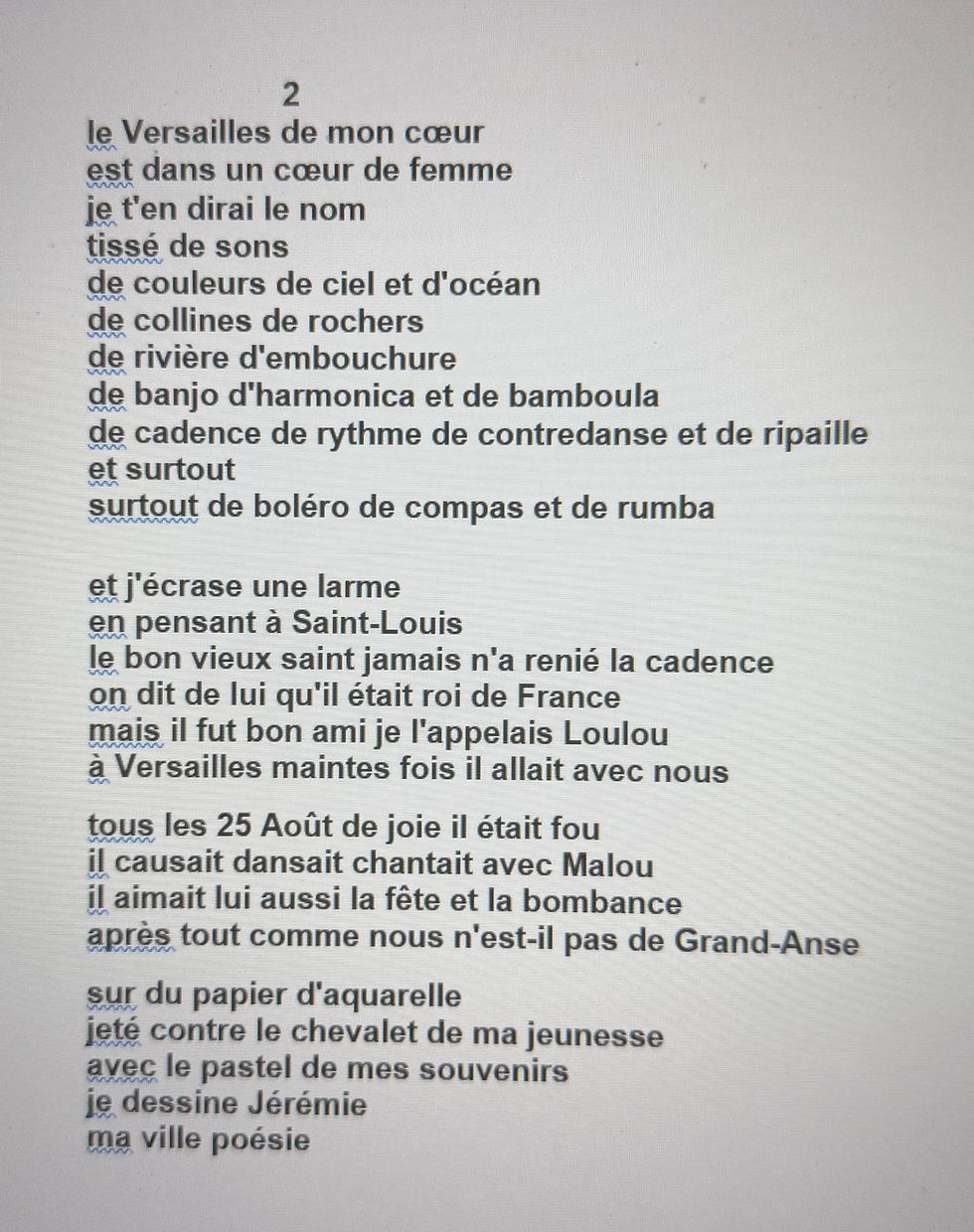


Les secrets du jardin de son coeur:
« Mon Jardin secret »
Fais- moi l'aumône d'un seul baiser et je ferai,
D'une goutte d'eau de ta bouche miraculeuse,
Tout un océan d’amour.
Fais-moi l'aumône d'un seul baiser
Et la magie de l'amour fera , de mon coeur ,
Un Jardin où les fleurs,
Sous les caresses du vent ,
Reflèteront la danse syncopée de tes paupières;
L'image rassurante, reposante de ton regard;
La clarté apaisante de tes yeux,
Le dessin évocateur de tes lèvres,
Le port altier, majestueux de ta poitrine,
L'allure orgueilleuse de tes seins,
Le creux accueillant de ton nombril,
Le relief enchanteur, envoûtant de ton "Mont de Venus";
Les contours sinueux de tes hanches
Et la cadence lascive de tes pas,
Un Jardin où tous les pétales de rose
Porteront l'emblème de l'amour infini
Pour exhaler des parfums differents ,
Délicats , subtils et doux
Qui te feront connaitre l"ivresse
Eclatante des profondeurs...
Jean Serge Dorismond MD
Pembroke Pines FL

Ma solitude
Du coin de l’œil, j’observe attentivement
Ce regard divin, et ce sourire angélique
Qui fleurissent mon coeur d’allégresse
Dans une solitude maladive.
Comment pourrais-je chanter tes louanges
Sur ce quai, abandonne dans la cohue ?
Que deviendra mon être qui pavane,
Assoiffe de ton nectar ?
Que dirais-je ce soir-là, muse de mes rêves,
Dans cette multitude de regards
Alors que le parfum que tu émanes
M’enivre encore d’un bonheur soutenu.
La candeur de ta chaire spirituelle
Encourage mes instincts hesitants
Alors que mon âme arbore ses secrets
Sur le chemin de ma Destinee.
La nuit reflète ma solitude
Et comme berce par une pleine lune,
Mes pensées s’envolent eparlillees
Vers ce firmament étoilé.
Dans ce confinement, je pense
A nos amis disparus sur le "front",
Comme des voyageurs du temps
Qui surement nous préparent le chemin.
PS: J’ai dédié ce poème a tous nos compagnons de lutte qui ont perdu la vie durant la pandémie du COVID-19 et qui continuent a nous quitter suite aux complications de ces vaccins. Puissent ce Dieu de Misericorde les recevoir dans son royaume, à bras ouverts.
Maxime Coles MD (4-21-2020)
.


Comments